Box Car
What Is a Box Car?
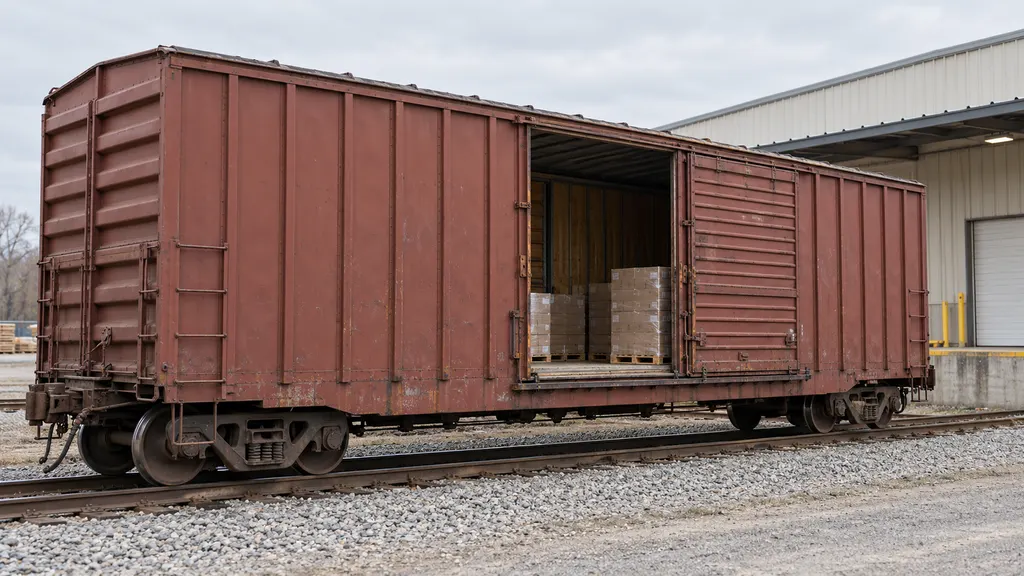
A box car, also written boxcar, is an enclosed railroad freight car used to transport goods that need protection from weather and exposure during rail transport. It has a roof, walls, a floor, and side doors through which cargo is loaded and unloaded. In logistics, the term refers to railway equipment, not a shipping carton, a road vehicle, or a detachable shipping container.
Box cars carry a range of packaged and unitized goods, including paper products, packaged consumer goods, and other freight compatible with the equipment. Their suitability depends on the cargo, the car's construction and condition, and the loading facilities available. The enclosure provides weather protection, but an ordinary box car should not be assumed to provide refrigeration, humidity control, or protection against every source of cargo damage.
The spelling boxcar is common in North American railway terminology. Both spellings refer to the same basic equipment concept; they do not identify different types of freight service.
Construction and Cargo Characteristics
A box car forms a fixed enclosure on a railway underframe. Unlike an intermodal container, its cargo compartment is part of the rail vehicle rather than a separate transport unit that is routinely lifted between trains, trucks, and ships. Freight normally enters and leaves through side doors at a loading location.
Several equipment characteristics affect whether a particular shipment can use a particular car:
- Interior dimensions: Usable length, width, and height determine whether the cargo and its proposed loading arrangement will fit.
- Door opening: Cargo must pass through the available opening. A load that fits inside the car may still be unsuitable if it cannot pass through the doorway.
- Load capacity: The shipment must remain within the applicable equipment and route limits. Available space does not, by itself, establish an acceptable cargo weight.
- Floor and interior condition: The floor, walls, and any installed fittings must be suitable for the intended cargo and handling method.
- Cargo-restraint arrangements: Blocking, bracing, and other securement measures help prevent freight from shifting during movement.
- Special equipment: Some cars have features intended for particular loading patterns or cargo requirements. Those features must be confirmed rather than inferred from the term box car.
Railroads publish equipment information describing the cars they offer. Such information helps establish suitability, but a general equipment description is not a substitute for checking the specifications and condition of the car supplied for a shipment.
Where Box Cars Fit in the Supply Chain
Box cars serve the freight transportation stage between production, storage, and distribution locations. A shipment may move between facilities with rail sidings, allowing loading and unloading directly from the railway car. Where a shipper or receiver lacks rail access, a transload facility can provide the transfer between road transport and rail transport.
This makes the box car relevant to ecommerce primarily through upstream inventory movements. For example, a retailer may arrange for palletized merchandise to travel by box car to a distribution facility, where workers unload it into warehouse inventory. Individual customer orders may subsequently be picked, packed, and dispatched through a separate parcel or local delivery network. The box car transports the replenishment freight, not necessarily the final customer packages.
A box car may also carry goods on a cross-border rail route where the railway network and service arrangements permit. However, the equipment type does not establish customs clearance, duty treatment, or import admissibility. Those matters depend on the goods, the countries involved, and the applicable procedures.
Users may encounter the term in rail quotations, equipment specifications, loading instructions, transport planning documents, or warehouse receiving schedules. In each case, it identifies a type of transport equipment rather than a complete description of the shipment or its commercial terms.
How a Box Car Shipment Is Planned and Handled
1. Confirm the cargo and service requirements
Planning begins with the goods: their dimensions, weight, packaging, handling restrictions, and sensitivity to moisture, temperature, contamination, or movement. The shipper also needs to establish whether the origin and destination can receive the proposed equipment. Where direct rail access is unavailable, any road transfer and transloading operations become part of the transport plan.
2. Select suitable equipment
The shipper and transport provider assess the required interior space, door configuration, capacity, and cargo-protection features. A shipment that needs active temperature control cannot be assigned to an ordinary enclosed car merely because it is sheltered from rain. Similarly, unusually shaped freight may require a different railcar type even when its total weight is within a box car's capacity.
3. Inspect before loading
The loading party should check whether the supplied car is suitable for the intended goods. Relevant checks include visible damage, floor condition, door operation, evidence of water entry, and residues or odors from previous cargo. Inspection requirements should reflect the commodity and applicable loading instructions. An enclosed space is not automatically a clean or cargo-compatible space.
4. Load and secure the freight
The loading plan should address weight distribution, handling access, and restraint against movement. Pallets, packages, rolls, or other cargo units need arrangements appropriate to their shape and packaging strength. Doors should not be treated as substitutes for cargo securement. The applicable railroad instructions and loading rules should guide the method used rather than a generic assumption that tightly filling the car is sufficient.
5. Receive, inspect, and unload
At destination, the receiver checks the shipment and prepares for safe unloading. Shifted cargo can create hazards when doors are opened, so receiving procedures should account for the condition of the load. Any shortage, damage, or seal discrepancy should be documented under the relevant transport and receiving arrangements. After unloading, the responsible parties follow the agreed instructions for releasing or returning the empty equipment.
Box Cars Compared with Related Equipment
The distinction between a box car and other transport equipment concerns construction and handling, not a universal ranking of cost, speed, or quality. The appropriate choice depends on the cargo and route.
| Equipment | Defining feature | Important distinction |
|---|---|---|
| Box car | Enclosed railway freight car with side loading doors. | The cargo enclosure is part of the rail vehicle. |
| Intermodal container | Separate freight container designed for transfer between compatible transport modes. | The loaded container can transfer between vehicles without unloading its contents at each transfer. |
| Flatcar | Railway freight car with an open loading platform. | It does not provide the fixed roof and walls of a box car. |
| Covered hopper | Enclosed railcar designed for suitable bulk commodities, with discharge outlets below. | Its loading and unloading arrangements differ from side-door handling of packaged freight. |
| Refrigerated railcar | Railway freight equipment designed to provide refrigerated transport. | Refrigeration is a specific capability, not an inherent property of all enclosed railcars. |
| Road trailer | Freight equipment designed to be hauled by a road tractor. | It is road equipment, even when used within a transport chain that also includes rail. |
A further distinction concerns carload. A box car is physical equipment; carload describes a rail freight shipment or service arrangement associated with a railcar. The terms are related but not interchangeable. Other railcar types can also carry carload shipments.
Practical Suitability Checks
Before specifying a box car, a shipper can use the following questions to identify issues requiring confirmation. These are planning checks, not a separate regulatory classification or a replacement for carrier instructions.
- Can both ends handle the equipment? Confirm rail access, track arrangements, unloading space, and any required transload services.
- Will the cargo pass through the doors? Check the loaded unit dimensions and handling clearances, not only the interior volume.
- Is the packaging suitable? Assess whether packages and unit loads can withstand the planned handling and restraint arrangements.
- Are environmental requirements satisfied? Distinguish weather protection from insulation, refrigeration, and humidity control.
- Is a loading plan available? Confirm how the freight will be distributed, restrained, and safely removed.
- Are handling responsibilities clear? Establish who loads, secures, inspects, unloads, and arranges any connecting road movement.
These checks also explain why a commodity name alone cannot establish suitability. Two shipments of the same product may require different equipment because their packaging, dimensions, environmental limits, or receiving facilities differ.
Common Misunderstandings
A box car is not simply a container on wheels. Although both provide an enclosed cargo space, an intermodal container is a separate transferable unit. Moving goods from a conventional box car into a road vehicle normally involves unloading and transferring the freight.
Enclosed does not mean temperature-controlled. A roof and walls help protect cargo from direct exposure, but they do not establish a controlled internal environment. Cargo-sensitive requirements must be matched to confirmed equipment capabilities.
Box cars are not limited to loose boxes. The name describes the equipment's enclosed form, not a requirement that every item be packed in a cardboard carton. Suitable freight may include palletized packages, paper rolls, or other cargo compatible with the car and loading method.
QA
What is a box car used for in logistics?
A box car carries suitable freight in an enclosed railway vehicle. It can support movements between production sites, warehouses, distribution facilities, and transload locations.
What is the difference between a box car and a shipping container?
A box car is a railway vehicle with an integral cargo enclosure. A shipping container is a separate transport unit that can transfer between compatible rail, road, and maritime equipment.
Can a box car carry ecommerce goods?
Yes. Suitable merchandise may travel by box car as inventory replenishment freight before entering warehouse fulfillment and final delivery operations. Suitability depends on the goods, equipment, route, and handling facilities.
Are all box cars refrigerated?
No. Enclosure alone does not provide refrigeration. Freight requiring a controlled temperature needs equipment with the appropriate confirmed capability.
Sources
- Merriam-Webster: Boxcar — Reference definition and spelling of the term.
- BNSF Railway: Boxcars — Railway equipment descriptions, cargo applications, and equipment characteristics relevant to shipment planning.
- BNSF Railway: Railcar Equipment — Industry context for distinguishing box cars from other railway freight equipment.