How to Ship Clothes with USPS: Poly Mailers, Ground Advantage, and Flat Rate
For most clothing shipments, the simplest USPS setup is a properly sealed poly mailer sent with USPS Ground Advantage. Use a box when the garment is structured, fragile, bulky, or likely to be damaged by compression. Choose a USPS Flat Rate package only when its included packaging fits the order and the flat-rate price is competitive for the shipment’s destination and weight. The right choice depends on the packed dimensions, total weight, destination, delivery promise, and how much protection the clothing needs.
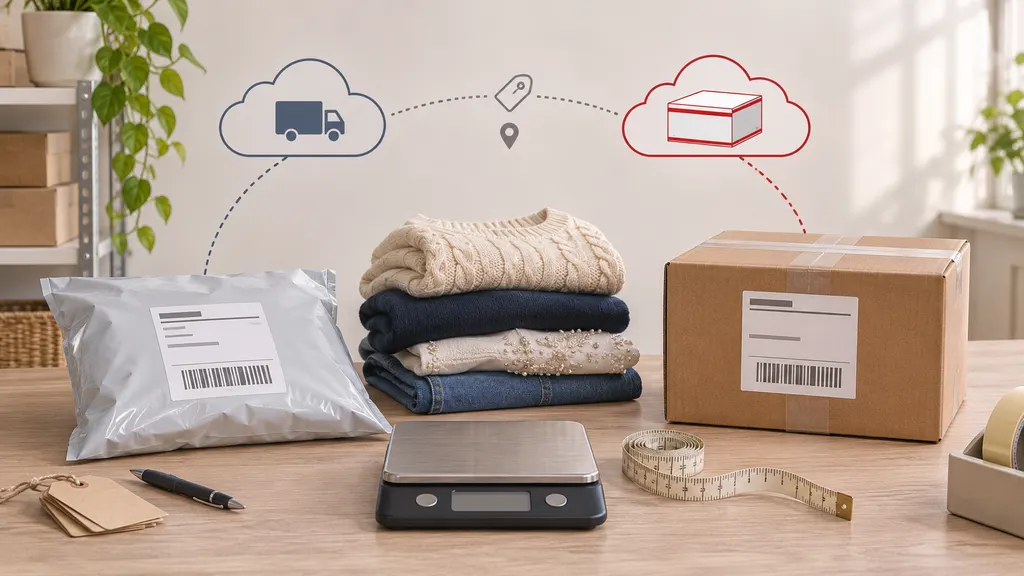
This guide explains how to package clothes, compare poly mailers with boxes and Flat Rate options, prepare the label, and avoid common fulfillment problems. It is written for individuals, online sellers, and small ecommerce teams shipping domestic clothing orders through USPS.
Choose the packaging before choosing the service
Clothing is usually easier to ship than breakable merchandise, but packaging still affects postage, damage risk, customer experience, and fulfillment speed. Start with the garment rather than the mail class.
- Soft, lightweight clothing: Fold the item, place it in a protective inner bag if needed, and use a durable poly mailer.
- Multiple garments: Use a larger poly mailer or a corrugated box if the order becomes heavy, bulky, or difficult to seal without stressing the seams.
- Structured garments: Jackets, shoes, hats, bags, and items with rigid components often travel better in a box.
- Premium or gift orders: Add an inner presentation package, but keep the outer packaging practical. Decorative packaging should not create unnecessary dimensional bulk.
- Returns-prone products: Consider packaging that can be opened and resealed without destroying the outer mailer.
Measure and weigh the completed parcel, not the garment by itself. Include the mailer, box, tissue paper, inserts, labels, and any protective material. USPS postage is based on the shipment details required for the selected service, and a small packaging change can affect the final cost or eligibility.
When a poly mailer is the best choice
A poly mailer is a lightweight plastic shipping envelope with a self-sealing adhesive strip. It is commonly used for shirts, leggings, sweaters, jeans, and other soft goods that do not need rigid protection. Its main operational advantage is low packaging weight and fast packing. It also takes less storage space than cartons.
Use a poly mailer when the clothing is dry, clean, completely enclosed, and unlikely to be damaged by bending or compression. Select a mailer large enough to hold the folded order without forcing the adhesive flap or stretching the seams. An oversized mailer can increase material use and make the package easier to snag, while an undersized mailer may split during handling.
A practical poly-mailer workflow is:
- Inspect the clothing for stains, loose threads, missing components, or incorrect sizing before packing.
- Fold the garment so that sharp corners, zippers, buckles, or tags do not press directly against the outer mailer.
- Use an inner poly bag or other suitable barrier when the garment needs additional protection from moisture or when presentation matters.
- Place the item in the outer mailer and leave enough room for the adhesive flap to close flat.
- Remove excess air without sharply compressing the garment, then seal the flap across its full width.
- Shake the sealed mailer gently and check that the item cannot escape through an unsealed edge.
- Apply the label to the flattest available surface. Do not place it over a seam, fold, or curved edge if that could obscure the barcode.
A poly mailer is not a substitute for protection. If a garment includes a rigid accessory, has a high-value finish, or must retain its shape, a box may reduce the risk of creasing or puncture. USPS also distinguishes between ordinary mailing packaging and specific USPS-provided packaging, so do not assume that a privately purchased mailer qualifies for every Flat Rate service.
USPS Ground Advantage for everyday clothing orders
USPS Ground Advantage is the general-purpose USPS ground service for many domestic parcels. USPS describes the service as including tracking and delivery in a stated range that can vary by package and destination. The service page lists eligibility and conditions that should be checked before mailing, including the applicable size, weight, and content rules.
For clothing sellers, Ground Advantage is often the starting point when the order does not need expedited delivery and does not fit a specialized flat-rate decision. It can be used with a poly mailer or a regular shipping box, provided the package meets USPS requirements. The exact postage depends on the shipment details and current USPS pricing, so use the USPS price calculator or a verified postage platform rather than relying on a static example.
Ground Advantage is a practical fit when:
- the order is a normal domestic parcel;
- the buyer accepts standard ground delivery rather than a guaranteed expedited service;
- the package is too large or too heavy for a convenient Flat Rate option;
- the shipment’s calculated postage is lower than the available Flat Rate alternative; or
- you want tracking information that can be shared with the customer.
Do not promise an arrival date solely because a service page shows a delivery range. Transit estimates can change with the origin, destination, operational conditions, weekends, holidays, and events outside the seller’s control. For an ecommerce store, describe the service accurately and separate handling time from carrier transit time.
When USPS Flat Rate is worth considering
USPS Flat Rate products use designated USPS packaging and charge a predetermined rate for eligible contents placed in the corresponding package, subject to the service’s rules and current pricing. The benefit is predictability: once the order fits the selected Flat Rate package, the distance within the eligible domestic market generally does not drive the same zone-based price calculation used for ordinary packages.
Flat Rate is not automatically cheaper. It can be useful for dense clothing orders traveling a long distance, but a lightweight poly mailer may cost less for a nearby or low-weight shipment. The result can also change when the order needs a larger Flat Rate package, extra protective material, or a different service level.
Use this comparison process:
- Pack the order in the smallest safe ordinary package and record its final weight and dimensions.
- Check the applicable Ground Advantage postage for the actual origin and destination.
- Check whether the order fits a USPS Flat Rate envelope or box without being forced or overpacked.
- Compare the current prices for the two eligible options, including any packaging cost and fulfillment effort.
- Choose the service that meets the customer promise while preserving a reasonable margin.
Flat Rate envelopes are more suitable for flexible, relatively flat contents. A thick sweater or several garments may not fit correctly even if the package can technically be closed. Do not use excessive force to make clothing fit: stressed seams can open, and an overfilled package can be rejected, damaged, or difficult to process. Check USPS packaging guidance and the current product restrictions before standardizing a Flat Rate workflow.
Poly mailer, regular box, or Flat Rate: a practical decision guide
| Option | Best fit | Main advantage | Watch for |
|---|---|---|---|
| Poly mailer with Ground Advantage | Soft, lightweight clothing | Low packaging weight and fast packing | Punctures, moisture exposure, and overstretched seams |
| Regular box with Ground Advantage | Structured, bulky, or multi-item orders | More shape and impact protection | Extra weight, storage, and potentially higher postage |
| USPS Flat Rate packaging | Orders that fit well and are cost-effective at the destination | Predictable pricing for an eligible package | Fit, service rules, current price, and overpacking |
The most efficient choice may differ by SKU. A store that sells thin T-shirts can use a poly-mailer rule, while the same store may need a box rule for boots or winter coats. Create packaging presets only after testing the actual packed dimensions and weights of representative orders.
Labeling, tracking, and customer communication
Enter the sender and recipient addresses carefully, including apartment, unit, and ZIP Code information. A missing unit number can create a delivery problem that packaging cannot solve. Confirm that the label matches the order before sealing the parcel, especially when processing several similar garments at once.
After the label is created, keep the tracking number connected to the correct order record. Carrier scans may not appear immediately after a label is printed, and tracking events can be added as the package moves through the network. Avoid telling a buyer that a parcel is in transit merely because a label was generated; use the carrier event status and your fulfillment records.
For a small ecommerce operation, a multi-carrier tracking page can help centralize shipment updates when orders use more than one carrier or when customers need a single place to check delivery progress. 17TRACK’s tracking service can be relevant for that post-purchase tracking use case, but it does not replace accurate packing, labeling, or USPS acceptance scans.
Keep the acceptance receipt or other shipment record when the order value, customer claim risk, or internal process warrants it. For higher-value merchandise, review the service’s available protection and claims conditions rather than assuming that tracking alone provides reimbursement.
Common mistakes when shipping clothes
- Choosing packaging by garment size alone: The final packed dimensions and weight are what matter for postage and handling.
- Using a thin retail bag as the outer package: A bag intended for shopping or storage may not withstand parcel handling.
- Overfilling a Flat Rate package: The package must close properly and remain suitable for mailing.
- Ignoring moisture protection: Clothing can be harmed by exposure even when the outer package arrives intact.
- Printing the wrong service label: Verify the selected service, package type, weight, and destination before handing over the parcel.
- Promising a fixed delivery date: Carrier estimates are not the same as a guaranteed arrival commitment.
- Failing to test a new mailer: Send a sample through your normal workflow and inspect the seal, barcode placement, and garment condition before adopting it at scale.
A repeatable USPS clothing-shipping checklist
- Confirm the item, size, color, condition, and destination address.
- Choose a poly mailer or box based on the garment’s protection needs.
- Fold and protect the clothing, then seal the package without overfilling it.
- Weigh and measure the completed parcel.
- Compare Ground Advantage with an eligible Flat Rate option when the order may benefit from predictable pricing.
- Buy and apply the correct label, keeping the barcode flat and visible.
- Obtain an acceptance scan or retain an appropriate mailing record.
- Send the tracking information and set expectations using handling time plus a carrier transit estimate.
- Monitor exceptions and respond quickly if the tracking record stops progressing or shows an address issue.
FAQ
Can I ship clothes in a USPS poly mailer?
Yes, soft clothing can generally be shipped in a durable poly mailer when the package is properly sealed and meets USPS mailing requirements. Use a box when the item needs shape or additional impact protection.
Is USPS Ground Advantage cheaper than Flat Rate for clothes?
There is no universal winner. Ground Advantage may be economical for lightweight clothing, while Flat Rate can be attractive for a dense order that fits a qualifying USPS package and is traveling far enough for the flat price to make sense. Compare the current postage for the actual shipment.
Can I use my own envelope for USPS Flat Rate?
Flat Rate products are tied to designated USPS packaging and service rules. Check the current USPS instructions for the specific Flat Rate product before using privately purchased packaging.
Should I put clothes in a plastic bag before the mailer?
An inner bag can provide an additional moisture and presentation barrier, particularly for premium orders or shipments exposed to uncertain handling conditions. It is not a substitute for a strong outer package.
How should an online seller handle USPS tracking?
Attach the tracking number to the correct order, distinguish label creation from a carrier acceptance event, and share realistic delivery expectations. If you sell through ecommerce channels, review tracking exceptions rather than waiting for the customer to report a problem.