How much Does It Cost to Ship Shoes? Cheapest Options by Carrier and Weight
Shipping shoes in the United States can cost roughly a few dollars for a lightweight, compact package and substantially more for heavy, oversized, expedited, or cross-border shipments. The cheapest option is determined by the packed shipment—not the shoes alone—along with the origin, destination, delivery speed, package dimensions, insurance, and additional services. For many single-pair shipments, the most economical choice is usually a ground service with a small box or poly mailer, but the final price must be confirmed with the carrier’s current calculator.
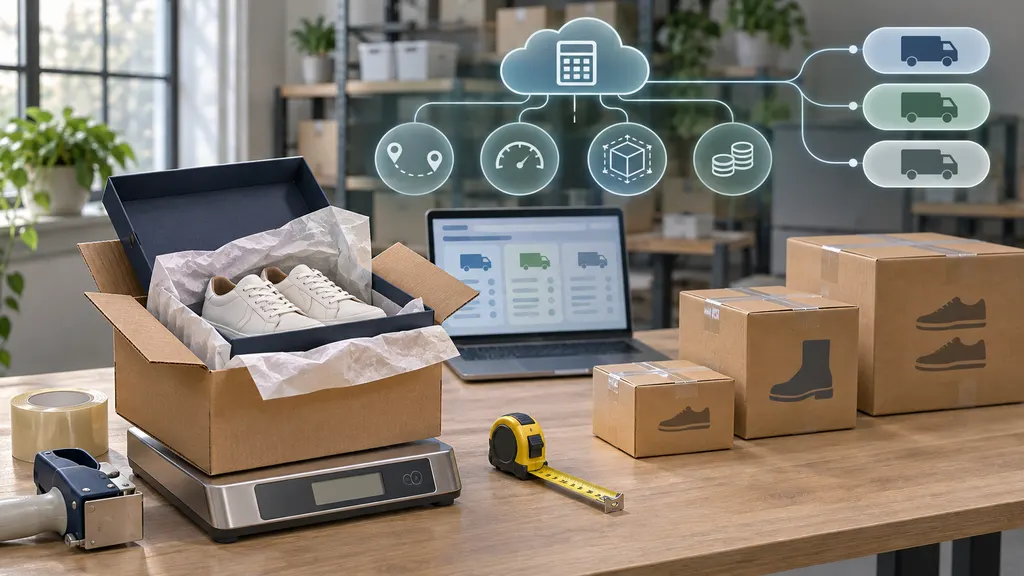
This guide explains how to estimate the cost, compare carriers by shipment profile, reduce avoidable fees, and choose packaging that protects the shoes without paying to transport unnecessary volume.
What determines the cost of shipping shoes?
Carriers generally calculate a shipment price from several variables. The weight of the packed parcel is only one of them.
- Origin and destination: A shipment traveling across a country normally costs more than one traveling a short regional distance. Residential delivery, remote locations, and certain delivery areas may also affect the total.
- Actual weight: This includes the shoes, shoebox, outer carton or mailer, padding, tape, labels, and any other packing material.
- Package dimensions: A large, light carton may be priced by dimensional weight rather than its scale weight.
- Delivery speed: Ground services are usually less expensive than two-day, overnight, or other time-definite services.
- Package type and handling: Oversize, additional handling, address correction, pickup, and other accessorial charges can change the final bill.
- Declared value and protection: Optional insurance or carrier-provided protection may add to the cost, depending on the carrier and service.
- Account or platform discounts: Business accounts, marketplaces, shipping platforms, and negotiated contracts may display rates different from public retail rates.
Because these variables interact, a generic “cost per pair of shoes” is not a dependable quote. A useful estimate requires at least the packed weight, packed dimensions, ZIP Codes or postal codes, service level, and whether the parcel is residential or commercial.
Typical weight categories for shoe shipments
Shoes vary widely. Lightweight sandals may weigh much less than boots, safety footwear, or athletic shoes with substantial packaging. The following categories are useful for planning, not guaranteed rate bands:
| Shipment profile | What usually affects the quote | Practical starting point |
|---|---|---|
| Lightweight single pair | Low actual weight, compact packaging, domestic delivery | Compare postal ground service with commercial ground rates |
| Standard pair with shoebox | The box may increase both weight and dimensional weight | Measure the final carton and compare all-in quotes |
| Heavy boots or work shoes | Actual weight, stronger packaging, and possible handling charges | Check ground services first, then compare regional pricing |
| Multiple pairs | Higher weight, larger carton, and possible dimensional pricing | Test whether splitting or consolidating lowers the total |
For ecommerce sellers, these categories should be replaced with measured packaging profiles. Record the packed weight and dimensions for each common shoe SKU, including returned and replacement shipments. That information makes rate shopping more reliable than estimating from product weight alone.
Cheapest carrier options by shipment profile
USPS: often worth checking for small, residential parcels
USPS can be attractive for compact domestic packages, particularly when the destination is residential and the shipment does not require a large carton. USPS Ground Advantage is a ground service designed for packages and includes tracking according to the USPS service description. It can be a useful first quote for a single pair of shoes when delivery speed is flexible.
USPS pricing still depends on weight, zone, package characteristics, and the postage channel used. The public price is not automatically the lowest available rate for every shipment. Compare the rate for the actual package, and confirm whether any service limitations, extra coverage, or packaging requirements apply.
USPS Priority Mail may be appropriate when faster delivery or included service features matter more than the lowest ground rate. It should not be assumed to be the cheapest option simply because the package is relatively light. Check the current quote and the expected delivery window before selecting it.
UPS Ground: useful for heavier or commercial shipments
UPS Ground is a common option for domestic parcel shipping and can be competitive for heavier packages, multiple pairs, or shipments moving between commercial addresses. Its quote may include more than the base transportation charge, so review the detailed estimate for residential, delivery-area, fuel, pickup, and other applicable fees.
UPS may be a practical choice when the shipment needs a stronger carton, a consistent parcel workflow, or a service level that fits a business’s fulfillment process. A lower headline rate is not necessarily a lower landed cost if the package is measured differently or if accessorial charges apply.
FedEx Ground and related ground services: compare with the same package data
FedEx ground services are another option for domestic shoe shipments. They can be suitable for standard cartons, heavier footwear, and business shipping accounts. The relevant comparison is the final quoted amount for the same origin, destination, package size, weight, and delivery requirement—not a comparison of advertised starting prices.
FedEx, like other parcel carriers, may use dimensional weight when package volume is high compared with actual weight. Sellers should check the carrier’s current dimensional-weight rules and rate tools before deciding that a lightweight shoe shipment will be inexpensive.
DHL and international services: compare the landed cost, not only postage
International shoe shipments require a broader calculation. Transportation is only one part of the cost. Duties, taxes, customs clearance, brokerage, remote-area charges, currency conversion, and delivery surcharges may affect the amount paid by the seller or recipient.
An international service can be appropriate when delivery speed, destination coverage, or customs handling is more important than the lowest base rate. Before dispatch, confirm the required commercial invoice information, product description, declared value, country of origin, and Incoterms or duty-payment arrangement. Footwear can also be subject to destination-specific import rules, so the seller should verify requirements for the receiving country.
How to compare shipping prices accurately
- Pack the shoes as they will actually ship. Include the shoebox, outer carton or mailer, paper, inserts, tape, and label.
- Measure the outside dimensions. Record length, width, and height at the widest practical points. Do not use product dimensions if the final package is larger.
- Weigh the sealed parcel. Round according to the carrier’s published rules rather than assuming a kitchen scale reading is the billable weight.
- Enter the same shipment details into each carrier’s official calculator. Use identical origin and destination information, package dimensions, weight, ship date, and service speed.
- Compare the total displayed price. Look for fuel, residential, delivery-area, pickup, signature, declared-value, and other fees.
- Check delivery requirements. A cheaper service may not meet the customer promise, marketplace handling time, or replacement-shipment deadline.
- Save the quote assumptions. Rates can change, and a saved record helps explain why a later invoice differs from an estimate.
For recurring ecommerce shipments, create a rate table by package profile rather than by shoe style alone. A seller might maintain profiles for a single pair in a mailer, a single pair in a shoebox, two pairs in one carton, and a heavy boot shipment. Each profile should include packed dimensions, weight, preferred services, and a backup option.
How dimensional weight can make shoes more expensive
Dimensional weight converts package volume into a billable weight using a carrier-specific divisor. The general concept is:
Dimensional weight = length × width × height ÷ dimensional divisor
The divisor and rounding method vary by carrier, service, package type, and destination. The carrier generally compares dimensional weight with actual weight and bills according to the applicable rule. Do not use a single industry-wide divisor for every quote.
Shoe boxes can create a relatively large rectangular package even when the shoes are light. Empty space inside an outer carton adds volume without improving protection. To control dimensional charges, use a snug but protective package, avoid oversized cartons, and test whether a durable mailer is appropriate for the product. Fragile, premium, or easily crushed shoes may still require a rigid box.
Packaging choices that reduce total cost
- Use the smallest safe package: Remove unused space while leaving enough room for cushioning and product protection.
- Choose packaging by product risk: A mailer may work for durable footwear, while structured shoes or retail packaging may need a carton.
- Prevent movement: Paper, tissue, or correctly sized inserts can protect the shoes without adding excessive volume.
- Measure before buying supplies in bulk: A slightly smaller carton can reduce dimensional weight across many orders.
- Separate branded packaging from transit packaging: A retail box can be protected inside a compact outer package when presentation matters.
- Review returns: A package that is easy for customers to reuse can reduce repacking time and damage during reverse logistics.
The cheapest package is not always the package with the lowest postage. Damage, replacement shipments, refunds, customer support, and return handling can exceed a small saving on the outbound label. Evaluate packaging by total fulfillment cost.
Which option is cheapest for your shipment?
For one lightweight domestic pair, start by comparing USPS Ground Advantage with the ground rates from UPS and FedEx using the final packed dimensions. For heavier boots, multiple pairs, or commercial destinations, include UPS Ground and FedEx Ground early in the comparison. For urgent delivery, compare the promised delivery date and the full expedited charge rather than choosing a carrier based only on its ground pricing.
For international orders, compare door-to-door landed cost and customs responsibilities. A lower transportation quote may not remain lower after duties, taxes, brokerage, and surcharges. If a business ships regularly, negotiated carrier rates or a shipping platform may change the result, but the seller should validate the actual billed amount with test shipments or invoices.
FAQ
Is it cheaper to ship shoes in a box or a poly mailer?
A poly mailer can be less expensive when the shoes are durable and the package remains adequately protected. A box may be necessary for structured, fragile, premium, or retail-packaged footwear. The correct comparison includes postage, packaging cost, damage risk, and return handling—not postage alone.
Does shoe weight include the shoebox?
Yes. The carrier charges for the shipment as packed. Include the shoes, shoebox, outer packaging, cushioning, tape, and label when weighing the parcel.
What is the cheapest way to ship shoes domestically?
There is no single cheapest carrier for every domestic shipment. For a compact, lightweight parcel, compare USPS ground service with UPS and FedEx ground quotes. For heavier or multi-pair cartons, commercial ground services may be competitive. Use the same package data for each quote.
How can I avoid dimensional-weight charges?
Use the smallest protective package that fits the shoes, reduce empty space, and check the dimensional-weight rules for the selected service. Measure the sealed parcel before purchasing postage.
Should I insure a shipment of shoes?
That depends on the product value, carrier terms, and business risk. Review the carrier’s coverage, exclusions, claim requirements, and declared-value options. Keep purchase records, packing documentation, and proof of shipment if protection is important.
Do international shoe shipments cost more than domestic shipments?
They often involve more cost components, including international transportation, duties, taxes, customs processing, and possible brokerage or remote-area fees. The final amount depends on the destination and shipment terms, so use a destination-specific quote and verify import requirements.
Sources
- USPS Ground Advantage — official service information.
- USPS Postage Calculator — official rate estimation tool.
- UPS Calculate Time and Cost — official UPS shipping quote tool.
- UPS Dimensional Weight — official explanation of dimensional pricing.
- FedEx Rate Tools — official FedEx rate and transit-time resources.
- FedEx Dimensional Weight — official dimensional-weight guidance.