How Shipment Tracking APIs Help Businesses Investigate Item Not Received Claims
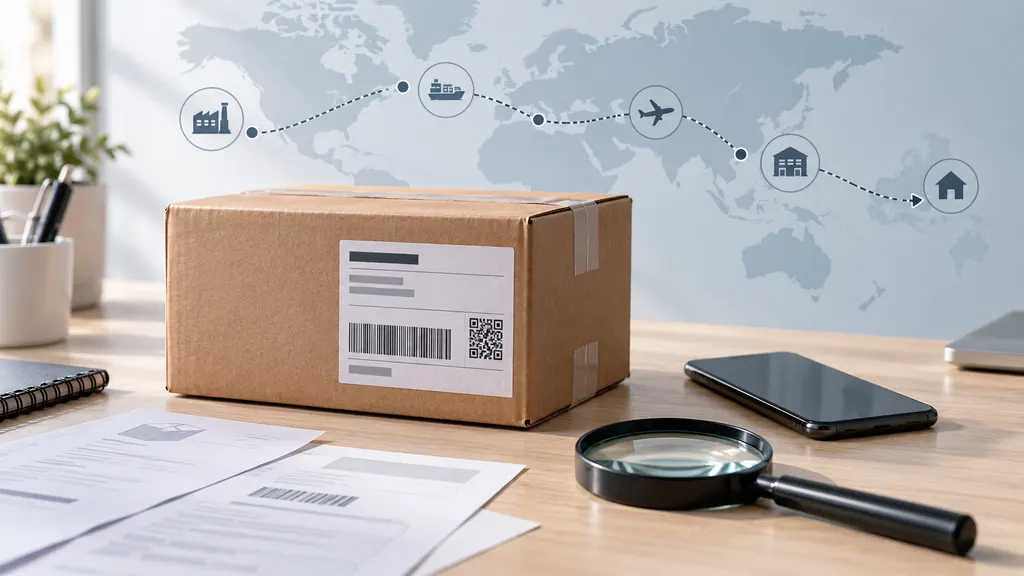
Shipment tracking APIs help businesses investigate Item Not Received claims by bringing shipment events into the systems where support and operations teams manage orders. They help establish whether a parcel was handed to a carrier, where its journey stopped, and whether a delivery event needs further investigation. The strongest use of this data is to build a documented case, not to treat a “delivered” status as automatic proof that the customer received the purchase.

For ecommerce merchants, the practical goal is to reach a defensible resolution: locate the shipment, request a carrier investigation, replace or refund the order when appropriate, or prepare relevant evidence for a payment dispute. A tracking API supports those decisions, but it does not replace carrier records, customer communication, or the rules governing the transaction.
What an Item Not Received investigation needs to establish
An Item Not Received claim, often abbreviated as INR, means the buyer says the purchased goods did not arrive. It describes the reported problem, not its cause. The underlying issue might be a delayed shipment, an incorrect address, a failed delivery attempt, a missing parcel, a misdelivery, or a package taken after delivery. The tracking record alone rarely distinguishes all of these possibilities.
Start with three questions:
- Was the correct shipment associated with the order? Confirm the tracking number, carrier, shipment date, and any separate packages.
- What does the carrier record establish? Separate label creation, physical acceptance, movement, attempted delivery, and recorded delivery.
- What remains unverified? Identify missing address information, unavailable delivery evidence, unexplained handoffs, or a conflict between the customer's account and the carrier record.
Keep the customer-service investigation separate from any carrier compensation claim or payment dispute. These processes may concern the same shipment, but they can have different evidence requirements, deadlines, and eligible claimants. Opening a carrier inquiry does not automatically pause another party's deadline.
What a tracking API adds to the evidence
Without an integration, an agent may repeatedly copy tracking numbers into carrier websites and paste updates into a ticket. An API can make tracking information available alongside the order and customer conversation. The operational benefit is easier access to a consistent shipment history, especially when orders involve multiple carriers or packages.
The information returned depends on the carrier, tracking service, shipment, and integration. Do not assume that every API response includes a delivery photo, signature, full destination address, or precise location.
A timeline rather than a single status
A latest-status label is useful for triage, but the event history is usually more useful for investigation. “In transit” might follow a recent facility scan or an extended gap with no new movement. “Delivered” might appear after a last-mile handoff that needs to be checked with another carrier.
Where available, retain the original event description, event time, location, reporting carrier, and the time your system retrieved the update. A normalized category can help route cases, but the original wording can contain details that the category omits.
A connection between shipment evidence and order evidence
Tracking data becomes more useful when connected to the correct order, fulfillment record, shipping label, and support ticket. This helps prevent a common investigation error: using a valid tracking record that belongs to a different parcel or covers only part of the order.
For split shipments, map the affected items to their packages. One delivered parcel does not establish delivery of every item in the order. Similarly, a carrier delivery scan does not establish what was packed inside the parcel; packing records and shipment weights may need separate review.
A practical workflow for investigating a claim
1. Validate the order-to-shipment match
Confirm the order number, disputed items, fulfillment location, carrier, and tracking number. Check for replacements, canceled labels, reused internal references, and multiple shipments. Compare the address supplied at checkout with the shipping label through an authorized internal process.
Avoid asking the customer to publish their full address or tracking details in a public channel. If verification is necessary, use an authenticated account or private support conversation.
2. Retrieve the event history and record its freshness
Capture the shipment history when the claim is opened. Record both the latest carrier-event time and the time the integration last checked for information. These answer different questions: when something reportedly happened, and how recently your system checked.
If the API record looks incomplete or conflicts with information supplied by the customer, consult the relevant carrier's official tracking record. Do not assume that an absent event proves the parcel has not moved. Equally, do not describe an old scan as a current location.
3. Route the case according to the unresolved issue
| Tracking evidence | Next investigation step | What not to conclude |
|---|---|---|
| Label created, with no visible acceptance event | Check warehouse dispatch records and carrier handover evidence. | Label creation alone proves carrier possession. |
| Movement followed by an unexplained gap | Review the route, service expectations, and carrier inquiry options. | A scan gap automatically means the parcel is lost. |
| Attempted delivery or collection status | Confirm the carrier's instructions and communicate the available next steps. | The customer has already received the parcel. |
| Delivered, but receipt is disputed | Review available delivery evidence and request a delivery-location investigation when needed. | The delivery status disproves the customer's account. |
| Return movement | Establish the return reason and follow the parcel back to the receiving location. | A return event means the merchant has already recovered the goods. |
4. Obtain the evidence the tracking feed does not provide
For a disputed delivery, request any relevant proof of delivery through an authorized carrier channel. Depending on the service, that might include a signature, delivery photograph, or additional delivery-location information. Such evidence may not exist or may not be accessible through the tracking API.
Ask the customer focused, neutral questions: whether a household member accepted the parcel, whether a reception desk handles deliveries, or whether the reported delivery location matches their property. Do not require unsafe searches or assume the buyer is responsible for investigating the carrier's mistake.
If the carrier offers a missing-mail or shipment-search process, follow its service-specific instructions. For example, USPS publishes an official Missing Mail process. Use the applicable carrier's requirements rather than applying one carrier's process to every shipment.
5. Record the resolution and its basis
The final case note should explain what was established, what remained uncertain, and why the business chose the resolution. Distinguish a confirmed delivery error from a goodwill replacement or a refund issued before the carrier investigation finished.
Give the customer a clear next action and an owned follow-up. Internally, assign responsibility for any open carrier claim so that closing the support ticket does not abandon the recovery process.
Build an evidence packet, not a status screenshot
A useful investigation packet connects the order, shipment, customer report, and decision. A screenshot showing “delivered” may be relevant, but it leaves important questions unanswered if it does not identify the disputed shipment or establish the information required by the reviewing party.
- Order record: Order identifier, disputed items, transaction reference, and relevant fulfillment records.
- Shipment record: Carrier, tracking number, package-to-item mapping, and shipping-label details.
- Tracking history: Original event descriptions, timestamps, and retrieval time where available.
- Supporting evidence: Carrier correspondence, proof of delivery, and relevant dispatch or packing records.
- Customer communication: The reported issue, verification questions, responses, and commitments made.
- Decision record: Resolution, reasoning, owner, and any outstanding follow-up.
For a payment dispute, organize the submission around that provider's applicable requirements. PayPal's U.S. Seller Protection terms, for example, distinguish proof of shipment from proof of delivery and impose eligibility conditions. A generic tracking export should not be assumed to satisfy those terms, another region's terms, or a different payment provider's process.
Where 17TRACK fits in the investigation workflow
For businesses considering a tracking integration, 17TRACK Tracking API is a relevant starting point for bringing shipment tracking into an internal workflow. Use its official API documentation to evaluate the integration against the carriers, shipment routes, and case-management requirements your team actually uses.
The integration should be evaluated as a source of shipment visibility, not as an automatic INR adjudication system. Before deployment, test whether the returned information helps agents distinguish pending handover, delayed movement, attempted delivery, and disputed delivery. Separately confirm access to any carrier evidence that is necessary for your claims process.
A useful pilot includes a straightforward delivery, a delayed parcel, a split order, and a delivered-but-not-received case. Check whether agents can reconstruct each history without losing the original carrier wording or attaching events to the wrong order. Do not judge suitability only by whether a dashboard displays the latest status.
Automate routing before automating decisions
Good early automation moves information and assigns work. It can attach tracking history to a ticket, flag missing shipment identifiers, identify records that need refreshing, and route a disputed delivery to a specialist. These actions reduce repetitive work without deciding what happened to the parcel.
Automatic rejection based only on a delivered status is a poor default. The same applies to automatically labeling a customer fraudulent because tracking and receipt reports disagree. A mismatch is a reason to investigate, not a finding of intent.
For implementation, plan for duplicate updates, events received out of order, temporary API failures, and time-zone differences. If using webhook notifications, follow the provider's documented security and retry behavior. Preserve event time separately from receipt time, restrict access to personal information, and establish an appropriate retention policy.
Measure whether the workflow improves investigations through outcomes the business can observe: time to first meaningful response, time spent collecting evidence, reopened cases, and cases with incomplete documentation. Faster closure is not an improvement if customers must reopen unresolved claims.
FAQ
Does a delivered tracking status prove the buyer received the order?
It establishes that the tracking source reports a delivery event. It does not necessarily establish who received the parcel, whether it reached the correct location, or which items it contained. Review the supporting evidence and the requirements relevant to the case.
Can a shipment tracking API provide delivery photos or signatures?
Availability depends on the carrier, shipping service, access permissions, and API. Do not assume that a tracking integration includes these records. Confirm whether they are returned directly, linked separately, or must be requested from the carrier.
How long should a merchant wait before replacing a missing order?
There is no universal waiting period. Consider the promised delivery terms, applicable consumer law, carrier investigation process, product circumstances, and any payment-dispute deadlines. Give the customer a specific follow-up commitment rather than repeatedly asking them to wait without a plan.
Can tracking data automatically win an INR payment dispute?
No. Tracking may support a response, but the reviewing party applies its own rules and evidence requirements. Match the shipment to the transaction, provide the required documentation, and submit it within the applicable deadline.
What if the API and carrier website show different information?
Compare retrieval times, tracking identifiers, carrier selection, and the original event descriptions. Refresh the record and investigate any material discrepancy with the provider or carrier. Preserve both records when relevant rather than silently replacing the evidence already used in a decision.
Sources
- 17TRACK Tracking API — official starting point for the tracking integration discussed in this guide.
- 17TRACK API documentation — technical reference for evaluating implementation requirements.
- USPS: Missing Mail and Lost Packages — official carrier guidance for missing-mail searches.
- PayPal U.S. Seller Protection terms — transaction eligibility and proof requirements; requirements should be checked for the applicable jurisdiction and transaction.