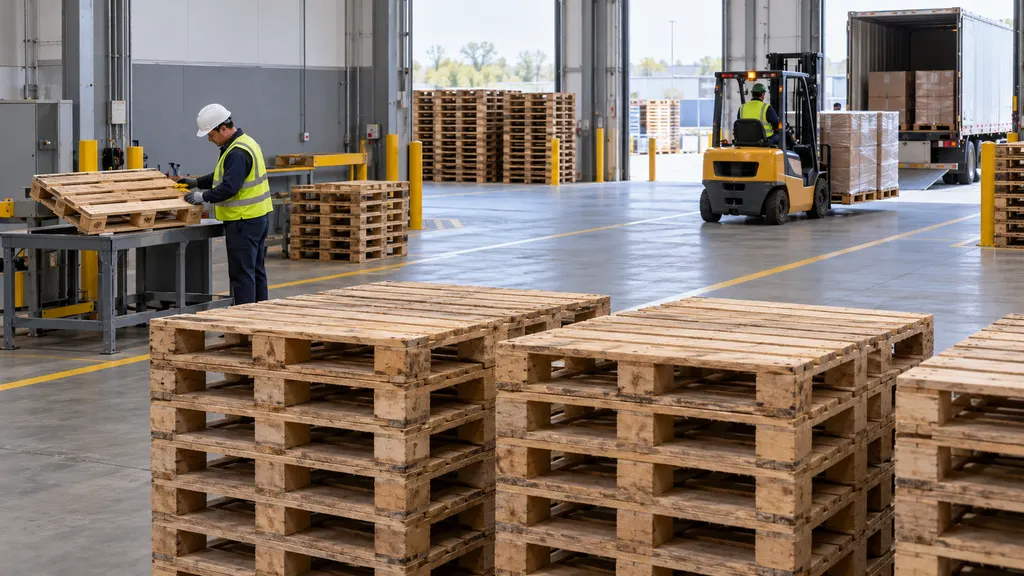
Hoisting Machinery
What Is Hoisting Machinery?
Hoisting machinery is equipment used to raise, lower, and hold loads through a controlled lifting mechanism. In logistics, it is used to handle cargo, machinery, containers, and other goods that cannot be moved safely or conveniently by hand. Examples include standalone hoists and cranes fitted with hoisting mechanisms. Some systems provide mainly vertical movement; others combine lifting with horizontal travel to position a load.
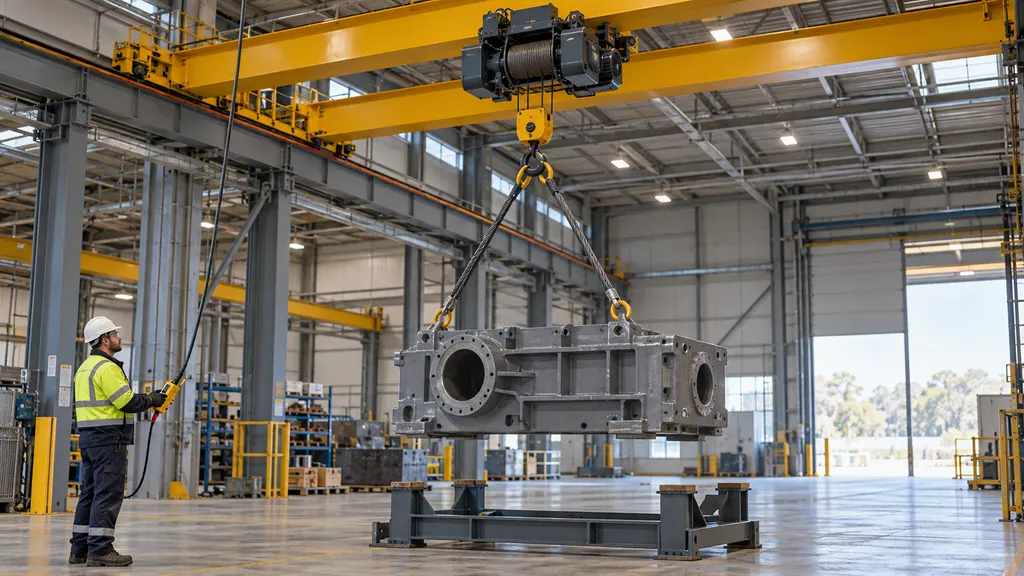
The expression is a broad technical description rather than a single, universally defined regulatory category. Its precise scope depends on the document, industry, and jurisdiction. A warehouse equipment specification may use it mainly for hoists and overhead cranes, while a safety framework may use the broader term lifting equipment, which can include other machines and accessories.
In a supply chain, hoisting machinery performs a physical handling function. It does not itself manage inventory records, arrange transportation, or track shipments, although its operation may form part of a receiving, storage, loading, or dispatch process.
How Hoisting Machinery Works
A hoisting mechanism applies mechanical force to lift a load and controls its descent. Depending on the design, it may use a chain, wire rope, drum, gears, hydraulic components, or another lifting arrangement. Power may come from manual effort, an electric motor, or another suitable source.
In a suspended-load system, the load is connected to a hook or other attachment through an appropriate lifting accessory. The mechanism transfers the load through the hoist and its supporting structure. Brakes and other holding arrangements control movement and help prevent unintended lowering. The supporting beam, trolley, crane structure, or anchorage must also be suitable for the forces involved.
Several components can therefore determine whether a lift is acceptable. The hoist's capacity alone does not establish the capacity of the complete arrangement. Supporting structures, attachment points, slings, lifting beams, and the way the load is connected all matter. Where a crane's permitted capacity changes with its configuration or working radius, the applicable load chart must be considered.
Common Equipment and Related Terms
The following terms describe different equipment functions and relationships. They are not mutually exclusive categories: a crane can incorporate a hoist, and both may fall within a broader definition of lifting equipment.
| Term | Meaning | Logistics application |
|---|---|---|
| Hoist | A mechanism primarily used to raise and lower a load. | Lifting a heavy component from a transport frame. |
| Overhead crane | A crane with a bridge travelling along an overhead runway, usually with a trolley-mounted hoisting mechanism. | Moving heavy goods across a warehouse bay. |
| Gantry crane | A crane with a bridge supported by legs rather than solely by elevated building runways. | Handling cargo in a yard or designated loading area. |
| Jib crane | A crane with a projecting arm that supports a lifting mechanism within a defined working area. | Positioning goods at a packing or maintenance station. |
| Lifting accessory | Equipment used to connect or support a load during lifting, such as a sling or lifting beam. | Connecting a crated machine to a crane hook. |
| Material-handling equipment | A broader group of equipment used to move, store, or control materials. | Includes lifting equipment as well as conveyors and other handling systems. |
A forklift lifts a load on forks or another attachment rather than necessarily suspending it from a hoist. It is therefore not synonymous with a hoist, although it is lifting equipment under relevant safety frameworks. Similarly, a conveyor moves goods along a defined route but is not normally described as hoisting machinery simply because part of its route rises.
Use in Logistics and Cross-Border Commerce
Receiving and warehouse handling
At receiving, hoisting machinery may transfer heavy goods from a delivery vehicle to a staging area or inspection position. Within a warehouse, it can place an item on a suitable support, move it between workstations, or assist with maintenance and repacking. Its usefulness depends on the load, available space, building structure, and handling frequency.
For example, an online retailer selling industrial equipment may receive a crated machine that cannot be handled using its parcel-processing equipment. A suitable crane or hoist may be needed to remove the machine from its transport frame. This is an illustrative handling scenario, not a requirement that applies to all ecommerce warehouses.
Loading and cargo transfer
At a terminal, depot, or loading area, cranes can transfer cargo between transport vehicles, storage positions, and other handling systems. Container handling requires equipment and attachments suited to the container and operation. A general-purpose hoist should not be assumed suitable merely because its stated capacity exceeds the cargo's weight.
Hoisting machinery is also relevant to cargo that does not fit standard parcel or pallet workflows. Heavy machinery, large fabricated components, and unusually shaped goods may require a planned lifting arrangement. The choice of equipment depends on both the load and the physical conditions at the origin and destination.
Cross-border shipment planning
International movement can introduce additional handling points, making clear cargo information important. Relevant details may include gross weight, dimensions, centre of gravity, designated lifting points, and handling restrictions. A transport crate or pallet does not automatically provide a suitable lifting point for a crane.
Where special lifting arrangements are needed, the shipper, transport provider, and receiving site should establish who supplies the equipment and who controls the operation. These are operational arrangements, separate from customs classification. The phrase hoisting machinery alone is not enough to determine a tariff classification, import requirement, or permission to operate equipment in a destination country.
Planning a Lifting Operation
The following sequence explains the main planning considerations. It is not a substitute for equipment instructions, a site-specific lifting plan, or the judgement of competent personnel. The UK Health and Safety Executive identifies planning, supervision, and safe execution as central elements of lifting operations.
- Establish the load characteristics. Confirm the weight, dimensions, stability, centre of gravity, and available lifting points. Include packaging or attachments where they form part of the lifted load. Do not rely on an unsupported estimate when selecting equipment.
- Check the complete lifting arrangement. Confirm that the machine, supporting structure, accessories, and attachment method are suitable. Consider sling configuration, load balance, and any capacity restrictions associated with the equipment's operating position.
- Assess the location and movement path. Check headroom, obstructions, clearance, visibility, and the landing area. Where mobile equipment or ground-supported structures are involved, supporting conditions also require assessment.
- Assign responsibilities and communication. Identify the operator, people attaching the load, and anyone directing movement. Establish how instructions will be communicated, especially where the operator cannot see the complete travel path.
- Confirm equipment condition. Carry out applicable pre-use checks and verify that required inspection or examination arrangements are in place. Damaged or unsuitable equipment should not be treated as acceptable merely because it has lifted a similar load before.
- Control and complete the movement. Keep people clear of the suspended load and relevant danger areas. Move the load under control and lower it onto a prepared, stable support before releasing the lifting accessories.
Planning should reflect the operation's complexity and risk. A repeated lift under controlled conditions and an unfamiliar lift involving an irregular load do not necessarily need identical arrangements. Changes in load, equipment, location, or personnel can require the plan to be reviewed.
Capacity, Inspection, and Safety Boundaries
Rated capacity is conditional. A marked capacity applies to specified equipment and operating conditions. It does not mean that every object below that weight can be lifted safely in any configuration. Load attachment, equipment position, accessory capacity, and structural support remain relevant.
Lifting accessories have their own limitations. Sling material, condition, configuration, and angle can affect suitability and allowable loading. Sharp edges and unsuitable contact surfaces can create additional hazards. OSHA's sling requirements address identification, safe operating practices, and inspection within the US regulatory context.
Inspection and maintenance serve different purposes. Maintenance keeps equipment in suitable working condition; inspection or examination assesses its condition and may identify defects requiring action. Neither should be assumed to replace the other. Requirements depend on the equipment and applicable legal framework.
Cargo lifting does not automatically permit personnel lifting. A machine capable of raising goods is not necessarily designed or authorised to raise people. Personnel lifting introduces distinct equipment and procedural requirements that cannot be inferred from a cargo capacity marking.
Legal terminology also varies. For example, the UK's Lifting Operations and Lifting Equipment Regulations address lifting equipment and operations, while US OSHA provisions include equipment-specific requirements for overhead and gantry cranes and separate provisions for slings. These sources illustrate relevant safety principles but should not be treated as a single worldwide rulebook.
Information to Check in Equipment and Shipping Documents
When the term appears in a warehouse specification, cargo-handling instruction, or procurement document, readers should identify what equipment is actually intended. A useful review includes:
- The equipment type, operating environment, and intended lifting task.
- The required capacity and any configuration-dependent restrictions.
- The load's documented weight, lifting points, and centre-of-gravity information where necessary.
- The required lifting accessories and their compatibility with the load.
- The available lifting height, horizontal reach, and travel clearances.
- The supporting structure or ground conditions and the intended landing position.
- The responsibilities for operation, inspection, maintenance, and supervision.
These details turn a broad equipment label into an identifiable handling requirement. They also help distinguish a physical lifting problem from a transport-booking, packaging, or documentation problem.
QA
What is the difference between a hoist and a crane?
A hoist primarily raises and lowers a load. A crane supports a hoisting mechanism and provides a working arrangement for positioning the load, often including horizontal movement. A hoist can therefore be a component of a crane.
Is all warehouse handling equipment hoisting machinery?
No. Warehouse handling equipment is a broader category. Conveyors, pallet-moving equipment, storage systems, and hoisting machinery perform different functions, even when they operate within the same workflow.
Is lifting capacity the only factor when choosing hoisting machinery?
No. Load dimensions, centre of gravity, attachment points, operating configuration, supporting conditions, clearances, and accessory limitations also affect whether a lifting arrangement is suitable.
Does hoisting machinery have one universal legal definition?
No. It is a broad technical expression. Applicable definitions and obligations depend on the equipment, operation, and jurisdiction, so the relevant regulatory text and equipment documentation must be consulted.
Sources
- US Occupational Safety and Health Administration: 29 CFR 1910.179, Overhead and gantry cranes — Definitions, rated loads, equipment requirements, inspections, and operating practices within the provision's scope.
- US Occupational Safety and Health Administration: 29 CFR 1910.184, Slings — Sling identification, loading limitations, safe operating practices, and inspection requirements.
- UK Health and Safety Executive: Lifting Operations and Lifting Equipment Regulations 1998 — Scope of lifting equipment, suitability, planning, supervision, and thorough examination in the UK framework.
- UK Health and Safety Executive: Planning and organising lifting operations — Risk-based planning, responsibilities, supervision, and safe execution of lifting operations.