Global Individual Asset Identifier(Giai)
What Is a Global Individual Asset Identifier?
A Global Individual Asset Identifier (GIAI) is a GS1 identification key used to uniquely identify an individual asset, such as a forklift, conveyor component, computer, or piece of transport equipment. In logistics and supply chain management, it provides a consistent reference for the physical asset across records, locations, and operational systems. It identifies the asset itself, rather than a shipment, customer order, or category of products.
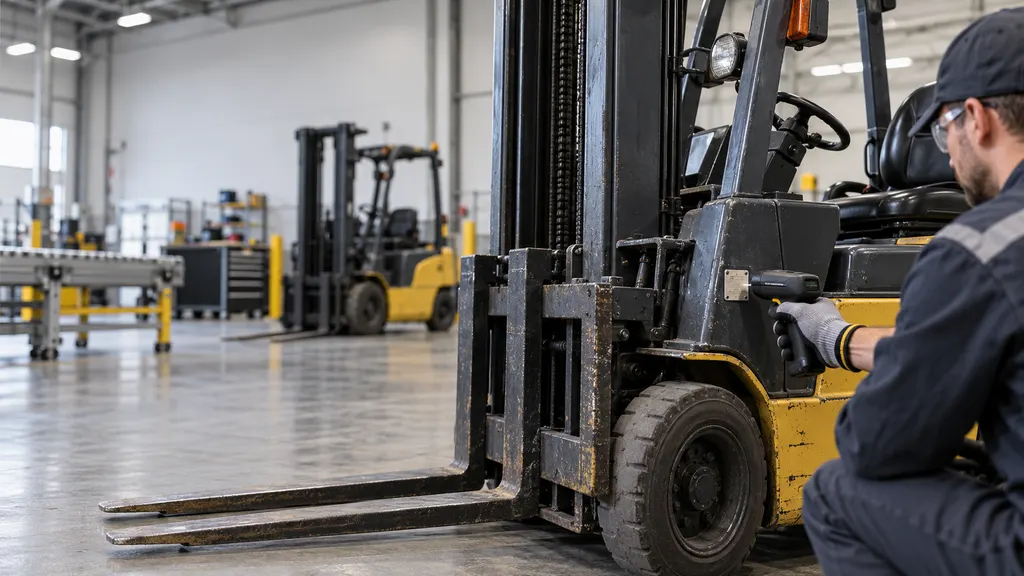
A GIAI can connect a particular asset with information about its location, maintenance, use, and lifecycle. The identifier does not contain all of that information. Instead, business systems use it as a reference to retrieve or exchange the relevant records. Its uniqueness depends on allocation according to GS1 rules, including the correct use of a GS1 Company Prefix and an individual asset reference.
Structure and Representation
A GIAI consists of a GS1 Company Prefix followed by an individual asset reference. The prefix provides the allocation namespace, while the asset reference distinguishes one asset within that namespace. The complete key can contain up to 30 characters. Because GS1 Company Prefixes vary in length, the space available for the individual asset reference also varies.
| Element | Purpose | Important distinction |
|---|---|---|
| GS1 Company Prefix | Provides the prefix under which the identifier is allocated. | It is not a location code or a reliable statement of manufacturing origin. |
| Individual asset reference | Distinguishes a specific asset within the allocating organization's namespace. | It can be alphanumeric, subject to the applicable GS1 syntax rules. |
| Application Identifier 8004 | Indicates that a GS1 element string contains a GIAI. | It describes the following data field and is not part of the GIAI itself. |
Unlike several other GS1 identification keys, the GIAI does not have a separate check digit. This makes validation of its structure and allocation particularly important: software should not assume that every GS1 identifier uses the same numeric format or check-digit calculation.
In human-readable text associated with a GS1 barcode, the Application Identifier may appear as (8004) before the asset identifier. The parentheses make the Application Identifier recognizable to people; they are not encoded as part of the barcode data. A scanner or receiving application must interpret the GS1 data structure correctly rather than treating every visible character as part of the asset key.
Barcodes and RFID
A GIAI is an identifier, not a specific label technology. It can be carried in suitable GS1 barcodes or represented in an Electronic Product Code (EPC) format for radio-frequency identification (RFID), according to the relevant standards. The choice of carrier depends on the reading environment, equipment, and application requirements.
Representation rules still matter. A value that is valid in a GS1 element string should not be assumed to fit every RFID encoding without checking the applicable EPC scheme and its constraints. An implementation should distinguish the underlying asset identity from the barcode syntax, EPC representation, or database field used to carry it.
How GIAI Is Used in Logistics and Ecommerce
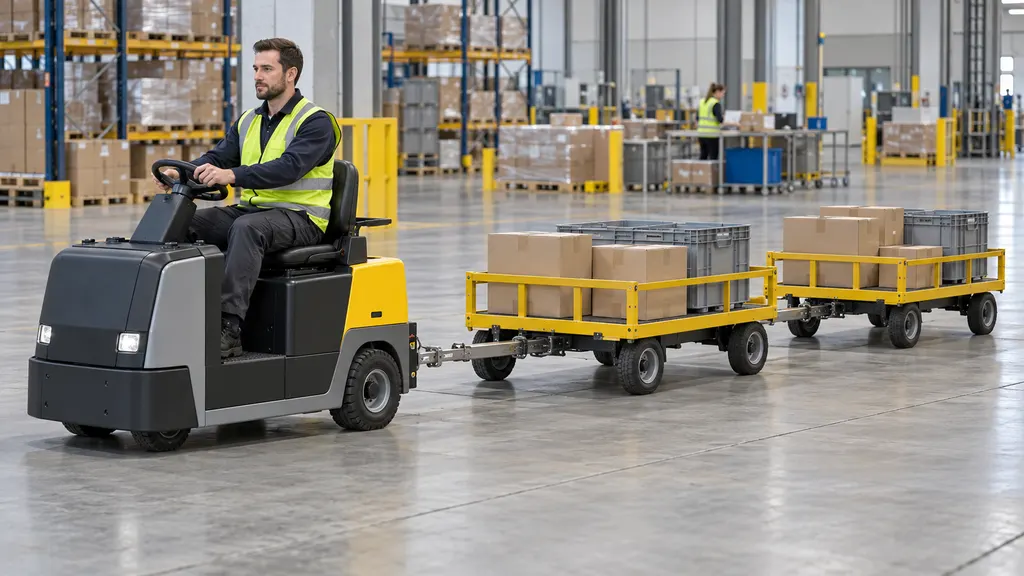
GIAI is relevant to the equipment and other individual assets that support commerce. A warehouse may use it for a forklift, a mobile terminal, or a sorting machine. An ecommerce operator may encounter it in an asset register, maintenance application, equipment label, or interface between warehouse systems and enterprise asset management software.
The distinction between an asset and the goods it handles is central. A conveyor can retain its GIAI while thousands of different orders pass over it. A forklift can retain its identifier as it moves between work areas. Neither identifier becomes the identity of the goods being handled.
| Illustrative asset | Possible use of its GIAI | Information held separately |
|---|---|---|
| Warehouse forklift | Link the physical machine to its equipment record. | Inspection history, service tasks, and assigned operating location. |
| Handheld warehouse terminal | Distinguish one device from otherwise identical devices. | Device assignment, repair history, and configuration records. |
| Conveyor component | Identify an individually maintained component. | Installation position, replacement records, and maintenance instructions. |
| Transport equipment | Maintain a consistent asset reference across operational handovers. | Custody events, inspection results, and current status. |
These examples describe possible implementations, not requirements that every organization use GIAI for those asset categories. Selection depends on the business object being identified and any applicable sector standards or trading-partner agreements.
Cross-border operations
In an international operation, a shared asset identifier can help participating organizations refer to the same piece of equipment without relying solely on their separate local equipment numbers. However, a GIAI does not itself provide customs clearance, establish ownership, prove origin, or replace transport documents. Any regulatory or documentary requirements remain separate.
Likewise, an asset crossing a border does not automatically become visible to all parties because it carries a GIAI. Visibility requires readable identification, compatible software, recorded events, and permission to exchange the relevant information.
How an Asset Identification Workflow Works
The following workflow illustrates how an organization might implement GIAI. It is an operational outline, not a substitute for GS1 allocation and data-carrier specifications.
- Define the object being identified. Decide whether the record represents an entire machine, a replaceable component, or another individual asset. Avoid assigning one identifier ambiguously to several physical objects.
- Allocate the identifier. Use the appropriate GS1 Company Prefix and an individual asset reference that follows the applicable rules. Check that the resulting key is unique within the allocation process.
- Create the asset record. Associate the identifier with descriptive information, such as equipment type, manufacturer serial number, service documentation, and internal asset number.
- Select and apply the carrier. Choose a supported barcode or RFID representation and a physical marking suitable for the operating environment. Confirm that placement permits reliable reading.
- Capture operational events. Read or enter the identifier when the asset is received, assigned, inspected, moved, repaired, or retired. Store the event details in the relevant system.
- Maintain identity and record continuity. Preserve the link between the physical asset and its record when labels are replaced or systems are migrated. Handle retirement and subsequent allocation decisions according to the applicable GS1 rules.
For example, a retailer may identify each warehouse terminal with a GIAI. When a terminal is sent for repair, staff can use that identifier to open the correct service record. The repair record can then remain associated with the same device when it returns to a different workstation. This does not require the GIAI to contain the workstation, repair date, or fault description.
GIAI Compared with Related Identifiers
Several identifiers may appear in the same warehouse or transport process. They identify different business objects and should not be treated as interchangeable.
| Identifier | Primary identification purpose | Difference from GIAI |
|---|---|---|
| Global Trade Item Number (GTIN) | Identifies trade items, such as products or services that may be priced, ordered, or invoiced. | A GIAI identifies an individual asset rather than a trade item identity. A GTIN combined with a serial number can identify an individual trade item instance. |
| Serial Shipping Container Code (SSCC) | Identifies a logistics unit, such as a palletized load or parcel. | An SSCC identifies the logistics unit being managed, not the enduring identity of equipment used to handle it. |
| Global Returnable Asset Identifier (GRAI) | Identifies returnable assets by type and, where applicable, individually through a serial component. | GIAI identifies individual assets without using the asset-type structure of GRAI. |
| Manufacturer serial number | Distinguishes an item within the manufacturer's numbering system. | It does not necessarily provide a globally unique reference across manufacturers. It can be stored alongside a GIAI. |
| Carrier tracking number | References a consignment or parcel within a carrier's tracking process. | It concerns a transport movement rather than the asset's ongoing identity. |
The distinction between GIAI and GRAI deserves particular attention for reusable equipment. The fact that an object is reused does not, by itself, settle which key is appropriate. The intended identification model, GS1 application rules, and partner requirements should guide the choice.
Implementation Checks and Common Misunderstandings
Identification is not automatic tracking. A GIAI provides a stable reference, but it does not independently report location. Location information comes from observations, scans, RFID reads, or other events connected to that reference. A missed event can leave a system with an outdated location even when the identifier is correct.
The identifier is not the asset record. Maintenance dates, custody, condition, and financial information belong in associated records. Embedding changing operational details into an asset reference can make it harder to preserve a consistent identity when those details change.
A valid label is not proof of ownership. The presence of a GIAI establishes an identification reference, not a legal title. Ownership and custody need appropriate supporting records.
Before deployment, practical checks include:
- Confirming that the allocating organization is entitled to use the relevant GS1 Company Prefix.
- Checking permitted characters, total length, and the selected barcode or EPC representation.
- Ensuring that receiving applications distinguish Application Identifier 8004 from the asset key.
- Testing that integrations preserve identifiers exactly, without unwanted truncation, numeric conversion, or character changes.
- Defining how manufacturer serial numbers and existing internal asset numbers map to the GIAI.
- Documenting which system maintains the authoritative asset record and which parties may update it.
- Testing label replacement and exception handling so that a damaged marking does not create a second identity for the same asset.
These checks address different layers: identifier allocation, physical readability, data interpretation, and record governance. Success at one layer does not guarantee success at the others.
QA
Is a GIAI a shipment tracking number?
No. A GIAI identifies an individual asset. A tracking number references a shipment or parcel within a transport process. An asset can participate in many movements while retaining its identity.
What does Application Identifier 8004 mean?
It indicates that the following GS1 data field contains a GIAI. The Application Identifier is not part of the asset key itself.
Does a GIAI contain maintenance or location information?
No. It provides the reference used to associate the asset with that information in business systems. Maintenance and location details are maintained separately.
What is the difference between GIAI and GRAI?
GIAI identifies an individual asset. GRAI is designed for returnable assets and has an asset-type structure with an optional serial component for individual identification. Selection should follow the relevant application requirements.
Sources
- GS1: Global Individual Asset Identifier (GIAI) — Official definition, key structure, and asset identification applications.
- GS1 General Specifications — Identification-key rules, Application Identifier 8004, data formats, and distinctions among GIAI, GRAI, GTIN, and SSCC.
- GS1 EPC Tag Data Standard — EPC representations and encoding requirements for GS1 identifiers, including GIAI.