DHL Clearance Event Meaning: Routine Processing or a Delay Requiring Action?
A DHL “Clearance Event” means a customs-related update has been recorded for your international shipment. It does not, by itself, mean the package is stuck or that you must pay a fee. Read the accompanying details: if clearance is progressing and nothing is requested, monitor the shipment; if DHL requests documents, payment, or importer instructions, the named party needs to respond.
This guide focuses on interpreting DHL Express tracking. Wording and support procedures can differ across DHL services and countries, so use the detailed shipment record and the contact channel for your specific service rather than treating the short status label as a complete diagnosis.
What a DHL clearance event actually tells you
Customs clearance is the process through which authorities assess whether goods can enter or leave a country and what requirements apply. Depending on the shipment, that can involve reviewing the declaration, checking supporting documents, assessing duties and taxes, or examining the goods.
A tracking event reports a development in that process. The phrase “Clearance Event” is therefore less informative than the explanation attached to it. It is not a reliable standalone signal of either successful release or a serious problem.
Keep three distinctions in mind:
- A clearance event is not necessarily a clearance delay. It may simply reflect ongoing processing.
- A clearance event is not confirmation of release. Look for a subsequent update explicitly indicating that clearance has been completed or the shipment has been released.
- A customs update is not necessarily a physical movement scan. It can reflect document processing rather than the parcel moving between facilities.
For the recipient, the practical question is not simply “Has customs been mentioned?” It is “Does the detailed update identify something that somebody must do?”
How to tell routine processing from an actionable hold
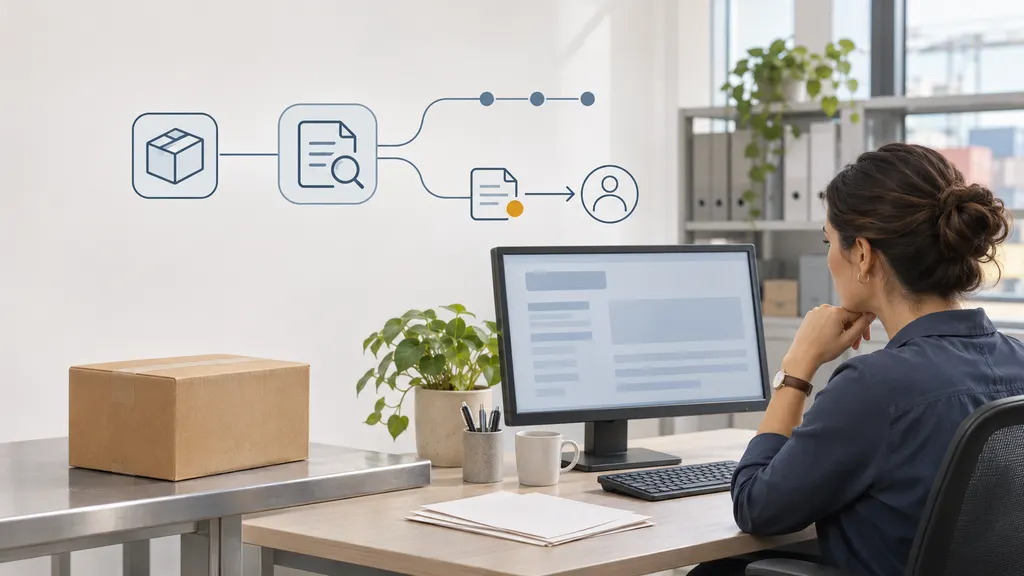
Open the shipment on DHL’s official tracking page and expand any available event details or further information. Read the latest entry alongside the preceding events. A brief label can hide the difference between a normal review and a specific request that will prevent progress until it is resolved.
| What the details indicate | How to interpret it | What to do |
|---|---|---|
| Clearance processing continues, with no request for information | No recipient action is established by that update alone. | Monitor tracking and check for separate DHL communications. |
| An invoice, description, value, or importer detail is required | A document or data issue needs attention. | Confirm the exact request and ask the appropriate sender or importer to provide it. |
| Duties, taxes, or another charge require payment | There may be a financial requirement before the shipment can progress. | Verify the request through an official DHL channel and confirm who is responsible. |
| Customs inspection or regulatory review is underway | An authority’s review may be controlling the next step. | Ask whether any supporting information is needed; do not assume payment will resolve it. |
| Clearance is complete or release is confirmed | That clearance step has finished, but delivery may still require onward transport. | Follow later movement scans and the updated delivery estimate. |
These are interpretation categories, not a universal list of DHL’s exact tracking phrases. The shipment-specific explanation takes priority.
What you should do next
1. Check the full record, not just the notification
Enter your tracking number through the official DHL website. Note the latest event, its location, any explanatory text, and whether the delivery estimate has changed. If you first saw the status in a retailer’s order page or a tracking app, check DHL’s record for additional shipment-specific instructions.
A location shown next to a clearance event does not necessarily establish where the package is physically sitting. Customs paperwork can be processed separately from transport movements. Use actual arrival and departure scans when assessing the parcel’s physical progress.
2. Look for a separate request
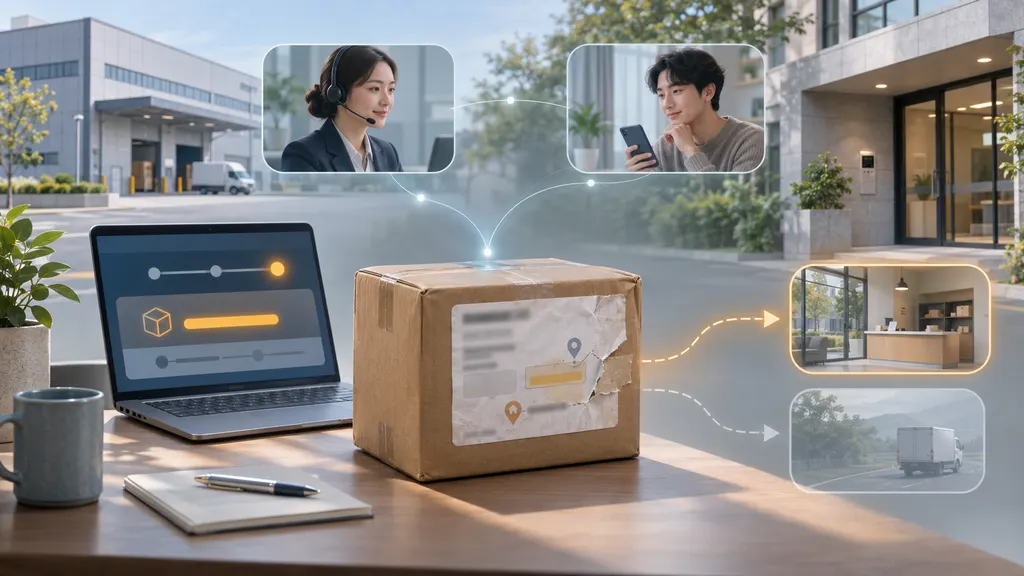
Check the email address and phone number associated with the shipment, including spam folders and messages sent to the purchaser or business importing the goods. A tracking label may remain brief even when a separate communication explains what is missing.
If you bought the item from a retailer, ask whether the seller has received a clearance inquiry. An inaccurate commercial invoice is normally something the sender needs to clarify; the buyer should not invent replacement information.
3. Identify the person responsible
The recipient is not automatically responsible for every customs task. The sender, importer, designated broker, or party responsible for charges may need to act.
- The sender may need to correct the invoice, explain the goods, or substantiate the declared transaction.
- The recipient or importer may need to provide identification, authorization, or import-related information where required.
- The party responsible for charges may need to arrange payment, depending on the shipment’s terms and billing instructions.
- DHL or the appointed broker may need to explain the outstanding requirement or submit information to customs.
- The customs authority determines the applicable regulatory requirements and release decision.
Ask DHL who is expected to respond. This prevents a common problem: the buyer waits for the seller while the seller assumes DHL is waiting for the buyer.
4. Submit only the information requested
Depending on the country and goods, a clearance inquiry may concern a commercial invoice, proof of purchase, a clearer product description, importer details, authorization, or a permit. These are possible requirements, not a checklist that applies to every package.
Before submitting documents, confirm that the names, quantities, currency, values, and descriptions are consistent. If the seller’s documents are wrong, request a correction rather than creating conflicting versions. Never lower the declared value or describe a purchase as a gift simply to try to speed clearance.
5. Confirm receipt and the next step
After responding, keep the case reference and ask whether the information was received and whether anything remains outstanding. Sending a document does not itself establish that customs has accepted it or released the shipment.
Continue monitoring for the next meaningful update. A useful confirmation is not just “we received your email,” but whether the missing requirement has been resolved and who now controls the next step.
How long should you wait before contacting DHL?
There is no dependable universal waiting period for a “Clearance Event.” The label does not reveal the applicable customs procedure, the completeness of the paperwork, or whether an inspection is required. A blanket promise that every shipment will clear within a fixed number of hours would be misleading.
Contact DHL promptly when a specific request appears. Waiting will not supply a missing invoice, importer authorization, or required payment. Also contact DHL if an instruction has a deadline, the stated delivery date has passed without a useful explanation, or repeated updates do not clarify what is preventing progress.
If the event is recent, no action is requested, and the shipment remains within its expected delivery window, monitoring is a reasonable first step. That is a practical judgment, not a guarantee that clearance will finish on schedule.
For time-sensitive goods, explain the urgency when you contact DHL. However, urgency does not remove customs requirements or guarantee priority release.
What to ask DHL when tracking is unclear
Have the tracking number ready and use questions that identify the blocker rather than asking only for a delivery date:
- Is clearance still processing, or is it waiting for a specific action?
- What exact document, payment, or authorization is outstanding?
- Who needs to provide it: the sender, recipient, importer, or broker?
- Has a request already been sent, and to which contact?
- How should the information be submitted securely?
- Is the shipment awaiting customs review, or is another clearance step incomplete?
- After the requirement is resolved, what update should I expect next?
You can summarize the situation this way: “My shipment shows ‘Clearance Event.’ Please confirm whether any action is outstanding, who must take it, and how to complete it. If nothing is required from us, please explain the current clearance stage and whether the delivery estimate has changed.”
For an online purchase, keep the seller informed. If the issue concerns the seller’s shipment paperwork or shipping arrangement, ask the seller to coordinate with DHL rather than attempting to solve it entirely yourself.
Does this status mean you owe customs charges?
No. A clearance event alone does not establish that duties, taxes, or clearance-related fees are payable. Those depend on factors such as the destination’s rules, the goods, their value, and the shipment’s arrangements.
Likewise, paying shipping at checkout does not, by itself, tell you whether import charges were included. Check the order terms and ask the seller if the responsibility is unclear. If DHL presents a payment request, verify both the request and the party responsible before paying.
Do not use an unexpected message as your only proof that payment is required. Navigate independently to DHL’s official website or contact DHL through an official support channel. Avoid sending identity documents or payment details to an unverified address. DHL’s fraud-awareness guidance is a useful reference for suspicious communications.
Why a clearance event may appear more than once
Repeated clearance-related entries do not automatically mean that a package has been rejected or that processing has restarted. A shipment can receive multiple updates while documents, declarations, or regulatory checks are being handled.
Compare the explanations rather than counting the number of entries. A new request for an invoice is more actionable than another generic clearance notification. Similarly, a later confirmation of release changes the interpretation of earlier processing events.
If the entries remain vague and delivery is affected, ask DHL whether they represent continuing review or an unresolved requirement. Tracking alone may not answer that question.
FAQ
Does “Clearance Event” mean my package has been seized?
No. The phrase alone does not establish seizure, rejection, or confiscation. Those are different circumstances that require explicit information from DHL or the relevant authority. Do not infer them from a generic customs update.
Can clearance start before the package arrives in the destination country?
Customs information can be submitted and processed ahead of a shipment’s physical arrival, depending on the route and procedure. A clearance-related entry is therefore not reliable proof of the parcel’s physical location. Check the transport scans separately.
Will DHL contact me if something is missing?
DHL may contact the relevant shipment party for information or payment, but that person is not necessarily the recipient. Check the tracking details and ask the sender whether they received a request. If tracking explicitly asks for action, do not wait solely for another message.
Does customs release mean delivery will happen today?
No. Release resolves a customs step, not every remaining transport step. The shipment may still need sorting, transfer, or dispatch for delivery. Look for subsequent movement scans and the latest delivery estimate rather than treating release as an out-for-delivery notification.
Can I collect the parcel myself to avoid the clearance process?
Do not assume collection bypasses customs. If release requirements remain unresolved, arranging pickup does not remove them. Ask DHL whether collection is available after the necessary clearance and operational steps have been completed.
Should I contact customs directly or DHL first?
For a DHL Express shipment, DHL is generally the practical first contact for understanding the tracking event and identifying any outstanding request. If you have appointed a separate broker, contact that broker as well. Follow any specific instructions issued by the customs authority.
Sources
The following official resources provide tracking, customs-support, and security guidance. Country-specific requirements and the instructions attached to your shipment take precedence over general guidance.
- DHL: Official shipment tracking — check the shipment’s latest events and available details.
- DHL Express: Help and Support — access service guidance and assistance; select the relevant country for local procedures.
- DHL: Customer Service — locate the appropriate support channel for the DHL service handling the shipment.
- DHL: Fraud Awareness — guidance on recognizing and reporting suspicious DHL-related communications.