Container Terminal
What Is a Container Terminal?
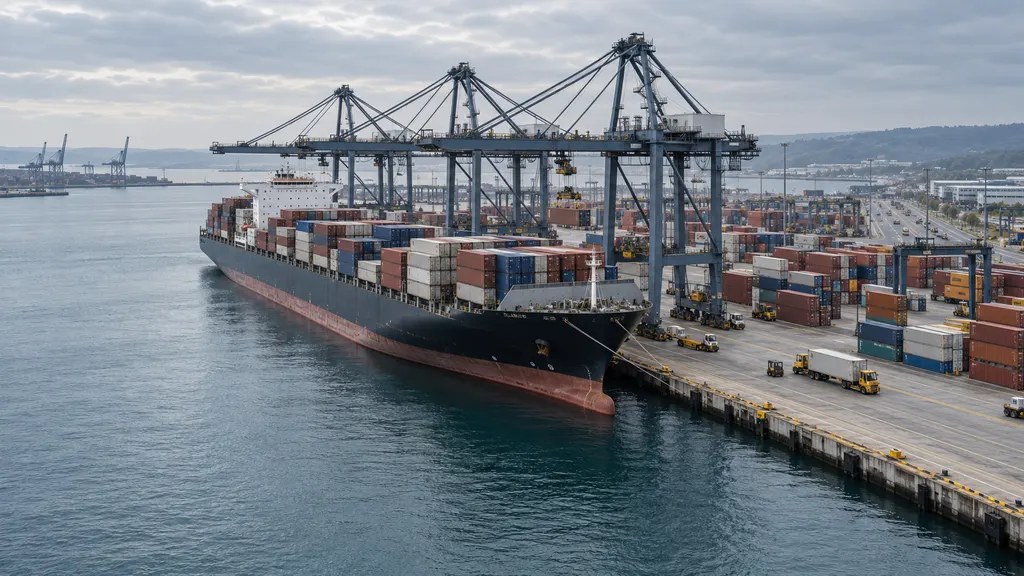
A container terminal is a transport facility where standardized freight containers are transferred between transport modes, temporarily stored, and prepared for onward movement. In maritime shipping, it is the part of a port equipped to handle containers moving between vessels and inland transport, such as trucks or trains. Inland container terminals perform a similar transfer function away from the coast, particularly between rail and road.
The term describes a cargo-handling facility, not an entire port, a shipping company, or a warehouse for individual products. Its main operational unit is the container. Goods normally remain inside the container while it passes through the terminal, although inspection, examination, or other authorized activities may require it to be opened.
Role in the Supply Chain
A container terminal connects different sections of a freight journey. At an export gateway, it receives containers from inland transport and prepares them for loading onto a vessel. At an import gateway, it receives containers discharged from a vessel and makes them available for collection after the applicable requirements have been met. A transshipment terminal transfers containers between vessels rather than primarily serving an inland destination.
These functions can coexist at one facility. A terminal may handle imports, exports, transshipment cargo, and empty containers, with separate operating procedures or storage areas for different movements.
For ecommerce businesses, a container terminal is relevant when merchandise travels as containerized freight before reaching a distribution center or fulfillment warehouse. It is not normally the facility that picks individual online orders or delivers parcels to consumers. Its performance and the availability of cargo can nevertheless affect when imported inventory reaches the warehouse.
For example, a retailer may import a container of household products. After discharge at the destination terminal, the container may remain in the yard while transport arrangements and release requirements are completed. A truck then collects it for delivery to a warehouse, where the products are unloaded and entered into inventory.
Main Areas and Equipment
The layout and equipment depend on the terminal's location, traffic, available land, and operating model. The following are common functional elements rather than mandatory features of every terminal.
| Area or equipment | Function | Operational significance |
|---|---|---|
| Berth and quay | Provide the waterfront interface where container vessels are worked. | Connect vessel operations with the terminal's landside handling system. |
| Ship-to-shore cranes | Lift containers between a vessel and the quay. | Support loading and discharge at equipped maritime terminals. |
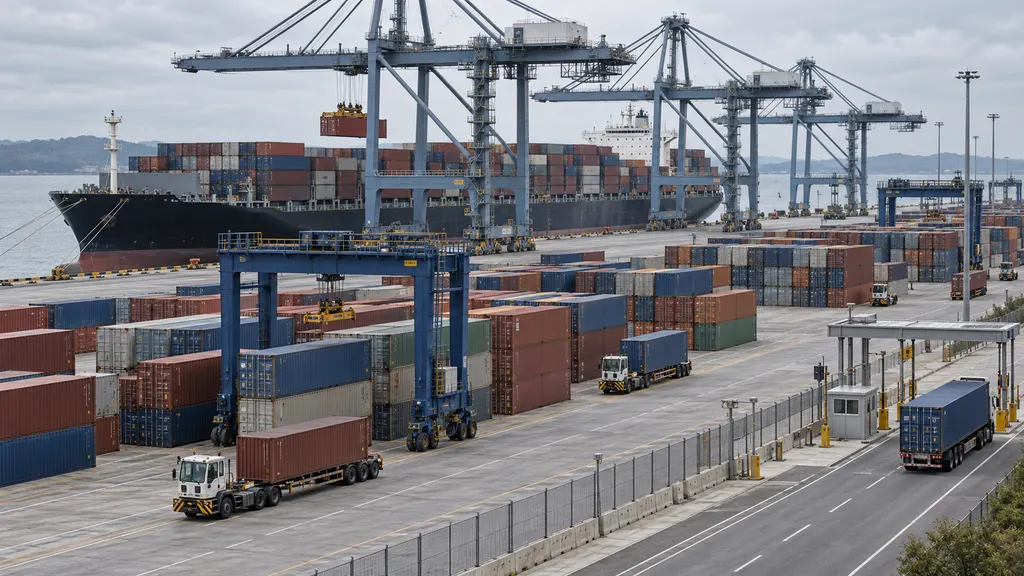
| Container yard | Holds containers temporarily in designated positions. | Provides a buffer between vessel schedules and inland collection or delivery. |
| Yard-handling equipment | Moves, stacks, and retrieves containers. | May include gantry cranes, straddle carriers, reach stackers, or other equipment. |
| Truck gate | Controls road access and records container handovers. | Supports identity checks, movement authorization, and equipment records. |
| Rail interface | Transfers containers to or from trains where rail access exists. | Connects the terminal with inland intermodal services. |
| Refrigerated-container connections | Supply electrical power to compatible refrigerated containers. | Support temperature-controlled cargo while the unit remains at the terminal. |
Terminals also use information systems to coordinate container locations, work instructions, vessel plans, and gate movements. The degree of automation varies. A terminal does not need to be fully automated to operate as a container terminal.
How Container Terminal Operations Work
Export movements
- Pre-arrival arrangements: The shipper, carrier, forwarder, or transport provider supplies the information required for the container's planned movement. Relevant acceptance conditions and delivery deadlines must be checked with the responsible parties.
- Gate-in or rail arrival: The terminal receives the container and records the handover. Acceptance can depend on the booking, container identification, documentation, and applicable cargo restrictions.
- Yard positioning: The container is placed in a storage position that supports the planned loading operation. Equipment, cargo characteristics, and vessel sequencing influence its location.
- Loading: Handling equipment moves the container to the vessel interface, where it is loaded according to the vessel's stowage and operational plan.
Import movements
- Discharge: The container is lifted from the vessel and transferred into the terminal's handling system.
- Temporary storage: It is placed in the yard until onward movement is authorized and arranged.
- Release checks: Customs requirements, carrier authorization, terminal requirements, and other applicable restrictions are resolved. These are distinct controls, even when digital systems exchange the relevant information.
- Collection: The container is retrieved and handed over to the collecting truck or rail service. The terminal records its departure.
This sequence is a simplified explanation, not a universal procedure. Transshipment containers may move from the yard to another vessel without leaving through the landside gate. Inspection requirements, direct-transfer arrangements, and local operating rules can also change the sequence.
Location and Traffic Functions
Two useful ways to describe a terminal are its physical location and the traffic it handles. These are different dimensions: an inland terminal describes location and connections, while a transshipment function describes how cargo moves through a facility.
- Maritime container terminal: Provides the interface between container vessels and other transport. It may serve gateway cargo, transshipment cargo, or both.
- Inland container terminal: Handles containers away from the seaport, often through road–rail transfers. Its services and administrative status depend on the facility and jurisdiction.
- Gateway function: Connects maritime transport with the surrounding inland market through import and export movements.
- Transshipment function: Connects one vessel service with another. Containers may be stored between the arrival of one vessel and departure of the next.
An inland terminal should not automatically be described as a customs clearance facility or a dry port. Those descriptions depend on the services, institutional arrangements, and terminology applicable to the particular location.
Container Terminal and Related Terms
| Term | Meaning | Difference from a container terminal |
|---|---|---|
| Port | A broader maritime location and infrastructure system serving vessels and cargo. | A port can contain several terminals, including facilities for non-containerized cargo. |
| Container yard | An area used to hold and organize containers. | A yard may be one part of a terminal; the term does not necessarily include the vessel, rail, or gate interfaces. |
| Container depot | A facility used for container storage and potentially inspection, maintenance, or repair, especially for empty equipment. | It need not provide direct vessel handling. Actual services vary. |
| Container freight station | A facility where cargo is consolidated into containers or deconsolidated from them. | Its distinguishing activity concerns the goods inside containers rather than only handling complete container units. |
| Fulfillment warehouse | A facility that stores products and prepares customer orders. | It handles inventory and order fulfillment rather than primarily transferring freight containers between transport modes. |
These facilities can be adjacent or operationally connected. A terminal complex may include a freight station or depot services, but that does not make the terms interchangeable.
Understanding Terminal Status and Cargo Availability
Importers and logistics teams may encounter terminal information in carrier tracking records, terminal portals, arrival notices, transport instructions, and freight-forwarder updates. Status labels should be interpreted according to the issuing system rather than assumed to have identical meanings everywhere.
Discharged indicates that a container has been unloaded from the vessel; it does not, by itself, establish that collection is permitted. Customs released concerns customs control and does not necessarily mean that all carrier or terminal requirements are complete. Gate-out records departure through the terminal gate, not delivery to the consignee's warehouse.
Before arranging collection, the responsible logistics team should verify:
- The exact terminal and container number, rather than relying only on the port name.
- Whether the container has been discharged and is available for the intended collection movement.
- Whether customs holds, examinations, or other regulatory controls remain outstanding.
- Whether the necessary carrier and terminal authorizations have been obtained.
- Whether collection appointments, vehicle registration, or access requirements apply.
- The applicable collection deadlines, free-time arrangements, and potential charges.
- Any special handling instructions for refrigerated, hazardous, or out-of-gauge cargo.
This is a planning checklist, not a statement of universal requirements. The terminal, carrier, relevant authorities, and contractual documents determine the conditions for a particular shipment.
Time, Capacity, and Charges
Terminal dwell time is the time a container remains at the facility between defined arrival and departure events. It differs from vessel transit time and the total door-to-door shipping time. Any dwell-time figure should identify the events being measured and the cargo flow concerned.
Storage space and handling capacity are also different. A terminal may have physical room for containers while facing constraints at a berth, gate, rail connection, or particular equipment operation. Container placement matters because retrieving a unit can require other containers to be moved first.
Costs associated with a terminal stay may include handling, storage, or other services. Demurrage and detention can also be relevant, but terminology, charging responsibility, and calculation rules vary by contract and jurisdiction. These labels should not be treated as universally interchangeable with terminal storage. A glossary definition cannot establish the amount payable for a particular container.
QA
Is a container terminal the same as a port?
No. A container terminal is a specialized facility for handling containers. A port is broader and may contain multiple terminals for containers and other cargo.
Does discharge mean a container is ready for pickup?
No. Discharge confirms unloading from the vessel. Collection may still depend on customs controls, carrier authorization, terminal requirements, and transport arrangements.
Can a container terminal be inland?
Yes. Inland container terminals handle container transfers away from the coast, particularly between road and rail. Their services and customs arrangements vary by location.
Does a container terminal process individual ecommerce orders?
That is not its defining function. It primarily handles freight containers. Individual products are normally received, stored, picked, and packed for customer orders at a warehouse or fulfillment facility.
Sources
- The Geography of Transport Systems: Port Terminals — Educational reference supporting terminal functions, port interfaces, handling infrastructure, and the relationship between maritime and inland transport.
- The Geography of Transport Systems: Rail Terminals — Educational reference supporting inland intermodal operations and road–rail container transfers.
- Wikipedia: Container terminal — Supplementary reference for the basic definition, maritime and inland settings, and container-handling equipment.
- UN Trade and Development: Review of Maritime Transport — Institutional reference for the wider context of container ports, maritime logistics, port performance, and connections with international trade.