Cheapest Way to Ship Clothes: Compare Mailers, Carriers, and Weight-Based Rates
The cheapest way to ship clothes is usually to use a lightweight poly mailer and compare ground-service rates using the parcel’s actual weight, dimensions, destination zone, and delivery requirements. For a single T-shirt or a small bundle, USPS Ground Advantage may be competitive because it is designed for lightweight packages and includes tracking. For heavier orders or larger shipping volumes, UPS or FedEx ground services may produce a lower total cost in some lanes. There is no universal cheapest carrier, so the winning method is to reduce package size first, then compare the billable weight and available service options.
This guide is for individual sellers, DTC ecommerce brands, resale businesses, and fulfillment teams that need a repeatable way to ship apparel without overpaying for packaging or transportation. It focuses on domestic parcel shipping in the United States. International shipments require additional checks for customs documentation, duties, taxes, and destination-specific restrictions.
What Determines the Cost of Shipping Clothes?
A carrier does not price an apparel shipment based only on the number of items. The final charge can depend on several variables:
- Actual weight: The scale weight of the packed parcel, including the mailer, box, labels, and protective material.
- Package dimensions: Length, width, and height can affect the charge when a carrier applies dimensional pricing.
- Destination: Ground transportation is commonly priced by shipping zone or distance from the origin.
- Service level: Economy and ground services generally cost less than expedited delivery, although the exact difference varies by carrier and shipment.
- Additional services: Insurance, signature confirmation, residential delivery fees, pickup charges, and delivery-area surcharges can change the total.
- Account terms: Business discounts, negotiated rates, postage software, and fulfillment contracts may produce a different price from a retail counter quote.
The practical lesson is simple: compare the total landed shipping charge for the same parcel and service requirement. A carrier with a lower base rate may not remain cheaper after dimensional adjustments, surcharges, pickup costs, or packaging are included.
Mailer or Box: Which Packaging Is Cheaper?
Use a poly mailer for soft, non-fragile clothing
A poly mailer is often the lowest-cost packaging choice for folded T-shirts, leggings, sweaters, jeans, and other garments that are not easily damaged by compression. It is light, takes up little space, and can be packed without the unused volume found in many boxes. For low-weight apparel orders, reducing packaging weight and dimensions can matter more than switching between two similar ground services.
Choose a mailer with a reliable adhesive strip and enough room to close without stretching the seams. A mailer that is too small can split during handling; one that is much larger than the order adds material and may increase dimensional measurements. For moisture-sensitive items, place the clothing in an inner plastic bag or another suitable protective layer before sealing the outer mailer. This adds a small amount of material but can protect the product from rain, leaks, or rough handling.
Use a box when structure or protection matters
A corrugated box is a better choice for shoes, structured jackets, accessories, gift packaging, or orders that include items likely to puncture a mailer. It may also be appropriate when the product must arrive with a polished presentation. The trade-off is additional packaging weight, more storage space, and a greater risk that empty volume will increase the carrier’s billable weight.
If a box is necessary, select the smallest practical box that protects the order without compressing it excessively. Avoid filling a large box with lightweight material simply because it is available. Measure the closed parcel, not the empty carton, and confirm that the product cannot move freely inside during transport.
Carrier Comparison for Apparel Shipments
The following comparison describes how to evaluate common U.S. parcel options. It is not a claim that one carrier is always cheapest. Rates change by origin, destination, package profile, account, and date, so each option should be tested with the same shipment details.
| Option | Where it may fit | What to verify |
|---|---|---|
| USPS Ground Advantage | Lightweight apparel parcels and shipments that benefit from postal delivery | Current zone rate, package weight, dimensions, included tracking, and any extra services |
| USPS Priority Mail | Orders where faster delivery or Priority Mail packaging is valuable | Whether the faster service justifies its price for the customer and shipment |
| UPS Ground | Heavier or repeat shipments that fit a ground parcel workflow | Billable weight, zone, residential or area surcharges, pickup terms, and account discounts |
| FedEx Ground services | Ground delivery for sellers with access to FedEx rates or pickup infrastructure | Dimensional rules, service selection, surcharges, pickup costs, and negotiated rates |
USPS describes Ground Advantage as a service for packages with USPS tracking and a maximum package weight of 70 pounds. That does not mean every apparel shipment at the maximum weight is economical; most clothing orders are far lighter, and the relevant comparison is the rate for the actual parcel. USPS also offers Priority Mail, which may be useful when speed or included packaging is more important than the lowest ground price.
UPS and FedEx both publish dimensional-weight guidance. When dimensional weight applies, the carrier compares the parcel’s actual weight with a dimensional calculation and may charge using the higher billable weight. The divisor and applicability can vary by service, package type, and current tariff. Sellers should therefore use the carrier’s current rate calculator or shipping account rather than relying on a general rule copied from an older guide.
Actual Weight Versus Dimensional Weight
Clothes are usually dense enough to fit efficiently in a mailer, which is one reason mailers can be economical. A box changes the calculation. For example, a small bundle of clothing may weigh only a few pounds but occupy a box with substantial unused volume. If the carrier’s dimensional calculation is higher than the scale weight, the shipment may be billed at the dimensional figure.
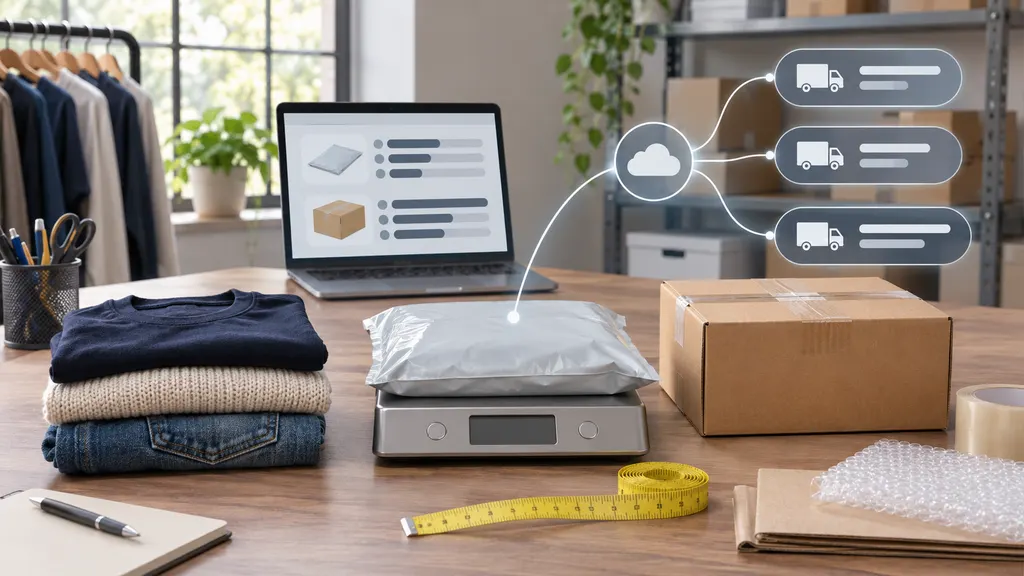
Use this process before buying postage:
- Fold the order as it will actually be packed.
- Place it in the selected mailer or box with all protective material.
- Seal the package and record the weight.
- Measure the outside dimensions at the longest practical points.
- Enter the same weight, dimensions, origin, destination, and delivery service into each carrier’s official calculator.
- Compare the final displayed charge, including any applicable surcharges or extra services.
Do not round down measurements to make a package appear cheaper. Incorrect dimensions can lead to a later adjustment, which makes the original shipping comparison unreliable. A scale and tape measure are inexpensive operational tools for any business shipping clothing regularly.
How to Find the Cheapest Shipping Method
1. Create representative shipment profiles
Instead of testing only one order, create profiles for the parcels your business actually ships. Useful profiles might include one lightweight top, two or three garments, a pair of jeans, a heavy sweater, and a boxed shoe order. Record the packed weight and dimensions for each profile. This creates a rate library that can be used by staff, an ecommerce checkout, or a fulfillment system.
2. Compare by destination, not just by product
A carrier that is economical for nearby destinations may not be the lowest-cost choice for a distant zone. Test representative ZIP Codes or postal regions from the customer locations you commonly serve. If orders are shipped from more than one warehouse, repeat the comparison for each origin because the zone profile changes.
3. Include packaging in the decision
Shipping cost is not limited to postage. Add the cost of the mailer or box, inner protection, labels, labor, pickup, and expected adjustment fees. A slightly more expensive service may still be operationally cheaper if it reduces damage, manual handling, or customer service work. Conversely, premium packaging may be unnecessary for a basic, low-value T-shirt.
4. Separate speed from price
Ask whether the customer actually needs expedited delivery. If the promise is standard delivery, compare ground services that meet that promise instead of paying for a faster service by default. If a delivery date is advertised, leave enough operational margin for order processing and carrier variability rather than selecting a service solely because it has the lowest quoted price.
5. Recheck rates when the order profile changes
A shipping rule that works for one shirt may fail for a six-item order. Review rates when packaging, warehouse location, product mix, carrier terms, or customer delivery promises change. Keep the comparison date and assumptions with the result so that an old quote is not mistaken for a current price.
Recommended Packaging Decisions by Order Type
- One or two lightweight garments: Start with a properly sized poly mailer and a ground service. Compare the parcel as packed, not the product’s catalog weight.
- Several folded garments: Test both a larger mailer and a compact box. The best choice depends on whether the box triggers dimensional weight or reduces damage risk.
- Denim, coats, or heavy knitwear: Weigh the completed package carefully and compare all available ground options. The difference between a mailer and box may be smaller than the effect of weight and destination.
- Shoes or fragile accessories: Use structural protection even if a mailer has a lower apparent cost. A damaged order can cost more than the initial shipping saving.
- High-volume ecommerce fulfillment: Standardize a small set of packaging types, maintain tested shipment profiles, and review carrier rates by zone and order category.
Common Mistakes That Make Clothing Shipping More Expensive
Using an oversized box: Empty space can increase dimensions and create a higher billable weight. Choose a carton that fits the folded order and required protection.
Comparing inconsistent quotes: A retail counter quote, an online account quote, and a discounted label may not use the same assumptions. Compare identical package details and service levels.
Ignoring surcharges: Residential, delivery-area, pickup, and special-handling charges can change the total. Review the carrier’s current terms instead of comparing only headline rates.
Choosing a mailer for every product: Soft apparel is usually suitable for flexible packaging, but shoes, hardware, and structured products may need a box.
Promising delivery based only on transit time: Order processing, weekends, holidays, weather, and address problems can affect the customer’s experience. Build the shipping promise around the service actually purchased and the operation’s handling time.
Bottom Line
For most small apparel orders, begin with a correctly sized poly mailer and compare USPS Ground Advantage with the ground options available through your shipping account. For larger or heavier parcels, compare UPS and FedEx using billable weight rather than actual weight alone. USPS Priority Mail is worth testing when speed or its packaging model matters. The cheapest method is the one that delivers the specific packed order at an acceptable service level after packaging, surcharges, discounts, and operational costs are included.
A simple rate test performed on several representative orders is more reliable than a permanent rule such as “always use a mailer” or “always use one carrier.” Revisit the test when your product mix, shipping origin, customer base, or carrier agreement changes.
FAQ
Is a poly mailer cheaper than a box for clothes?
Often, yes, for soft and non-fragile garments because a mailer generally uses less material and creates less unused volume. It is not automatically cheaper for every order. Compare the complete packed shipment and use a box when the product needs structural protection.
What is the cheapest carrier for shipping one shirt?
There is no single carrier that is cheapest for every origin and destination. A lightweight USPS ground shipment may be competitive, but the result can change with the destination, dimensions, account discount, and delivery requirement. Enter the same package details into current carrier calculators before buying the label.
Should I price clothes by actual weight or dimensional weight?
Use the carrier’s billable-weight rules. A carrier may charge based on actual weight or dimensional weight, depending on which is higher and on the service terms. Lightweight clothing in a large box is the main situation where dimensions can materially change the charge.
Does free packaging always reduce shipping costs?
No. Packaging supplied by a carrier may be useful, but it can be larger or heavier than the most efficient package for a particular apparel order. Compare the total cost and confirm that the packaging is eligible for the selected service.
How can an ecommerce seller reduce apparel shipping costs?
Use accurate packed weights, standardize efficient mailer and box sizes, compare carriers by destination, remove unnecessary empty space, and review surcharges and negotiated rates. Track damage and adjustment fees as well as postage so that a low label price does not hide higher operating costs.
Sources
- USPS Ground Advantage — official service information, package eligibility, and tracking details.
- USPS Priority Mail — official service information and packaging guidance.
- UPS Dimensions and Weight — official guidance on package measurements and dimensional weight.
- FedEx Weight and Dimensions — official guidance on actual weight, dimensional weight, and package measurements.
- FedEx Shipping Rates — official rate and surcharge reference.