Can You Ship Food in the Mail? USPS Rules for Perishable and Homemade Food?
Yes, you can usually ship food through the United States Postal Service, but the rules depend on whether the food is shelf-stable, refrigerated, frozen, homemade, or subject to a separate restriction. USPS generally permits many foods in domestic mail when they are packaged securely and are unlikely to create a hazard during transportation. Perishable food requires more planning: the sender must choose packaging, cooling materials, and a delivery service that can reasonably protect the food until arrival.
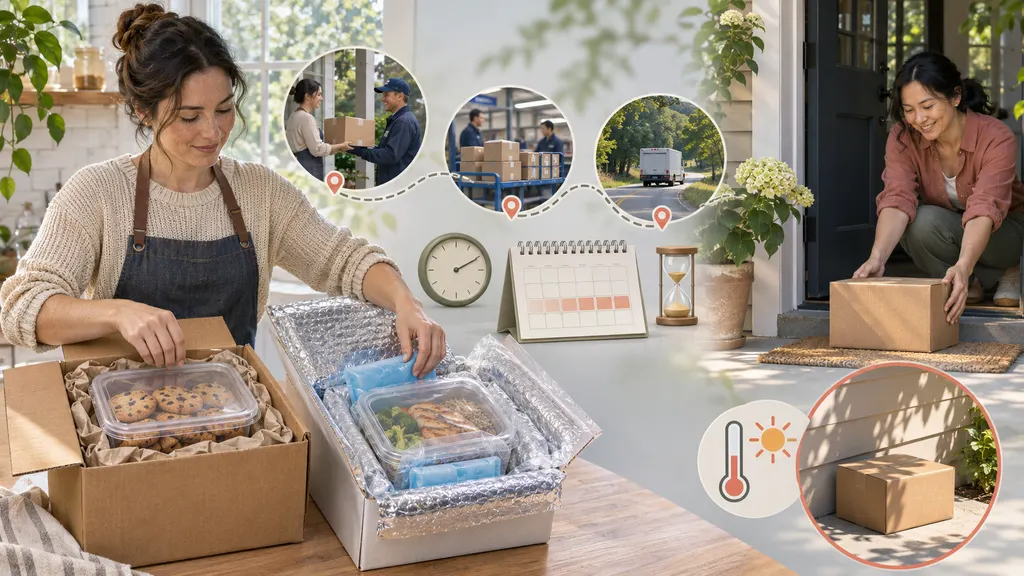
The most important distinction is that USPS mailing permission is not the same as food-safety protection. A parcel may be accepted for mailing and still arrive too warm, damaged, delayed, or unsuitable to eat. Before shipping, check the current USPS Publication 52, food-safety guidance, and any destination-specific rules.
What Food Can You Ship Through USPS?
Most nonperishable foods are the simplest items to mail. Examples include sealed snacks, dry pasta, rice, canned goods, commercially packaged baked goods, tea, coffee, and other foods that do not require refrigeration. The package still needs to be strong enough for ordinary handling, and the contents should be protected from crushing, leaking, and contamination.
Perishable food can also be mailable in domestic shipments when it is packaged properly and can travel without becoming a hazard or deteriorating excessively. This category may include meat, seafood, dairy products, prepared meals, fresh produce, cakes with perishable fillings, and other foods that require temperature control. USPS does not make a perishable item safe simply by accepting it at a retail counter. The sender remains responsible for selecting suitable packaging and a realistic delivery window.
Food that contains liquid, grease, sauces, or melting ingredients needs extra protection. A sealed inner container, leak-resistant wrapping, cushioning, and a sturdy outer box can help prevent damage to the food and other mail. If an item could leak, break, melt, or spoil under normal transportation conditions, it should not be mailed until those risks have been addressed.
USPS Rules for Perishable Food
USPS rules treat perishables differently from ordinary dry goods because the contents can deteriorate during transportation. The practical test is whether the item can reach its destination without becoming a danger, causing damage, or creating an unacceptable condition for the mailstream. Packaging should be designed for the actual product, expected weather, and likely transit time rather than for the label alone.
Use a Suitable Inner and Outer Package
Start with a food-safe inner container that is closed securely. For liquids or foods that may release moisture, use a leak-resistant bag or secondary container. Place the protected food inside a rigid outer box with enough cushioning to limit movement. Empty space can allow containers to shift and break, while excessive pressure can crush delicate baked goods.
Insulated packaging may be appropriate for refrigerated or frozen food, but insulation alone does not keep food cold indefinitely. If cold packs or another refrigerant are used, they should be placed so that the food remains protected as the refrigerant melts. The outer packaging must also protect the shipment from condensation and water damage.
Plan for the Entire Transit Window
Do not plan only for the normal delivery estimate. A shipment can encounter weekends, weather, address problems, processing delays, or an attempted delivery when nobody is available. Perishable food should be sent early enough in the week to reduce the chance of sitting in a facility or mailbox over a weekend, although the exact schedule depends on the service and destination.
Choosing a faster service can reduce exposure to heat and delay, but faster mail is not a substitute for temperature control. USPS delivery estimates and service commitments can vary by product and eligibility. Confirm the current service details before mailing, and avoid promising a recipient that the food will arrive on a specific day unless the selected service provides a commitment that applies to that shipment.
Consider the Recipient’s Availability
A cold or frozen shipment should be sent to an address where someone can receive it promptly. Tell the recipient when the package is expected, where it will be delivered, and what to do with it after arrival. A parcel left in direct sun, a hot vehicle, or an uncooled location can become unsafe even when the carrier handled it normally.
For temperature-sensitive food, USDA guidance recommends keeping perishable items cold and checking their condition when they arrive. If food arrives warm, has an unusual odor, has damaged packaging, or has clearly spent too long outside temperature control, the safest choice may be to discard it rather than taste-test it.
Can You Mail Homemade Food?
Homemade food is not automatically prohibited from domestic USPS mail. In many cases, homemade cookies, brownies, breads, candies, and similar shelf-stable products can be mailed if they are packaged securely. The main question is whether the food can remain safe and intact during transportation, not simply whether it was made at home.
Dry, firm baked goods are generally easier to ship than foods containing cream, custard, soft cheese, whipped cream, meat, or other ingredients that require refrigeration. A homemade item may be acceptable to mail from a carrier perspective while still requiring special handling under food-safety or state regulations. If the food is being sold, shipped across state lines, or produced as part of a business, check applicable cottage-food, labeling, licensing, and destination requirements before accepting orders.
How to Package Homemade Baked Goods
- Allow baked goods to cool completely before packing them.
- Wrap individual pieces or separate layers so they do not stick together.
- Use a food-safe container that limits movement and crushing.
- Add cushioning between the food container and the outer box.
- Protect the parcel from moisture if the product can soften or absorb water.
- Include the recipient’s name, complete address, and a return address.
Do not use a fragile decoration, soft filling, or frosting that can melt unless the packaging and temperature plan are designed for it. A label such as “Perishable” can alert handlers and the recipient, but it does not replace appropriate packaging or create a delivery guarantee.
Shipping Refrigerated or Frozen Food
Refrigerated and frozen food needs a plan for both temperature and containment. Use an insulated container when appropriate, add a suitable cold source, and keep the food separated from materials that could contaminate it. The box should be strong enough to withstand handling after the cold source begins to melt.
Dry ice requires additional care. It is a regulated material because it releases carbon dioxide gas as it warms. If you use dry ice, follow the current USPS requirements for packaging, ventilation, quantity, and exterior markings. Do not seal dry ice in an airtight container. Requirements can vary according to the shipping method and whether the parcel is domestic or international, so consult the current USPS hazardous-material and dry-ice instructions before packing.
International shipments require a separate review. Food may be restricted by the destination country, customs authorities, or agricultural rules even when USPS accepts the parcel for export. Customs forms must accurately describe the contents, and the recipient may face inspection, delay, refusal, duties, or disposal. Homemade food and animal products can be especially sensitive to import rules.
Items That Need Extra Checking
Some foods are not automatically forbidden, but they require more research than ordinary snacks. Meat, poultry, seafood, dairy products, alcohol-containing products, plants, seeds, liquids, and foods packed with dry ice may be affected by federal, state, postal, customs, or destination-country requirements. The rules may also depend on whether the item is for personal use or commercial sale.
Alcohol is a separate example. A food containing a small amount of alcohol is not necessarily treated the same way as a beverage containing alcohol, but the ingredients, concentration, packaging, and applicable regulations matter. Do not assume that a homemade liqueur, alcoholic beverage, or food product can be mailed simply because it is sealed.
Never conceal a restricted or hazardous material by describing it vaguely on a customs form. Accurate descriptions help USPS and customs authorities handle the parcel correctly. If you cannot determine whether an item is mailable, ask USPS before shipping or consult the relevant government authority.
Domestic Versus International Food Shipments
| Question | Domestic shipment | International shipment |
|---|---|---|
| Can food be accepted? | Many foods can be mailed if properly packaged and not otherwise restricted. | Acceptance also depends on destination-country import rules. |
| Is refrigeration enough? | No. Packaging, cold source, transit time, and recipient availability all matter. | No. Customs delays make temperature-sensitive shipments more difficult. |
| Are forms required? | Usually no customs declaration is required for a normal domestic parcel. | A customs declaration and accurate contents description are generally required. |
| What is the main risk? | Spoilage, leakage, damage, or delay. | Spoilage plus inspection, refusal, seizure, or import restrictions. |
A Practical Pre-Mailing Checklist
- Identify whether the food is shelf-stable, refrigerated, frozen, liquid, fragile, or otherwise restricted.
- Check the current USPS Publication 52 provisions that apply to the item and any refrigerant.
- Review food-safety requirements, especially for meat, seafood, dairy, prepared meals, and commercial sales.
- Check state or destination-country rules if the parcel crosses a state or national border.
- Choose packaging that prevents leaks, crushing, contamination, and excessive temperature exposure.
- Select a service and mailing day that provide a realistic chance of arrival before the food becomes unsafe.
- Confirm that the recipient can receive and refrigerate or freeze the food promptly.
- Describe international contents accurately and complete all required customs information.
- Keep the acceptance receipt and tracking number so you can monitor movement.
Tracking can help you notice an unusual delay, but it does not measure the food’s internal temperature and does not guarantee that a perishable item is safe to eat. For a quick shipment check, you can use 17TRACK’s tracking page after the USPS tracking number is available. Tracking is a visibility tool, not a substitute for suitable packaging, a cold chain, or a food-safety decision.
What to Do If Food Arrives Damaged or Spoiled
Take photographs of the outer packaging, labels, seals, leaks, and the food’s condition. Keep the mailing receipt and tracking history. If the package is damaged, contact the sender first, because the sender is usually the party who selected the packaging and shipping service. The sender can then review USPS claims or service procedures where applicable.
Do not rely on smell or a small taste to determine whether temperature-sensitive food is safe. When the handling history is uncertain and the food should have been refrigerated or frozen, follow conservative food-safety guidance. The financial value of a parcel is not a reason to take a health risk.
Bottom Line
You can ship many types of food in the mail, including some homemade foods and domestic perishables. Shelf-stable products are the easiest. Refrigerated, frozen, liquid, and delicate foods need a documented plan for packaging, temperature control, transit time, and recipient availability. International shipments add customs and import restrictions, while dry ice and other special materials require their own USPS review. Check the current rules before every unusual shipment, because acceptance at the counter does not guarantee safe delivery or edible contents.
FAQ
Can I mail homemade cookies through USPS?
Usually, shelf-stable cookies can be mailed domestically when they are wrapped and packed to prevent breakage, moisture damage, and contamination. Cookies with cream, custard, soft cheese, or another perishable filling require a separate temperature and food-safety plan.
Can I send meat or seafood by USPS?
Some domestic shipments of meat and seafood may be mailable when properly packaged, but they are perishable and may require insulation and a cold source. Check the current USPS requirements and food-safety guidance before shipping. International rules may prohibit or restrict the same products.
Does USPS guarantee that perishable food will arrive fresh?
No. Mailing acceptance and package tracking do not guarantee that food will remain at a safe temperature or arrive in edible condition. The sender must account for transit time, delays, weather, packaging, and the recipient’s ability to receive the parcel.
Can I use dry ice in a USPS package?
Dry ice may be permitted for certain mailable products, but it has specific packaging, ventilation, marking, and transportation requirements. Review the current USPS instructions before using it, and do not place dry ice in an airtight container.
Can I ship homemade food internationally?
Possibly, but the destination country may restrict homemade food, animal products, plants, liquids, or other ingredients. Customs forms must describe the contents accurately. Verify the destination-country rules before sending because a parcel can be delayed, refused, or disposed of during import processing.