How to Ship Food and Perishable Goods: Packaging, Carriers, and Delivery Speed
Shipping food and other perishable goods safely requires more than choosing the fastest service. You need to confirm that the carrier accepts the product, use packaging that protects the contents from heat and damage, control temperature for as long as necessary, and select a delivery window that leaves little room for delay. The right method depends on the food’s temperature requirements, its shelf life, the destination, the season, and whether the shipment is domestic or international.
This guide explains how to prepare perishable shipments, compare delivery options, manage cold packs and dry ice, and reduce the risk of spoilage. Carrier rules differ by country and service, so verify the current requirements before shipping.
Start with the Product, Not the Carrier
Classify the shipment before buying packaging or printing a label. A shelf-stable product, a chilled product, a frozen product, and a live plant may all require different handling and documentation.
- Shelf-stable food: Products that do not require refrigeration can usually be packed as ordinary goods, provided the packaging protects them from leakage, breakage, contamination, and temperature extremes.
- Refrigerated food: Items that must remain cold need insulated packaging and a cooling method such as gel packs. The product label or manufacturer’s instructions should guide the required temperature range.
- Frozen food: Frozen products generally need more thermal protection and, in some cases, dry ice. A shipment should be planned so the contents remain acceptably frozen through the expected transit period and a reasonable delay.
- Products with a short shelf life: Fresh meat, seafood, dairy, prepared meals, and some produce require especially careful timing. If the product cannot tolerate a missed delivery, consider whether the recipient will be available to receive it.
Food safety is separate from package appearance. A box can arrive intact while the contents have spent too long at an unsafe temperature. When safety depends on temperature, use a validated packing method or follow the producer’s shipping instructions rather than relying on the outside temperature alone.
Check Carrier and Destination Rules Before Packing
Perishable goods are not treated identically by every carrier or service level. Some carriers accept certain foods only under specific conditions, while others may restrict dry ice, live animals, alcohol, plants, or international food shipments. Rules may also vary according to the destination, transportation mode, package size, and whether the shipment is sent by an individual or a business.
Review the carrier’s current rules for three separate questions:
- Is the product permitted on the selected service?
- Are there marking, labeling, declaration, or packaging requirements?
- What happens if the package is delayed, refused, returned, or delivered when nobody is present?
For domestic shipments in the United States, the U.S. Postal Service publishes requirements for perishable, restricted, and potentially hazardous mail in Publication 52. FedEx also provides guidance for shipping perishables. These pages are useful starting points, but the sender remains responsible for checking the exact service and destination rules.
International shipping adds another layer of risk. Customs authorities may restrict meat, dairy, seeds, plants, fresh produce, and other biological or agricultural products. A package can be correctly packed and still be delayed or rejected at the border. Check the import rules of the destination country and prepare accurate commercial and customs documentation where required.
Use a Packaging System with Multiple Layers
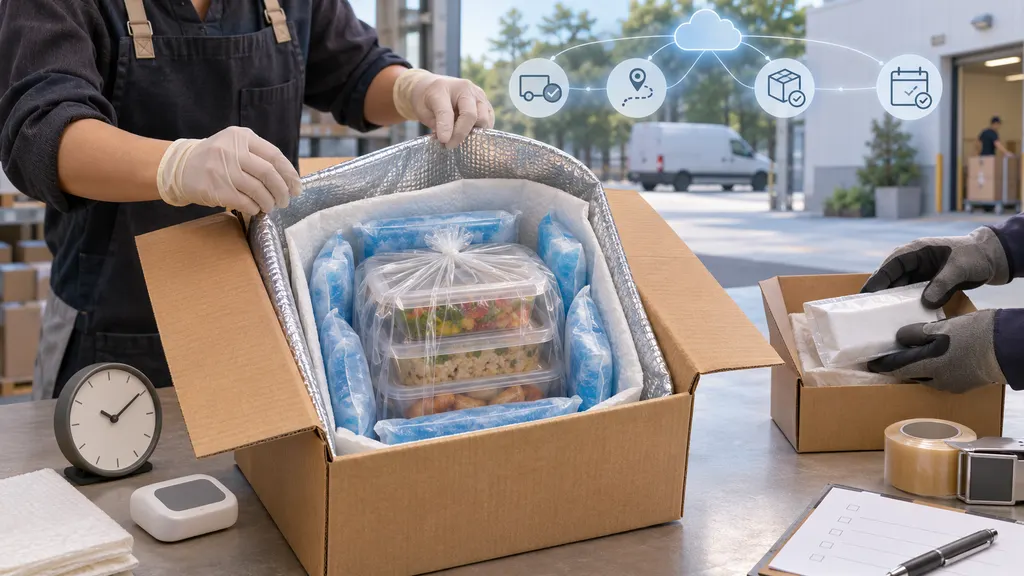
Effective perishable-food packaging usually has four functions: contain the product, prevent leaks, insulate against temperature change, and protect the package from handling damage. Use a system rather than placing the product directly inside a shipping carton.
1. Primary container
Seal the food in a leak-resistant primary container. For liquids, sauces, soups, or thawing products, leave appropriate expansion space and secure the lid according to the product’s packaging requirements. Glass containers should be individually wrapped and separated so that one broken item does not contaminate the entire shipment.
2. Secondary containment
Place the primary container inside a sealed bag, liner, or other secondary barrier. Add absorbent material when a leak could damage the product, the shipping carton, or nearby packages. Absorbent material does not replace a leak-proof container; it is a backup layer.
3. Insulation and coolant
Use an insulated liner or container sized for the product and the coolant. Gel packs are commonly used for chilled shipments, while dry ice may be used for some frozen products when permitted. Keep coolant around the product rather than placing it only on top. Fill unnecessary voids so the contents do not shift and warm air does not circulate freely.
4. Outer carton
Choose a strong corrugated carton that fits the insulated package without excessive empty space. Cushion fragile items and use strong tape on all seams. Do not make the carton so large that the product and coolant can move during handling. A compact package is easier to stabilize and may reduce shipping cost, although the required insulation should never be removed solely to reduce dimensions.
Before shipping at scale, test the complete package. Place it in conditions that resemble the expected journey, including the likely transit duration and a reasonable delay. Measure the product or internal package temperature when temperature control is part of the safety plan. A single successful shipment does not prove that every product, box size, season, and destination will perform the same way.
Choose Delivery Speed by Risk, Not Convenience
The fastest advertised service is not automatically the safest choice. The relevant question is whether the package can remain within the product’s acceptable condition until delivery, including weekends, holidays, weather disruptions, address problems, and a missed first attempt.
| Shipping option | When it may fit | Main limitation |
|---|---|---|
| Economy or ground service | Shelf-stable goods or products with a well-tested temperature window | Longer and less predictable transit can increase spoilage risk |
| Expedited service | Chilled or frozen goods that need a shorter transportation window | Higher cost does not eliminate weather, address, or delivery risks |
| Time-critical or scheduled delivery | High-value or highly perishable products with a defined receiving plan | Availability and destination coverage must be confirmed in advance |
Ship early in the week when possible so a delayed package is less likely to remain in transit over a weekend. Avoid dispatching a highly perishable order immediately before a holiday unless the service schedule and receiving arrangements have been confirmed. Tell the recipient when the package will arrive and provide instructions for immediate unpacking and storage.
Dry Ice, Gel Packs, and Temperature Control
Gel packs are generally suited to chilled products, but their performance depends on the number of packs, the insulation, the product temperature at packing, and the transit environment. Pre-chill the product and coolant when the product instructions call for it. Do not assume that a frozen gel pack will keep a large shipment frozen for the full journey.
Dry ice is a solid form of carbon dioxide. It can create ventilation and handling concerns because it releases gas as it sublimates. It must not be sealed in an airtight container. Packages containing dry ice may require specific markings, labels, weight information, or carrier approval. The carrier’s hazardous-material guidance should be checked before use, and the shipper should follow the applicable rules for the destination and transport mode.
Never use coolant as a substitute for a product safety plan. The safe temperature range, maximum transit time, and handling instructions should come from the food producer, a qualified food-safety professional, or a validated packaging test.
Label, Track, and Prepare for Exceptions
Use a complete recipient address, a phone number when appropriate, and clear handling instructions. Marking a package “Perishable” can alert handlers, but it does not guarantee temperature control or faster delivery. If dry ice or another regulated material is present, use the required markings rather than informal wording.
Tracking is useful for identifying a stalled shipment, checking delivery progress, and contacting the recipient before arrival. It cannot measure product temperature or prevent spoilage by itself. For multi-carrier visibility, 17TRACK’s tracking service can be used to check shipment status across supported carriers. Confirm the carrier and tracking number before relying on status updates, and remember that tracking events may not provide a continuous record of the package’s physical condition.
Build an exception plan before the first shipment. Decide what to do if the address is incorrect, the recipient is unavailable, the carrier reports a delay, or the package arrives warm or damaged. For commercial shipments, document the packing method, coolant quantity, dispatch time, tracking events, product lot or order information, and customer communication. This record helps identify whether a problem came from packing, transit, delivery, or product handling.
A Practical Pre-Shipment Checklist
- Confirm that the product is legal and accepted for the destination and selected carrier service.
- Identify whether the product must remain ambient, chilled, or frozen.
- Check the product’s safe temperature and maximum transit guidance.
- Use a leak-resistant primary container and a sealed secondary barrier.
- Select insulation and coolant for the product, package size, season, and expected transit time.
- Use a strong outer carton with sufficient cushioning and no unnecessary empty space.
- Confirm dry-ice or other special-material marking requirements, if applicable.
- Choose a service with enough time margin for delays and delivery attempts.
- Ship early in the week when the product is highly perishable.
- Notify the recipient and provide unpacking and storage instructions.
- Record the tracking number and define an escalation plan for delays.
When Another Shipping Method Is Safer
Parcel shipping may not be appropriate when the product has a very narrow temperature range, the destination is difficult to reach, the delivery window is uncertain, or the package would require unusually large amounts of coolant. In those cases, a specialized temperature-controlled logistics provider, local delivery network, or scheduled freight service may provide a better operational fit. The decision should be based on validated product requirements and the consequences of a failed delivery, not only on the label price.
FAQ
Can I ship perishable food with regular packaging?
Regular packaging may be suitable for shelf-stable food that does not require temperature control. Chilled and frozen products generally need an insulated, leak-resistant system with an appropriate coolant and a tested transit window.
Is overnight shipping always necessary for food?
No. Shelf-stable products may not need expedited delivery, while some chilled or frozen products may need it. The appropriate service depends on the product’s safe handling requirements, packaging performance, destination, and delay tolerance.
Can I ship frozen food with gel packs?
It depends on the product and the validated packaging method. Gel packs may help maintain cold conditions, but they may not keep a product frozen for the full journey. Follow the producer’s instructions or use a tested packaging design.
What should I do if a perishable package is delayed?
Check the tracking status, contact the carrier when escalation is available, and notify the recipient. Do not assume that an intact box is safe. The recipient should follow the product’s food-safety guidance and avoid consuming food that has been held outside its acceptable conditions.
Can I ship food internationally?
Possibly, but destination-country rules may restrict specific foods or require permits and declarations. Confirm import, customs, agricultural, and carrier requirements before accepting the order.