Best Shipping Software for Ecommerce Businesses and Online Stores
The best shipping software for an ecommerce business depends on what you need to optimize: carrier rates and labels, international delivery, order automation, or shipment tracking after dispatch. ShipStation is a strong general-purpose choice for multichannel operations, Shippo suits smaller teams that want a straightforward shipping platform, Easyship is well suited to international shipping, and Shopify Shipping is convenient for merchants already operating inside Shopify. 17TRACK is a relevant option when the main requirement is multi-carrier tracking and post-purchase shipment visibility rather than label purchasing.
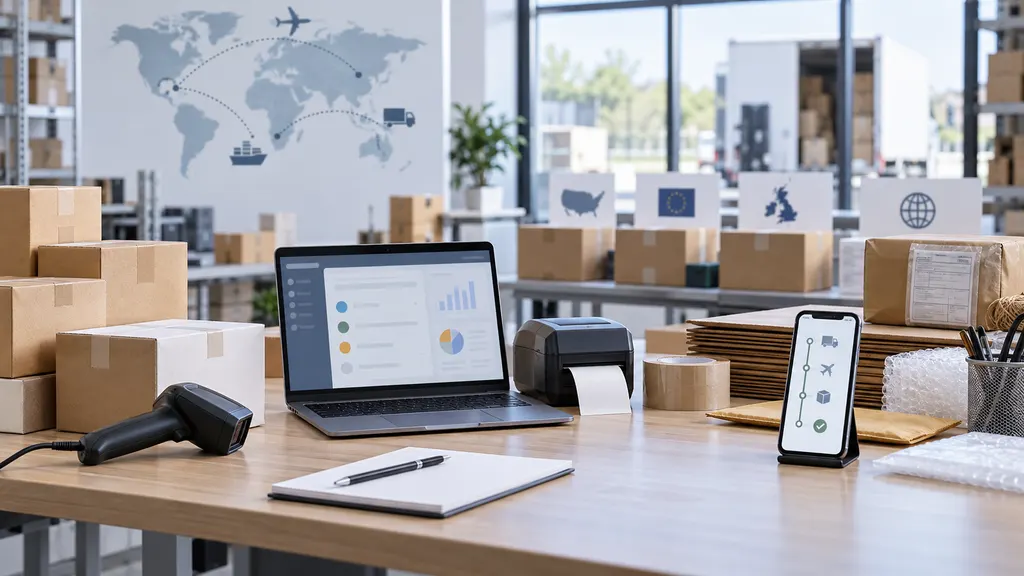
This comparison focuses on the software's primary role, integrations, shipping workflow, and operational fit. Features, carrier availability, and pricing can vary by country, account type, and service plan, so confirm the current details before purchasing.
Quick comparison
| Software | Best suited to | Primary role | Important qualification |
|---|---|---|---|
| ShipStation | Multichannel sellers and growing operations | Order, label, and fulfillment workflow management | Check whether the required stores, marketplaces, and carriers are supported in your region. |
| Shippo | Small and midsize merchants seeking a simple shipping workflow | Rates, labels, tracking, and shipping operations | The right plan depends on shipment volume and the features required. |
| Easyship | Merchants shipping internationally | Multi-carrier shipping, international delivery, and duties workflow | Carrier and destination availability should be tested for the lanes you actually use. |
| Shopify Shipping | Shopify merchants that want shipping inside the store admin | Label creation and shipping management within Shopify | Availability and supported services depend on the merchant's location and Shopify setup. |
| Sendcloud | European ecommerce operations and delivery teams | Shipping automation, carrier management, and returns workflows | Confirm country coverage, carrier contracts, and available integrations before rollout. |
| 17TRACK | Businesses prioritizing multi-carrier tracking and buyer visibility | Shipment tracking, tracking APIs, and post-purchase visibility | It should be evaluated as a tracking and visibility layer, not assumed to replace a full label-buying platform. |
Best shipping software by business need
Best for multichannel shipping: ShipStation
ShipStation is designed for merchants managing orders from multiple sales channels and shipping them through a range of carriers. Its official product materials emphasize importing orders, automating shipping rules, creating labels, and connecting selling channels and carriers. That makes it a practical candidate for retailers that have outgrown manual fulfillment across separate marketplaces and storefronts.
Why consider it: The platform's value is strongest when order volume and channel complexity make centralized workflows more useful than a basic carrier portal.
Not ideal when: You only ship occasionally, operate in one simple channel, or primarily need customer-facing tracking rather than fulfillment operations.
Best for a straightforward shipping workflow: Shippo
Shippo combines carrier rates, label creation, tracking, and ecommerce integrations in one platform. Its official documentation and product pages position it for businesses that want to connect stores and marketplaces, compare shipping options, and manage shipping from a central interface.
Why consider it: Shippo is a reasonable shortlist option for smaller teams that want core shipping functions without building their own carrier connections.
Not ideal when: Your requirements include highly specialized warehouse execution, complex enterprise governance, or carrier coverage that has not been verified for your origin and destination countries.
Best for international shipping workflows: Easyship
Easyship focuses on connecting ecommerce businesses with multiple shipping options and supporting international delivery workflows. Its official materials highlight carrier selection, shipping rates, tax and duty information, customs-related processes, and shipment management. These functions are particularly relevant when cross-border delivery creates more decisions than domestic label generation.
Why consider it: It belongs on the shortlist when landed cost, customs information, and international carrier choice are central to the shipping decision.
Not ideal when: Your operation is domestic and simple, or when you need a full warehouse management system rather than a shipping platform.
Best for Shopify-native shipping: Shopify Shipping
Shopify Shipping lets eligible merchants manage shipping tasks from within Shopify. The official Shopify help documentation describes functions such as buying and printing shipping labels, managing packages, and configuring shipping settings, subject to location and carrier availability.
Why consider it: It reduces the need to move between systems when orders, products, and fulfillment activity already live in Shopify.
Not ideal when: You operate several non-Shopify channels, require a separate multi-store control layer, or need carrier and service options that are unavailable in your market.
Best for European delivery operations: Sendcloud
Sendcloud provides shipping automation, carrier connectivity, tracking, and returns-related tools for ecommerce businesses. Its official product information places particular emphasis on European shipping operations and integrations with ecommerce platforms and marketplaces.
Why consider it: It can be a relevant option for merchants whose delivery network and customer base are concentrated in Europe and who want shipping and returns workflows in one environment.
Not ideal when: Your key lanes, carriers, or selling channels fall outside the platform's supported coverage, which should be confirmed before contracting.
Best for multi-carrier tracking and shipment visibility: 17TRACK
17TRACK is most relevant when the business problem begins after an order has shipped: customers need a consistent way to follow parcels handled by different carriers, or the merchant needs tracking data for a website, app, or operational system. The 17TRACK product pages cover consumer tracking, Shopify order tracking, and a tracking API for developer integrations.
Why consider it: A dedicated tracking layer can complement a label or fulfillment platform when the priority is shipment visibility, tracking events, and the post-purchase experience across carriers.
Not ideal when: You are looking for a complete replacement for order management, warehouse execution, rate shopping, or label purchasing. Confirm the relevant API or app capabilities for your workflow rather than assuming that every tracking feature is included in every product.
How to choose shipping software
1. Map the complete order flow
Write down where an order starts, how it is imported, where inventory is packed, how a label is purchased, how tracking is sent to the buyer, and how exceptions are handled. A platform can be strong at label creation but still require another tool for warehouse operations, returns, or customer notifications.
2. Check integrations before comparing prices
Verify the exact connections you need: ecommerce platforms, marketplaces, order-management systems, warehouse tools, accounting software, and carriers. Do not rely only on a general integrations logo wall. Confirm whether the integration supports the actions you require, such as importing orders, sending tracking numbers back, splitting shipments, or synchronizing fulfillment status.
3. Test carrier and destination coverage
Carrier support is not universal. Check origin countries, destination countries, service levels, package types, dangerous-goods rules, customs requirements, and negotiated-rate support. A platform that works well for domestic parcels may not be suitable for international or oversized shipments.
4. Compare the total operating cost
Look beyond the subscription. Include label charges, carrier rates, API or transaction fees, user seats, returns features, premium support, implementation work, and the internal cost of maintaining manual steps. Pricing pages and plan limits change, so use the vendor's current pricing information and request a quote where the commercial terms are not public.
5. Evaluate tracking and exception handling
A shipping platform should help the team identify delayed, failed, returned, or delivered-but-disputed shipments. Ask whether the system provides useful carrier events, customer notifications, branded tracking, delivery estimates, and export or API access. These requirements may justify adding a dedicated tracking platform to the label workflow.
A practical shortlist by company stage
- Early-stage Shopify store: Start by evaluating Shopify Shipping and the carrier options available in your location. Add a separate tool only when channel, international, or tracking requirements justify it.
- Growing multichannel merchant: Compare ShipStation and Shippo against the exact stores, marketplaces, carriers, and automation rules used by the operation.
- Cross-border seller: Evaluate Easyship or another international-focused platform, then test customs, duties, delivery estimates, and returns on real destination lanes.
- European ecommerce operation: Include Sendcloud in the evaluation if its country and carrier coverage matches the business's network.
- Merchant with a weak post-purchase experience: Consider 17TRACK as a tracking and visibility layer alongside the existing label or fulfillment system.
How to validate a vendor before switching
Run a small proof of concept using representative orders rather than a best-case shipment. Include domestic and international destinations, multiple package sizes, a split order, a return, a delayed scan, and a shipment handled by a less common carrier. Measure label creation time, rate accuracy, tracking-event quality, customer notification behavior, exception visibility, and the effort required to correct an order.
Ask each vendor to confirm the items that are not clear from public documentation: country-specific carrier access, negotiated rates, API limits, data retention, support response terms, returns workflows, and the treatment of failed or duplicate labels. This process is more reliable than choosing solely from a feature checklist.
FAQ
What is the best shipping software for a small online store?
For a small store, Shopify Shipping can be a practical starting point if the business already operates on Shopify. Shippo is another candidate when the merchant wants a separate shipping interface or needs to connect additional sales channels. The decision should be based on local carrier availability, shipment volume, and the required integrations.
Is shipping software the same as a fulfillment service?
No. Shipping software generally helps manage rates, labels, orders, tracking, and delivery workflows. A fulfillment service physically stores inventory, picks and packs orders, and hands parcels to carriers. Some providers connect to fulfillment partners, but the two functions should be evaluated separately.
Can one platform manage every carrier?
No platform should be assumed to support every carrier or service. Coverage depends on the vendor, country, account setup, and shipping lane. Confirm the exact carriers and services needed for the business before implementation.
What is the difference between shipping software and tracking software?
Shipping software usually helps create labels and move orders into fulfillment. Tracking software focuses on shipment events, status visibility, notifications, and post-purchase communication. Some platforms cover both areas, while others are designed mainly for one of them.
Should an ecommerce business use more than one shipping tool?
It can make sense when the tools solve different problems, such as using one platform for labels and another for multi-carrier tracking or returns. The trade-off is additional integration work, cost, and data synchronization risk. Use a second tool only when its operational benefit is clear.