Why AI Customer Support Needs a Shipment Tracking API for Up-to-Date Delivery Information
AI customer support is moving beyond FAQs to handling customer requests directly. G2 lists more than 1,000 products in its AI Customer Support Agents category. E-commerce support platforms such as Gorgias and Siena are bringing tasks like order lookups, shipping address changes, and returns & exchanges into AI conversations.
Customers increasingly expect AI support agents to identify the order in question, retrieve current information from business systems, and recommend the right next step based on what is happening now.
Shipment information is central to that experience. Industry data indicates that nearly 40% of customer support inquiries during peak season are WISMO (Where Is My Order?) . AI support agents need up-to-date tracking data to tell customers whether a package is out for delivery, confirm whether it has been delivered, or explain what to do when there is a shipping exception.
A shipment tracking API lets AI support agents retrieve tracking data on demand, supplementing the shipment records already stored in the order management system.
1. Why AI Customer Support Needs More Timely Tracking Data
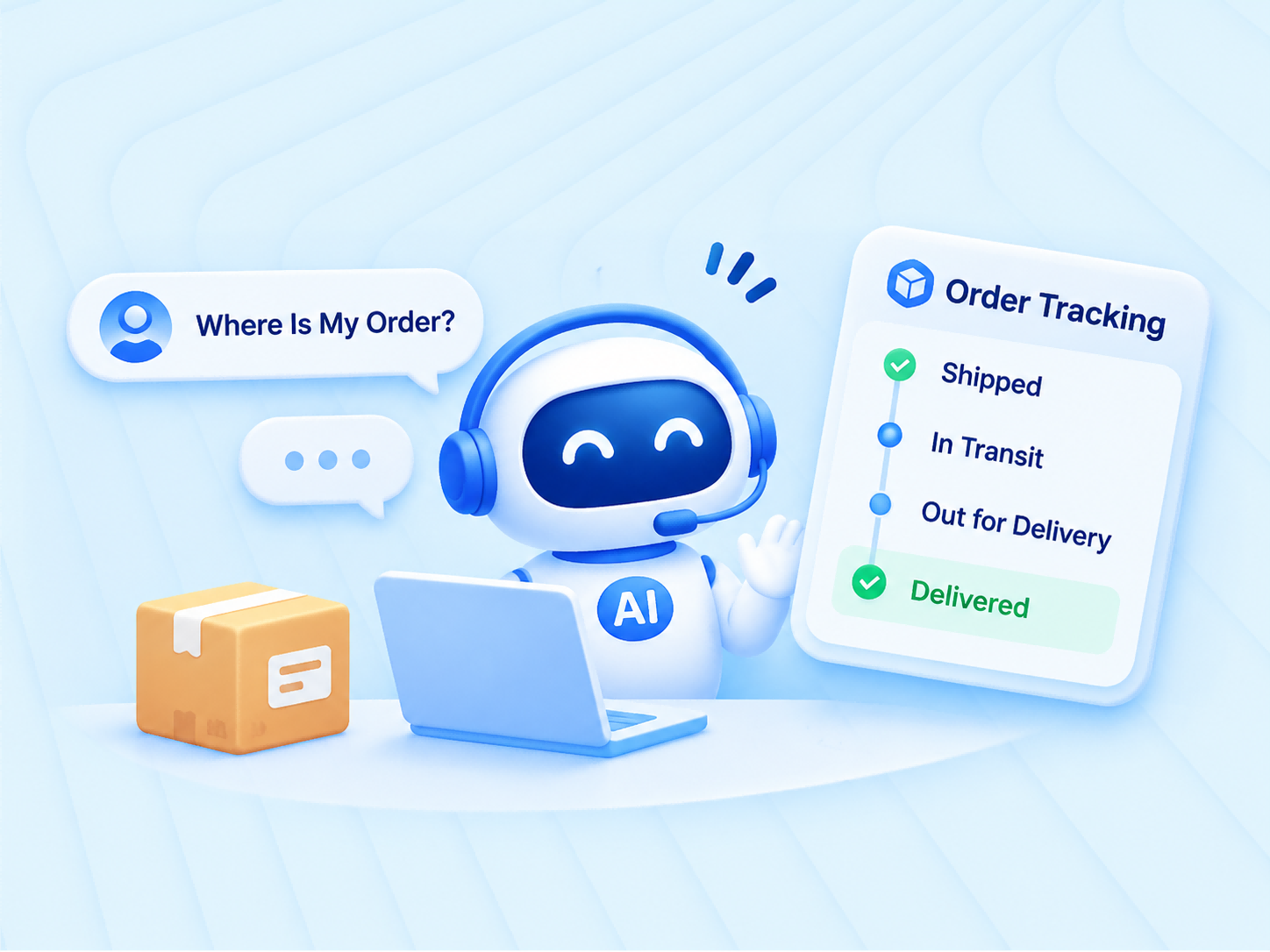
How often tracking data is updated directly affects the accuracy of AI support responses.
For logistics management, operational reporting and analytics, a delay of a few hours is often acceptable. Teams generally focus on overall shipping trends and fulfillment performance across shipments.
When customers contact support, they expect the agent to tell them what is happening with their package at the time of the inquiry.
Since the last update, a package may have moved from in transit to out for delivery, or the carrier may have recorded a delivery or a new exception. An AI agent relying on older data may provide outdated information or suggest an action that no longer fits the situation.
That can undermine customer trust and send an inquiry to a human agent even when it could have been resolved automatically.
AI support agents need an API that retrieves the latest available tracking data on demand so they can verify a shipment’s status during the conversation.
2. The 17TRACK Real-Time API Retrieves the Latest Tracking Data on Demand
Scheduled tracking updates meet the needs of most day-to-day logistics operations. AI customer support and time-sensitive business decisions can require more recent tracking data than a scheduled update provides.
The 17TRACK Real-Time API lets businesses retrieve the latest available tracking data on demand. In Instant mode, it sends an immediate query to supported carriers when a workflow calls for more timely tracking information.
AI customer support platforms can configure the Real-Time API as a tool their agents can call. To verify a specific order’s shipment status, the agent can use the associated tracking number to request the latest available tracking events and base its reply on the results.
On-demand queries let AI support agents refresh shipment information between scheduled updates whenever a customer’s question calls for it.
The Real-Time API returns the information the carrier currently makes available. If the carrier has yet to record a new event, the most recent available event remains the basis for the reply.
3. How the 17TRACK API Provides Reliable Tracking Data for AI Customer Support
Along with on-demand access to recent updates, AI support agents need broad coverage, accurate data, and a consistent data structure to serve merchants across countries and shipping channels.
The 17TRACK API gives AI customer support platforms a single way to access shipping data across a global carrier network, with intelligent carrier identification and standardized tracking data.
A Single Integration for 3,500+ Carriers Worldwide
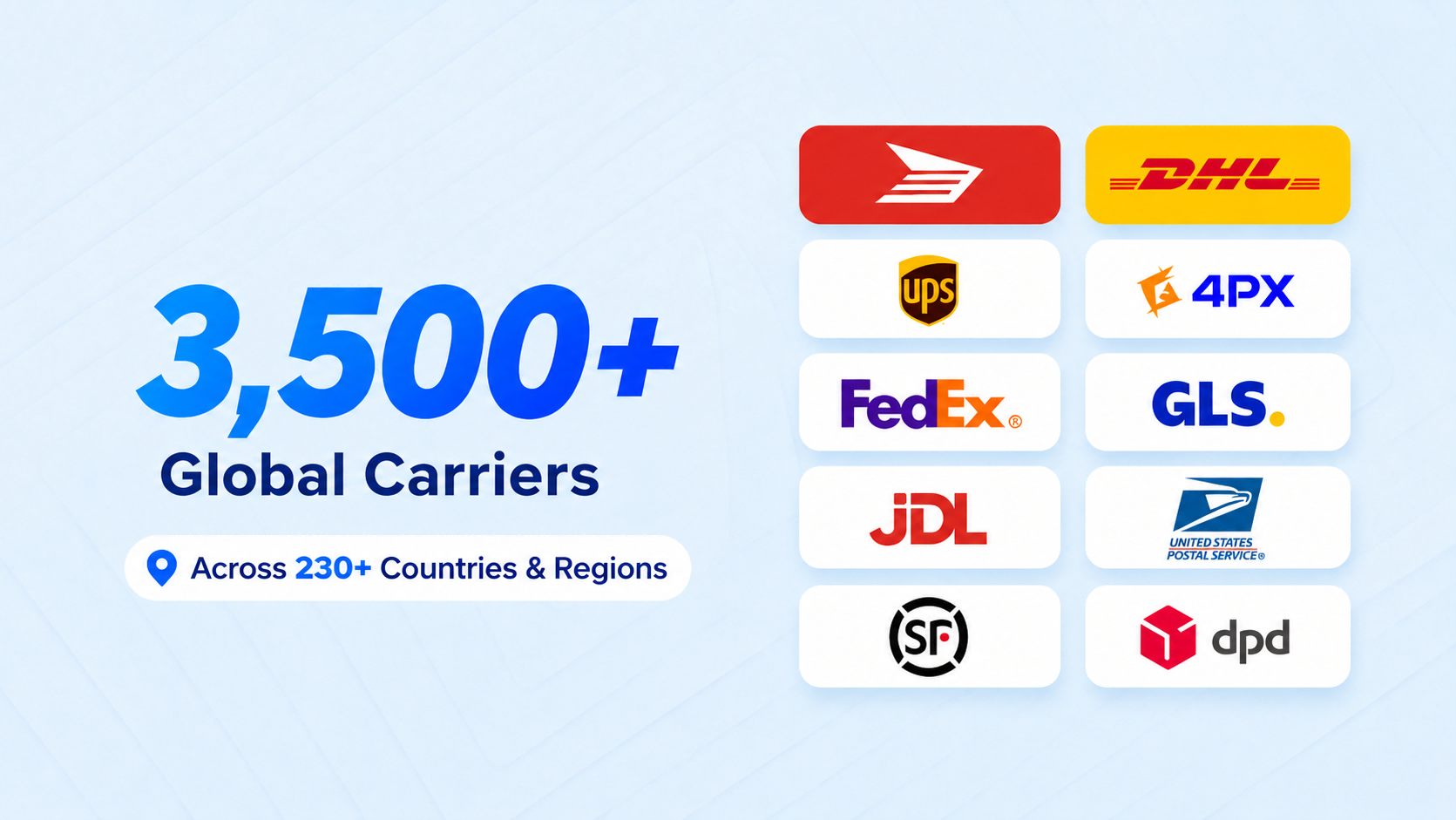
An AI customer support platform may serve multiple brands across several countries, each with its own mix of carriers.
17TRACK API covers 3,500+ carriers across 230+ countries and regions. Platforms can retrieve tracking events from international couriers, postal operators, and regional carriers through one interface, reducing the work of building and maintaining separate carrier integrations.
AI-Powered Carrier Identification Improves Matching Accuracy
Different carriers can use similar tracking number formats. A query sent to the wrong carrier can return no results even when tracking events already exist.
17TRACK API adapts an in-house AI model with rule-based matching. It considers factors such as tracking number patterns, region, and frequently used carriers to achieve a 95%+ carrier identification rate. This helps businesses query the right data source and reduce lookup failures caused by carrier mismatches.
9 Main Statuses and 30 Sub-statuses Standardize Tracking Events
Carriers use different event descriptions for the same stage of a shipment’s journey.
The 17TRACK API maps tracking events from different sources to 9 main statuses and 30 sub-statuses while retaining detailed tracking history.
With a consistent data structure, AI support agents can apply the same logic across carriers to determine whether a package is in transit, out for delivery, delivered, or experiencing an exception.
Using the event details, timestamps, and rules configured by the merchant, the agent can assess the current fulfillment status, guide the customer on what to do next, or hand the issue over to a human agent when needed.
Helping AI Customer Support Resolve Delivery Issues
Resolving post-purchase issues requires AI support agents to understand what the customer needs and retrieve accurate data in time to act on it. For delivery inquiries, the latest available tracking events help the agent establish the shipment’s status and give advice that fits the situation.
The 17TRACK API combines global multi-carrier tracking, AI-powered carrier identification, standardized tracking statuses, and a Real-Time API to give AI support agents reliable access to shipment data on demand.