Pallet
What Is a Pallet?
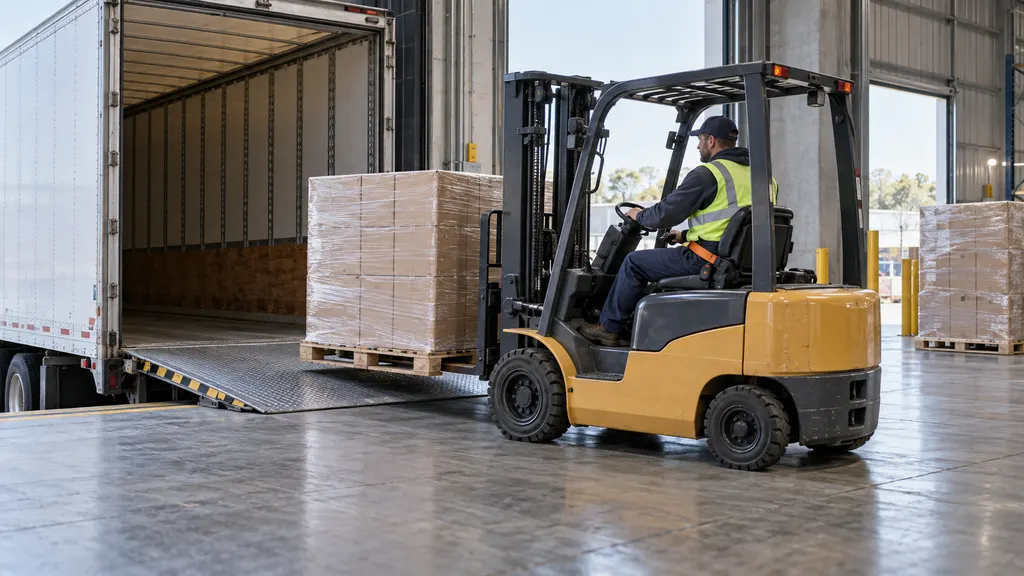
A pallet is a portable, usually rigid platform that supports goods so they can be lifted, moved, stored, and transported together using equipment such as a forklift or pallet truck. In logistics, pallets provide a handling base for cartons, bags, drums, and other packages. A pallet and the goods secured to it form a unit load, allowing multiple packages to be handled as one physical unit rather than individually.
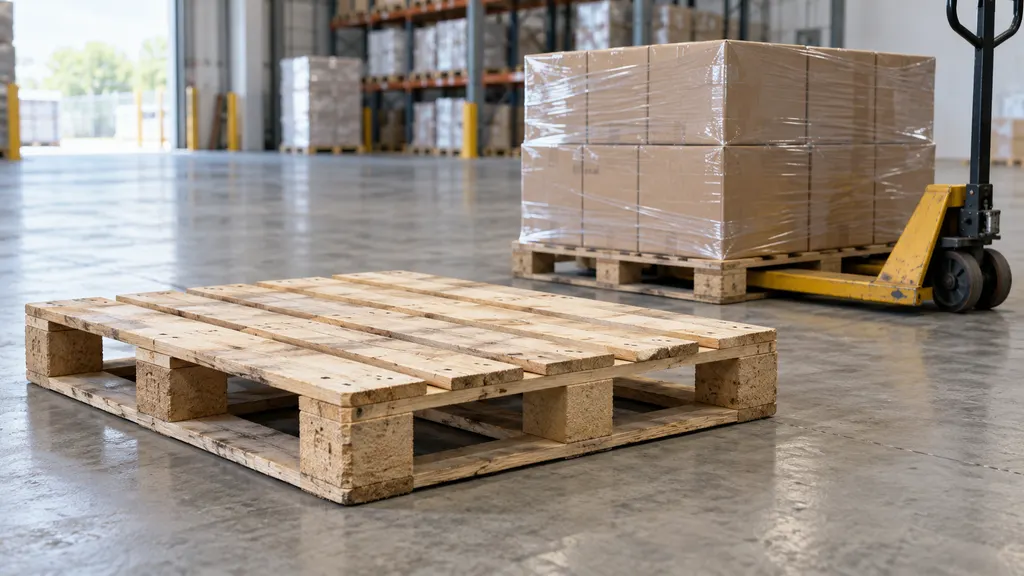
The word can refer to the empty platform or, informally, to a loaded platform. This distinction matters in warehouse instructions, freight bookings, and purchasing documents: a request for ten empty pallets is different from a shipment containing ten palletized loads. A pallet is handling equipment, not a shipping container, and does not by itself enclose or fully protect its contents.
Role in Logistics and Ecommerce
Pallets connect several stages of a supply chain. A manufacturer may stack packaged goods on pallets, a carrier may transport the loaded pallets, and a warehouse may receive and store them before breaking the loads down for order fulfillment. Palletization is the process of arranging and securing goods on a pallet for these activities.
In ecommerce, pallets are particularly relevant to inventory replenishment and movements between suppliers, distribution centers, and fulfillment facilities. The final customer order may still travel as an individual parcel. Palletized inbound inventory and parcel-based outbound delivery are therefore compatible parts of the same fulfillment process, not competing descriptions of a single shipment.
For example, an online retailer may receive cartons of household products on pallets. Warehouse staff check the shipment, record the received quantities, and move the goods into storage. Later, individual items are picked from that inventory and packed into customer parcels. Returns may also be consolidated onto pallets for movement to an inspection or processing facility.
Users encounter the term in freight quotations, warehouse receiving requirements, packing lists, supplier instructions, and equipment specifications. Depending on the document, a pallet count may describe physical handling units rather than the number of cartons, products, or customer orders.
Construction and Main Characteristics
A pallet has a load-supporting surface and space underneath for handling equipment to enter. Its construction determines how equipment can approach it, how it supports the load, and whether it is suitable for a particular storage arrangement. Material, design, dimensions, and rated performance are separate characteristics; none should be used alone to determine suitability.
Materials
| Material | Relevant characteristics | Selection considerations |
|---|---|---|
| Wood | Can be assembled from separate boards and supporting members; some designs permit repair. | Check condition, load suitability, and applicable wood packaging requirements for international movements. |
| Plastic | Can be molded into different shapes and surface designs. | Check rated performance, cleaning requirements, temperature suitability, and compatibility with handling equipment. |
| Metal | Can provide a durable platform for specified industrial applications. | Consider empty weight, corrosion exposure, and the requirements of the intended handling system. |
| Paper-based materials | Include designs made from corrugated or other engineered paper materials. | Confirm load limits, moisture tolerance, and whether the intended handling and storage conditions are suitable. |
These are material categories, not a universal ranking of quality. A pallet suitable for one product or distribution system may be unsuitable for another. Material selection does not replace assessment of the complete loaded pallet.
Design and Equipment Access
Two common construction descriptions are stringer pallets and block pallets. Stringer pallets use longitudinal supporting members beneath the deck; block pallets use blocks as part of the supporting structure. Other design features include the number of decks, deck-board spacing, and openings for lifting equipment.
The expressions two-way entry and four-way entry describe the sides from which compatible equipment can enter. Equipment compatibility still needs checking: openings that permit forklift access do not necessarily provide equivalent access for every pallet truck. The actual pallet design, fork dimensions, and intended approach matter.
Dimensions, Weight, and Load Capacity
There is no single pallet size used for every market or supply chain. Different standardized formats and customer-specific designs coexist. As one defined example, an EPAL Euro pallet has a footprint of 1,200 by 800 millimeters. That specification describes a particular pallet system, not all pallets used in Europe or in international trade.
When recording dimensions, distinguish the pallet footprint from the overall dimensions of the loaded unit. Goods, protective materials, or wrapping may extend beyond the platform. Loaded height includes the pallet itself, while the pallet's own weight contributes to the total gross weight handled and transported.
Load capacity also depends on how a pallet is supported and used. A load resting on a level floor creates different conditions from a load being moved or supported across warehouse rack beams. Capacity information should therefore identify the relevant handling or storage condition rather than present one unexplained weight limit.
- Static loading: the pallet supports a stationary load under specified support conditions.
- Dynamic loading: the loaded pallet is handled or moved under specified conditions.
- Racking: the pallet is supported in a rack arrangement, potentially leaving parts of its underside unsupported.
A stated capacity is not permission to load any goods in any arrangement up to that weight. Load distribution, concentrated pressure, pallet condition, rack geometry, and the supplier's instructions remain relevant. A damaged pallet may no longer perform as intended even when the goods weigh less than its original rated capacity.
How Palletized Goods Are Prepared and Handled
Pallet preparation brings together product packaging, load stability, equipment compatibility, and destination requirements. The following sequence describes practical checks rather than a universal packing specification.
- Confirm receiving requirements. Establish the permitted pallet format, loaded dimensions, weight limits, labeling arrangements, and any restrictions on overhang or pallet condition.
- Select and inspect the pallet. Check that its design suits the load and handling equipment. Look for broken components, protruding fasteners, contamination, or other damage that could make use unsafe.
- Arrange the goods. Build a load with adequate support and a stable weight distribution. Packaging strength and product shape affect which stacking pattern is appropriate.
- Secure the load. Use suitable wrapping, strapping, edge protection, or other restraints where needed. Restraints should stabilize the goods without damaging the products or their packaging.
- Measure and identify the completed unit. Record the actual loaded dimensions and gross weight, and apply the identifiers required by the warehouse or shipment process.
- Move and store it appropriately. Use compatible equipment and a suitable storage location. Follow equipment instructions and site safety procedures when lifting, stacking, or placing loads in racks.
Securing goods to a pallet does not automatically secure that pallet inside a vehicle or container. Load restraint during transport is a separate consideration. Similarly, stretch wrap can help hold packages together but does not make weak packaging suitable for every stacking or handling condition.
Pallets in Cross-Border Trade
Wooden pallets can fall within international plant-health controls for wood packaging material. ISPM 15, published under the International Plant Protection Convention, sets out measures intended to reduce the risk of introducing and spreading pests associated with wood packaging material in international trade.
For wood packaging within its scope, the standard provides for approved treatment and application of a prescribed mark. Its scope includes relevant solid-wood packaging, while exemptions cover certain materials, including wood packaging made wholly from processed wood materials manufactured using glue, heat, pressure, or a combination of these methods. Applicability should be assessed against the actual construction and the importing country's requirements, not simply whether the pallet is described commercially as wooden.
An ISPM 15 mark is not a certificate of load capacity, product quality, or customs clearance. It addresses a plant-health requirement for the wood packaging. It does not replace commercial documentation, product-specific controls, or checks on the pallet's physical condition.
Repair and remanufacture can affect marking and treatment requirements. Exporters using repaired wooden pallets should verify compliance rather than assume that an existing mark remains sufficient in every circumstance. The relevant national plant protection organization is an appropriate authority for destination-specific guidance.
Related Terms and Common Misunderstandings
| Term | Meaning | Relationship to a pallet |
|---|---|---|
| Palletized load | Goods assembled and secured on a pallet for handling. | Includes both the platform and its contents. |
| Unit load | Items grouped so they can be handled as one unit. | A palletized load is one form of unit load. |
| Skid | A supporting platform, often described as lacking the bottom deck associated with some pallet designs. | Usage overlaps with pallet in commercial speech; specifications are more reliable than the name alone. |
| Carton | A packaging box containing products or other packages. | Several cartons may be placed on one pallet. |
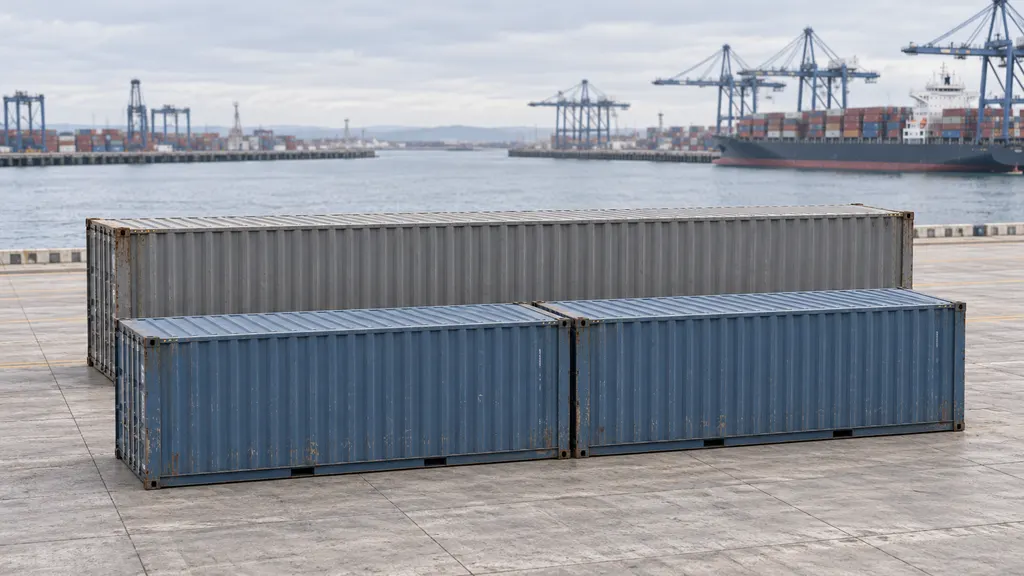
| Shipping container | A transport unit used to contain cargo during movement. | A container can carry multiple palletized loads; it is not itself a pallet. |
A pallet count is not an inventory quantity. One pallet may hold multiple products or cartons, and a shipment can contain pallets with different contents. Inventory records therefore need the relevant item quantities as well as any pallet-level identifiers.
Matching dimensions do not prove interchangeability. Pallets with the same footprint can differ in construction, condition, equipment access, and supported loads. A receiving facility may require a particular specification rather than merely a matching length and width.
A pallet is not inherently safe to stack or rack. Suitability depends on the platform, goods, packaging, support conditions, and handling method together. Safe use requires assessment of the actual load and operation.
QA
What does pallet mean in shipping?
It means the platform used to support goods for mechanical handling. In shipment descriptions, it may also refer informally to the complete loaded unit, so the intended meaning should be clear.
Is there a universal standard pallet size?
No. Multiple standardized formats and customer-specific sizes are used. The required dimensions should be confirmed with the receiving facility and transport arrangements.
What is the difference between a pallet and a skid?
A skid is often described as a supporting platform without a bottom deck. However, commercial usage overlaps, so construction specifications should take priority over terminology.
Do all pallets need ISPM 15 treatment?
No. ISPM 15 concerns wood packaging material within its scope, not every pallet material or every movement. Material, construction, destination rules, and the applicable exemptions determine the requirements.
Sources
- Merriam-Webster: Pallet — Reference definition of the handling platform.
- UK Health and Safety Executive: Pallet Safety, Guidance Note PM15 — Pallet construction, selection, inspection, loading, handling, and storage considerations.
- European Pallet Association: EPAL Euro Pallet — Dimensions and specifications for the named pallet format.
- International Plant Protection Convention: ISPM 15, Regulation of Wood Packaging Material in International Trade — Scope, exemptions, treatment, marking, and requirements concerning repaired or remanufactured wood packaging.