USPS Small Flat Rate Box Guide: Size, Cost, and What Actually Fits
The USPS Small Flat Rate Box is a compact Priority Mail option for items that fit inside a box measuring approximately 8 11/16 inches long, 5 7/16 inches wide, and 1 3/4 inches high. Its postage is based on the applicable Small Flat Rate Box price rather than the package’s weight or destination within the United States, but the price can change when USPS updates its rates. The most reliable way to confirm the current cost is to check the official USPS price list or calculate postage immediately before shipping.
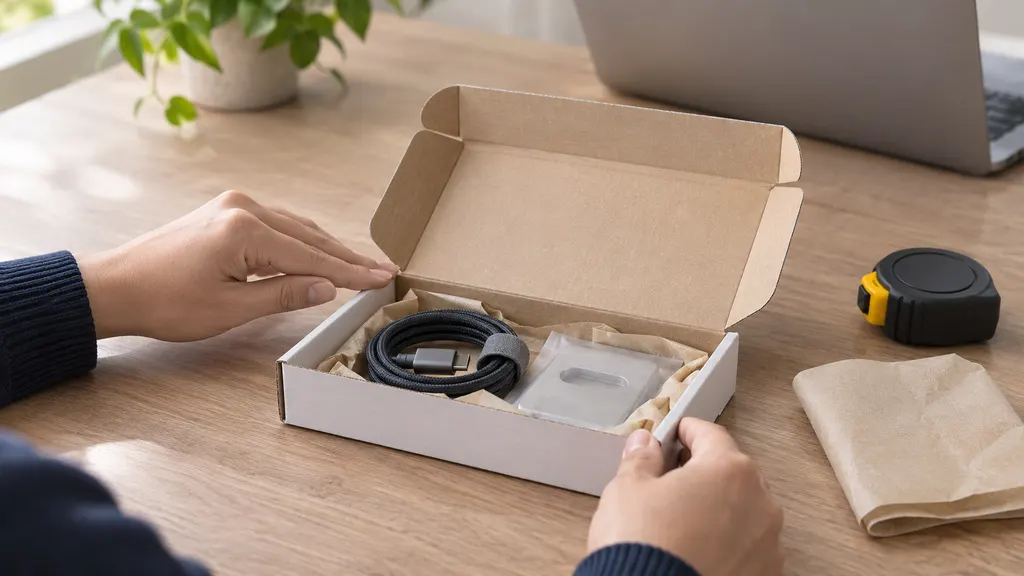
The box is useful for small, dense shipments that are too bulky for a padded envelope but do not need much volume. It is not a general-purpose small parcel box: the height is limited, and an item that technically fits may still be difficult to pack safely. The practical question is not only whether the lid closes, but whether the contents can be protected without forcing the box or changing its shape.
Small Flat Rate Box size and capacity
The USPS Small Flat Rate Box has these approximate external dimensions:
| Specification | Approximate measurement |
|---|---|
| Length | 8 11/16 inches |
| Width | 5 7/16 inches |
| Height | 1 3/4 inches |
| Common metric approximation | About 22.1 × 13.8 × 4.4 cm |
These are the box’s stated dimensions, not a promise that every item with the same measurements will be safe to ship. Interior space can be slightly smaller because of the box material, folds, seams, and any protective packaging. When measuring an item, include the space required for bubble wrap, paper, a sleeve, or another cushioning material.
What usually fits
The box works best for flat or compact items that do not need much cushioning. Examples may include small books, compact accessories, folded clothing, cables, small tools, cosmetics, and other non-fragile merchandise. The actual fit depends on the item’s shape and whether it can be placed flat without damaging it.
Some products fit by volume but not by geometry. A round or irregular item may leave unusable gaps, while a rigid product near the maximum height may prevent the flaps from closing. A box that closes only when pressed down is overfilled. That can weaken the package and may cause the contents or seams to become exposed during handling.
A practical fit test
- Measure the item at its widest, longest, and thickest points.
- Add the thickness of the planned protective material on all sides that need protection.
- Place the packed item in a correctly assembled Small Flat Rate Box.
- Close the flaps without compressing the contents or distorting the box.
- Shake the closed package gently. If the contents move significantly, add cushioning; if the box bulges, use a larger package.
For sellers, a physical test is more reliable than relying only on product dimensions. Make a sample package using the exact insert, wrapping, labels, and retail packaging used for normal orders. This reveals whether the product needs a different box, a thinner insert, or a separate shipping method.
What usually does not fit well
The 1 3/4-inch height is the main limitation. Thick sweaters, shoes, bulky electronics, large bottles, rigid gift packaging, and heavily cushioned fragile goods often need more vertical space. Items with corners that press against the walls can also be poor candidates even when their calculated dimensions appear acceptable.
Liquids require additional care. A container must be sealed against leakage, and the outer packaging should be able to contain a spill if the inner container fails. The Small Flat Rate Box is not automatically suitable for every liquid, cosmetic, battery, or restricted item. Check the applicable USPS rules before mailing anything regulated, fragile, hazardous, or perishable.
Do not alter the box to create more capacity. Cutting, reshaping, extending the flaps, or covering the box with packaging that changes its form may affect whether it qualifies for the intended flat-rate service. If the original packaging cannot close normally, select a different package and service.
How the Small Flat Rate Box cost works
Flat Rate postage is designed to remove weight and zone calculations from the basic pricing decision. If the shipment is eligible, you pay the applicable Small Flat Rate Box price rather than calculating a separate price for every domestic destination. That can be useful when sending a dense item across the country, where a weight-and-distance price could otherwise be higher.
There is no single permanent price to memorize. USPS rates can change, and the amount may depend on the purchase channel, mailing service, postage method, and any additional service selected. A price displayed through an online postage platform may not match a retail counter price. Some online labels can also include discounts or account-specific pricing, subject to the platform’s terms.
The box itself is generally available through USPS supply channels at no separate charge for qualifying Priority Mail use. Free packaging does not mean free postage. You still need to pay the applicable postage, and extra services such as insurance, signature options, or special handling can add cost when available and selected.
Where to verify the current price
- Check the current USPS price list, commonly published in the Postal Explorer rate materials.
- Use the official USPS postage calculator or shipping workflow for the service and mailing date.
- Compare the price shown at a retail counter with the price shown through the postage channel you plan to use.
- Confirm whether the quoted amount includes any selected extra service.
For recurring shipments, record the date of each price check in your shipping rules. Avoid hard-coding an old postage amount into an ecommerce system or customer-facing shipping table without a review process. A rate change can turn a previously profitable shipping charge into an undercollection.
Small Flat Rate Box versus other USPS packaging
The Small Flat Rate Box is most attractive when the parcel is compact, relatively heavy for its size, and traveling far enough that zone-based pricing may be less appealing. It is less attractive when the item is light, flat, or close to the dimensional limit. In those cases, a padded envelope, your own lightweight box, or another Priority Mail package may provide a better physical fit or a lower price.
| Option | Usually makes sense when | Main limitation |
|---|---|---|
| Small Flat Rate Box | The item is compact and dense, and predictable domestic pricing is useful | Very limited height and fixed shape |
| Flat or padded mailer | The contents are thin, flexible, or need less structural protection | Less suitable for rigid or fragile items |
| Your own box | The product has an unusual shape or needs custom cushioning | Pricing may depend more on weight, dimensions, and destination |
| Larger Flat Rate Box | The product needs more room but still benefits from flat-rate pricing | A larger box is not automatically cheaper or better for a small item |
The right comparison is based on the packed shipment, not the product alone. Weigh and measure the finished parcel, then compare the available USPS services for its origin, destination, size, and mailing date. For small businesses, this test should be repeated for the products that generate the most orders because packaging changes can alter the result.
Labeling and packing checklist
- Use a box intended for the service you are purchasing.
- Remove or cover old barcodes, addresses, and service markings.
- Keep the shipping label on the largest flat surface and away from seams when possible.
- Use enough cushioning to prevent movement without bulging the box.
- Seal every opening with suitable packing tape; do not rely only on the adhesive strip for a heavy item.
- Confirm the recipient address, return address, ZIP Code, and any apartment or suite information.
- Check USPS restrictions for batteries, liquids, perishables, medicines, and other regulated contents.
- Retain the tracking number and acceptance receipt for valuable or time-sensitive shipments.
Tracking can help you monitor a package after acceptance, but it does not replace correct packaging, an accurate address, or compliance with mailing rules. If you manage many orders, connect tracking information to the order record so that delivery exceptions can be investigated without relying on a customer’s memory of the label or mailing date.
Bottom line
The USPS Small Flat Rate Box is a good fit for compact, dense items that can be protected within an approximately 8 11/16 × 5 7/16 × 1 3/4-inch box. Its main benefit is predictable flat-rate pricing, but the current postage should always be verified through USPS because rates and purchase-channel prices can change. Test the packed product, not just the bare item; compare alternatives when the shipment is light or unusually shaped; and never force the box closed.
FAQ
Is the USPS Small Flat Rate Box free?
USPS supplies qualifying Priority Mail packaging through its official supply channels, but the shipping service is not free. You still pay the applicable postage and any selected extra services. Availability and ordering conditions should be checked on the official USPS website.
Does the Small Flat Rate Box have a weight limit?
Priority Mail packages are subject to USPS service and packaging rules, including applicable maximum-weight requirements. Do not assume that the flat-rate format makes every weight acceptable. Check the current USPS rules for the exact service and package type before mailing a heavy item.
Can I use my own box for Small Flat Rate postage?
No. Small Flat Rate pricing is tied to the designated USPS Small Flat Rate packaging format. If you use your own box, compare the available services using the parcel’s actual weight, dimensions, and destination.
Can I put a Small Flat Rate Box inside another box?
Using an outer box may change how the shipment is classified and priced. It can also obscure markings or create packaging issues. If additional protection is needed, confirm the arrangement with USPS or choose packaging designed for the required service rather than assuming the inner flat-rate label still governs.
What if my item fits only after I press the lid down?
Use a larger package or reduce the amount of product packaging. A lid that closes only under pressure indicates that the shipment is overfilled or inadequately matched to the box. The finished parcel should remain structurally sound and should not bulge.
Where can I find the current USPS Small Flat Rate Box price?
Use the current USPS Postal Explorer price materials, the official USPS postage calculator, or a USPS shipping workflow for the intended mailing date. Verify the purchase channel because online and retail prices may not be identical.