USPS Flat Rate Box Sizes and Prices: Compare every Box before You Ship
USPS Flat Rate boxes are useful when the contents are heavy enough that a fixed Priority Mail price may cost less than weight-and-zone pricing. The main box choices are the Small Flat Rate Box, two Medium Flat Rate Box designs, and the Large Flat Rate Box. The reference retail prices below are based on the USPS Priority Mail price schedule available through USPS Postal Explorer; because postage can change, confirm the current amount before buying a label.
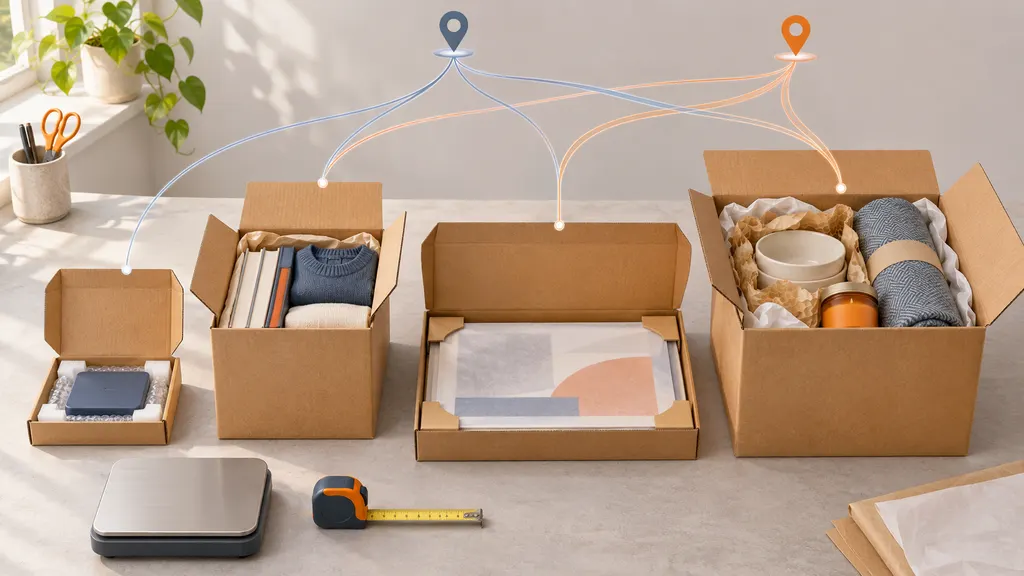
The right choice depends on more than the outside dimensions. You should compare usable space, the shape of the item, destination zone, total packed weight, and whether the shipment qualifies for a special military or diplomatic address rate. A larger box is not automatically better: unused space can increase the amount of protective material required and may make packing less secure.
USPS Flat Rate box sizes and reference prices
| Box | Inside dimensions | Reference retail price | Best suited to |
|---|---|---|---|
| Small Flat Rate Box | 8 11/16 x 5 7/16 x 1 3/4 inches | $10.20 | Small, dense items that need Priority Mail handling |
| Medium Flat Rate Box, Top-Loading | 11 1/4 x 8 3/4 x 6 inches | $17.65 | Books, clothing, packaged goods, and compact retail orders |
| Medium Flat Rate Box, Side-Loading | 14 x 12 x 3 1/2 inches | $17.65 | Flat or wide products that are difficult to place in a top-loading box |
| Large Flat Rate Box | 12 1/4 x 12 1/4 x 6 inches | $24.65 | Larger domestic shipments when the fixed price beats weight-based Priority Mail |
USPS also offers free military-service and diplomatic-service versions of certain Priority Mail Flat Rate boxes. Those shipments can have different prices and eligibility rules from ordinary domestic packages. Do not apply the military or diplomatic rate simply because the recipient is connected with the military; the address format and mailing conditions must meet USPS requirements.
How the box designs differ
Small Flat Rate Box
The Small Flat Rate Box is shallow and is generally most useful for compact items. Its narrow profile can help prevent movement when the product is already close to the box’s shape. It is not a good choice for bulky merchandise, thick clothing, or anything that must be placed diagonally. The label, closure, and protective packaging also need to fit without forcing the box out of shape.
Use the Small box when the shipment is physically compact and the Priority Mail service is valuable for the destination. If the item is light, compare the Flat Rate price with another USPS service before sealing the package. Flat Rate pricing is not automatically the lowest option for every weight or ZIP Code combination.
Medium Top-Loading Box
The top-loading Medium box has a more conventional carton shape. It is often easier to pack for products that can be placed vertically, including books, folded apparel, small household items, and multiple retail units. Its depth provides more room for cushioning than the shallow Medium side-loading design, but it still has a fixed footprint that may not fit long or flat products.
Do not fill the box merely because space is available. Heavy contents can make the package difficult to handle and may crush less durable products. Use void fill to limit movement, but leave enough room for the flaps to close naturally. USPS packaging should not be bulging, over-taped, or structurally distorted.
Medium Side-Loading Box
The side-loading Medium box is wider and shallower than the top-loading version. It can be more practical for flat merchandise, documents that should not be folded, framed items that fit within the dimensions, or several thin products packed together. Its shape is less suitable for tall or rounded objects.
The two Medium boxes have the same listed Flat Rate price, so the decision is primarily about geometry and packing protection rather than postage. Measure the packed product, not just the product by itself. A product that technically fits may still need corner protection, an inner carton, or sufficient cushioning to withstand handling.
Large Flat Rate Box
The Large Flat Rate Box provides the greatest capacity among the standard domestic Flat Rate boxes in this comparison. It is a reasonable candidate for larger bundles, household goods, and ecommerce orders that would become expensive under weight-and-zone pricing. It is not automatically the right option for lightweight shipments, nearby destinations, or products that fit efficiently in a smaller carton.
Large boxes also create a packing trade-off. More empty space means more void fill, greater risk of internal movement, and potentially more dimensional bulk even when the Flat Rate service itself uses a fixed price. Select the Large box only after checking that the contents can be immobilized without overloading the carton.
Flat Rate box comparison: which one should you use?
Choose the Small box when the item is compact and shallow. Choose the Medium top-loading box when the contents are moderately deep or are easiest to load from the top. Choose the Medium side-loading box when the shipment is broad and flat. Choose the Large box when the combined contents need its footprint and the fixed price is competitive with the alternatives.
For a more reliable decision, compare the following factors in order:
- Measure the packed contents. Include inner packaging, corner protection, and the space required to close the carton.
- Check the actual destination. USPS pricing for non-Flat Rate services can vary by distance and destination zone, so a Flat Rate box may be attractive for one address but not another.
- Weigh the completed package. Heavy contents may justify Flat Rate pricing, while light contents may be cheaper through another service.
- Compare the service requirements. Verify the selected service, delivery options, insurance or included coverage terms, and any restrictions that apply to the contents.
- Test the packing method. Shake the closed package gently. The contents should not move freely, and the box should remain square.
When USPS Flat Rate is not the cheapest option
Flat Rate pricing is based on the box type rather than the package’s exact weight and destination zone. That simplicity is useful, but it can produce a higher price when the shipment is light, small, or traveling a relatively short distance. A small parcel may be better suited to a different USPS service, depending on its weight, dimensions, destination, and required delivery characteristics.
Compare the complete postage quote instead of comparing only the printed box price. The quote should reflect the actual mailing service, package dimensions, weight, destination ZIP Code, and any optional services. A free USPS Flat Rate box does not make the shipment free; postage is charged when the package is mailed.
Also check whether the item is eligible for the service you plan to use. Hazardous materials, restricted articles, international destinations, military addresses, and certain unusually shaped packages can require additional rules or documentation. The official USPS service page and current domestic mail manual should take priority over an older shipping checklist.
Practical packing checks before you ship
- Use the correct box. USPS-produced Flat Rate packaging should be used for the corresponding Flat Rate service. Do not cover or alter markings in a way that creates confusion about the service being purchased.
- Protect fragile items. Wrap individual pieces, separate hard surfaces, and reinforce vulnerable corners. A Flat Rate box is a postage option, not a substitute for product protection.
- Close the flaps without force. If the carton is bulging, move to a larger box or reduce the contents. Excessive tape cannot correct an overloaded package.
- Remove old labels. Reused cartons can contain barcodes and addresses that interfere with processing. Cover or remove outdated labels before applying the new one.
- Verify the label details. Check the recipient address, return address, service type, postage amount, and any required customs information before handing over the parcel.
How to verify the price before mailing
USPS postage is time-sensitive. Before shipping, open the current USPS price tables or postage calculator, select the intended Flat Rate box, enter the mailing origin and destination, and confirm whether the transaction is retail or another eligible mailing category. Prices shown by third-party shipping software may also depend on the account, channel, or postage product being used.
Keep a record of the quote for business shipments, especially if the package is part of a customer order. If the final package differs from the dimensions or weight entered during label creation, correct the label before mailing. For recurring shipments, test each box type with representative orders rather than assuming that one Flat Rate box is always the most economical choice.
FAQ
Which USPS Flat Rate box is the cheapest?
The Small Flat Rate Box has the lowest reference retail price among the standard domestic Flat Rate boxes listed here. It is only the cheapest option when the contents fit its shallow dimensions and the service is appropriate. A different USPS service may cost less for a light package.
Are the two Medium Flat Rate boxes priced differently?
The top-loading and side-loading Medium Flat Rate boxes have the same reference retail price in the price schedule used for this guide. Their dimensions and loading orientation differ, so select the design that matches the shape of the packed contents.
Can I use a Large Flat Rate Box for any domestic package?
No. The package must meet USPS size, weight, content, packaging, and service requirements. A Large box is also not necessarily the lowest-cost choice. Compare the current Flat Rate quote with other eligible USPS services before mailing.
Do USPS Flat Rate boxes cost money?
USPS provides its branded Flat Rate packaging through its approved distribution channels, but the shipment still requires postage. The prices in this article refer to postage, not a purchase price for the empty carton.
Do Flat Rate prices include tracking?
Priority Mail shipments generally include USPS tracking as part of the service, but confirm the current service terms and label details before mailing. Keep the acceptance receipt or tracking number so the shipment can be followed after handoff.