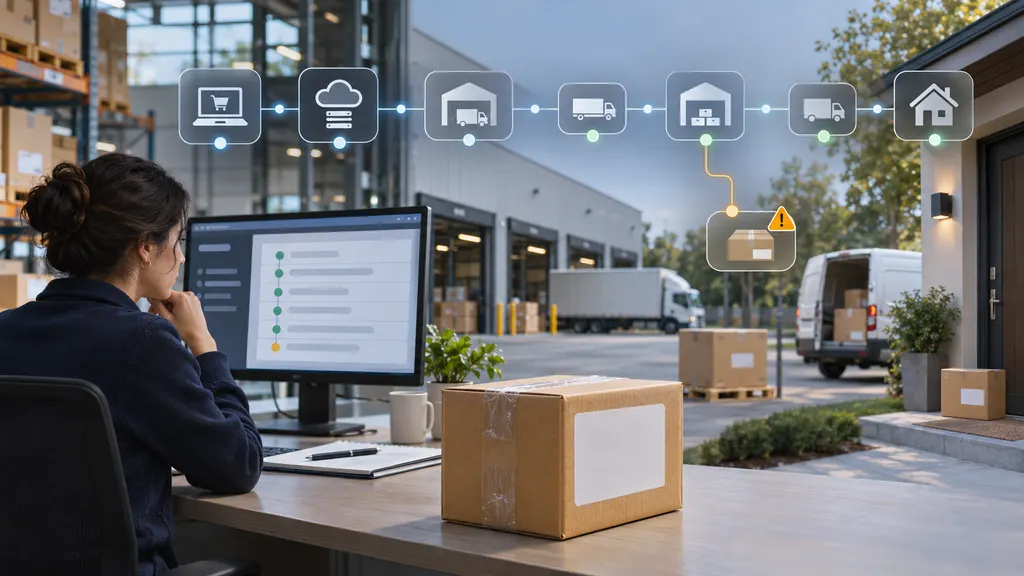
Special Railway Line
What Is a Special Railway Line?
A special railway line is a railway connection or route provided for a particular facility, industrial activity, or transport purpose rather than for unrestricted general railway use. In freight logistics, the expression can refer to tracks serving a factory, mine, port, warehouse, or other freight facility and connecting it with a wider railway network. However, the phrase is not a universally standardized English railway term. Its exact meaning depends on the country, source document, and operating arrangement.
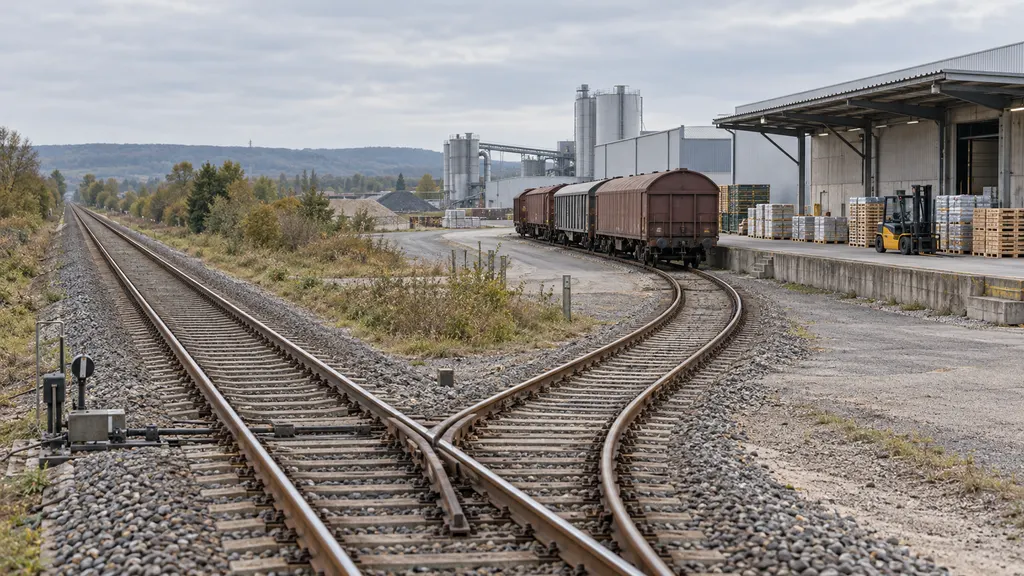
In translated logistics documents, the expression may describe an industrial railway, a private siding, or another dedicated rail connection. In a service quotation, it may instead be used loosely for a specialized rail freight service. These meanings should not be treated as interchangeable: a physical railway line is infrastructure, while a transport service is an arrangement for moving goods.
Meaning and Terminology
The safest interpretation begins with the object being described. A document discussing track construction, access, maintenance, or a connection to a factory is describing infrastructure. A quotation discussing departures, cargo acceptance, transit arrangements, or freight charges is more likely describing a service. The wording alone does not establish ownership, access rights, technical standards, or operating frequency.
Eurostat defines a railway line by reference to railway tracks forming a route between points. That infrastructure meaning provides a useful starting point, but it does not establish a separate international category called a special railway line. Where this phrase appears in a contract, technical specification, or translated regulation, the document's definitions and the applicable jurisdiction take precedence over an informal commercial interpretation.
| Related term | Meaning | Relationship to special railway line |
|---|---|---|
| Industrial railway | A railway serving industrial operations, potentially including an internal network of tracks. | May describe the intended meaning when the line serves a plant, mine, or industrial complex. |
| Private siding | A track associated with a particular facility or user, connected to other railway infrastructure. | May be the more precise term for a facility's freight loading connection; ownership and access require confirmation. |
| Branch line | A railway route branching from another route. | Describes the route's relationship to the network, not necessarily exclusive industrial use. |
| Dedicated freight line | Infrastructure designated for freight traffic rather than mixed passenger and freight use. | Concerns traffic purpose and need not serve only one facility. |
| Dedicated rail freight service | A transport operation organized for particular cargo, customers, or a route. | Describes a service, which may run over infrastructure shared with other trains. |
These terms describe different characteristics rather than mutually exclusive categories. A privately owned industrial connection, for example, may also branch from a public railway route. Neither description alone explains who operates trains or who maintains the connection.
Role in Freight Logistics
A facility rail connection provides an interface between a production or storage site and the railway transport network. Depending on its layout and equipment, it may allow freight wagons to be positioned at loading areas or containers to be transferred between rail and other modes. Its supply-chain role is therefore physical access: it connects a location where goods are produced, stored, or handled with rail transport.
This access can change where a shipment is transferred between modes. Without a usable connection, a shipper may need road transport between its premises and a rail terminal. With an appropriate connection, some loading or unloading may take place at the premises instead. That possibility does not establish that direct rail transport is available for every shipment or that it is cheaper than using a terminal.
A connection must be considered alongside the rest of the transport arrangement. Track access does not itself provide wagons, locomotive services, train paths, cargo-handling equipment, or onward capacity. A usable logistics solution requires compatible infrastructure and an operator willing and authorized to provide the relevant movements.
How a Facility Rail Movement Works
The following sequence illustrates a possible freight movement through an industrial connection. It is an explanatory workflow, not a universal operating procedure; responsibilities and movement sequences depend on local arrangements.
- Transport planning: The shipper and transport provider confirm the cargo, destination, equipment requirements, loading arrangements, and whether the facility can accept the proposed railway movement.
- Access coordination: The parties establish the connection point, available operating windows, train or wagon handover arrangements, and responsibility for movements inside the facility.
- Equipment positioning: Suitable wagons are brought to the agreed location. Local movements, often called shunting or switching, place them where loading or unloading can occur.
- Cargo handling: Goods are loaded, secured, or unloaded using equipment appropriate to the cargo and wagon type. Required checks and transport documentation are completed.
- Handover and departure: Loaded or empty wagons are transferred to the next operator or movement under the applicable operating arrangements.
- Onward transport: The shipment proceeds through the wider rail network and any subsequent terminal, border, or delivery stages included in the transport plan.
The distinction between movement within a facility and movement on the connecting railway matters. A facility may manage its own internal handling while another organization provides the connection to the wider network. Alternatively, operating responsibilities may be combined. Neither arrangement can be inferred simply from the label special railway line.
Technical and Operational Conditions
A line's existence does not establish its suitability for a particular shipment. Assessment needs to address the complete route and the proposed operating method, rather than only the track inside the shipper's premises.
| Condition to check | Why it matters |
|---|---|
| Network connection and access | A physical connection does not by itself establish a contractual right to use the adjoining network. |
| Track and equipment compatibility | Track gauge, permissible loads, clearances, and other technical limits must suit the intended equipment and cargo. |
| Usable track length and layout | These affect wagon positioning, handling arrangements, and the movements needed within the facility. |
| Loading and unloading facilities | The site needs equipment and working areas appropriate to the cargo and transport unit. |
| Operating responsibilities | The parties need to know who controls movements, supplies traction, maintains infrastructure, and manages handovers. |
| Available service | A technically suitable connection is not equivalent to a confirmed transport booking or recurring service. |
Regulatory scope also requires care. For example, the United States track safety provisions in 49 CFR 213.3 distinguish certain tracks inside installations from track that forms part of the general railroad system of transportation. Separately, 49 CFR 1150.1 addresses the scope of authorization requirements and exceptions involving certain types of track. These are jurisdiction-specific provisions, not worldwide definitions of special railway lines. An exception under one provision should not be interpreted as freedom from all safety, operating, or other legal obligations.
Use in Ecommerce and Cross-Border Trade
For an ecommerce business, a facility rail connection is relevant primarily to upstream inventory movements rather than individual parcel delivery. For example, a retailer may receive a consolidated shipment of merchandise through a rail-served distribution facility, then separate that inventory into customer orders for road-based distribution. The railway connection serves the consolidated freight movement; it does not determine how each customer order is delivered.
In a cross-border shipment, the connection is only one part of a longer transport chain. The cargo may still require terminal handling, transit arrangements, customs procedures, or transfer between transport systems. A special railway line does not automatically have customs clearance facilities, bonded status, or permission to handle every category of goods. Those capabilities require separate verification.
Where a forwarder uses the expression for a commercial rail service rather than infrastructure, the buyer should establish the actual service boundaries. Important questions include the origin and destination terminals, any road collection or delivery legs, cargo acceptance conditions, responsibility for customs formalities, and the point at which the quoted service ends. A route name does not answer these questions.
Practical Interpretation Example
Suppose a manufacturer states that its factory has a special railway line. A logistics planner should first determine whether this means a physical siding connected to the railway network or simply access to a contracted rail freight service. If it is a physical connection, the planner would then confirm that it is operational, suitable for the proposed wagons, and supported by an available transport arrangement.
If a separate quotation advertises a special railway line between two inland terminals, it may be describing a service using shared railway infrastructure. The planner should not assume that the provider owns the route, that trains run exclusively for that shipment, or that delivery to the consignee's premises is included. In both situations, precise descriptions of infrastructure, service scope, and responsibility are more useful than the label alone.
QA
Is a special railway line the same as a private siding?
Not necessarily. A private siding may be the intended meaning when the phrase describes a facility connection, but the expression can also refer to a broader industrial railway or a specialized transport service.
Does a special railway line provide direct delivery to a warehouse?
Only if the warehouse has a suitable operational connection and the transport arrangement includes delivery there. Otherwise, road transport or terminal handling may still be required.
Does special mean faster or exclusive?
No. The word alone establishes neither speed nor exclusive use. Those characteristics must be supported by the operating arrangement or service terms.
Does a cross-border rail connection include customs clearance?
Not automatically. Infrastructure access and customs arrangements are separate matters. The available facilities and the responsibilities included in the transport contract must be checked.
Sources
- Eurostat — Glossary: Railway line. Supports the infrastructure meaning of a railway line, as distinct from a transport service.
- Electronic Code of Federal Regulations — 49 CFR 213.3, Application. Supports the jurisdiction-specific distinction involving track inside installations and the general railroad system of transportation.
- Electronic Code of Federal Regulations — 49 CFR 1150.1, Introduction. Supports the discussion of U.S. authorization scope and exceptions involving certain railway tracks; it is not a universal definition of special railway line.