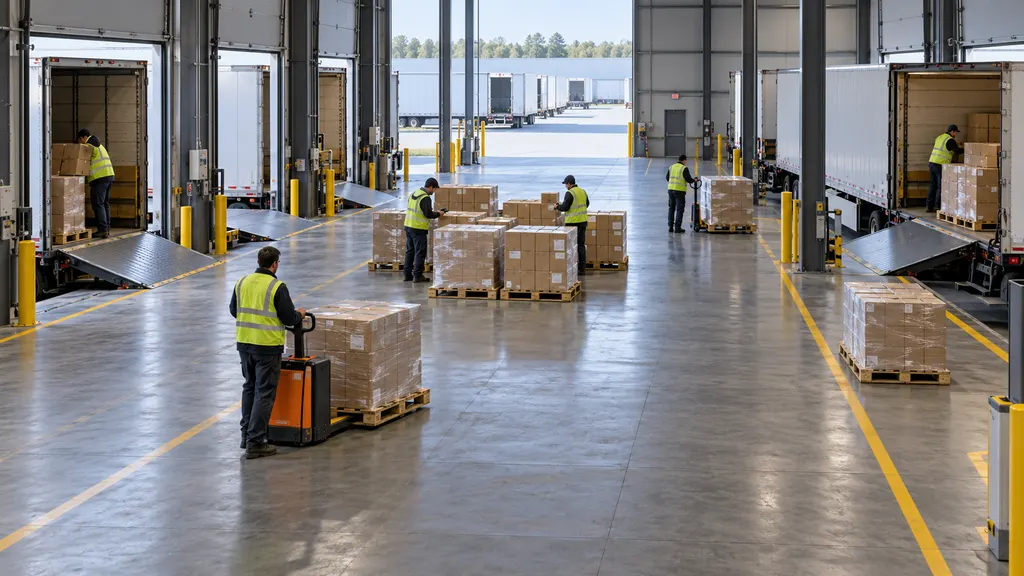
Full Container Ship
What Is a Full Container Ship?
A full container ship is a cargo vessel designed specifically to carry freight containers as its principal cargo, rather than a mixture of containers and conventional loose cargo. In maritime transport, the term describes the vessel’s design and intended service, not whether every container position is occupied. Such vessels carry containers in designated positions below deck and on deck, using structural arrangements and securing equipment suited to container transport.
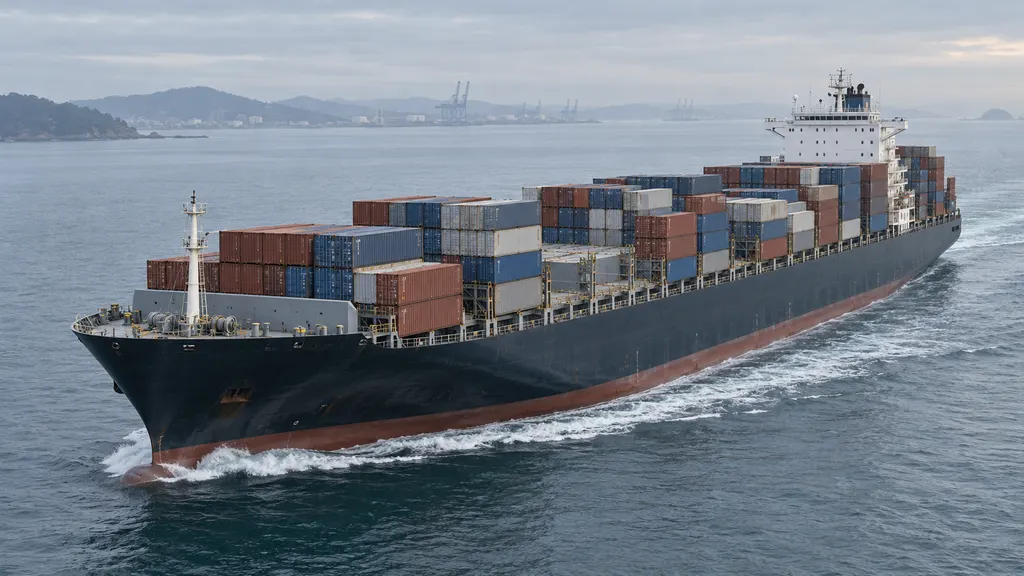
The expression is associated with purpose-built container ships, including fully cellular container ships. However, terminology varies between technical references and commercial documents. When a precise distinction matters, the vessel’s specifications should establish its cargo arrangements. A full container ship must not be confused with a full container load (FCL), which is a container shipment arrangement rather than a type of ship.
Design and Main Characteristics
The defining characteristic is specialization for containerized cargo. Instead of treating containers as an occasional addition to other cargo, the ship’s cargo spaces, deck arrangements, and handling procedures are organized around them. Standardized container dimensions allow compatible units to move between ships, trucks, rail services, and terminals without unloading the goods at every transfer.
Container positions and cell guides
On a fully cellular container ship, vertical steel guides in the holds help locate containers in defined stacks and guide them during loading and discharge. These structures are known as cell guides. Containers carried on deck require suitable support and securing arrangements; the presence and extent of deck cell guides depend on the vessel’s design.
Container positions are commonly identified through a bay, row, and tier system. This allows a stowage plan to specify a container’s longitudinal position, position across the vessel, and vertical level. It also helps coordinate terminal handling and subsequent discharge.
Securing equipment
Containers must be restrained against movement during the voyage. Depending on their location and the ship’s approved arrangements, securing equipment can include twistlocks, lashing rods, and related fittings. Cell guides do not remove the need to follow the applicable securing procedures. The vessel’s cargo securing arrangements and operating limits govern how containers may be carried.
Capacity and practical limitations
Container ship capacity is often expressed in twenty-foot equivalent units (TEU). A standard twenty-foot container represents one TEU, while a standard forty-foot container represents two. TEU is a capacity measure, not a statement of cargo weight or a guarantee that every nominal position can be used on a particular voyage.
Actual loading is constrained by factors such as container weights, vessel stability, draft, stack limits, cargo compatibility, and the planned port rotation. Refrigerated containers also require suitable electrical connections when powered cooling is needed. A ship can therefore reach an operational limit before all nominal container positions are occupied.
Full Container Ship and Related Terms
Several similar expressions refer to different levels of the transport system. Distinguishing the vessel, the container booking, and the vessel’s utilization prevents misunderstandings in quotations and shipping instructions.
| Term | What it describes | Important distinction |
|---|---|---|
| Full container ship | A vessel dedicated to containerized cargo. | Describes the ship’s function, not its current occupancy. |
| Fully cellular container ship | A container ship with cellular arrangements that guide and locate containers, particularly in its holds. | Describes a structural arrangement; exact features depend on the vessel. |
| Full container load (FCL) | A shipment booked as a container unit rather than as part of a shared consolidation. | Does not require the container to be physically filled to capacity. |
| Less than container load (LCL) | A shipment consolidated with other shipments in a shared container. | Describes the booking and consolidation arrangement, not a different ship type. |
| Fully loaded container ship | A description of a vessel’s loading condition. | Requires context: available slots, weight, and other operating limits are different measures. |
| Multipurpose cargo ship | A vessel designed to accommodate different cargo forms, potentially including containers. | Carrying containers alone does not make a vessel a dedicated container ship. |
FCL and LCL containers can travel on the same container ship. Their commercial arrangements differ, but the vessel does not become a different type because it carries one or the other. Similarly, a dedicated container ship remains a container ship when it sails with unused positions or carries empty containers.
How a Full Container Ship Fits into the Shipping Process
A full container ship performs the maritime leg of an intermodal transport chain. Its role is separate from packing the goods, arranging customs clearance, and completing inland delivery, although these activities must be coordinated with the vessel’s schedule.
- Booking and cargo preparation: The shipper or freight forwarder arranges transport and provides shipment information. Goods are packed and secured inside a suitable container. For an LCL shipment, consolidation may take place at a freight facility before the container reaches the terminal.
- Documentation and weight information: Required shipping details and cargo declarations are submitted. Under the applicable SOLAS requirements, the verified gross mass of a packed container must be available in time for use in preparing the ship’s stowage plan. Responsibility rests with the shipper as defined by those requirements.
- Terminal receipt and stowage planning: The terminal receives the container, and planning accounts for its destination, weight, dimensions, and any special handling requirements. Dangerous goods and refrigerated cargo introduce additional considerations.
- Loading and securing: Handling equipment places containers in their assigned positions. Securing follows the vessel’s approved arrangements. A container’s placement is not determined simply by which unit reaches the terminal first.
- Sea transport and possible transshipment: The container travels to the discharge port, either directly or through a transfer between vessels. A transshipment changes the carrying vessel without necessarily requiring the goods to be unpacked.
- Discharge and onward movement: After unloading, the container proceeds through the required release and clearance processes before inland transport or unpacking. The sequence depends on local procedures and the shipment arrangement.
The ship’s arrival does not by itself mean the goods are ready for collection. Terminal availability, customs status, carrier release, and inland transport arrangements are separate operational matters.
Relevance to Ecommerce and Cross-Border Trade
For an ecommerce business, a full container ship may carry inventory between a manufacturing location and an overseas distribution market. The vessel transports the containerized freight; it does not normally represent the final parcel-delivery stage to an individual shopper.
For example, a retailer may book an FCL shipment of packaged household products to replenish a fulfillment warehouse. The packed container travels by road to an export terminal, crosses the sea on a dedicated container ship, and continues inland after discharge and clearance. Products are later picked from warehouse inventory to fulfill individual orders. This example illustrates the distinction between an ocean freight shipment and the many customer orders its contents may eventually supply.
A smaller retailer may instead use LCL transport. Its cartons are consolidated with other shipments, and the shared container can travel on the same kind of vessel. At destination, deconsolidation separates the shipments for onward handling. Choosing between FCL and LCL concerns shipment size, handling arrangements, and commercial terms; it does not determine whether the carrying vessel is a full container ship.
How to Interpret the Term in Shipping Documents
The expression may appear in vessel descriptions, transport studies, fleet information, or shipping reference material. It is less informative on its own than a shipment’s booking details. When interpreting it, identify exactly what the document is describing.
- Check whether the subject is the ship or the shipment. A vessel description concerns carrying capability; FCL or LCL indicates a shipment arrangement.
- Separate nominal capacity from available space. Published TEU capacity does not establish that a particular sailing can accept a specific container.
- Confirm cargo-specific requirements. Refrigeration, dangerous goods, unusual dimensions, and high weights require suitable arrangements and acceptance.
- Check the route rather than assuming a direct voyage. A booking on container shipping services may involve transshipment.
- Distinguish vessel movement from cargo release. Departure, arrival, discharge, customs clearance, and delivery are separate milestones.
For tracking purposes, a vessel’s reported location establishes where the ship is reported to be, not whether a particular container has been loaded, discharged, or released. Shipment-specific events require corresponding container, terminal, or carrier information.
Common Misunderstandings
“Full” means the ship has no spare space. In this term, “full” identifies a dedicated container-carrying vessel. It does not certify that the vessel has reached its slot capacity, weight limit, or any other operating limit.
A full container ship carries only FCL bookings. The vessel can carry containers associated with FCL shipments, LCL consolidations, and empty-container movements. The booking arrangement and the vessel type are separate concepts.
Standardized containers eliminate cargo restrictions. Standard dimensions simplify handling, but weight distribution, internal cargo securing, dangerous goods requirements, and vessel limitations still apply. Securing goods inside a container and securing that container aboard the ship are related but distinct tasks.
QA
Is a full container ship the same as a container ship?
The expression refers to a dedicated container-carrying vessel. In many contexts, “container ship” is sufficient. “Full container ship” emphasizes specialization rather than the carriage of containers as one cargo type among several.
Does a full container ship have to be fully loaded?
No. The term describes the vessel’s design and service, not how much cargo it carries on a particular voyage. It may sail with unused positions or carry empty containers.
What is the difference between a full container ship and FCL?
A full container ship is a vessel. FCL is a shipment arrangement booked as a container unit. An FCL container does not have to be physically full, and it may travel alongside containers holding LCL consolidations.
Does TEU capacity show how much cargo weight a ship can carry?
No. TEU expresses container capacity in twenty-foot equivalent units. Cargo weight, stability, draft, stack limits, and other restrictions must be considered separately when planning an actual load.
Sources
- Encyclopaedia Britannica: Container ship — Reference background on container ships, their dedicated cargo arrangements, and container handling.
- UNECE: IMO/ILO/UNECE Code of Practice for Packing of Cargo Transport Units — Guidance supporting the discussion of container packing, cargo securing, and responsibilities across intermodal transport.
- International Maritime Organization: Verification of the gross mass of a packed container — Official explanation of verified gross mass requirements and their relationship to ship loading and stowage planning.