Shipper'S Own Container
What Is a Shipper’s Own Container?
A shipper’s own container (SOC), also called a shipper-owned container, is a freight container supplied by the shipper rather than provided as equipment by the ocean carrier. The term is used in container shipping to distinguish the equipment arrangement from the transport service: the carrier transports the container, but does not supply it from its own container fleet for that shipment.
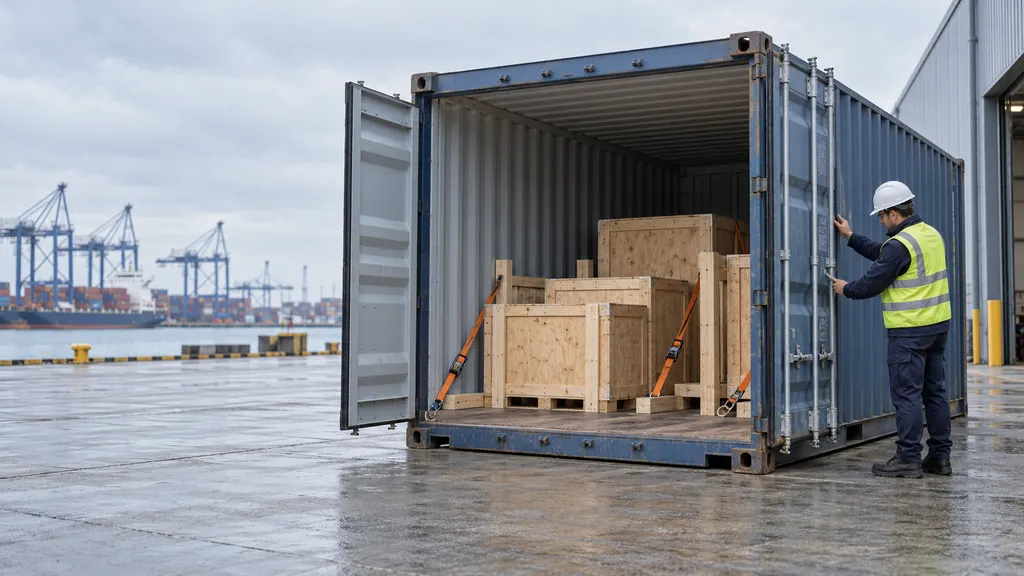
Despite the word “own,” an SOC is not necessarily purchased outright by the shipper. It may be leased or otherwise obtained independently of the carrying line. The important distinction is who supplies the equipment under the shipping arrangement, not simply whose name appears on its ownership documents. SOC status does not change the identity of the goods inside or remove the need for a freight booking, customs formalities, or safe cargo packing.
SOC and Carrier-Owned Containers
The corresponding term is carrier-owned container (COC). In commercial usage, COC describes equipment supplied by the carrier, including containers that the carrier leases rather than legally owns. Both expressions therefore describe an operational equipment arrangement more reliably than they describe legal ownership.
| Comparison | Shipper’s own container (SOC) | Carrier-owned container (COC) |
|---|---|---|
| Equipment provision | The shipper supplies the container independently of the carrying line. | The carrier supplies the container for the shipment. |
| Access to equipment | The shipper arranges purchase, leasing, or another permitted supply arrangement. | Equipment release is arranged through the carrier’s booking and equipment procedures. |
| After unloading | The shipper must arrange the container’s next use, storage, repositioning, or return to its lessor. | The container is returned or otherwise handled according to the carrier’s equipment instructions. |
| Equipment-related costs | May include acquisition or lease costs, examination, maintenance, storage, and repositioning. | May include equipment-use charges under the carrier’s applicable terms. |
| Transport acceptance | The proposed container must satisfy the carrier’s acceptance requirements. | The carrier provides equipment within its own supply arrangements, while cargo suitability still needs checking. |
Neither arrangement establishes a universal price advantage. A meaningful comparison must include the full equipment cycle, not only the ocean freight quotation or the cost of buying a container.
How an SOC Shipment Works
1. Establish the equipment requirement
The shipper first determines the container type needed for the cargo and route. Relevant considerations include cargo dimensions, weight, loading method, moisture sensitivity, and any temperature-control requirement. SOC is an equipment-supply designation, not a container size or construction category. It should not be treated as a synonym for a dry container, refrigerated container, or special-purpose container.
2. Obtain carrier acceptance
Before moving equipment to a loading location, the shipper or freight forwarder should identify the shipment as SOC and confirm the carrying line’s requirements. Depending on the carrier and equipment, acceptance may involve container identification details, photographs, safety approval information, examination records, or an inspection. These requirements are not identical across all carriers, routes, or container types.
Possession of a container does not itself guarantee carriage. Equipment acceptance, available vessel space, cargo acceptance, and terminal handling arrangements are separate matters that need to align.
3. Check condition and pack the cargo
The container should be suitable for the intended cargo and journey. Practical checks include structural condition, doors and locking gear, floor condition, cleanliness, dryness, and signs of damage or contamination. A valid approval plate does not replace a check of the container’s actual condition before packing.
The cargo must also be distributed and secured appropriately. The IMO/ILO/UNECE Code of Practice for Packing of Cargo Transport Units, commonly called the CTU Code, provides guidance on packing and securing cargo. Its relevance is independent of whether the container is shipper-supplied or carrier-supplied.
4. Complete shipment documentation
The container number identifies the physical equipment and should be recorded accurately in booking, terminal, transport, and customs information where required. It is different from a booking number, bill of lading number, order number, or seal number. Recording a container as SOC does not substitute for any of those identifiers.
For packed containers subject to the applicable SOLAS requirements, a verified gross mass must be provided before loading onto a ship. SOC status does not create an exemption. Responsibilities and submission arrangements should be checked with the carrier and the parties preparing the shipment.
5. Plan the destination equipment cycle
After unloading, the equipment still needs a destination plan. It may be reused for another shipment, held in storage, repositioned empty, sold where legally permitted, or returned under a lease. The party arranging the SOC should establish who pays for and coordinates these activities before departure, rather than assuming the ocean carrier will manage them.
Safety Approval, Identification, and Customs
The International Convention for Safe Containers (CSC) establishes an international framework for container safety approval and maintenance. For containers within its scope, a safety approval plate and the applicable examination arrangements are important checks. Under the CSC framework, responsibility for maintaining a container in a safe condition rests with the owner; contractual arrangements may allocate practical tasks among the parties involved.
A container’s identification markings serve a different purpose. The identification system associated with ISO 6346 uses an owner code, equipment category identifier, serial number, and check digit. These markings support equipment identification. They do not, on their own, prove that the container is safe, that a particular shipper owns it, or that a carrier has accepted it for a booking.
Customs treatment is another separate issue. The goods inside the container and the container itself can have different customs considerations. Depending on the jurisdiction and intended use, the equipment’s temporary admission, continued presence, sale, or permanent importation may need attention. An SOC designation is not a customs authorization, and it does not determine duties or taxes on the cargo. Local requirements should be checked with the relevant customs authority or an appropriately qualified customs representative.
Use in Cross-Border Commerce
An SOC arrangement may be considered when a business wants to control equipment availability or retain a container beyond a single unloading operation. Its usefulness depends on the transport route, destination facilities, equipment needs, and the next planned use of the container. These are planning considerations, not evidence that SOC is preferable for every shipment.
For example, a retailer may independently lease a container to move inventory from a supplier to an overseas distribution facility. Before booking, the retailer would need to confirm carrier acceptance and establish what happens to the empty container after unloading. If the lease requires return to a particular depot, that return movement belongs in the cost assessment.
In ecommerce, the container usually belongs to the upstream replenishment movement rather than the individual customer delivery. One container can carry inventory associated with many products and eventual customer orders. Tracking the container therefore does not, by itself, identify the delivery status of every parcel later fulfilled from that inventory.
Cost and Responsibility Checks
A practical assessment should compare equivalent movements and clearly allocate responsibilities. An inexpensive container can become costly if its next use is uncertain or its empty repositioning requires substantial additional transport.
- Equipment supply: Confirm the purchase or lease terms, permitted uses, and any restrictions on geographical movement or modifications.
- Condition and examination: Identify who checks the container, maintains required records, arranges repairs, and pays for rejected equipment.
- Transport and handling: Include inland movement, terminal handling, ocean carriage, and any necessary lifting or unloading arrangements.
- Destination arrangements: Establish where the container can be unloaded and stored, and whether the site can accommodate the equipment.
- Empty equipment: Price the next movement, storage period, reuse, or lease return rather than treating the container’s journey as finished when the cargo is delivered.
- Liability and insurance: Clarify responsibility for container damage, cargo damage, loss, and repair costs. Do not assume cargo insurance automatically covers the equipment.
Using an SOC may avoid charges specifically associated with retaining a carrier-supplied container, but it does not make the shipment free of time-related charges. Terminal storage, handling, inland transport waiting time, and contractual equipment costs may still apply. The labels “demurrage” and “detention” also vary across tariffs and jurisdictions, so the actual charging provisions matter more than a general claim that SOC eliminates them.
Common Misunderstandings
- “SOC means the shipper must hold legal title.” In shipping usage, independently leased equipment may also be handled as SOC.
- “Owning a container guarantees acceptance.” Carriage remains subject to the carrier’s equipment and cargo acceptance requirements.
- “A container number confirms safety approval.” Identification, safety approval, examination status, and physical condition are distinct checks.
- “SOC removes all return obligations.” It changes the equipment arrangement, but a lease may still require return, and empty-container logistics still need planning.
- “SOC changes customs duties on the contents.” Cargo customs treatment is determined by the applicable customs rules, not by the SOC label.
QA
Does a shipper’s own container have to be purchased?
No. The shipper may supply independently leased equipment. The central distinction is that the carrying line does not provide the container for that shipment.
Is SOC cheaper than a carrier-owned container?
Not necessarily. Compare freight, equipment acquisition or leasing, maintenance, storage, handling, and empty repositioning for the complete movement.
Can any container be used as an SOC?
No. It must be suitable for the cargo and handling arrangements, meet applicable safety requirements, and be accepted by the carrier.
Does an SOC need a verified gross mass?
Yes, when the packed container falls within the applicable SOLAS requirements. Shipper-supplied equipment is not exempt merely because it is designated SOC.
Sources
- Hapag-Lloyd — Shipping glossary: industry terminology for shipper-owned and carrier-provided container arrangements.
- International Maritime Organization — Containers: the CSC safety framework, container maintenance responsibilities, and verified gross mass requirements.
- United Nations Economic Commission for Europe — CTU Code: guidance on cargo transport unit suitability, packing, and securing.
- Bureau International des Containers — Container identification number: container identification components and their purpose.