Regional Logistics Center
Definition
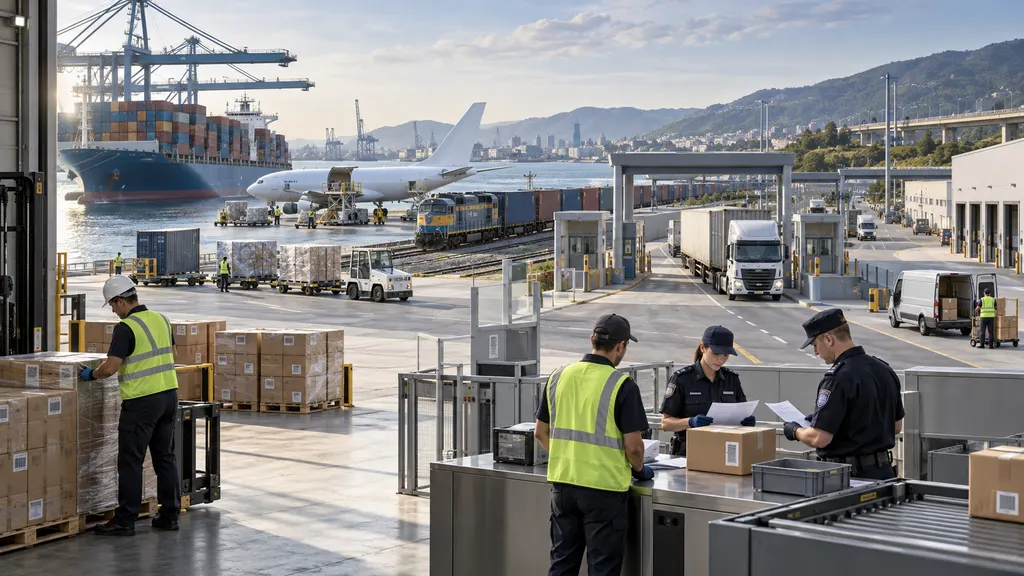
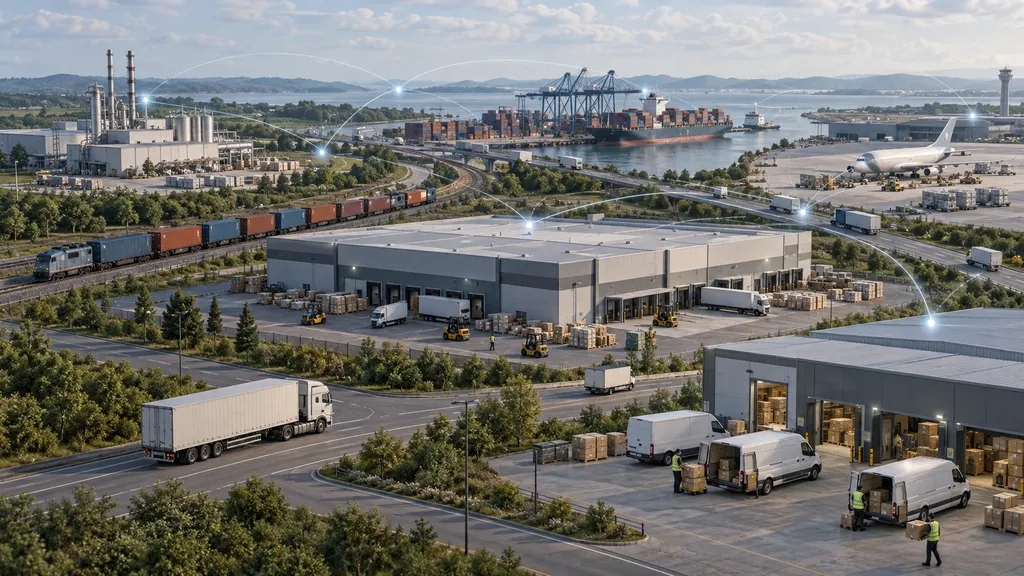
A regional logistics center is a strategically located facility or coordinated logistics area that consolidates, stores, processes, and distributes goods for a defined geographic region. It connects suppliers, warehouses, carriers, transport networks, businesses, and sometimes customs or value-added services. The term is used in logistics, supply chain management, ecommerce fulfillment, and cross-border trade, although it does not describe one universally standardized facility type.
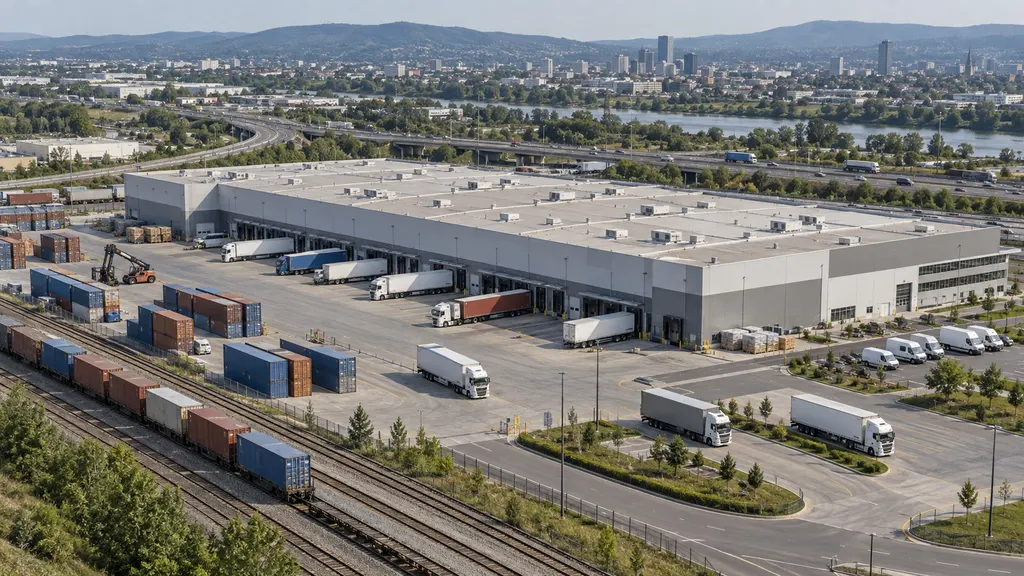
Depending on the context, a regional logistics center may be a single distribution facility, a logistics park, an inland freight terminal, or a group of interconnected facilities. In British English, regional logistics centre is also common.
Role in Logistics
A regional logistics center usually operates between upstream supply sources and downstream delivery points. It may receive goods from manufacturers, import gateways, national distribution centers, or other logistics facilities, then allocate those goods to wholesalers, stores, fulfillment sites, or final-mile delivery networks.
Its regional function distinguishes it from a facility serving only one local market. The actual service area depends on transport connections, inventory strategy, delivery requirements, facility capacity, and the organization operating the network.
| Supply Chain Activity | Possible Role of a Regional Logistics Center |
|---|---|
| Inbound transport | Receive goods from suppliers, ports, airports, rail terminals, or other distribution facilities. |
| Inventory positioning | Hold selected inventory closer to regional demand without placing all stock at every local facility. |
| Consolidation and sorting | Combine shipments or sort goods by destination, customer, delivery route, or order priority. |
| Outbound distribution | Dispatch goods to retailers, businesses, local warehouses, parcel networks, or consumers. |
| Returns handling | Receive returned goods for inspection, storage, repair, resale, recycling, or onward transport when the operation includes reverse logistics. |
Common Functions
The functions of a regional logistics center vary by network design and the type of goods handled. Common functions include:
- Receiving: checking incoming goods and recording their movement into the facility.
- Storage: holding inventory temporarily or for a planned replenishment cycle.
- Cross-docking: transferring goods from inbound to outbound operations with limited storage.
- Order fulfillment: picking, packing, and dispatching goods against customer or business orders.
- Shipment consolidation: combining smaller consignments where operationally appropriate.
- Inventory control: maintaining records of stock location, quantity, status, and availability.
- Value-added processing: performing activities such as labeling, kitting, repacking, or basic configuration when required by the supply chain.
- Transport coordination: arranging or sequencing movements with carriers and other logistics facilities.
Not every regional logistics center performs all of these activities. For example, a cross-docking facility may emphasize rapid transfer rather than long-term storage, while an ecommerce fulfillment center may focus on individual order processing.
Regional Logistics Center in Ecommerce
In ecommerce, a regional logistics center can support inventory placement and order fulfillment for customers within a defined market area. An ecommerce operator may position inventory there so that orders can be processed through a regional network rather than being shipped individually from a distant supplier or a single national facility.
A regional center may handle business-to-consumer orders, business-to-business replenishment, or both. Its activities can include receiving supplier inventory, storing stock, picking customer orders, packing parcels, handing shipments to carriers, and processing returns. The center itself does not necessarily perform final delivery; a parcel carrier or another delivery provider may complete that stage.
For cross-border ecommerce, a regional logistics center may be located before or after an international transport and customs stage. Its role must therefore be distinguished from customs clearance. A facility can support the movement of imported goods, but the existence of a regional center does not by itself prove that customs formalities occur there.
Regional Logistics Center Compared with Related Facilities
| Facility or Term | Main Distinction | Relationship to a Regional Logistics Center |
|---|---|---|
| Local delivery depot | Usually focuses on short-distance delivery preparation and route dispatch for a smaller area. | May receive shipments from a regional logistics center. |
| National distribution center | Often serves a country-wide or larger network and may feed several regional facilities. | A regional logistics center may operate downstream from it. |
| Ecommerce fulfillment center | Primarily processes customer orders, including picking, packing, and dispatch. | A regional logistics center may also be a fulfillment center, but the terms describe different aspects: geographic role versus operational function. |
| Freight terminal | Primarily supports the transfer of freight between transport modes or vehicles. | A regional logistics center may include or be connected to a freight terminal, but storage and order processing are not inherent in every terminal. |
| Logistics park | Generally refers to a broader planned area containing multiple logistics, transport, or related facilities. | A regional logistics center may be one facility within a logistics park. |
How It Fits into a Supply Chain
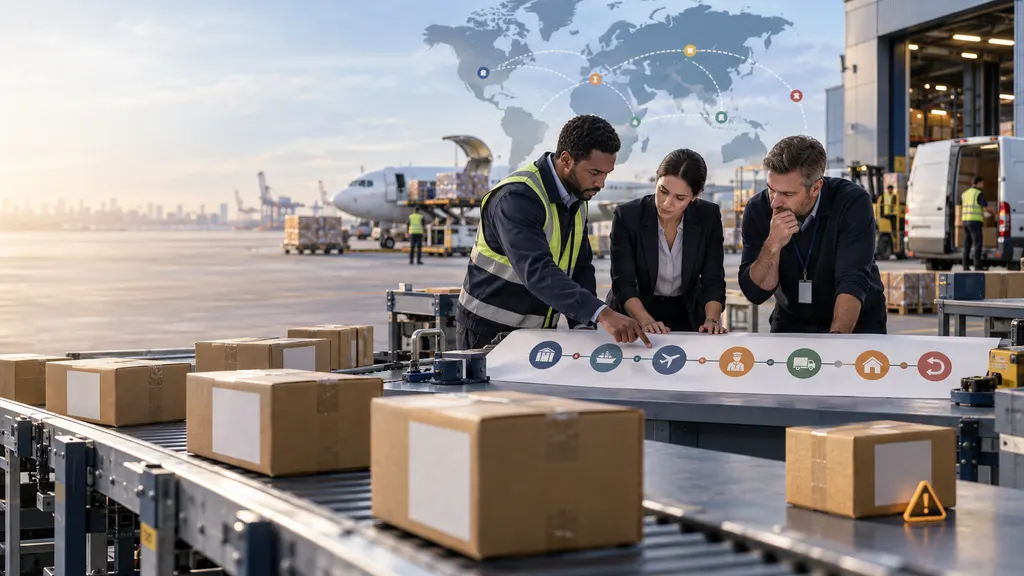
- Goods move from suppliers, production sites, import gateways, or upstream warehouses toward the regional logistics center.
- The facility receives, identifies, sorts, stores, or cross-docks the goods according to the operating model.
- Orders, replenishment requests, or transport plans determine which goods leave the center and where they are sent.
- Outbound shipments move to stores, businesses, local delivery depots, other warehouses, or consumers.
- Information about inventory, orders, shipments, and exceptions is exchanged with merchants, carriers, warehouse systems, and customers as applicable.
This sequence is a general operating model rather than a mandatory process. Some centers do not hold inventory, some do not handle customer orders, and some specialize in freight transfer or regional replenishment.
Common Misunderstandings
- It is not automatically a customs facility. A regional logistics center may handle imported goods, but customs processing depends on the applicable arrangements, authorities, and facility permissions.
- It is not the same as final-mile delivery. The center may prepare or dispatch shipments while a separate carrier or local depot delivers them.
- It does not always mean long-term warehousing. Some centers emphasize cross-docking, sorting, or rapid transfer.
- It is not a universally fixed classification. Organizations may use the term for facilities with different combinations of storage, fulfillment, transport, and value-added services.
Related Terms
Related terms include distribution center, fulfillment center, logistics hub, inland freight terminal, cross-docking, last-mile delivery, and reverse logistics. These terms describe related facilities or activities, but they should not be treated as exact synonyms without considering the operating context.
QA
What is a regional logistics center?
It is a facility or coordinated logistics area that manages the movement, storage, processing, or distribution of goods for a defined geographic region.
Is a regional logistics center the same as a fulfillment center?
Not necessarily. A fulfillment center is defined mainly by order-processing activities, while a regional logistics center is defined mainly by its role in serving a region. One facility can perform both roles.
Does a regional logistics center handle customs clearance?
It may be connected with cross-border operations, but the term alone does not establish that customs clearance takes place there.
Sources
- United Nations Economic Commission for Europe, Recommendation No. 28 on Freight Forwarding — transport and freight-forwarding context.
- United Nations Economic and Social Commission for Asia and the Pacific, Handbook on Designing and Implementing Freight Villages in Asia and the Pacific — logistics facilities, freight villages, and network functions.
- World Customs Organization, Compendium of Trade Facilitation Recommendations — customs and trade-facilitation context relevant to cross-border logistics.
- ISO 14825:2021, Intelligent transport systems — Geographic Data Files — transport-network and geographic information context.