Distribution Center
Definition
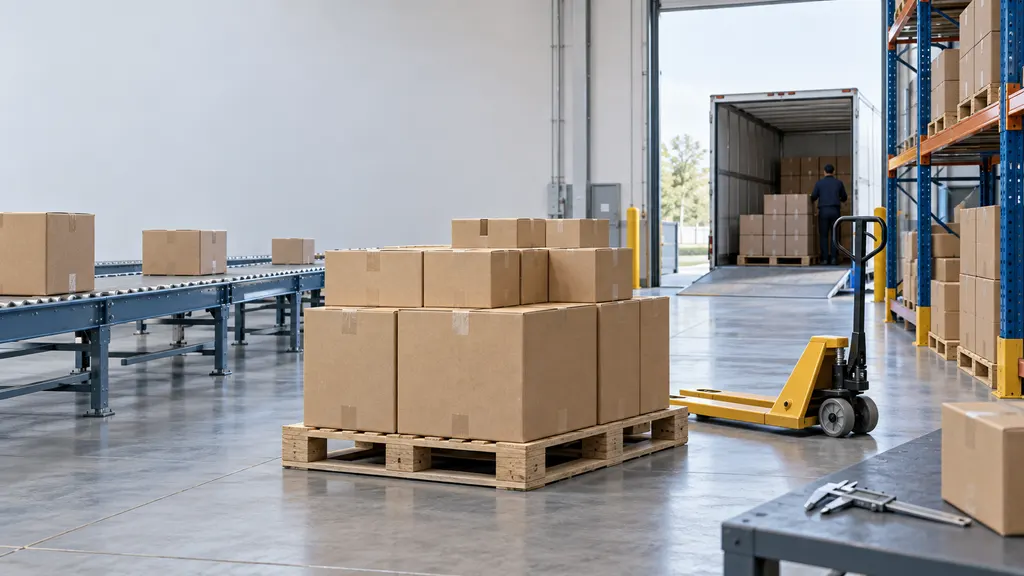
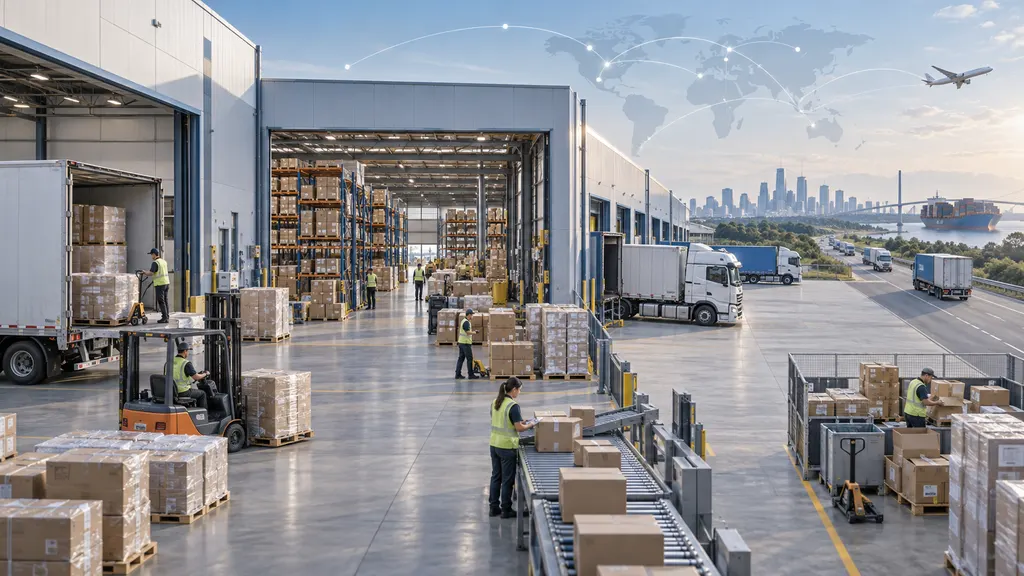
A distribution center is a facility used to receive, store temporarily, sort, consolidate, and dispatch goods to their next destination. In logistics and ecommerce, it connects suppliers, manufacturers, warehouses, carriers, stores, and customers. Unlike a traditional storage-focused warehouse, a distribution center often emphasizes the rapid movement and coordination of inventory rather than long-term storage.
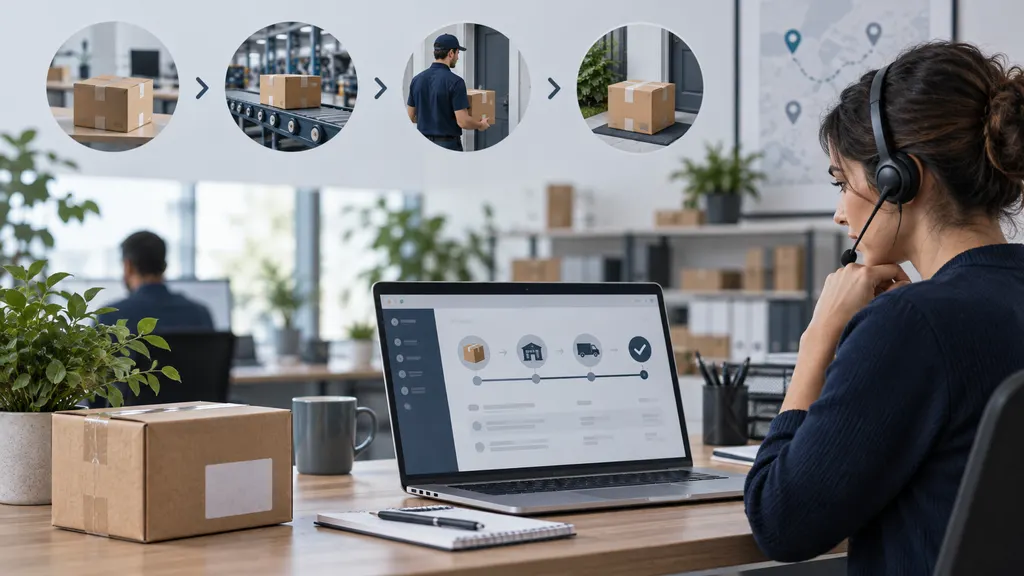
The term may describe a physical facility, the operations performed there, or both. A distribution center can serve domestic orders, cross-border shipments, retail locations, business customers, or a combination of these channels.
In Logistics and Ecommerce
A distribution center occupies an intermediate position in the supply chain. Inventory may arrive from manufacturers, suppliers, import facilities, or other distribution centers. After processing, it may be sent to retail stores, fulfillment facilities, business customers, or final consumers.
In ecommerce, a distribution center may receive online orders through an order-management or warehouse-management system. Workers or automated systems then locate inventory, pick the required items, pack them when appropriate, and hand the shipment to a carrier or another logistics provider. Some distribution centers also process returns, relabel goods, or prepare orders for different delivery services.
In cross-border commerce, a distribution center may be located near a port, airport, customs facility, or major transport corridor. Its operations can include shipment consolidation, deconsolidation, document processing, inventory staging, and transfer to a domestic delivery network. The distribution center itself does not necessarily perform customs clearance; that function depends on the parties, location, and applicable customs procedures.
Key Characteristics
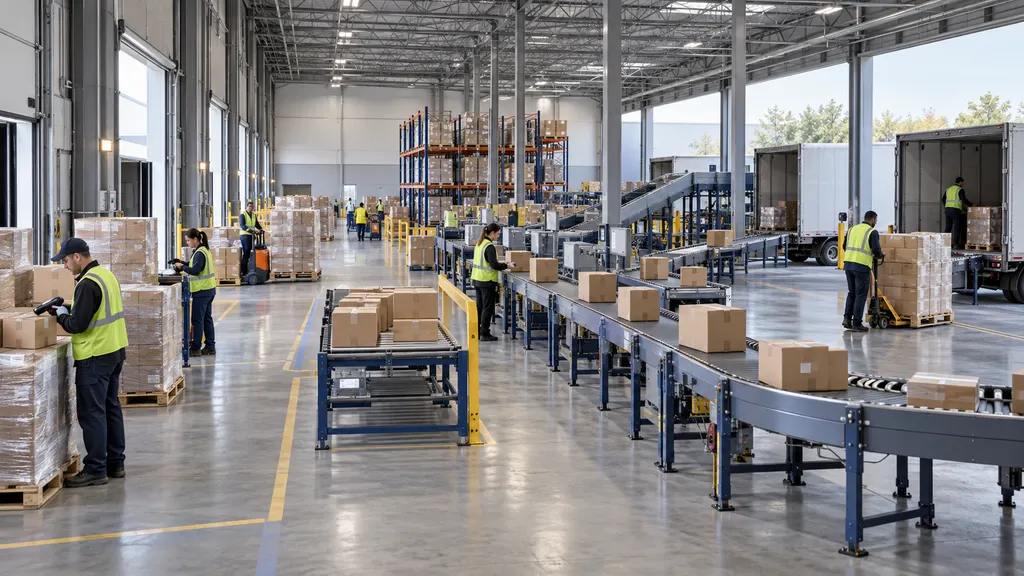
- Inbound receiving: Goods are accepted, checked, recorded, and assigned to an operational location.
- Inventory coordination: Stock is tracked so that available goods can be allocated to orders or replenishment requirements.
- Sorting and consolidation: Items or shipments may be grouped by destination, customer, carrier, service level, or transport mode.
- Order processing: The facility may support picking, packing, labeling, and dispatch.
- Outbound transportation: Completed shipments are transferred to carriers, line-haul operators, stores, or other facilities.
- Cross-docking: Some goods move from inbound receiving to outbound dispatch with little or no storage.
Distribution Center Compared with Related Facilities
| Facility or Term | Primary Function | Typical Distinction |
|---|---|---|
| Distribution center | Move, sort, consolidate, and dispatch goods | Usually emphasizes throughput and onward distribution, although it may also hold inventory. |
| Warehouse | Store and manage inventory | May focus more on storage duration and inventory holding than on rapid outbound movement. |
| Fulfillment center | Process customer orders | Usually associated with picking, packing, and shipping individual ecommerce orders, but the terms can overlap in practice. |
| Cross-dock facility | Transfer inbound goods directly to outbound transport | Uses little or no conventional storage for the goods being transferred. |
| Sortation center | Sort parcels or shipments by destination or service | May be a specialized facility within a wider distribution network. |
These distinctions are descriptive rather than universal legal classifications. Companies may use the terms differently, and a single facility may perform several of these functions.
How a Distribution Center Works
- Inbound planning: An arrival is scheduled or recorded, and transport or purchase information is matched with the expected goods.
- Receiving: The facility unloads and checks the goods, records quantities, and identifies discrepancies or damage when applicable.
- Put-away or staging: Goods are placed in storage, held in a staging area, or directed toward immediate outbound processing.
- Allocation: Inventory is assigned to customer orders, store replenishment, transfers, or other authorized destinations.
- Picking and preparation: Required items are selected and may be packed, labeled, documented, or consolidated.
- Dispatch: Shipments are sorted and transferred to the relevant carrier, transport service, store, customer, or downstream facility.
The exact sequence varies according to the type of goods, order profile, facility design, inventory system, transport plan, and applicable handling or regulatory requirements.
Examples of Use
| Scenario | Role of the Distribution Center |
|---|---|
| Online retail order | Receives an order, allocates available stock, prepares the items, and hands the shipment to a delivery carrier. |
| Retail replenishment | Consolidates products from suppliers and sends planned quantities to stores. |
| Cross-border shipment | Stages imported goods, groups shipments by destination, and transfers them into a domestic distribution network after the relevant border procedures. |
| Returns operation | Receives returned goods for inspection, restocking, repair, recycling, disposal, or another disposition decision. |
Common Misunderstandings
- A distribution center is not always the same as a warehouse. Both may store goods, but a distribution center generally places greater emphasis on processing and onward movement.
- A distribution center is not necessarily the final delivery location. It may send goods to another facility or carrier before the goods reach the customer.
- A distribution center does not automatically mean that customs clearance occurs there. Customs procedures depend on the shipment, jurisdiction, responsible party, and facility authorization.
- Distribution center and fulfillment center are not always separate concepts. Organizations may use either term for facilities that perform overlapping order-processing and distribution activities.
Related Terms
Fulfillment center focuses on completing customer orders, especially picking, packing, and dispatch. Warehouse is a broader term for a facility used to store and manage goods. Shipment refers to goods transported under a shipping arrangement, while a distribution center is the facility or operational node through which goods may be processed or routed. Reverse logistics covers the movement of goods back from customers or downstream locations for return, recovery, repair, recycling, or other disposition.
QA
What is a distribution center in logistics?
It is a logistics facility that receives, processes, sorts, consolidates, and dispatches goods to downstream destinations.
What is the difference between a distribution center and a warehouse?
A warehouse generally emphasizes storing and managing inventory, while a distribution center generally emphasizes processing and moving goods through the supply chain. The functions may overlap.
Is a distribution center the same as a fulfillment center?
Not always. A fulfillment center is usually associated with processing customer orders, whereas a distribution center may also serve stores, business customers, transfers, or broader network-routing functions.
Does a distribution center handle customs clearance?
It may support cross-border logistics, but the facility does not automatically perform customs clearance. That depends on the applicable procedures and the parties authorized to conduct them.
Sources
- Encyclopaedia Britannica: Warehouse — background on warehousing and storage facilities.
- World Customs Organization: Customs and trade facilitation resources — context for customs-related processes in international supply chains.
- Inbound Logistics: Distribution Center — industry terminology and operational context.