Unit Loading and Unloading
What Is Unit Loading and Unloading?
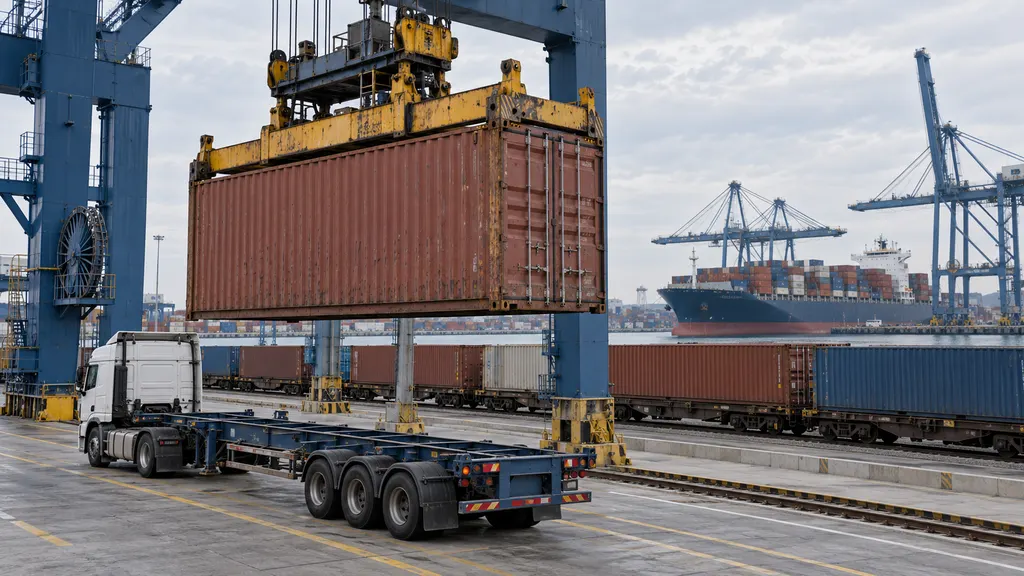
Unit loading and unloading is the movement of goods onto or off a vehicle, into or out of a freight container, or between handling locations as a single handling unit rather than as separate loose items. In logistics and warehousing, that unit may be a pallet of cartons, a secured bundle, or another assembly designed to be moved together. The purpose is to organize the physical transfer of cargo while maintaining the stability, identification, and condition of the load.
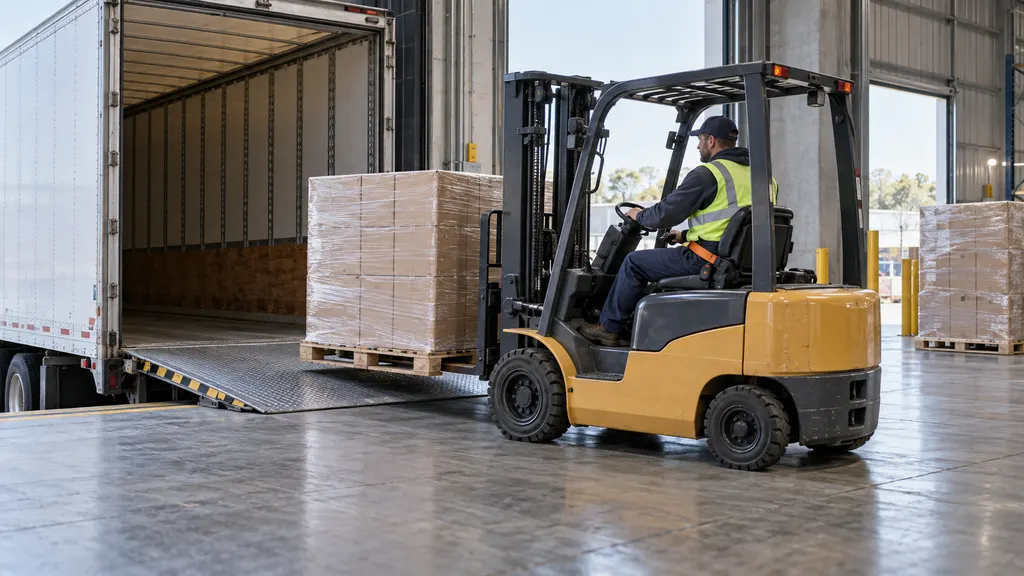
The expression is descriptive rather than the name of one universally standardized procedure. Its meaning depends on what the operation treats as the unit. Moving a pallet into a trailer, packing palletized goods into a freight container, and lifting an entire container onto a vehicle are related handling activities, but they occur at different levels. An operating instruction should therefore identify both the handling unit and the transfer being performed.
Understanding the Handling Unit
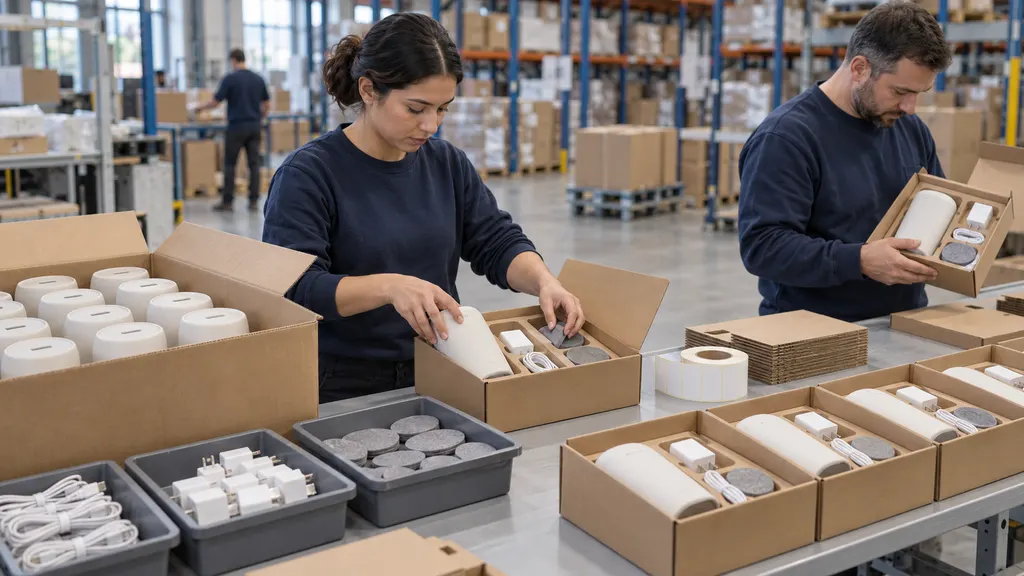
A unit load consists of one or more items arranged so they can be handled together. A familiar example is a group of cartons stacked on a pallet and restrained with wrapping or strapping appropriate to the goods. The pallet provides a handling interface, while the arrangement and restraint help the cartons remain together during movement.
The packaging layers should not be confused. A product may sit inside a retail package, several retail packages may be placed in a shipping carton, and multiple cartons may form a palletized unit load. Loading the pallet transfers all those cartons in one handling movement, but their individual identities may still matter for receiving, stock allocation, or order fulfillment.
Not every collection of goods forms a safe unit load. Items placed together must remain sufficiently stable for the intended equipment, route, and handling conditions. Wrapping does not correct a damaged pallet, unsuitable stacking pattern, or load that exceeds equipment capacity.
Where It Fits in Logistics and Ecommerce
Unit loading and unloading connects storage, transportation, and receiving operations. At an outbound warehouse, prepared units move from a staging area into a vehicle. At the destination, those units are removed, checked, and transferred to storage, inspection, or another transport movement. A cross-docking operation may transfer a unit between inbound and outbound vehicles without putting its contents into long-term storage.
In ecommerce, a unit load may contain replenishment stock rather than individual customer orders. For example, a retailer may receive a pallet containing cartons of one product, record the receipt, and later open the cartons for individual order picking. The pallet is the handling unit during unloading, while the products become the relevant inventory units during fulfillment.
Cross-border movements add documentation and inspection considerations. A physical handling unit does not necessarily correspond to one customs declaration, one order, or one commercial shipment. Grouping cartons on a pallet does not change their origin, classification, or other applicable customs requirements. If a unit is opened for inspection or its contents are redistributed, the operation must preserve the connection between the goods and their records.
Related Terms and Important Distinctions
| Term | Meaning | Relationship to Loading and Unloading |
|---|---|---|
| Unitization | Combining items into a unit that can be handled together. | Usually prepares goods for subsequent handling; it is not the transfer itself. |
| Palletization | Arranging goods on a pallet. | Creates one common form of unit load. |
| Loading and unloading | Placing cargo onto or into transport equipment and removing it. | Can involve unit loads or separate packages. |
| Container packing and unpacking | Putting cargo into a freight container and removing it. | Concerns the container's contents, not necessarily movement of the container itself. |
| Stowage | The positioning and arrangement of cargo within a transport space. | Determines where units sit and how they relate to other cargo. |
| Cargo securing | Measures used to restrain cargo against movement during transport. | Remains necessary where required even when the goods are already unitized. |
| Receiving | The operational process of accepting, checking, and recording incoming goods. | Includes more than physical unloading. |
These distinctions prevent a common error: assuming that a wrapped pallet is automatically ready for transport. Restraint holding cartons together and securing the pallet within a vehicle address different movement risks. Both must be assessed for the actual journey.
How the Process Works
1. Define the transfer and identify the goods
Before movement begins, establish what is being moved, its destination, and the handling method. Relevant information includes the unit's dimensions, weight, condition, identification, and any handling restrictions. A pallet identifier can help connect a physical load to warehouse records, but an identifier alone does not confirm the contents or their condition.
2. Check the unit and handling equipment
Inspect the load for leaning stacks, broken packaging, loose restraints, protruding goods, and damage to its supporting base. Select equipment compatible with the unit and operating environment. A forklift, pallet truck, conveyor, or lifting attachment is not interchangeable merely because it can physically reach the goods. Capacity, load position, access, and the manufacturer's instructions matter.
3. Prepare the loading or unloading area
The transfer area must support safe movement of people, equipment, and cargo. Checks may include the condition of the floor, lighting, pedestrian separation, vehicle stability, and suitability of any dockboard or bridge plate. Measures to prevent unintended vehicle movement must match the equipment, site procedure, and applicable requirements. The United States Occupational Safety and Health Administration addresses several of these issues in its powered industrial truck standard.
4. Position and move the unit
The operator engages the unit using the intended lifting or support points and moves it along a suitable route. Sudden acceleration, braking, turning, or impact can disturb the load. During unloading, the operator should consider whether cargo has shifted in transit before removing restraints or attempting a lift. Opening a vehicle or container can itself present a risk if goods are leaning against the doors.
5. Arrange and secure outbound cargo
Loading requires more than filling available space. Placement must consider weight distribution, cargo compatibility, vehicle or container limits, and the planned means of restraint. Where appropriate, arrangements may also support the delivery sequence, but access convenience must not override safe loading. The joint IMO/ILO/UNECE Code of Practice for Packing of Cargo Transport Units provides guidance on packing and securing cargo in transport units.
6. Complete the handover
After movement, confirm the receiving location, unit count, and visible condition. Record discrepancies according to the operation's procedures. A unit that has physically left a trailer has been unloaded, but it may still await inspection, inventory acceptance, or release for further processing. These are distinct operational milestones.
Key Operational Checks
The following checks illustrate the information needed for a controlled transfer. They are not a substitute for equipment instructions, task-specific training, or applicable safety requirements.
- Load integrity: Is the base sound, and are the goods supported without unstable overhang or loose components?
- Weight and capacity: Is reliable weight information available, and can the equipment handle the load in its actual configuration?
- Access and clearance: Can the unit pass through doors and along the route without striking structures or other cargo?
- Transfer surface: Are floors, ramps, dockboards, and vehicle decks suitable for the expected equipment and load?
- People and vehicle separation: Are pedestrians protected from moving equipment and falling cargo?
- Transport restraint: Are the goods restrained as needed for the journey, separately from any packaging used to hold them together?
- Identification and records: Can staff connect the physical unit to the relevant shipment and inventory information?
- Exception handling: Is there a defined response for damaged, unstable, unidentified, or unexpectedly heavy cargo?
Uncertainty about load weight, structural condition, or equipment suitability is a reason to pause and resolve the issue rather than infer safety from appearance. Similarly, a load that was stable in storage may behave differently when lifted, moved over an uneven surface, or exposed to transport forces.
Illustrative Logistics Scenarios
| Scenario | What Is Moved as a Unit? | Important Distinction |
|---|---|---|
| Warehouse replenishment | A pallet of cartons is removed from a delivery vehicle. | Unloading the pallet does not complete checking or inventory receipt. |
| Export container packing | Prepared pallets are placed inside a freight container. | Carton restraint on each pallet does not by itself secure the pallets inside the container. |
| Cross-dock transfer | An identified pallet moves from an inbound vehicle to an outbound vehicle. | The physical unit may remain intact while its transport assignment changes. |
| Returns consolidation | Returned packages are grouped on a pallet for transfer to an inspection facility. | Grouping packages does not establish the condition or refund eligibility of their contents. |
For example, a retailer may receive several palletized units of replenishment stock. If one pallet has shifted during transport, the receiving team may need to isolate it and arrange a safe recovery method before normal unloading continues. Recording the event separately from the quantity check preserves the distinction between handling condition and inventory accuracy.
Benefits and Limitations
Handling several packages together can reduce the number of separate handling movements needed for a transfer. Unit loads can also provide a consistent interface for compatible equipment and simplify identification at the group level. These are potential operational advantages, not guarantees of a particular productivity improvement or damage reduction.
Unitization also introduces constraints. Pallets and other supporting materials occupy space and add weight. Incompatible dimensions can limit vehicle utilization or storage access. An unstable unit can expose several packages to damage at once, and a mixed-product pallet may need to be broken down before accurate checking or individual order picking. Suitability therefore depends on the goods, equipment, facilities, and next process.
QA
Does unit loading mean loading one item at a time?
No. In this context, a unit can contain many items arranged to move together, such as cartons on a pallet. The relevant feature is that they are handled as one assembly.
Is palletization the same as unit loading?
No. Palletization arranges goods on a pallet. Unit loading transfers the prepared unit onto or into transport equipment. Palletization may occur before loading.
Does unloading confirm delivery or inventory acceptance?
Not by itself. Unloading is a physical activity. Delivery confirmation, condition checks, quantity verification, and inventory acceptance are separate steps governed by the relevant procedures and agreements.
Does a wrapped pallet still need cargo securing?
It may. Wrapping can help hold the goods together, but the complete pallet may still need restraint against movement within the vehicle or container. The requirements depend on the load and transport conditions.
Sources
- UNECE: IMO/ILO/UNECE Code of Practice for Packing of Cargo Transport Units — Guidance supporting the discussion of container packing, cargo arrangement, load distribution, and securing.
- Occupational Safety and Health Administration: 29 CFR 1910.178, Powered Industrial Trucks — United States requirements relevant to load handling, truck operation, vehicle movement precautions, and loading surfaces.
- Health and Safety Executive: Loading and Unloading — Workplace transport guidance supporting the discussion of stable loads, loading areas, and safe loading and unloading arrangements.