Item Bagged Meaning: Tracking and What Happens before Dispatch
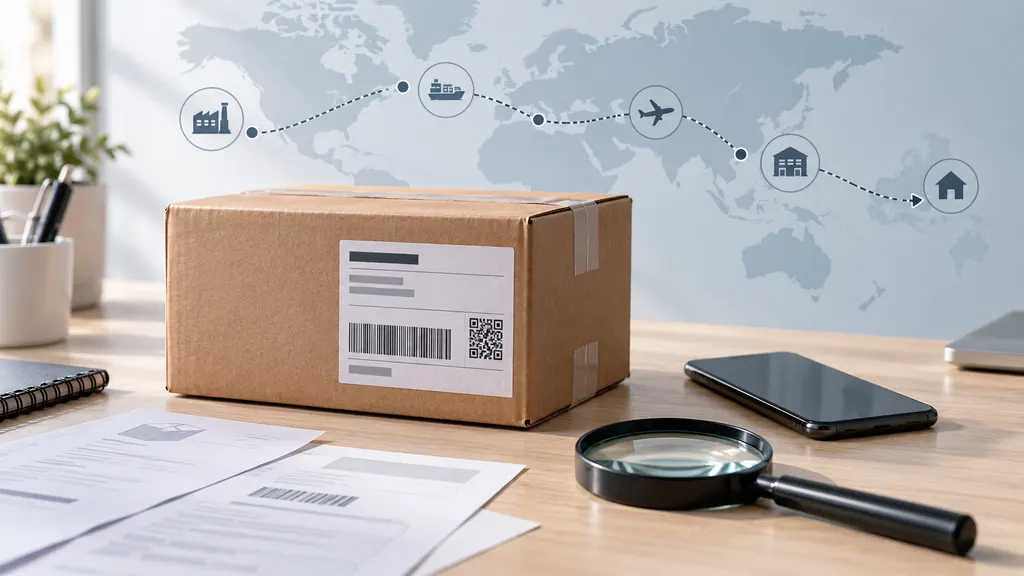
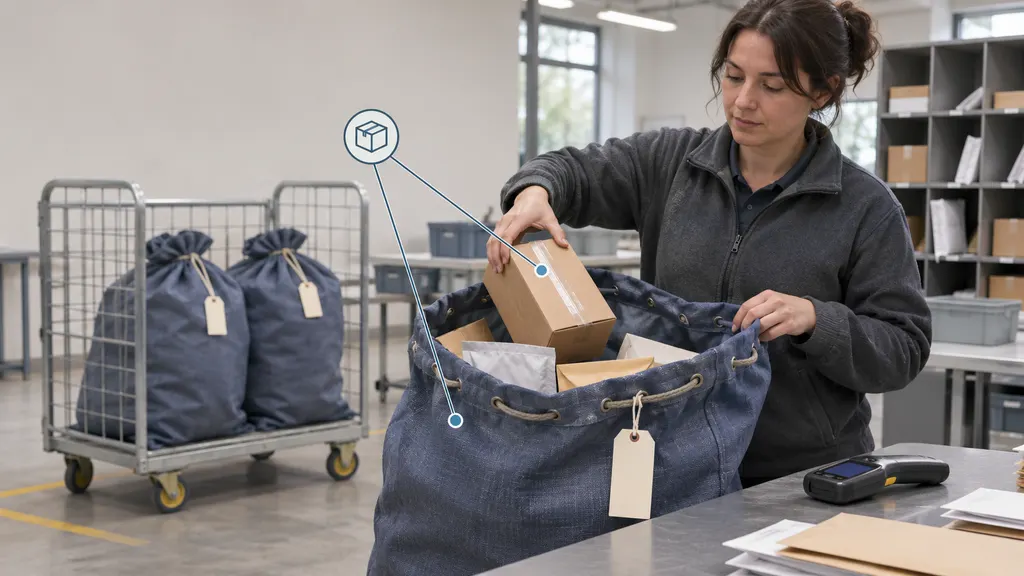
“Item Bagged” generally means a postal item has been assigned to or enclosed in a dispatch bag with other mail for the next stage of its journey. It is a sorting and preparation event, not confirmation that the bag has left the facility. If you are waiting for a delivery, this status alone usually requires no action: look for a later dispatch, arrival, or delivery-related update.
The wording is commonly encountered in India Post tracking. Other postal operators may describe similar handling differently. Read it alongside the event location, timestamp, service type, and surrounding scans rather than treating the phrase as a delivery estimate.
What does “Item Bagged” tell you about your parcel?
Postal networks move many individual items together between facilities. Grouping mail into dispatch bags helps organize those movements by destination, route, or processing point. A bagging event indicates that your item has reached this preparation stage in the tracking record.
Here, “bagged” refers to postal handling. It does not normally mean the seller has put your purchase into its retail packaging, added protective wrapping, or repacked it because of damage. Your parcel can remain inside its original shipping packaging while being grouped with other postal items.
There is also a limit to what a tracking label proves. The public event does not let you inspect the bag, confirm its loading position, or establish whether transport has already begun. Operational events and their publication can occur at different times. The safest interpretation is that the system has recorded preparation for an onward movement.
- It indicates processing progress: the item has reached a grouping or dispatch-preparation stage.
- It does not confirm departure: a separate dispatch or later arrival event provides better evidence of onward movement.
- It does not mean out for delivery: the bag may be going to another sorting facility, not directly to your local delivery office.
- It does not establish a delivery date: the remaining journey depends on the service and route.
What happens between bagging and dispatch?
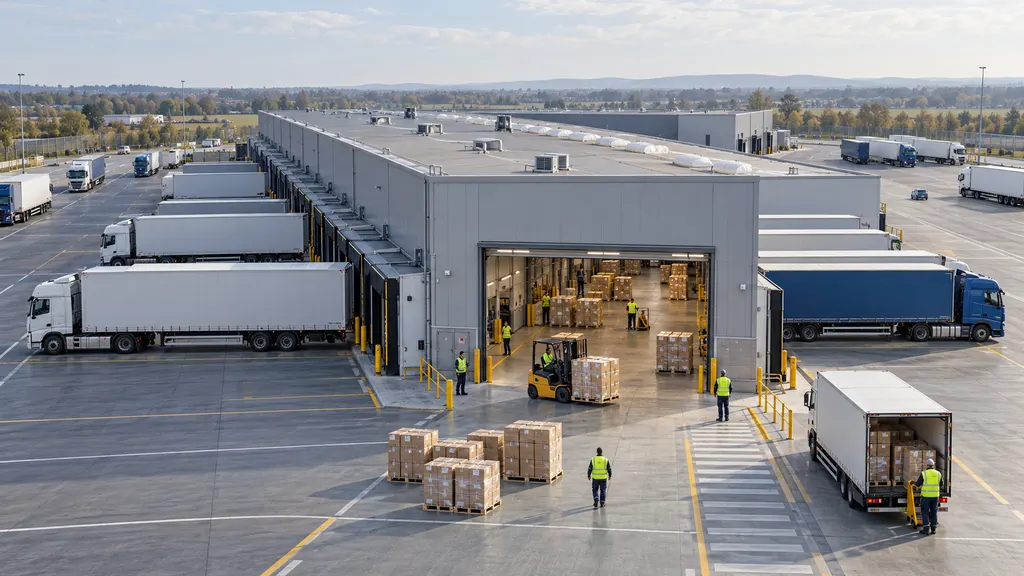
Bagging and dispatch describe related but different parts of the postal workflow. Bagging prepares a group of items for movement; dispatch records the sending stage. The precise sequence varies by postal operator and facility, and not every internal step appears in customer tracking.
- Mail is sorted for an onward destination. The next destination may be a processing hub, an exchange office, or a delivery-area facility. It is not necessarily the recipient’s town.
- Items are grouped into a dispatch bag. The postal system records the association or handling event that may appear as “Item Bagged.”
- The bag is prepared for its onward connection. It may need to wait for a scheduled collection, available transport, or the next processing handover.
- A dispatch event may be recorded. Depending on the tracking system, the update may identify the sending office or the next destination.
- The receiving facility processes the incoming mail. Arrival, receipt, opening, or sorting events may become visible before another onward movement.
This is an explanatory sequence, not a promise that your tracking page will display every step in that order. A public history can skip intermediate events or show them after a reporting delay. A later arrival scan is stronger evidence of progress than trying to infer a departure time from the earlier bagging scan.
Why can a parcel be bagged more than once?
A shipment can travel through several processing points. Mail grouped for one leg may be separated and regrouped for the next. That means repeated bagging events, especially at different locations, can fit a normal journey.
Repeated wording does not automatically mean a parcel is moving in circles. Compare the locations and timestamps. Bagging at an origin hub followed by bagging at a destination-area hub tells a different story from an unchanged record at one office. Even at the same office, the label alone is not enough to diagnose a routing error.
How “Item Bagged” differs from nearby tracking statuses
The following distinctions help you interpret the journey without assuming that every carrier uses identical terminology.
| Tracking wording | General meaning | What not to assume |
|---|---|---|
| Item booked or accepted | The postal operator has recorded acceptance or booking. | That the item has already left the acceptance location. |
| Item bagged | The item has been grouped for an onward dispatch stage. | That its transport has departed. |
| Item dispatched | The system has recorded an onward sending event. | That the next stop is the recipient’s address. |
| Item received or arrived | Receipt at a processing or delivery location has been recorded. | That final delivery will happen immediately. |
| Out for delivery | The shipment has entered the local delivery stage. | That delivery has already been completed. |
Does “Item Bagged” mean customs clearance or international departure?
No. Bagging by itself confirms neither customs clearance nor departure from a country. An international postal item can be grouped for movement before export processing, after a processing stage, or during its domestic journey in the destination country.
An event at an international exchange office provides location context, but the word “bagged” still does not prove that the parcel has boarded an aircraft. Look for separate customs, export, import, dispatch, or destination-country receipt events where the operator provides them.
Likewise, do not infer customs charges from this status. If payment or documentation is required, verify the request through the postal operator’s official channels. A bagging scan alone is not a payment instruction.
How long should you wait for the next update?
There is no reliable universal countdown from “Item Bagged” to dispatch or delivery. The interval depends on the purchased service, route, transport connections, operating schedules, and any disruption affecting the journey. An international shipment also has more potential handovers than a short domestic route.
Use the operator’s service guidance and your shipment’s delivery estimate as the reference point. Do not replace them with an unsupported rule such as “all bagged parcels move within 24 hours.” A gap between public scans does not, by itself, establish that the parcel is lost or still physically sitting where the last event occurred.
The practical trigger for follow-up is a missed delivery expectation, an explicit exception, or an unusually long gap relative to the service—not the word “bagged” on its own. If the contents are time-sensitive, you can ask the sender or operator for guidance sooner, but a tracking inquiry cannot guarantee faster transport.
What to do if tracking stays on “Item Bagged”
- Open the complete tracking history. Check whether “Item Bagged” is actually the newest event. A summary view may omit useful location or sequence details.
- Verify the tracking number and operator. Use the shipment number supplied by the sender, not an order number. For India Post shipments, start with the official India Post website and its tracking service.
- Read the event location. Determine whether it is an origin office, an intermediate facility, or a destination-area office. Do not assume an unfamiliar place name means misrouting.
- Compare the timeline with the service purchased. Check the booking date, expected delivery window, and any applicable service notices.
- Check for a separate exception. An address problem, unsuccessful delivery attempt, customs request, or return event needs a different response from a routine bagging entry.
- Contact the appropriate party when follow-up is warranted. Ask the postal operator about the recorded movement. For an online purchase, also contact the seller if the delivery window has passed or a marketplace protection deadline is approaching.
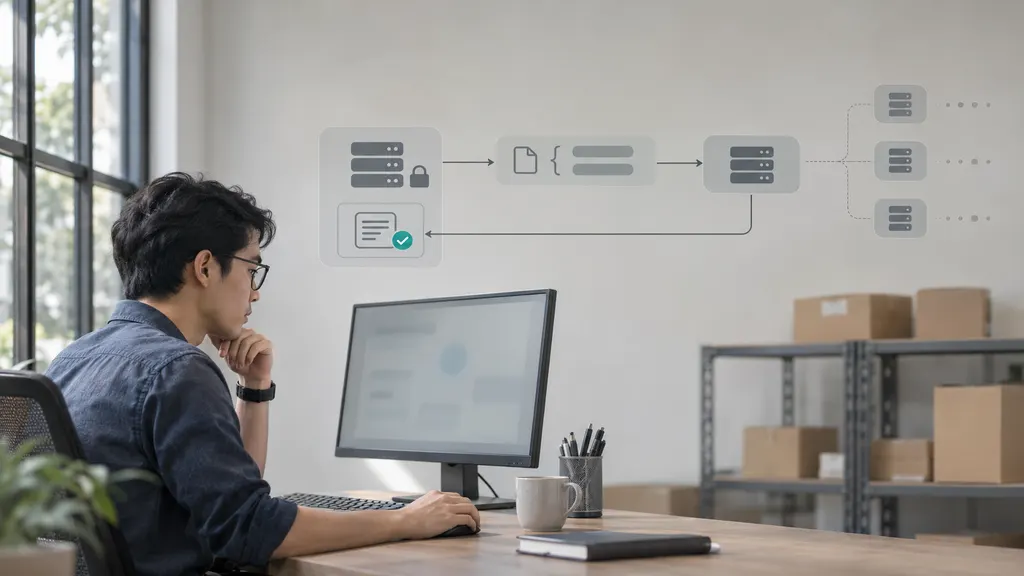
You can also enter the shipment number on 17TRACK to check its tracking history. Use this as another way to review shipment updates, not as a way to release a bag or accelerate dispatch. If two tracking views differ, compare individual event timestamps and consult the postal operator for clarification.
What information should you include in an inquiry?
Provide the tracking number, booking date if known, service name, latest event text, event location, and the delivery estimate you were given. State the issue plainly: “The latest event is Item Bagged at this office, and the expected delivery window has passed. Can you confirm whether a later movement is recorded?”
Keep the booking receipt, seller correspondence, and a copy of the tracking history. The sender may need to initiate a formal inquiry or claim, depending on the service and applicable rules. Do not assume that the recipient can complete every postal claim process independently.
FAQ
Does “Item Bagged” mean my parcel will arrive today?
No. It describes preparation for a postal movement, not a delivery appointment. A local “out for delivery” event is more relevant to a possible same-day delivery, although it is not confirmation of completion.
Is “Item Bagged” a sign that something is wrong?
Not by itself. It is generally a routine processing status. Concern should be based on the wider timeline, a missed delivery expectation, or an explicit problem event rather than the bagging label alone.
Why does tracking show bagging but no dispatch?
The item may be waiting for an onward connection, or the next public update may not yet be available. The status alone cannot distinguish those possibilities. A later receiving-office event can confirm progress even if you never see a separate dispatch entry.
Can I collect the parcel from the office shown in the bagging event?
Do not travel there based only on the scan. A processing facility may not offer customer collection, and the item may already have moved. Ask the postal operator whether collection is available and wait for confirmation of the location and requirements.
Should I ask the seller for a refund immediately?
A routine bagging event is not, on its own, a reason to conclude that delivery has failed. Check the promised delivery window and the seller’s or marketplace’s applicable protection rules. If a deadline is approaching, contact the seller promptly rather than waiting indefinitely for another scan.
Sources
- India Post official website — official starting point for shipment tracking, postal service information, and customer support. Shipment-specific events and service guidance should be checked with the operator.
- 17TRACK tracking — shipment-number lookup referenced as an additional way to review tracking updates.