International Shipping Customs Documents: What to Prepare before Dispatch
Before dispatching an international shipment, prepare an accurate customs declaration, a commercial invoice for goods sold or otherwise transferred commercially, and any destination- or product-specific documents that apply. Check that the description, quantity, value, currency, origin, and recipient details agree across the paperwork and shipping label. The exact requirements depend on what you are sending, where it is going, and how it will be transported.
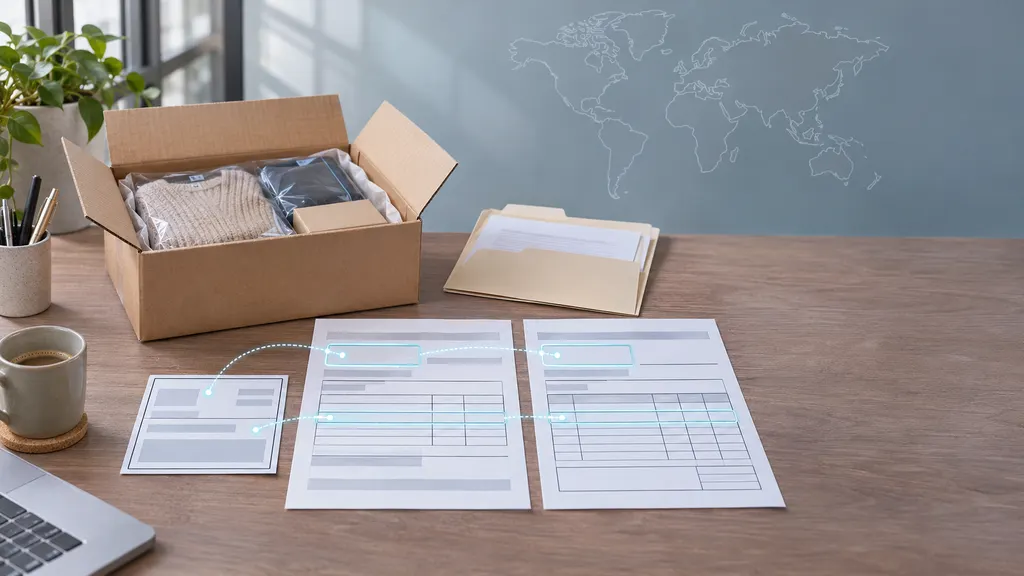
This guide is for people arranging cross-border shipments, from occasional senders to ecommerce teams. It focuses on the documents to assemble before handoff to a postal operator, carrier, or freight forwarder. It does not replace a destination country’s customs instructions or a carrier’s booking requirements.
Start with the shipment, not a generic document checklist
A parcel of clothing sold to a customer, a replacement part sent under warranty, and a personal gift may all need customs information, but they should not be described or valued in the same way. Before completing forms, establish five facts: what each item is, why it is moving, where it was made, what it is worth, and who will receive it. Then check the rules for the destination and the service you intend to use.
First determine whether the shipment contains documents only or physical goods. Postal operators and carriers may treat document shipments differently, but a printed item is not automatically exempt from customs requirements merely because the sender calls it a document. If the contents include merchandise, samples, gifts, returns, or replacement goods, use the appropriate shipment purpose and follow the operator’s instructions for declaring them.
Next confirm the importer or recipient details. A delivery address alone may not be enough for a commercial shipment. Depending on the country and the goods, the importer may need to supply a tax or customs identification number, appoint a broker, or provide information for a permit. Establish who will answer customs questions before the parcel leaves; correcting an incomplete record after arrival can be slower than resolving it before dispatch.
The documents most shipments should be checked against
Customs declaration
A customs declaration tells the relevant authorities what is entering or leaving a country. For postal shipments, the required declaration is commonly completed through the postal operator’s shipping process. For courier and freight movements, declaration information may be submitted electronically by the carrier, broker, or importer using information supplied by the sender. Do not assume that a paper form is always required—or that electronic submission means the sender has no paperwork to prepare.
Describe the actual contents item by item. “Clothes,” “parts,” and “gift” say too little about the goods themselves. A useful description identifies the product and, when relevant, its material and use: for example, “women’s cotton T-shirts” or “steel bicycle brake cables.” State the correct quantity and a defensible value in the specified currency. Selecting “gift” or “sample” does not remove the need to describe and value physical goods.
Commercial invoice or other value-supporting document
The commercial invoice is a central source of information for a commercial shipment. Prepare it before booking so its details can be used consistently on the shipping label and in the customs declaration. It should normally identify the seller or sender and buyer or recipient, provide a clear itemized description, quantities, unit and total values, currency, country of origin, and the reason for export. Include shipping terms and freight or insurance information when the carrier or destination requires them.
A sale invoice may not exist for a gift, sample, warranty replacement, or return. The carrier or destination may instead ask for a pro forma invoice or another document stating the goods and their value for customs purposes. Use a truthful shipment purpose and value; a zero-price transaction does not necessarily mean the goods have no customs value. If an item is being returned, keep the original sale or export records and the return authorization where available, because a claim for any applicable returned-goods treatment may require supporting evidence.
Transport and packing records
The shipping label or waybill identifies the shipment for transport and links it to the recipient and service. It is not a substitute for a customs invoice or a required declaration. Check that the sender and recipient names and addresses match the customs documents and that the package count and weights are consistent with what you hand over.
A packing list is particularly useful for multi-item or multi-package shipments. It shows what is in each package and helps a carrier, broker, or customs officer reconcile the physical shipment with the invoice. For a simple parcel, the carrier’s process may not require a separate packing list; for freight or complex consignments, confirm the format and level of detail with the forwarder or broker.
Documents that depend on the product, route, or trade claim
Not every shipment needs a certificate of origin, import license, or product certificate. The mistake is to assume none of them apply until the shipment is stopped. Check requirements using the product classification and destination country, then ask the importer or broker to confirm any uncertain cases.
- Proof of origin: If the importer intends to claim preferential tariff treatment under a trade agreement, the agreement’s origin rules and proof requirements matter. The country from which a parcel is dispatched is not necessarily the country where its goods originate. A non-preferential certificate of origin may also be requested for a different reason; do not treat the two as interchangeable.
- Licenses, permits, and product certificates: Requirements can attach to particular goods or end uses, including regulated foods, plants, animal products, medicines, chemicals, and controlled technology. Check both export-side restrictions and import-side requirements before accepting an order or booking transport.
- Safety and transport paperwork: Batteries and other potentially dangerous goods may be subject to transport classification, packaging, marking, and documentation rules separate from customs requirements. Confirm the carrier’s acceptance rules and the applicable mode of transport rather than relying on a customs invoice alone.
- Freight-specific records: Formal freight movements may involve a bill of lading or air waybill, broker instructions, and additional declarations. The party filing an export or import declaration can vary by jurisdiction and transaction, so agree on responsibilities before departure.
Product classification helps determine duties, restrictions, and possible documentation requirements. The Harmonized System provides the international foundation for classifying traded goods, but countries use their own tariff schedules and may require more detailed codes. Do not copy a code from a similar-looking product without checking its material, function, and the destination tariff schedule.
Check values, origin, and responsibility before printing a label
Three fields deserve particular attention because a plausible-looking invoice can still be wrong. The first is value. Use the actual transaction information when goods are sold, and provide a supportable value when no sale takes place. Show the currency clearly. Do not reduce a declared value to avoid charges, and do not assume that a discount, free replacement, or gift removes the need for an accurate declaration.
The second is country of origin. This generally concerns where the goods were produced under the applicable origin rules, not the location of your warehouse or the country where you bought them. A package containing items made in different countries may need origin recorded by line item. If production spans multiple countries, seek an origin determination appropriate to the relevant rules rather than guessing from the last shipping location.
The third is responsibility for charges and clearance. Agree with the recipient who is expected to handle import formalities and pay applicable duties and taxes. If you use an Incoterms rule in a commercial contract, write the agreed rule and named place accurately, and make sure the transport booking reflects the intended arrangement. Incoterms rules allocate specified seller and buyer responsibilities, but they do not replace customs declarations, establish a product’s origin, or guarantee that an importer has the registrations needed to clear the goods.
A practical pre-dispatch review
- Confirm the route and parties. Record the origin, destination, sender, recipient, and importer where applicable. Check that the carrier accepts the destination and contents.
- Describe and classify each item. Use a specific description, quantity, material or use where relevant, and a checked tariff classification when required. Separate materially different products into separate invoice lines.
- Establish value and origin. Retain the sale record or other evidence supporting the declared value. Record the correct currency and the origin of each product rather than the dispatch country by default.
- Check restrictions and claims. Identify import permits, export controls, transport restrictions, and any origin proof needed for a preferential tariff claim. Confirm them with the relevant authority, carrier, or broker if the answer is unclear.
- Prepare consistent documents. Complete the invoice or appropriate alternative, customs information, label or waybill, and any packing list or supplementary certificates. Compare item descriptions, quantities, values, addresses, package count, and shipment purpose across them.
- Submit in the required format. Follow the carrier’s instructions for electronic data and any physical copies. Save the final documents and submission confirmations with the order or shipment record.
For repeat shipments, turn this review into a product-level record: approved description, checked classification, manufacturing origin, and any destination-specific flags. Recheck the record when the product, supplier, destination, or applicable rules change. That is more reliable than rebuilding customs data from a brief storefront title every time an order is dispatched.
FAQ
Do I need a commercial invoice for a personal gift?
Not necessarily. The postal operator or carrier may use a customs declaration and may request a pro forma invoice or similar document instead of a sale invoice. You still need an accurate description, value, and shipment purpose. Check the service and destination requirements before sending.
Can I put “no commercial value” on a sample or free replacement?
Do not use that phrase as a substitute for providing a supportable customs value. A sample or replacement can have a value even when the recipient pays nothing. State the reason for shipment separately and follow the carrier’s and destination authority’s instructions for valuation.
Is a certificate of origin required for every international parcel?
No. It depends on the goods, destination, and whether the importer is making a claim under a trade agreement or must meet another origin-document requirement. Recording the correct country of origin on the shipment documents remains important even when no separate certificate is required.
Are electronic customs forms enough, or should I attach paper copies?
Follow the shipping service’s instructions for the specific route. Some processes collect and transmit customs information electronically; others also require printed documents or a document pouch. Keep a copy of what you submitted so discrepancies can be resolved if the carrier or customs authority asks.
Who should check the destination country’s import requirements?
The sender should check before dispatch, and the importer or recipient should confirm requirements that apply to them, such as permits or importer identification. For unfamiliar or regulated goods, involve a qualified customs broker or the relevant authority before shipping rather than waiting for a clearance hold.
Sources
- UK Government, Export goods from the UK: step by step.
- UK Government, Import goods into the UK: step by step.
- USPS, International Customs Forms.
- European Commission, Access2Markets, for checking product- and market-specific trade requirements.
- World Customs Organization, What is the Harmonized System?
- International Chamber of Commerce, Incoterms rules.