International Package Tracking Statuses Explained: What each Shipping Stage Means
International package tracking statuses describe where a shipment was last recorded and what is likely to happen next. They do not always provide a live location, and the wording varies by carrier, postal operator, destination country, and shipping service. The most useful way to read a status is to identify the shipment stage—label creation, acceptance, transport, customs, last-mile delivery, or exception—and then check whether the carrier requires action.
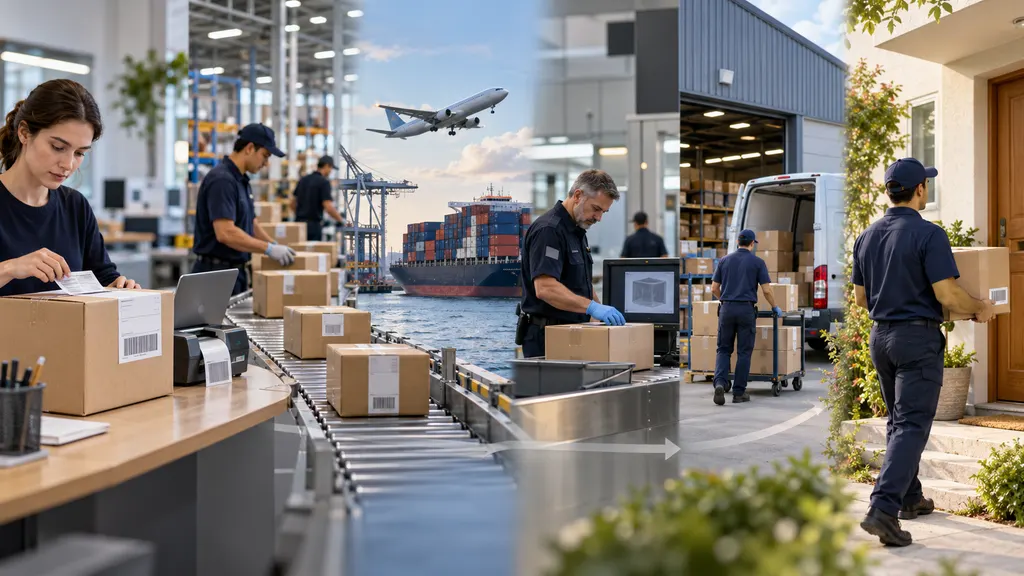
This guide explains the common stages of international shipping, what each status usually means, why updates can pause, and what to do when a tracking message appears unclear or overdue.
How international tracking statuses work
A tracking event is normally created when a carrier or logistics partner scans a parcel, records a handoff, or updates a shipment record. Some events are physical scans at a facility. Others are administrative updates, such as electronic shipment information being received or customs documentation being submitted.
As a result, a status can be accurate without showing the package's exact current position. A parcel may continue moving between scans, while an international shipment may also be transferred between multiple postal operators, customs authorities, airlines, line-haul providers, and local delivery companies.
Carrier wording is not standardized. One carrier may use “in transit,” while another uses “departed facility,” “transportation to destination,” or “dispatched from office of exchange” for a similar stage. The event date, location, and next expected action are often more useful than the label alone.
International package tracking statuses by shipping stage
1. Shipping information received or label created
“Label created,” “shipment information received,” or “pre-shipment” usually means the sender or shipping platform has transmitted electronic details to the carrier. A tracking number may exist before the parcel has been physically accepted.
This status does not necessarily mean the carrier has possession of the package. The next update may appear after the parcel is picked up, handed to a drop-off location, or processed at an origin facility. If the status remains unchanged beyond the sender's stated dispatch window, contact the seller first and ask whether the parcel was handed to the carrier.
2. Accepted, picked up, or received by the carrier
“Accepted,” “picked up,” “received at origin facility,” or “collected” generally indicates that the carrier has recorded possession or a formal acceptance of the shipment. This is a more meaningful milestone than label creation, although the package may still be waiting for sorting or export processing.
For postal shipments, the first scan can occur at a local post office, parcel center, or export processing facility. For courier shipments, it may occur during pickup or at a regional hub.
3. Processing at origin or export facility
Statuses such as “processed at origin facility,” “sorted,” “tendered to airline,” or “dispatched from the office of exchange” indicate preparation for international transport. The parcel may be undergoing sorting, export documentation checks, security screening, or consolidation with other shipments.
“Dispatched” does not always mean the aircraft has departed. In some postal systems, it means the shipment has left one processing office for another. The location and following event should be used to interpret the message.
4. In transit to the destination country
“In transit,” “departed facility,” “on the way,” or “transportation to destination” usually means the shipment is moving through the carrier's network. It may be traveling by road, air, or a combination of transport modes.
An in-transit status can remain unchanged during a long international leg because there may be no public scan while the parcel is on an aircraft, awaiting a connection, or moving between partner networks. A gap in updates alone does not prove that the shipment is lost.
5. Arrived in the destination country
“Arrived at destination country,” “arrival at inward office of exchange,” or “received by destination post” means the shipment has been recorded in the destination network. It may still need import review, sorting, payment of duties, or transfer to a local delivery unit.
Arrival in the destination country does not mean the parcel has cleared customs or is ready for delivery. Those are separate steps, and the order in which they appear can differ by carrier.
6. Customs clearance or import processing
“Customs clearance,” “presented to customs,” “import clearance in progress,” and similar messages refer to review by customs authorities or a carrier's customs-processing team. The review may consider the declared contents, value, origin, documentation, and applicable import requirements.
A package can receive a customs-related status without being held. “Clearance in progress” is not the same as “customs hold.” If the message asks for an invoice, identification, tax payment, import permit, or other information, the recipient or sender should follow the instructions from the carrier or relevant authority.
Customs rules differ by country and shipment type. Do not infer the amount of duty, tax, or processing time from a tracking status alone. The carrier, customs authority, seller, or designated customs broker is the appropriate source for shipment-specific requirements.
7. Customs cleared or released for delivery
“Customs cleared,” “released by customs,” or “import clearance completed” generally means the shipment has passed the relevant clearance step and can continue through the destination network. It may still need local sorting, payment collection, or handoff to the final-mile delivery company.
Some systems show a clearance event only after the parcel has already moved to a local facility. For that reason, the status should be read together with the event location and timestamp.
8. Arrived at a local facility or delivery depot
“Arrived at delivery facility,” “at local facility,” or “processed at destination facility” means the parcel has reached a facility serving the destination area. It is usually closer to delivery, but it does not guarantee delivery on the same day.
The package may be sorted into a route, held for a scheduled delivery date, transferred to a subcontracted courier, or sent to a pickup point. If the address is incomplete or the delivery method requires an appointment, the carrier may issue a separate exception message.
9. Out for delivery
“Out for delivery” normally means the parcel has been assigned to a delivery route or driver. It is the clearest indication that a delivery attempt may occur soon, but it is not proof that delivery will be completed that day.
Weather, route capacity, access problems, address errors, security restrictions, or a failed delivery attempt can change the outcome. If delivery does not occur, the next event may show a new attempt, a pickup location, a return process, or an exception.
10. Delivered
“Delivered” means the carrier has recorded a completed delivery event. The delivery record may include a signature, recipient name, safe-place note, photo, or location detail, depending on the service and destination.
If the recipient cannot find the parcel, check the delivery details, household or building reception area, designated safe place, and nearby neighbors. Then contact the carrier and seller promptly, especially if the shipment contains valuable goods or the delivery record appears inconsistent with the address.
Statuses that require attention
| Status or message | What it usually indicates | Practical next step |
|---|---|---|
| Address incomplete or incorrect | The carrier cannot complete delivery using the available address data. | Contact the carrier and seller; provide corrected details only through an official channel. |
| Customs documentation required | Additional information may be needed for import processing. | Check the carrier's request and submit accurate documents by its stated method. |
| Held at customs | The shipment is not currently moving through normal clearance. | Ask the carrier or customs broker whether payment, documents, or recipient action is required. |
| Delivery attempted | A delivery attempt was recorded but was not completed. | Review the notice for redelivery, pickup, or address instructions. |
| Exception or delay | An event has disrupted the expected transport or delivery process. | Read the detailed event, confirm the latest location, and escalate if the carrier's guidance is unclear. |
| Returned to sender | The shipment is moving back because delivery or import completion was not possible. | Contact the seller and carrier to determine the return reason and available resolution. |
Why tracking updates stop or appear out of order
A tracking gap can have several ordinary explanations. The parcel may be moving between two scan points, waiting for transport, or transferring from an international carrier to a postal operator that publishes fewer events. Data can also be uploaded in batches, so a later event may appear after the physical movement has already occurred.
Different tracking pages may show different levels of detail. A carrier's own site is usually the best source for official exception instructions, delivery changes, customs requests, and proof of delivery. A multi-carrier service can be useful when a shipment changes hands, but its event wording may be normalized or less detailed than the carrier's original record.
When you track a package, compare the latest event time, location, carrier, and service commitment rather than relying on a single phrase. If the parcel has exceeded the delivery window, the sender should normally open an inquiry or claim because the sender is often the contracting customer of the carrier.
How to interpret an international shipment step by step
- Identify the latest genuine event. Separate a physical scan from a message that only confirms electronic data.
- Check the location. An event in the origin country, a transit hub, and the destination country implies different next actions.
- Look for an exception. Address, customs, payment, and delivery-attempt messages may require action.
- Compare the status with the promised service window. A pause is more concerning when the shipment is past the carrier or seller's stated delivery range.
- Use the original carrier page for escalation. Confirm the official contact route before sharing personal information or paying a requested charge.
- Ask the seller to intervene when appropriate. The seller can often start a carrier investigation, confirm the declared information, or arrange a replacement under its own policy.
Using a multi-carrier tracking service
International shipments often involve more than one carrier. A multi-carrier tracking service can bring events into one view, which is useful when the parcel moves from an origin postal operator to an international logistics provider and then to a destination carrier.
17TRACK's tracking page can be used to check shipment events across supported carriers, while its main tracking service provides a central place to enter a tracking number. The service can help recipients follow a shipment when the responsible carrier is not obvious, but the carrier's own site remains the better authority for formal claims, customs requests, delivery changes, and detailed proof-of-delivery records.
For businesses, the same distinction matters. A consolidated tracking view can improve post-purchase visibility, but operational decisions should be based on the original carrier event when an exception, refund, replacement, or customer dispute is involved.
When should you contact the carrier or seller?
Contact the carrier when the status explicitly requests recipient action, the address is wrong, a customs document is needed, or delivery is marked complete but the parcel cannot be located. Contact the seller as well when the parcel is overdue, appears returned, or has not received an acceptance scan after the stated dispatch period.
There is no universal number of days that defines a lost international parcel. The appropriate escalation point depends on the carrier, service, origin, destination, delivery promise, and any published inquiry deadline. Keep the tracking number, order information, event history, correspondence, and relevant customs documents together before opening a case.
FAQ
Does “in transit” mean my package is moving right now?
Not necessarily. It usually means the latest recorded event places the shipment within the carrier's transportation network. The parcel may be traveling, waiting for a connection, or moving between facilities without a new public scan.
Why does customs clearance take longer than other tracking stages?
Customs processing may involve document review, inspection, valuation, duties, taxes, or requests for information. Requirements vary by destination and shipment. If the status identifies a missing document or payment, follow the carrier's official instructions instead of relying on a generic tracking interpretation.
Can a package be delivered without an “out for delivery” update?
Yes. Event visibility differs by carrier and delivery partner. Some networks publish fewer last-mile scans, and an out-for-delivery event may be uploaded late or omitted.
What should I do if tracking says delivered but I have not received the package?
Review the delivery time and location details, check common safe places and reception areas, and ask household members or neighbors. If it is still missing, contact the carrier and seller promptly and request the available delivery evidence.
Is a tracking number proof that a parcel has shipped?
No. A number can be created when shipping information is submitted before the carrier receives the parcel. Look for an acceptance, pickup, or origin-processing scan to confirm that the shipment has entered the carrier's network.
Sources
- 17TRACK tracking page — official tracking service.
- 17TRACK official website — official consumer tracking service.
- UPS Tracking Support — carrier guidance on tracking and shipment information.
- FedEx package tracking FAQ — carrier guidance on tracking updates and delivery status.
- DHL tracking content information — explanations of DHL tracking events and shipment progress.
- USPS: Where is my package? — official postal guidance on tracking and delayed updates.