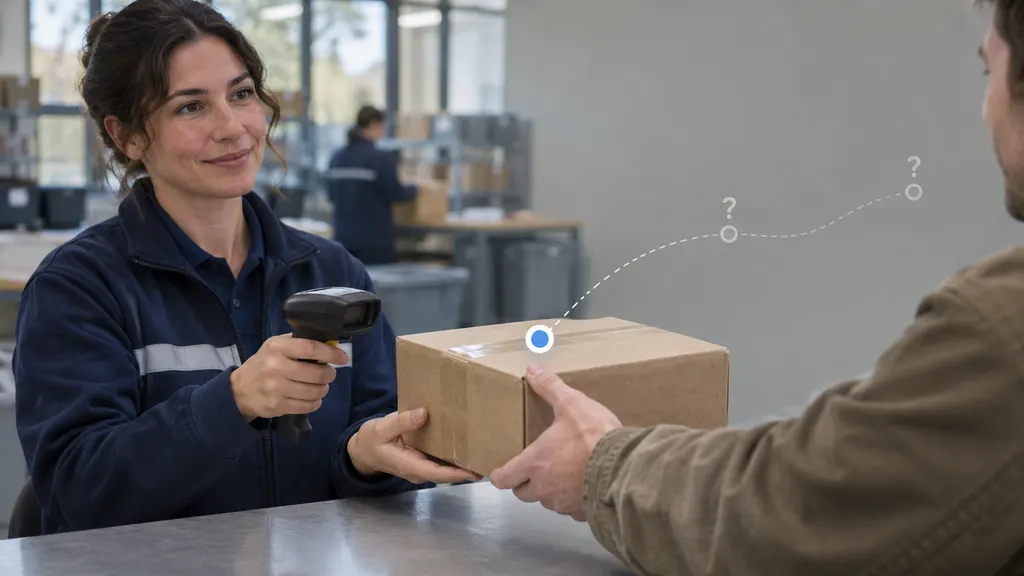
How to Pilot a New Shipment Tracking API Alongside Your Existing Provider
To pilot a new shipment tracking API without disrupting your existing provider, run both against the same selected shipments, keep the existing provider in control of customer-facing updates, and compare the results against predefined operational criteria. Expand only after the new integration has demonstrated reliable tracking, manageable exceptions, acceptable costs, and a safe path to production.

This is an integration test, not a contest to see which API returns more events. The person leading it—typically an engineering or operations owner—needs to establish whether the new source improves decisions made by the order management system, support team, or customer notification workflow without introducing duplicate messages or misleading delivery states.
Define the decision before writing the integration
A useful pilot answers a narrow question: should the new API replace the current source for a particular workflow, serve as a fallback, or remain an additional source for selected shipments? Those outcomes require different tests. A fallback must work when the primary source is delayed or unavailable. A replacement must support the full set of shipments and downstream processes you intend to move. A supplemental source might only need to improve visibility for a defined group of carriers or routes.
Write down the pilot’s scope and success criteria before implementation. Specify the shipment types, carriers, origin and destination markets, tracking-number formats, and fulfillment channels you will include. Identify who will judge success and who can authorize a rollout. Keep a separate list of shipments the pilot will not cover; otherwise, a strong result from an easy subset can be mistaken for proof that the integration is ready everywhere.
Set acceptance thresholds based on your own baseline and business requirements rather than adopting a generic industry target. At minimum, decide how you will evaluate usable tracking responses, time to a meaningful status update, event accuracy, failed requests, support effort, and total operating cost. Record any requirements that are non-negotiable, such as data-handling rules or the ability to recover after an interrupted event feed.
Choose a representative shipment cohort
Give both providers the same shipments whenever your agreements and integration design permit it. This paired approach makes differences easier to interpret than comparing unrelated shipments from different weeks. Include recently created labels, shipments with a carrier acceptance scan, in-transit parcels, delivered parcels, and known exceptions. If your business uses international shipping, include routes where customs processing, carrier handoffs, or local last-mile delivery make event interpretation harder.
Do not select only clean shipments that already have a complete history. Newly created tracking numbers can expose registration delays; shipments with sparse scans test how the API represents uncertainty. Include cases that matter to support, such as a customer asking about a package that appears stalled or a shipment whose delivery status needs verification.
Keep the cohort controlled. Log when each tracking number was submitted to each provider, which carrier you supplied or detected, and whether the two requests used equivalent inputs. Carrier detection, if offered, should be evaluated separately from tracking-event quality: a wrong carrier assignment can make an otherwise functional integration look inaccurate. Remove or protect recipient details not needed for the test, and confirm that sharing shipment data with the additional provider is permitted under your internal privacy and vendor requirements.
Build a shadow integration first
In the first phase, the new API should feed an internal comparison store, not your customer-facing tracking page, automated notifications, or delivery-complete logic. Leave the existing provider as the production source of record. This separation lets the team inspect new data without risking conflicting emails, premature delivery confirmations, or duplicate support tickets.
Use a stable internal shipment identifier to connect both provider records to the same order. Store the original provider response alongside a normalized record. The original response helps developers investigate discrepancies; the normalized record allows consistent comparison. Do not discard provider-specific event descriptions before you understand what they mean.
A practical comparison record can contain the internal shipment ID, carrier identifier, tracking number, provider, raw status, normalized status, event description, event time, time zone or offset if supplied, time received by your system, event location when available, and the API response or notification identifier. Not every source will supply every field. Mark missing values as unknown rather than manufacturing a timestamp or location.
If the candidate integration uses event notifications, confirm its authentication and delivery behavior in its official documentation before relying on them. Test duplicate notifications, events received out of order, and temporary endpoint failures. Make processing idempotent so receiving the same event twice does not send the same customer message twice. If you use polling instead, record request frequency, response behavior, and any applicable usage limits. The correct architecture depends on documented provider behavior; a pilot should verify it rather than assume that all tracking APIs work alike.
Compare decisions, not just status labels
Two providers may describe the same physical event differently. One might return a detailed carrier scan while the other presents a broad milestone. Treat that as a mapping problem until you determine whether it changes a business decision. For each shipment, ask: would either source cause a different customer notification, support response, escalation, or order-state change?
Create a small, explicit status taxonomy for your own systems, such as pre-transit, in transit, exception, out for delivery, delivered, and unknown. Define the evidence required to move into each state. Preserve raw events so a broad normalized category does not hide an important carrier message. Never assume that an event with a later receipt time represents a later physical movement; the event’s occurrence time and the time your system received it answer different questions.
Review mismatches by category rather than reporting a single agreement percentage. Useful categories include:
- Missing shipment: One source has no usable record for a tracking number that the other recognizes.
- Delayed update: Both eventually show the same milestone, but one becomes usable later for your workflow.
- Different status meaning: The sources appear to disagree about exception, delivery, or handoff.
- Different event detail: Both support the same decision, but one includes additional carrier context.
- Integration error: Your request, carrier mapping, authentication, or event processing caused the difference.
Investigate significant mismatches against available carrier information and your own fulfillment records when possible. Neither API response should automatically be treated as ground truth. A carrier scan may arrive late, a shipment may have multiple legs, or a merchant may have associated the wrong tracking number with an order. Keep an adjudication note for each high-impact discrepancy, including whether the cause remains unresolved.
Test reliability and recovery under ordinary failures
A pilot that succeeds only when every request works on the first attempt is not production-ready. Simulate expired credentials, network timeouts, malformed tracking inputs, and temporary unavailability in your integration test environment. Confirm that retries do not create duplicate shipment records or notifications. Check how the system behaves when an update arrives after an apparently final state; operational rules should accommodate legitimate corrections instead of silently discarding them.
Measure failures at the level your team can act on. Separate provider responses from errors in your application, and distinguish a shipment with no new scans from a failed API call. Monitor registration failures, rejected requests, delayed processing, duplicate events, and gaps between the last known scan and the present. Assign an owner for each alert type. Otherwise, adding a second data source can increase noise without improving visibility.
Also test the recovery procedure. If your event receiver is unavailable, determine how you would reconcile missed updates using methods the provider actually documents. If your polling job stops, determine how you will identify affected shipments and resume without exceeding contractual or technical limits. A recovery runbook is part of the pilot result, not a task to postpone until after rollout.
Evaluate the full operating cost
API charges are only one cost of running two sources. Estimate the work required to register and monitor shipments, maintain carrier mappings, handle authentication, store event histories, review exceptions, and support customer-facing discrepancies. Confirm the candidate provider’s current pricing terms and relevant usage rules directly before projecting spend; do not infer cost from request counts alone.
Compare costs against a defined operational benefit. If the new API supplies useful updates sooner for a subset of shipments, quantify what that enables in your own operation: fewer manual checks, better-timed notifications, or more reliable exception triage. If it supplies largely equivalent information, the added integration may still be justified as resilience—but only if you have tested how failover will work. Two integrations that share the same untested assumptions do not automatically provide a dependable backup.
Move to production in stages, with a rollback switch
After the shadow phase, enable the new source for one low-risk internal workflow before allowing it to trigger customer communications. For example, support agents could see both feeds with a clear source label while the existing provider still controls automated order updates. Review the resulting tickets and discrepancies before changing production decision rules.
For any customer-facing rollout, define which source wins when statuses conflict. Avoid a simple “latest response wins” rule: receipt order does not establish event accuracy. Use explicit rules for high-impact states, particularly delivered and delivery exception. Document who can override a state and how that correction will propagate to downstream systems.
Roll out by a clearly identified segment, such as a carrier-route combination or fulfillment channel that passed the pilot. Maintain a configuration switch that restores the original source for that segment without redeploying the entire application. Before expansion, verify that disabling the new provider will stop its notifications, preserve necessary records, and leave existing orders in a coherent state.
The final decision should be specific. Approve the API for the segments and workflows that met your criteria, defer segments with unresolved mismatches, and reject a production change when the added operational burden outweighs the demonstrated benefit. A successful pilot does not need to end in a full replacement; it needs to produce a decision you can explain and reverse if conditions change.
Where 17TRACK fits in the pilot
If 17TRACK is the candidate source, start with its Tracking API overview and API documentation when designing the integration and test cases. Treat the documentation as the authority for the endpoints, authentication, request and response formats, and any notification behavior applicable to your implementation. Confirm current commercial terms and any requirements that are not clear from the documentation directly with 17TRACK before setting acceptance criteria.
The same shadow-testing method applies regardless of which tracking API you are evaluating. What matters is whether its documented behavior and observed results meet your shipment mix, internal workflows, and risk tolerance—not whether an API appears to offer a longer feature list.
FAQ
How long should a shipment tracking API pilot run?
Run it long enough for the selected cohort to produce the events your business needs to evaluate, including delivery and relevant exceptions. A fixed number of days is less useful than a completion condition: enough shipments have progressed through the applicable lifecycle, and enough discrepancies have been investigated to support a decision. If international or infrequently scanned shipments are in scope, make sure those cases are represented before closing the pilot.
Can we send the same tracking number to two providers?
Technically, a paired test can use the same tracking number with two integrations, but first check each provider’s terms, data-handling requirements, and any carrier-specific constraints. Use your internal shipment ID to connect the two records, and prevent either shadow feed from triggering duplicate customer actions.
What if the providers disagree about whether a package was delivered?
Do not resolve a delivered-status conflict by choosing whichever response arrived most recently. Inspect the underlying event, its occurrence time, the tracking number and carrier association, and any available carrier or fulfillment evidence. Keep the existing production rule in place while the discrepancy is investigated. If delivery confirmation is a high-impact business event, require a documented resolution rule before expanding the new integration.
Should the new API be a replacement or a fallback?
Choose based on the workflow you have actually tested. Replacement requires confidence across the shipment segments and downstream actions being migrated. Fallback requires a tested trigger, a way to reconcile the two sources, and a recovery path when the primary source returns. If only a particular carrier or route benefits, limited supplemental use may be the clearer outcome.
Sources
- 17TRACK Tracking API overview — official product entry point for evaluating the candidate API.
- 17TRACK API documentation — official technical reference to check before implementing requests, interpreting responses, or designing notification handling.