Empty-Loaded Rate
Definition
What is the empty-loaded rate? The empty-loaded rate is a logistics performance measure that describes the proportion of vehicle, container, trailer, wagon, or other transport movements performed without a commercially assigned load. It is used mainly in freight transport and supply chain management to assess how often transport capacity is moved empty rather than carrying goods. The exact meaning depends on the measurement basis: a company may calculate it from empty trips, empty distance, empty vehicle capacity, or empty container movements.

The term is related to, but is not always identical with, empty running, empty mileage, empty repositioning, and deadheading. These expressions describe the underlying activity, while the empty-loaded rate expresses that activity as a proportion of a defined total. Because companies and statistical agencies may use different denominators, an empty-loaded rate should always state what is being counted.
Why the Empty-Loaded Rate Matters in Logistics
Freight transport normally involves a vehicle or container moving between locations with a load, but the return movement may occur before another suitable load is available. A truck may deliver goods from a distribution centre to a store and then return to a depot without freight. A container may be discharged at an import destination and then be moved empty to a location where export cargo is available. These movements consume transport resources even though they do not directly carry saleable goods.
The rate therefore provides information about the utilization of transport capacity. A higher rate may indicate an imbalance between outbound and return freight, geographic separation between supply and demand, restrictive delivery requirements, equipment repositioning, or a planning decision that prioritizes service availability over load matching. A lower rate can indicate that transport movements are more frequently paired with loads, but it does not automatically prove that the operation is more efficient. A carrier may intentionally accept an empty movement to meet a time-sensitive collection, return equipment, or protect network reliability.
In ecommerce and cross-border ecommerce, the measure can appear in several parts of the physical flow. It may concern line-haul trucks between fulfillment centres, delivery vehicles returning from delivery routes, international containers after import unloading, or trailers repositioned between logistics facilities. It is usually an operational metric rather than a customer-facing order status. Consumers are more likely to encounter the consequences indirectly through transport cost, delivery network design, equipment availability, or environmental reporting.
How the Rate Is Calculated
There is no single universal formula for every transport mode. A general form is:
Empty-loaded rate = empty transport activity ÷ total transport activity × 100
The phrase “transport activity” must be defined. Depending on the purpose of the analysis, it may mean trips, kilometres or miles, vehicle capacity, container moves, or another operational unit. The numerator and denominator must use the same unit. For example, an empty-distance rate should not be calculated by dividing empty kilometres by the number of trips.
| Measurement basis | Possible calculation | What it shows | Main limitation |
|---|---|---|---|
| Trips or journeys | Empty trips divided by total trips | How frequently movements occur without a load | A short empty trip and a long empty trip have equal weight |
| Distance | Empty kilometres or miles divided by total kilometres or miles | The share of travel distance performed empty | It requires reliable route or odometer data |
| Capacity | Unused or empty capacity movement divided by total available capacity movement | How much transport capacity is moved without freight | Different cargoes may use space, weight, or equipment differently |
| Container or equipment moves | Empty equipment moves divided by total equipment moves | Equipment repositioning and container imbalance | It may not describe road vehicle utilization in the same way |
For an illustrative trip-based calculation, an operation recording 40 empty trips out of 200 total trips would report an empty-loaded rate of 20 percent for that defined period. This example does not establish a benchmark or acceptable target. A rate can be compared meaningfully only when the reporting period, transport mode, geography, equipment type, and denominator are consistent.
Empty-Loaded Rate by Transport Context
Road Freight
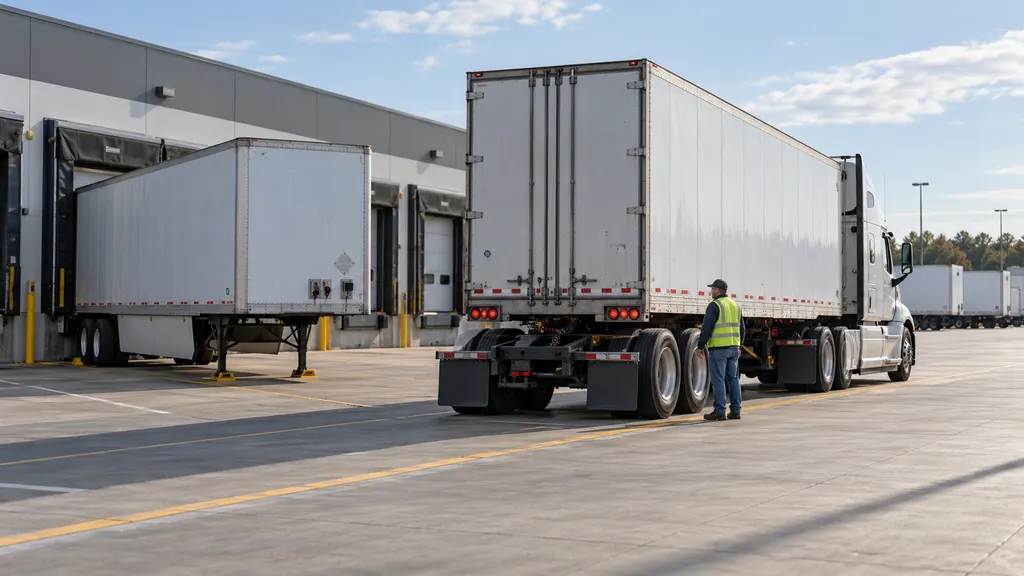
In road freight, the measure commonly concerns trucks, vans, trailers, or other commercial vehicles. Empty running may occur after a delivery, before a backhaul collection, between subcontracted assignments, or when a vehicle is moved to a different operating base. A trip can also be partially loaded, which creates a measurement question: a business may classify it as loaded because it carries some freight, or may measure the percentage of available weight or volume that is used. Those approaches should not be mixed.
Road operators often separate an empty return journey from a vehicle that is traveling between assignments. Both movements may be empty, but they may have different operational causes. For analysis, companies may therefore record the origin, destination, reason for movement, vehicle type, distance, and whether a load was commercially available but rejected.
Container Shipping
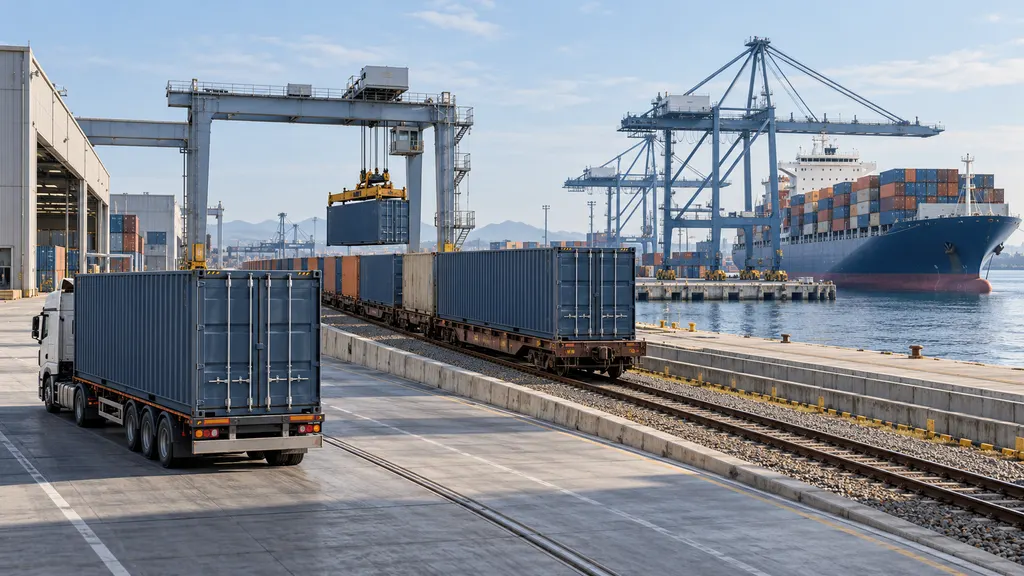
In container shipping, an empty-loaded rate usually relates to the movement of empty containers rather than an empty truck. After an import container is unpacked, the container may be returned empty to a depot, moved to an export area, or repositioned to another location. The container is an equipment asset, and its movement may be necessary even though it does not contain cargo.
Container analysis should distinguish an empty container move from a loaded container carried on an empty or lightly utilized truck. It should also distinguish the physical movement of the container from the commercial status of the shipment. A shipment can be commercially active while the equipment used for a previous shipment is being repositioned empty.
Rail, Air, and Other Modes
Rail operators may track empty wagon movements, while air cargo operations may examine empty or partially utilized aircraft capacity. The same general idea can apply to barges, inland waterway equipment, pallets, roll cages, and reusable transport packaging. However, the terminology and calculation method vary by mode. For example, a capacity-based measure may be more informative for aircraft or vessel space, while a trip-based measure may be easier to apply to a dedicated truck fleet.
Operational Causes
An empty-loaded movement can result from several conditions rather than from a single planning error. Common causes include:
- Directional imbalance: freight demand is stronger in one direction than in the return direction.
- Geographic mismatch: the next suitable load is located far from the delivery point.
- Timing mismatch: the vehicle is available before the next load can be collected.
- Equipment requirements: a specific trailer, container type, temperature capability, or loading configuration must be repositioned.
- Service commitments: an operator moves an empty vehicle to preserve a collection or delivery schedule.
- Regulatory or operational constraints: route, driver, border, depot, or operating-hour restrictions limit the available backhaul.
- Returns and reverse flows: the outbound network carries goods, but the return stream is smaller, irregular, or handled through another channel.
These causes matter because the same rate can have different management implications. A high rate caused by a temporary depot closure is different from a persistent imbalance in a cross-border trade lane. The metric should therefore be reviewed alongside load factor, vehicle utilization, distance, service level, fuel or energy use, and the reason for each empty movement.
Use in Ecommerce and Cross-Border Operations
An ecommerce business may encounter the measure when evaluating fulfillment transfers, parcel injection networks, middle-mile transport, or returns logistics. For example, a retailer may send inventory from one fulfillment centre to a regional facility and then return the vehicle empty because no compatible transfer is scheduled. A parcel carrier may also use different transport arrangements for outbound parcels and returns, making the return leg less predictable than the outbound leg.
Cross-border operations add further complexity. Export and import flows may not be balanced by country, product category, season, or customs process. A container, trailer, or vehicle may need to cross a border empty because the next load is available only on the other side. Customs documentation, equipment ownership, port appointments, and border operating hours can influence whether a return load is feasible. The empty-loaded rate should not be treated as a customs status or as a measure of whether a shipment has cleared customs.
For management purposes, a company may segment the metric by lane, mode, facility, carrier, equipment type, direction, and reason code. It may also compare planned empty movements with unplanned empty movements. Such segmentation is more informative than a single network-wide percentage because it identifies where the empty activity occurs and whether it is controllable.
Related Terms and Important Distinctions
| Term | Meaning | Relationship to empty-loaded rate |
|---|---|---|
| Empty running | Travel by a freight vehicle without a load | Describes the activity that may be measured by the rate |
| Deadheading | Movement without revenue-generating freight, often after a delivery or before a pickup | Often overlaps with empty running, but usage can differ by transport sector |
| Backhaul | A return movement that may carry freight after the primary movement | A loaded backhaul can reduce empty running; an unavailable backhaul can contribute to it |
| Load factor | The proportion of available capacity used by freight | Measures utilization of loaded capacity, not necessarily whether a trip is entirely empty |
| Empty container repositioning | Moving a container without cargo to another location | A container-specific form of empty movement |
| Vehicle utilization | A broader measure of how effectively a vehicle or fleet is used | May include time, distance, capacity, and loaded status, not only empty movements |
“Empty-loaded rate” should also be distinguished from “empty space” inside a loaded vehicle. A truck carrying freight that occupies only part of its available volume may be underutilized, but it is not necessarily an empty trip. A clear report should state whether it measures binary loaded status, unused capacity, or both.
Common Misunderstandings
- It is not a universal industry benchmark. The result depends on the unit of measurement and the scope of the operation.
- A lower rate is not always automatically better. An empty movement may be justified by service obligations, equipment balancing, or the absence of a safe and compatible load.
- An empty trip is not the same as an empty vehicle day. A vehicle may perform several loaded and empty movements during one operating day.
- It is not the same as load factor. A load factor measures the use of capacity, whereas an empty-loaded rate usually measures the share of movements without a load.
- It is not the same as a shipment or order status. The term describes transport activity and does not by itself indicate whether an order is delayed, delivered, returned, or in customs processing.
Practical Reporting Checklist
A useful empty-loaded rate report should identify the transport mode, equipment type, period, geography, data source, numerator, denominator, and treatment of partial loads. It should also explain whether empty repositioning between depots is included, whether subcontracted transport is included, and how cancelled or repositioned trips are classified.
For operational investigation, the report can add the origin and destination, distance, planned or unplanned status, reason code, carrier or fleet assignment, and the next available load. These details help separate structural network imbalance from planning or execution problems. A company should avoid comparing a trip-based road metric with a container-move metric as though they were equivalent. The numbers may both be called empty-loaded rates while measuring different activities.
QA
What does empty-loaded rate mean in logistics?
It means the proportion of defined transport movements performed without a commercial load. The denominator may be trips, distance, capacity, or equipment moves, so the calculation basis must be stated.
Is empty-loaded rate the same as load factor?
No. Empty-loaded rate usually identifies movements with no load, while load factor measures how much available capacity is used. A partially filled vehicle can have a low load factor without being an empty movement.
Why do empty containers affect the rate?
An empty container must sometimes be repositioned to a location where export cargo or another operational requirement exists. That movement uses transport capacity even though the container carries no cargo.
Can a high empty-loaded rate always be considered inefficient?
No. It may indicate an opportunity to improve planning, but it can also result from service commitments, equipment requirements, timing constraints, or an imbalance between freight flows.
Sources
- United Nations Economic Commission for Europe, Glossary for Transport Statistics — transport terminology and the treatment of empty movements.
- Eurostat, Glossary: Empty run — reference terminology for freight vehicle movements without a load.
- UK Department for Transport, Road Freight Statistics — official road freight data context and measurement considerations.
- UN Trade and Development, Review of Maritime Transport 2023 — maritime transport context relevant to container flows and equipment repositioning.