Container
What Is a Container?
A container in logistics is a reusable freight transport unit designed to hold goods and allow them to be transferred between transport modes without unloading the goods themselves. In international shipping, the term usually refers to an intermodal freight container: a durable unit with standardized dimensions and handling features that can move between a ship, railway wagon, and road vehicle.
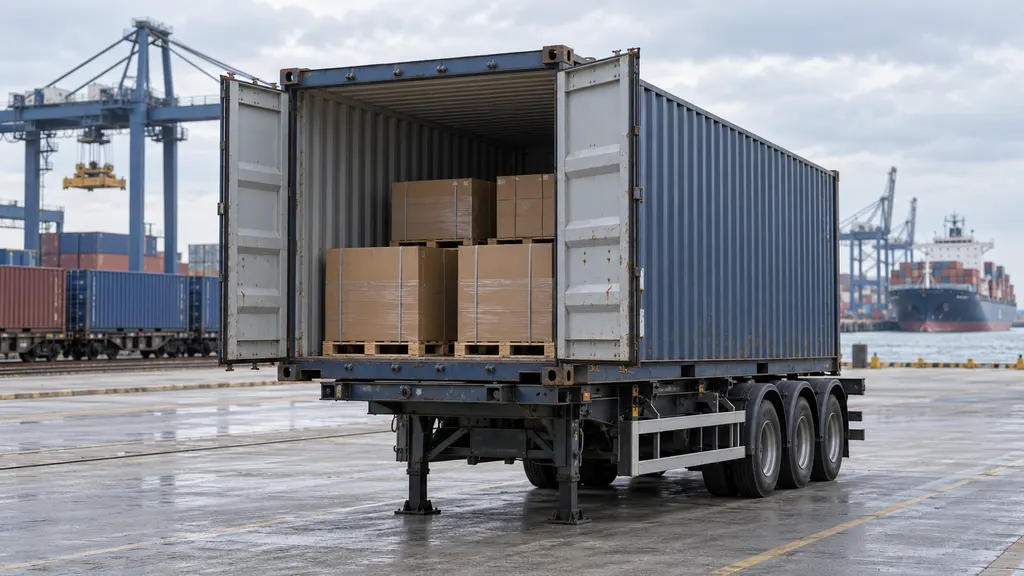
A container is transport equipment, not the cargo inside it. It may hold cartons, pallets, machinery, packaged consumer products, or other goods suitable for its design. Outside freight transport, the word can also describe smaller storage receptacles or specialized equipment. This entry focuses on freight containers used in logistics, cross-border shipping, and international trade.
Role in Logistics and Cross-Border Trade
Containers connect different stages of a supply chain. Goods can be packed into a container at a factory or consolidation facility, transported inland, loaded onto a vessel, discharged at a destination port, and delivered to a warehouse. The container provides a common handling unit across these stages, although inspections, consolidation arrangements, or routing requirements may require it to be opened or unloaded along the way.
For ecommerce businesses, containers are relevant to bulk inventory movements rather than individual doorstep deliveries. For example, a retailer may import packaged products in a container, receive them at a distribution warehouse, and later dispatch individual customer orders as parcels. The inbound container movement and the outbound parcel movements are separate transport operations.
The term appears in freight quotations, booking confirmations, bills of lading, terminal records, equipment release instructions, and warehouse receiving documents. Depending on the document, information may refer to a particular physical container, an equipment type requested for a booking, or a container-based capacity measure.
Main Characteristics
- Repeated use: Freight containers are built for repeated transport operations rather than a single shipment.
- Intermodal handling: Standardized interfaces allow suitable lifting and securing equipment to handle a container across compatible transport systems.
- Cargo enclosure or support: Depending on its design, a container may enclose goods, support oversized cargo, or hold a tank.
- Identification: An individual container carries markings that distinguish it from other equipment and indicate relevant characteristics.
- Operating limits: Structural ratings, dimensions, and loading conditions determine what can safely be carried.
Standardization does not make every container interchangeable for every shipment. Cargo dimensions, weight, temperature requirements, loading methods, and transport restrictions still determine whether a particular unit is suitable.
Common Container Types
Container types differ by construction and cargo-handling requirements. The following are established equipment descriptions, not a ranking of suitability. A booking must specify the equipment needed rather than assuming that any available container will work.
| Type | Main Characteristics | Typical Application |
|---|---|---|
| General-purpose dry container | Enclosed equipment with rigid walls, a roof, and doors; does not provide active refrigeration. | Suitable packaged goods that do not require controlled refrigeration. |
| Refrigerated container | Insulated equipment with a refrigeration system, commonly called a reefer. | Cargo requiring specified temperature conditions during transport. |
| Open-top container | Equipment with a removable roof covering or an opening at the top. | Cargo requiring top loading or, subject to approval, additional height clearance. |
| Flat-rack container | A load-bearing platform with end structures and no enclosed side walls or fixed roof. | Heavy, wide, or irregularly shaped cargo requiring specialized securing. |
| Tank container | A tank held within a supporting frame designed for intermodal handling. | Compatible bulk liquids, gases, or other tank-suitable substances, depending on the tank specification. |
A refrigerated container requires more than an equipment label. Cargo preparation, set-point instructions, airflow, power availability, and monitoring arrangements matter. Similarly, an open-top or flat-rack container does not automatically authorize oversized cargo: the carrier and relevant handling facilities must accept the proposed dimensions, weight, and securing arrangements.
Size, Capacity, and Weight
Nominal Size and Usable Space
Common container descriptions include 20-foot and 40-foot units. These are nominal size descriptions, not guarantees of usable internal length. A high-cube container provides additional height compared with a standard-height container of the same nominal length.
For shipment planning, internal dimensions and door openings can be more important than the nominal size. Goods that fit within the internal space may still be unable to pass through the doors. Packaging, pallets, blocking materials, and the space needed for safe loading also affect usable capacity. Equipment specifications should therefore be checked for the actual unit or equipment series being supplied.
TEU and FEU
A twenty-foot equivalent unit, or TEU, is a capacity measure based on a nominal 20-foot container. A nominal 40-foot container is commonly counted as two TEU and may be described as one forty-foot equivalent unit, or FEU. These measures describe container capacity or traffic; they do not identify the weight, value, or number of products inside a container.
Tare, Payload, and Gross Mass
- Tare mass: The mass of the empty container.
- Payload: The load carried in the container. Loading calculations must account for cargo and associated packing or securing materials.
- Gross mass: The combined mass of the container and its contents.
- Maximum operating gross mass: The rated upper limit for the loaded container.
A container's structural limit is not necessarily the practical limit for the entire journey. Road axle restrictions, rail conditions, lifting equipment, and carrier acceptance requirements may impose additional constraints. A shipment can also reach its weight limit before filling the available space, or fill the space while remaining below its weight limit.
Identification, Safety Plates, and Seals
Container identification numbers help logistics participants refer to the same physical equipment. Under the ISO 6346 identification system, a container number includes an owner code, an equipment category identifier, a serial number, and a check digit. The Bureau International des Containers, or BIC, maintains the international register of container owner codes.
A container number is different from a booking number, bill of lading number, purchase order number, or parcel tracking number. A shipment can involve several containers, and one container may carry goods associated with several commercial orders. Recording the correct identifier is therefore important when matching terminal events, transport documents, and warehouse receipts.
Containers covered by the International Convention for Safe Containers, known as the CSC, carry a safety approval plate containing prescribed information. The convention establishes a framework for safety approval, examination, and maintenance. The presence of a plate does not eliminate the need to assess the container's current condition or suitability for a particular load.
A seal serves a different purpose. It is applied to a closure to help indicate whether access may have occurred after sealing. A seal number should be recorded where required, but a matching seal does not by itself prove the quantity, quality, or customs status of the goods. Container identification, safety approval, and sealing are separate controls.
How a Container Shipment Works
- Select equipment: The shipper or its service provider determines the appropriate container type using cargo dimensions, mass, handling needs, and transport conditions.
- Arrange equipment release: The booking and release arrangements establish where the empty container can be collected or where cargo must be delivered for consolidation.
- Inspect before packing: The responsible party checks relevant aspects of condition, cleanliness, doors, flooring, and suitability for the intended goods.
- Pack and secure cargo: Goods are loaded with attention to weight distribution, package strength, restraint, and safe unloading. Space alone is not an adequate loading plan.
- Complete required information: Container details, cargo information, seal details where applicable, and required transport and customs documents are prepared.
- Transport and transfer: The packed container moves through inland transport, terminals, and the sea leg according to the booked service.
- Release and unpack: Following applicable carrier, terminal, and customs release requirements, the container moves to its unpacking location.
- Return equipment: Where the container is supplied under return arrangements, the empty equipment is returned according to the applicable instructions.
The IMO/ILO/UNECE Code of Practice for Packing of Cargo Transport Units, commonly called the CTU Code, provides guidance on matters such as suitability, load distribution, packing, and securing. It is a non-mandatory global code; applicable laws and contractual requirements must also be considered.
Verified Gross Mass
Under the SOLAS requirements for packed containers within scope, the shipper identified in the relevant transport document is responsible for providing the verified gross mass, or VGM. The permitted approaches are weighing the packed container, or using an approved method to determine the combined mass of its contents and add the container's tare mass.
VGM must be available in time for the vessel's stowage planning. A packed container within scope cannot be loaded onto a ship without VGM being available to the relevant parties. Providing VGM does not replace cargo securing, dangerous goods obligations, customs formalities, or the carrier's other acceptance conditions.
Container, Shipment, FCL, and LCL
| Term | Meaning | Important Distinction |
|---|---|---|
| Container | The physical freight transport equipment. | It is neither the goods nor the commercial transport movement. |
| Cargo | The goods being transported. | Cargo may travel inside a container or by another transport method. |
| Shipment | A consignment or movement of goods under a particular transport arrangement. | It may occupy part of a container, one container, or several containers. |
| Full container load, or FCL | A container transport arrangement in which a container is booked as a whole rather than as shared consolidation space. | The container does not have to be physically full. |
| Less than container load, or LCL | A transport arrangement in which separate consignments are consolidated into shared container space. | Consolidation and deconsolidation introduce handling stages distinct from the container's main journey. |
| Pallet | A platform used to assemble goods into a handling unit. | Several pallets may be loaded inside a container; they are not equivalent transport equipment. |
For example, a retailer may book an FCL movement for inventory that occupies only part of the container because it wants a dedicated equipment arrangement. Another retailer may send a smaller consignment through LCL consolidation. These are illustrative booking choices, not rules about which arrangement is cheaper or faster.
Practical Checks and Common Misunderstandings
Before booking or packing, the parties involved should establish the actual cargo dimensions and mass, suitable equipment, loading method, securing needs, and destination unloading capability. They should also confirm who supplies cargo data, who arranges VGM where required, and who is responsible for equipment collection and return.
A sealed container is not automatically customs-cleared. Customs decisions concern the goods and applicable procedures. A container can be selected for inspection, and a seal may need to be removed and replaced under the relevant process.
A dry container is not a climate-controlled warehouse. It provides an enclosure, but temperature changes and moisture can still affect cargo. Protective packaging and moisture-management decisions must reflect the goods and route.
Container tracking is not necessarily product tracking. A location or status event associated with equipment does not establish the condition of every item inside it. After deconsolidation or warehouse receipt, separate records may be needed to follow individual orders.
QA
Does FCL mean the container is completely full?
No. FCL describes the booking arrangement, not how much of the container's space is occupied. Safe loading and applicable weight limits still apply.
Can one container carry several shipments?
Yes. In LCL consolidation, separate consignments share a container. The container number identifies the equipment, while shipment documents distinguish the consignments.
Is a container number the same as a tracking number?
A container number identifies physical equipment and can be used to find related transport events. It is not interchangeable with a booking number, bill of lading number, or individual parcel tracking number.
How should a business choose a container?
Selection should account for cargo dimensions, mass, temperature needs, loading and unloading methods, securing requirements, and route restrictions. Nominal length alone is insufficient.
Sources
- International Maritime Organization: Containers — Container safety framework and the International Convention for Safe Containers.
- UNECE: IMO/ILO/UNECE Code of Practice for Packing of Cargo Transport Units — Equipment suitability, packing, load distribution, securing, and handling guidance.
- International Maritime Organization: Verification of the Gross Mass of a Packed Container — SOLAS VGM responsibilities, permitted verification methods, and loading conditions.
- Bureau International des Containers: Container Identification Number — Container identification structure and the role of registered owner codes.