Flexible Freight Bags
What Are Flexible Freight Bags?
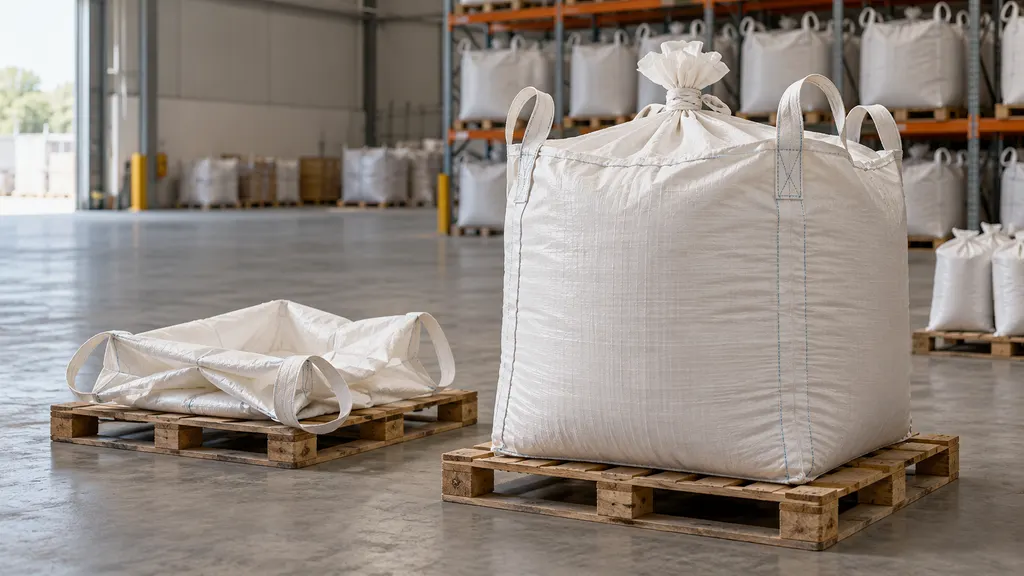
Flexible freight bags are non-rigid bags or sacks used to contain goods during storage, handling, and transportation. In bulk logistics, the expression commonly refers to large bags designed for materials such as granules, powders, and other dry, flowable products. The more precise technical term for this type of packaging is a flexible intermediate bulk container (FIBC), also called a bulk bag or big bag.
However, “flexible freight bags” is a descriptive expression rather than a single, universally standardized packaging category. A supplier or shipping document may use it more broadly for transport sacks or other flexible packaging. Buyers and warehouse operators should therefore confirm the actual bag design, intended contents, handling method, and applicable specifications rather than relying on the name alone.
These bags are freight packaging, not a transportation service or a distinct shipping mode. They hold goods that move through a supply chain by road, rail, sea, or other transport arrangements. Their suitability depends on the relationship between the bag, its contents, the handling equipment, and the conditions of the journey.
Construction and Functional Characteristics
An FIBC normally has a flexible body, commonly made from woven polypropylene fabric, and a design that permits mechanical handling. Depending on the specification, it may incorporate lifting loops, filling openings, discharge outlets, coatings, or a separate inner liner. These features serve different purposes and should not be treated as interchangeable guarantees of protection.
- Outer fabric: Provides the main structural containment. Its construction must be suitable for the intended load and handling conditions.
- Seams and closures: Help retain the contents. Fine powders may require additional measures to limit leakage through stitching or openings.
- Lifting arrangements: Allow the filled bag to be handled using suitable equipment in accordance with the manufacturer's instructions.
- Filling and discharge features: Influence how the bag connects to production equipment and how material is released.
- Liners and coatings: May provide additional containment or barrier properties, but their performance depends on the specified materials and construction.
Flexibility allows an empty bag to occupy less space than a comparable rigid container, but a filled bag still requires adequate storage space, support, and protection. A flexible construction does not mean that the package can withstand puncture, prolonged outdoor exposure, or unrestricted stacking.
Distinction from Related Packaging
The following terms describe different packaging or cargo-handling arrangements. They are useful distinctions, not a formal classification of all flexible freight bags.
| Term | Meaning | Important distinction |
|---|---|---|
| FIBC or bulk bag | A flexible intermediate bulk container used for bulk materials and designed for mechanical handling. | Its construction and handling provisions distinguish it from an ordinary sack. |
| Transport sack | A bag used to package goods, potentially handled individually or as part of a palletized load. | It is not automatically an FIBC merely because it contains freight. |
| Rigid IBC | An intermediate bulk container with a rigid construction. | Its containment structure and handling requirements differ from those of a flexible bag. |
| Freight container liner | A liner installed inside a freight container for a suitable bulk cargo. | It uses the freight container as part of the containment arrangement rather than functioning as a separate bulk bag. |
| Parcel mailing bag | Flexible outer packaging for an individual parcel shipment. | It serves a different handling context and should not be assumed to provide bulk-load lifting capability. |
| Dunnage bag | An inflatable device placed in cargo voids to help restrain movement. | It helps secure cargo rather than holding the goods as the primary package. |
Role in Logistics and Cross-Border Trade
Flexible bulk bags connect material production, warehousing, and transport. A producer may fill a bag from processing equipment, transfer it to storage, and dispatch it to a customer that empties the contents into another production process. The packaging therefore needs to suit both the dispatch operation and the receiving operation.
For example, an importer may purchase polymer granules in bulk bags for delivery to a manufacturing warehouse. The shipping team would need to establish whether the bags will be palletized, how they will be secured inside the transport unit, and whether the receiving site can lift and discharge them safely. This is an illustrative workflow, not evidence that every shipment of polymer granules uses the same packaging.
In ecommerce supply chains, the connection is often upstream of consumer fulfillment. A business may receive ingredients or materials in bulk bags before converting or repacking them into retail units. The bulk bag is then an inbound handling unit, while the consumer order is fulfilled using separate parcel packaging.
Cross-border transport introduces additional checks. The importer and exporter need accurate descriptions of the goods, package counts, weights, and any applicable handling or regulatory information. Using a bulk bag does not determine the customs classification of its contents or remove restrictions that apply to the commodity. If wooden pallets or other supporting materials are used, those materials may also need separate assessment under the destination's requirements.
Selection Criteria
Bag selection should begin with the material and the operating environment, rather than with external dimensions alone. Two bags that appear similar may have different load limits, closure arrangements, barrier properties, or permitted uses.
| Selection factor | Questions to resolve | Operational significance |
|---|---|---|
| Material characteristics | Is the product granular, powdery, abrasive, moisture-sensitive, or chemically incompatible with any packaging component? | Determines containment, compatibility, and protection requirements. |
| Filled mass and volume | What will the filled bag weigh, and how much space will the material occupy? | Both the load rating and usable volume must be suitable; volume alone does not establish safe capacity. |
| Filling and discharge | Does the design match the filling equipment and the receiver's discharge system? | A mismatch can create handling difficulties or uncontrolled release. |
| Handling equipment | Can the available equipment support the load and engage the lifting arrangement correctly? | Equipment capacity alone does not establish compatibility with the bag. |
| Environmental exposure | Will the package encounter moisture, sunlight, contamination, or temperature conditions beyond its specification? | Additional protection or a different packaging arrangement may be necessary. |
| Hazardous properties | Are the contents regulated dangerous goods, or can handling create an ignition or dust hazard? | Packaging approval and workplace controls require separate evaluation. |
| Intended reuse | Is the bag specified for single use or an approved multiple-use arrangement? | Visual appearance alone does not establish suitability for another filling cycle. |
Static electricity deserves particular attention when powders, combustible dusts, or flammable atmospheres are involved. A bag should not be assumed to provide electrostatic protection simply because it is made from plastic fabric. Selection requires an assessment of the material, the surrounding environment, and the bag's documented protective properties.
Handling and Warehouse Workflow
Before filling
Verify the bag specification against the intended contents and filling mass. Inspect the fabric, seams, lifting components, and closures for visible damage or contamination. Confirm that the filling arrangement supports the bag as required and that operators understand the manufacturer's instructions. Where liners are fitted, check their placement before introducing material.
During lifting and movement
Use suitable lifting equipment and engage the designated lifting points in the prescribed manner. Avoid practices that drag the bag, damage its fabric, or expose lifting components to unsuitable contact surfaces. Keep people clear of suspended loads. A bag's rated capacity is not permission to use any lifting arrangement that can physically raise it.
During storage
Place filled bags on suitable supporting surfaces and protect them from conditions outside their specification. Do not assume that every design is stackable. Where stacking is permitted, follow the relevant instructions and consider load stability, floor conditions, and the risk of collapse. Keep identification visible or otherwise accessible to warehouse staff.
Before dispatch and at receipt
Inspect the package for leakage, damage, and insecure closures. Check that the cargo arrangement limits movement and protects bags from sharp edges or damaging contact. The IMO/ILO/UNECE Code of Practice for Packing of Cargo Transport Units provides a broader framework for packing and securing cargo; it does not replace bag-specific instructions.
At receipt, compare the physical shipment with its documents and record discrepancies before the contents enter normal stock. A warehouse may assign an identifier to each bag and connect it to the material description, batch or lot, received quantity, and storage location. This supports inventory control without treating the bag identifier as a substitute for the product's batch identity.
Regulatory and Documentation Boundaries
Not every flexible freight bag is approved for dangerous goods. Where dangerous-goods rules apply, the shipper must establish that the packaging design, material compatibility, filling conditions, markings, and use comply with the applicable transport requirements. In the United States, the Hazardous Materials Regulations define intermediate bulk containers and include construction provisions for flexible IBCs. Those provisions should not be read as blanket approval for any bag or commodity.
Likewise, a load rating or dangerous-goods marking does not establish suitability for food contact. These are different questions supported by different documentation. A purchasing specification should identify the evidence required for the actual use, rather than accepting a broad description such as “shipping grade” as sufficient.
Useful records may include the manufacturer's specification, handling instructions, relevant conformity or test documentation, and inspection records. The exact documents depend on the product, route, contract, and applicable rules. Shipping paperwork should identify the contents and packaging clearly enough for the parties handling the shipment to understand what they are receiving.
QA
Are flexible freight bags and FIBCs the same?
Not necessarily. FIBC is a more precise technical term. “Flexible freight bags” may refer to FIBCs, but it can also be used loosely for other transport bags. Confirm the specification before treating the terms as equivalent.
Are flexible freight bags waterproof?
Not automatically. Moisture protection depends on the fabric, coating, liner, seams, and closures. A bag should only be relied on for the protection documented for its particular construction.
Can a bulk bag be reused?
Only when its specification and condition permit reuse under the intended operating conditions. A bag that looks undamaged is not automatically suitable for another filling or lifting cycle.
Can flexible freight bags carry dangerous goods?
Some appropriately specified and approved flexible IBCs can be used for permitted dangerous goods. Suitability depends on the applicable regulations and the particular contents, not simply on the presence of lifting loops or a high load rating.
Sources
- U.S. Electronic Code of Federal Regulations, 49 CFR 171.8 — Regulatory definitions, including intermediate bulk containers.
- U.S. Electronic Code of Federal Regulations, 49 CFR 178.710 — Construction standards for flexible intermediate bulk containers within the U.S. hazardous-materials packaging framework.
- UNECE: IMO/ILO/UNECE Code of Practice for Packing of Cargo Transport Units — Cargo packing, securing, and transport-unit handling context.
- Flexible Intermediate Bulk Container Association — Industry terminology and guidance on FIBC selection, handling, and safe use.