China Post Tracking Statuses Explained: from Collection to Delivery and When to Act
China Post tracking statuses describe reported steps in a parcel’s journey, from collection and sorting to export, arrival in the destination country, and delivery. The wording varies by service and tracking platform, and a status may appear after the physical event occurred. The useful question is not simply whether the latest line has changed, but what it confirms, what it does not confirm, and who can act next.
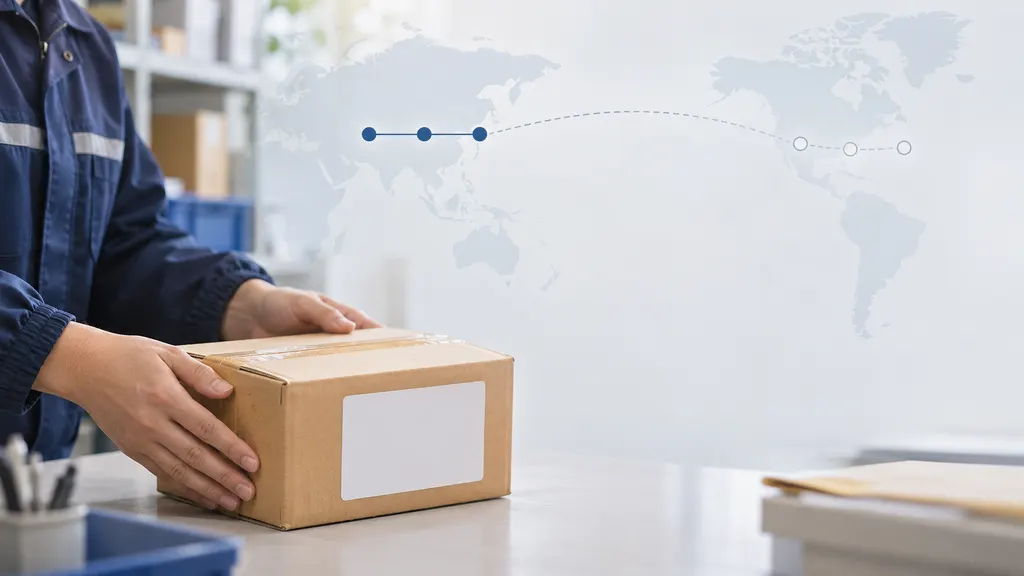
If your parcel has no new scan, first check its last confirmed location and the date of that event. An export scan does not mean the parcel has reached your country; a customs update does not necessarily mean customs has released it; and a delivery attempt usually calls for a faster response than an uneventful gap between international scans.
How to read a China Post tracking record
A tracking record is a sequence of events reported by postal and logistics systems, not a live map of the parcel. Read the location, event description, and timestamp together. A line such as “arrived at sorting center” identifies a reported handling point, while “departed from sorting center” says the item was recorded leaving that point. Neither alone guarantees that the next facility has scanned it.
Status wording is not completely standardized across services or tracking interfaces. One page might say “accepted,” another “collected,” and another “received by carrier” for a similar early-stage event. Translation can also make an event sound more final than it is. When a phrase is ambiguous, rely on the sequence of scans rather than treating one word as a delivery promise.
The date matters, but avoid applying a universal deadline to every gap. International parcels can pass through transport, customs, and postal handoffs without a public scan at each step. To decide whether to act, compare the last event with the seller’s stated delivery window and any service information available from the carrier. If the window has passed, an inquiry is more useful than repeatedly refreshing the same tracking page.
Collection and domestic processing: has the carrier received the parcel?
Shipping information received or label created
This generally means shipment details have been submitted or a label has been prepared. It does not, by itself, establish that China Post has physically accepted the parcel. If an order remains at this stage, ask the seller whether the parcel has been handed over and whether the tracking number is correct. The seller is usually best placed to investigate before an acceptance scan appears.
Accepted, collected, or received by the carrier
An acceptance event is a more meaningful starting point for following the parcel. It indicates that a carrier system has recorded receipt of the item. The recorded location may be a post office, collection point, or processing facility; the precise meaning depends on the service and event text. Save the acceptance date if you later need to discuss a delay with the sender.
Sorting, arrival at a facility, and departure from a facility
These events show movement through the postal network. Several scans at sorting facilities can be normal, and a parcel may appear to revisit the same city because it passed through different facilities or processing steps. A repeated location alone is not evidence that the parcel is lost. Check whether the event type or timestamp has changed before assuming that the record is a duplicate.
If the latest event is an early sorting scan and the seller’s delivery window is still open, monitoring is usually the practical next step. If the record stops moving and the promised window expires, contact the seller with the tracking number and the last visible event. The sender may need to initiate a carrier inquiry, depending on the shipment arrangement.
Export and international transit: what the scans actually confirm
Handed to airline, dispatched from outward office, or departed from origin country
These descriptions generally place the parcel in an export or international transport stage. They do not necessarily confirm that an aircraft carrying the parcel has departed at the time shown, or that the parcel has arrived in the destination country. Some event labels reflect a dispatch or handover within the postal network rather than a passenger-style flight update.
This is a common point for a quiet tracking period. A gap after an export-related scan is not, on its own, proof of a problem. Check the delivery estimate supplied for your order rather than assuming that every day without a new line requires a claim. If the estimate has passed, give the seller the last export event and ask what investigation options apply to the service used.
Arrival in the destination country or received by inbound office
An arrival event is a useful milestone, but it does not mean the parcel is ready for delivery. It may still require import processing and transfer into the destination postal network. Read subsequent events for customs review, release, local sorting, or delivery attempts. If a local postal operator provides more detailed updates, its tracking page may help clarify the final part of the journey.
Customs statuses: do not confuse review with release
Messages such as “presented to customs,” “customs clearance in progress,” or “held by customs” point to import or export processing, but the wording alone may not explain whether documents, duties, inspection, or routine review are involved. “Released from customs” is a different milestone: it indicates that the reported customs stage has ended, not that the parcel has already reached a delivery route.
Do not pay a fee or upload personal documents solely because a tracking line mentions customs. First look for an official notice or instructions from the responsible postal operator or customs authority. If the record gives no instructions, the seller may be able to confirm the shipment details and whether any action is expected from the recipient. Requirements depend on the destination and shipment; a generic tracking message is not a reliable substitute for a case-specific notice.
Local delivery statuses: the point where your response may matter
Arrived at delivery office or out for delivery
“Arrived at delivery office” generally places the parcel in the local delivery network. “Out for delivery” suggests a delivery attempt is planned, but it is not a guarantee of delivery at a particular hour. Check that your address and contact information on the order are correct, and watch the destination postal operator’s tracking page for more specific instructions.
Delivery attempted, available for pickup, or awaiting recipient action
These statuses deserve prompt attention. They may indicate that nobody was available, access was unsuccessful, or the parcel has been directed to a collection point. The exact reason and next step should come from the local operator’s notice or tracking record. Look for a collection location, identification requirements, or a redelivery option. Do not assume that a delivery attempt automatically means another attempt will occur.
Delivered
“Delivered” indicates a delivery event was recorded, but the short status may not identify precisely who received the parcel or where it was left. If you cannot find it, check the address on your order, any delivery notice, household members, building reception, and safe places where deliveries are normally left. Then contact the destination operator or seller with the tracking number and delivery event. Report the issue promptly, especially if the order has a buyer-protection or dispute deadline.
When a status looks wrong or stops changing
The right contact depends on the last confirmed stage. Before acceptance, start with the seller. During international transit, ask the seller to check the service used and the options for a sender-side inquiry. After a destination-country arrival or a failed delivery attempt, the local postal operator may have the most actionable delivery information. The seller remains relevant for order, refund, or replacement questions.
- No tracking result: Recheck the number against the seller’s order details. If the seller has only recently supplied it, ask whether the parcel has actually been handed to the carrier. A number alone is not proof of acceptance.
- Different sites show different latest events: Compare event timestamps and descriptions, not just the headline status. Updates can reach tracking interfaces at different times. For an action such as pickup or redelivery, follow the instructions from the operator handling that step.
- Export status has not changed: Check whether the order’s delivery window has passed. If it has, ask the seller to investigate rather than assuming the last visible scan identifies the parcel’s current physical location.
- Customs message requests action: Verify the request through an official carrier or customs channel before providing documents or payment.
- Delivered but not received: Check likely delivery locations and notices, then raise the discrepancy with the local operator and seller without waiting for more tracking scans.
You can use china post tracking on 17TRACK to review reported events, particularly when following an international parcel. Treat any tracking interface as a view of carrier-reported information, not as an authority that can change a delivery outcome. For a pickup instruction, customs request, or missing parcel investigation, contact the organization responsible for that step.
A practical way to decide whether to wait or act
Start with the last confirmed event, not the most reassuring interpretation of its wording. If the record only shows shipment information, ask the seller about handover. If it shows acceptance and ordinary sorting while the delivery window is open, keep monitoring. If it shows export or inbound processing without an instruction to the recipient, compare the elapsed time with the order’s delivery window before opening an inquiry.
Act sooner when the status reports a failed delivery, pickup availability, a verified request for information, or delivery you cannot locate. Those events describe a possible next step for you, unlike a routine transit scan. Keep the tracking number, order details, screenshots of relevant events, and any official notices together. They make a conversation with the seller or postal operator more specific: you can identify the last scan, its date, and the action you need clarified.
No single status can tell you with certainty when a parcel will arrive. The strongest reading comes from the full event sequence, the destination operator’s instructions, and the delivery terms attached to the order. When those sources disagree, ask the party responsible for the next physical step rather than relying on a generic status label.
FAQ
Does “shipping information received” mean China Post has my parcel?
Not necessarily. It may mean shipment details were created or transmitted. Look for an acceptance or collection event to confirm that physical receipt has been recorded. If none appears, ask the seller to verify handover.
Why has my parcel not updated since leaving China?
International transport and handoffs do not always produce continuous public scans. The last export event may remain visible until another system reports an inbound event. Check the delivery window for your order; if it has passed, ask the seller about an inquiry.
Does “held by customs” mean I must pay a fee?
No. That wording does not, by itself, establish why the parcel is being held or whether payment is required. Follow a verified notice from the responsible operator or authority, and confirm unexpected payment requests through an official channel.
Who should I contact after a failed delivery attempt?
Check the destination postal operator’s tracking page or delivery notice for pickup or redelivery instructions. Contact that operator if the instructions are unclear. Contact the seller as well if the address or order details need correction.
What if tracking says “delivered” but I have no parcel?
Check the delivery address, notices, household members, reception, and usual safe places. Then report the discrepancy to the destination operator and seller, giving them the tracking number and recorded delivery event.
Sources
- China Post official website — carrier information and official contact starting point.
- 17TRACK tracking — tracking interface referenced for reviewing reported shipment events.
- USPS: Missing Mail and Lost Packages — destination-operator guidance relevant to checking delivery and pursuing a missing-item inquiry when USPS handles the parcel.