Chill Space
What Is Chill Space?
Chill space, in warehousing and logistics, means refrigerated space used to hold goods that require chilled rather than frozen conditions. It may refer to a refrigerated room, a designated temperature-controlled storage area, or the available capacity within such an area. Its operational meaning depends on the facility, the goods, and the applicable storage specification; the phrase alone does not establish a temperature range or handling standard.
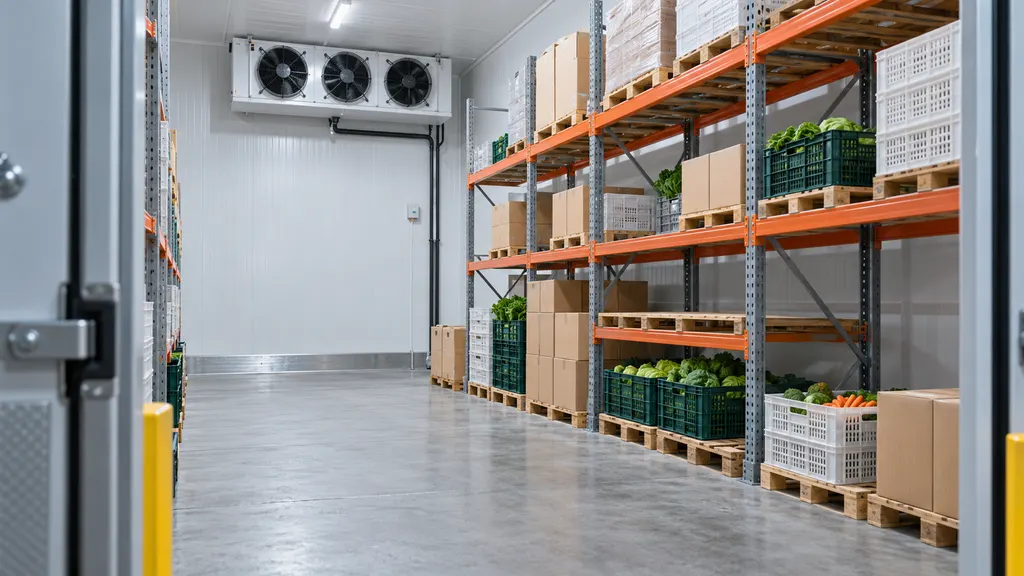
Chill space is relevant to temperature-sensitive inventory, particularly perishable food. In a warehouse listing, storage quotation, or operating procedure, it can describe where goods will be held or how much refrigerated capacity is available. Outside logistics, the expression can refer informally to a place for relaxation. That unrelated meaning is not the subject of this entry.
Meaning in Warehousing and the Cold Chain
Chill space is one physical component of a cold chain: the linked storage, handling, and transport arrangements used to maintain required temperature conditions. A refrigerated warehouse cannot, by itself, protect goods throughout their journey. Receiving, picking, dispatch, vehicle loading, transport, and delivery must also be compatible with the product's requirements.
The term is therefore more useful as a description of a storage environment than as a complete service specification. A business evaluating chill space needs to establish the permitted temperature conditions, the activities covered, the usable capacity, and the evidence available to demonstrate appropriate handling.
For food operations, refrigeration is part of a wider system that also includes hygiene, protection against contamination, stock control, and appropriate handling. European Union food hygiene legislation, for example, addresses suitable temperature-controlled handling and storage conditions and the maintenance of the cold chain where required. These obligations cannot be reduced to whether a warehouse has a chilled room.
Temperature Requirements and Product Suitability
Chill space does not have one universal temperature specification. The appropriate conditions depend on the product, its labeling, applicable food or product rules, and any validated handling instructions. A temperature suitable for one item may be unsuitable for another.
Refrigerated food storage illustrates why this distinction matters. Refrigeration slows bacterial growth, but it does not sterilize food or make every product safe indefinitely. Storage life, previous handling, packaging condition, and product-specific controls remain relevant. Some products can also suffer quality damage if held too cold, even without being intentionally frozen.
Before allocating goods to chill space, an operator should identify their required temperature limits and determine whether the facility can maintain those conditions during normal operations. A nominal room setting is not, on its own, evidence that every product location remains suitable. Door openings, loading patterns, airflow, and the placement of goods can affect the storage environment.
The actual condition of incoming goods also matters. Space designed to hold already chilled inventory should not automatically be assumed capable of rapidly cooling warm stock. Holding capacity and cooling capability are different operational questions and should be checked separately.
Related Terms and Important Distinctions
| Term | Meaning | Relationship to chill space |
|---|---|---|
| Chilled storage | Storage under refrigerated conditions appropriate for goods intended to remain unfrozen. | Describes the storage activity or conditions; chill space describes the area or capacity used. |
| Chill room | A refrigerated room used for chilled goods. | A physical room may provide chill space, but the term does not specify its usable capacity. |
| Cold storage | A broader expression for refrigerated storage, which may include chilled and frozen environments. | The precise temperature service should be confirmed rather than inferred from the name. |
| Frozen storage | Storage under conditions intended to keep goods frozen. | It is not interchangeable with chilled storage. |
| Temperature-controlled storage | Storage maintained within specified temperature conditions. | A broader concept that can include chilled storage and other controlled environments. |
| Cold chain | The connected handling, storage, and transport arrangements needed to maintain required temperature conditions. | Chill space represents a location or capacity within that system, not the entire chain. |
Commercial terminology can overlap. A facility may use “cold room,” “chiller,” or “refrigerated storage” for a similar area. The documented operating conditions matter more than the label. Buyers should not assume that different terms necessarily identify different technical service levels.
How Chill Space Is Used
Receiving and acceptance
When temperature-sensitive goods arrive, the receiving process should establish whether they are suitable for acceptance and storage. Relevant checks may include product identification, packaging integrity, temperature evidence where required, and consistency with the delivery documents. Goods with an unresolved temperature or condition concern should not simply enter available inventory because refrigerated capacity exists.
Storage and inventory control
Accepted goods are assigned to locations compatible with their storage requirements. Stock placement should support airflow, cleaning, inspection, and product segregation where necessary. Inventory records connect the physical location with the product, quantity, batch or lot information where applicable, and relevant date controls.
Usable capacity is consequently not just the volume inside the room. A layout must also leave sufficient space for safe access and appropriate operation. A nominal pallet count does not establish that every proposed load arrangement is suitable.
Picking, staging, and dispatch
Order preparation can create a break between controlled storage and controlled transport. The operating plan should address where goods are picked, how prepared orders are staged, and how exposure outside the required conditions is controlled. The appropriate method depends on the product and the handling process; there is no single exposure allowance implied by the term chill space.
Monitoring and exception handling
Temperature records support assessment of storage conditions, but their usefulness depends on the monitoring arrangement and the quality of the records. Operators should know where measurements are taken, how equipment is checked, who responds to alarms, and how deviations are investigated. A room reading should not automatically be treated as the internal temperature of every item stored there.
If a deviation occurs, the response should follow the applicable product and food-safety procedures. Returning the room to its intended temperature does not, by itself, establish that affected goods remain suitable for sale or use.
Use in Ecommerce and Cross-Border Fulfillment
For ecommerce involving chilled products, warehouse storage is only part of the fulfillment design. The retailer must connect storage conditions with order preparation, packaging, dispatch timing, and the delivery arrangement. Access to chill space does not establish that a parcel will remain within its required conditions until the recipient receives it.
For example, an online food retailer may hold chilled products in a refrigerated warehouse and assemble orders for delivery. The relevant assessment includes not only the storage room but also how goods are protected during picking, packing, handover, and transport. This is an illustrative operating scenario, not a claim that a particular packaging method or delivery service is adequate.
Cross-border movements add further handover points. Where inspection, clearance, or transfer may interrupt the planned journey, a shipper should determine whether suitable storage is available and who is responsible for arranging it. Refrigerated capacity at the origin does not demonstrate that equivalent facilities exist at every intermediate location.
Returned chilled goods require a separate suitability assessment. Placing a returned item in chill space does not resolve uncertainty about its previous temperature exposure, packaging integrity, or handling history. Any decision to return it to saleable inventory must follow applicable rules and product-specific procedures.
What to Check in a Chill-Space Specification
A storage quotation or facility description becomes more useful when it answers concrete operational questions. The following are evaluation points, not a universal certification checklist:
- Product compatibility: Which goods are accepted, and which handling restrictions apply?
- Temperature conditions: What operating limits are specified, and how are they demonstrated?
- Capacity basis: Is availability expressed as floor area, volume, pallet positions, or another measure, and what loading assumptions apply?
- Handling scope: Does the arrangement cover storage only, or also receiving, picking, packing, and dispatch?
- Monitoring and records: What measurements are recorded, and can relevant records be retrieved?
- Deviation procedures: Who investigates an excursion and determines the disposition of affected goods?
- Continuity arrangements: What procedures address refrigeration failure or loss of access to the storage area?
- Handover responsibility: Where does responsibility pass between the warehouse, shipper, and transport provider?
These details distinguish a general capacity description from an operationally meaningful agreement. They also help avoid treating a refrigerated room as proof of product suitability, regulatory compliance, or complete cold-chain coverage.
QA
What temperature is chill space?
The phrase does not define a universal temperature. The required conditions must be established from the product specification, labeling, applicable rules, and agreed storage procedures.
Is chill space the same as freezer space?
No. Chill space refers to refrigerated capacity for goods intended to remain unfrozen. Freezer space is intended to maintain frozen goods. The two should not be substituted without confirming product requirements.
Does chill space include refrigerated delivery?
Not necessarily. It describes storage space or capacity. Picking, packaging, transport, and delivery must be checked separately in the service agreement and handling plan.
Can chill space be used to cool warm goods?
That capability must be confirmed. A facility designed to maintain already chilled goods may not be suitable for the required cooling process. Storage capacity alone does not establish cooling performance.
Sources
- USDA Food Safety and Inspection Service: Refrigeration & Food Safety — Supports the explanation of refrigeration, bacterial growth, and the distinction between refrigerated conditions and assurance of food safety.
- U.S. Food and Drug Administration: FDA Food Code — Provides a model framework for food temperature control, cooling, cold holding, and related operational safeguards; it does not establish a universal definition of “chill space.”
- Regulation (EC) No 852/2004 on the hygiene of foodstuffs — Supports the discussion of suitable temperature-controlled handling and storage, transport hygiene, and cold-chain continuity within its scope.