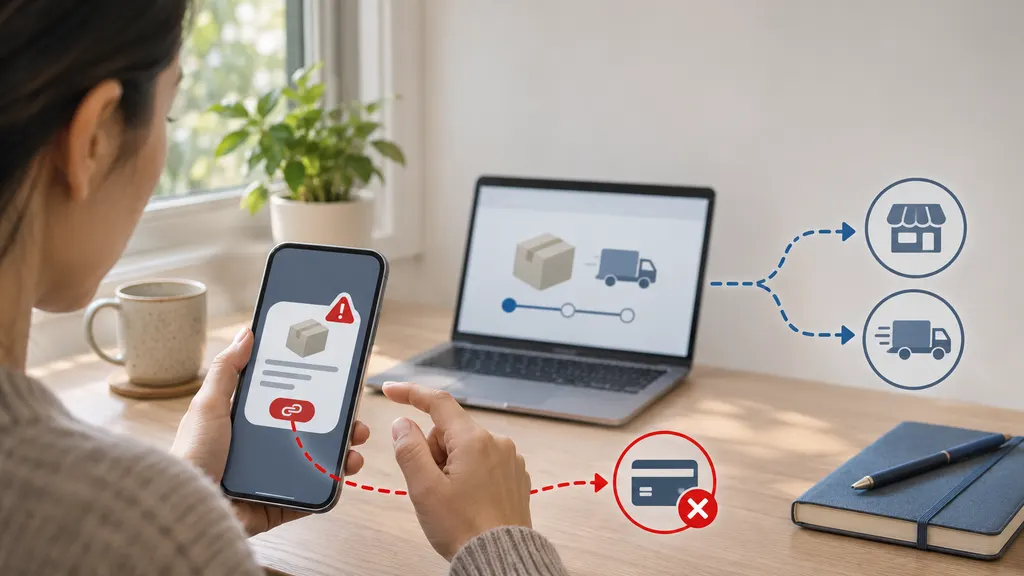
Can You Mail Liquids? U.S. Carrier Rules and Packaging Requirements?
Yes, you can mail many liquids within the United States, but the answer depends on what the liquid is, how much you are sending, its container, and the carrier and service you choose. Ordinary nonhazardous liquids generally need leak-resistant packaging. Flammable, pressurized, corrosive, or alcoholic products may face additional restrictions or be prohibited. Identify the product before buying a label: a securely packed bottle is not necessarily eligible for shipment.
For an occasional sender, the practical question is whether a particular item can travel by the intended service. For an ecommerce business, the same decision also affects product listings, fulfillment instructions, carrier selection, and the risk of a package being rejected or leaking in transit.
Start with the liquid, not the carrier
“Liquid” describes a physical form, not a shipping classification. A sealed bottle of shampoo and a bottle of flammable solvent present different risks. Before comparing USPS, UPS, and FedEx rules, check the product label and identify its ingredients and hazards. For a commercial product, its safety data sheet (SDS) can help identify whether it is flammable, corrosive, or otherwise regulated. An SDS is useful evidence, but it does not replace the carrier’s acceptance rules or a shipper’s responsibility to classify the shipment correctly.
Use these questions as a first screen:
- What exactly is inside? Record the product name and, where relevant, its ingredients or hazard classification. Do not describe a perfume, cleaning chemical, or alcoholic beverage simply as “liquid.”
- Is it hazardous or pressurized? Alcohol-based fragrance, aerosol containers, certain cleaning products, and some paints or adhesives can require special handling even in retail-sized packages.
- Where is it going? Domestic, international, and destination-specific rules can differ. A product accepted for a domestic ground shipment should not be assumed eligible for air service or international mail.
- Which service will carry it? Carrier restrictions may depend on transportation mode, service, quantity, packaging, and whether the shipper has the required authorization.
If you cannot identify the contents well enough to answer those questions, do not guess at a service or declare the item as a harmless liquid. Ask the manufacturer for product information and confirm the applicable carrier requirements first.
How USPS, UPS, and FedEx approach liquids
All three carriers distinguish ordinary liquids from products subject to hazardous-materials or other special rules. Their requirements are not interchangeable. Check the carrier’s current instructions for the specific product and service before tendering a package.
USPS
USPS permits many properly packaged liquids, but its shipping restrictions distinguish generally mailable items from restricted or prohibited contents. USPS Publication 52 provides the detailed mailing standards for hazardous, restricted, and perishable materials. Some items that appear routine to a shopper are subject to service restrictions: alcohol-containing perfume, for example, can have different mailing options from a nonflammable lotion. Do not assume that a permitted domestic ground mailing is also permitted by air or internationally.
Alcoholic beverages are a separate category. USPS states that beer, wine, and liquor cannot be mailed. That rule should not be confused with the rules for every product containing alcohol: the contents and applicable USPS classification matter. When a product may be flammable or otherwise regulated, consult Publication 52 rather than relying on a general packaging checklist.
UPS and FedEx
UPS and FedEx can carry many liquids, but acceptance of regulated products depends on their hazardous-materials or dangerous-goods requirements and the service used. Their official guidance addresses matters such as classification, packaging, documentation, and shipper eligibility. Neither carrier’s general ability to transport hazardous materials means that every sender can hand over every liquid at a retail counter.
For an ordinary, nonhazardous liquid, check the carrier’s packaging instructions and the terms applicable to your shipment. For a product with a hazard warning, begin with the carrier’s hazardous-materials or dangerous-goods guidance. Contact the carrier before shipping if its published requirements do not clearly resolve your product, quantity, service, or drop-off method. Businesses should confirm these details before promising a shipping option at checkout.
Which common liquids need a closer look?
The product examples below are screening categories, not blanket approvals. Formulations vary, and the label on a particular bottle may change the answer.
- Water, beverages, and other apparently nonhazardous liquids: Leakage and breakage are the primary packaging concerns, but food or beverage shipments can also raise spoilage or destination questions. USPS does not permit mailing beer, wine, or liquor.
- Shampoo, conditioner, and lotions: Many are ordinary liquids for shipping purposes, but check the specific formulation and package. A pump that can be depressed in transit needs protection.
- Perfume and cologne: Alcohol content can make these products flammable. Verify the carrier’s rules and transportation mode before purchasing an air label.
- Nail polish, paint, adhesives, and solvents: These may be flammable or otherwise regulated. A small bottle is not automatically exempt from carrier requirements.
- Household cleaners: Ingredients vary. Some products can be corrosive or have other hazardous properties; read the label and SDS rather than treating all cleaners alike.
- Aerosol products: A pressurized container presents questions beyond liquid leakage. Check the rules for the finished product and container, not just the fluid inside.
If a product is regulated, additional requirements may apply to its classification, permitted quantity, packaging, marking, labeling, documentation, or shipper authorization. Those requirements cannot be replaced by adding more bubble wrap.
How to package an eligible liquid
Once you have confirmed that the carrier accepts the product through the chosen service, pack it to withstand routine handling and a possible leak from the primary container. The carrier’s product-specific rules take priority over this general process.
- Check the primary container. Use a container suitable for its contents. Make sure the cap is secure, the seal is intact, and the bottle is not cracked. Protect pump dispensers and flip-top closures against accidental opening.
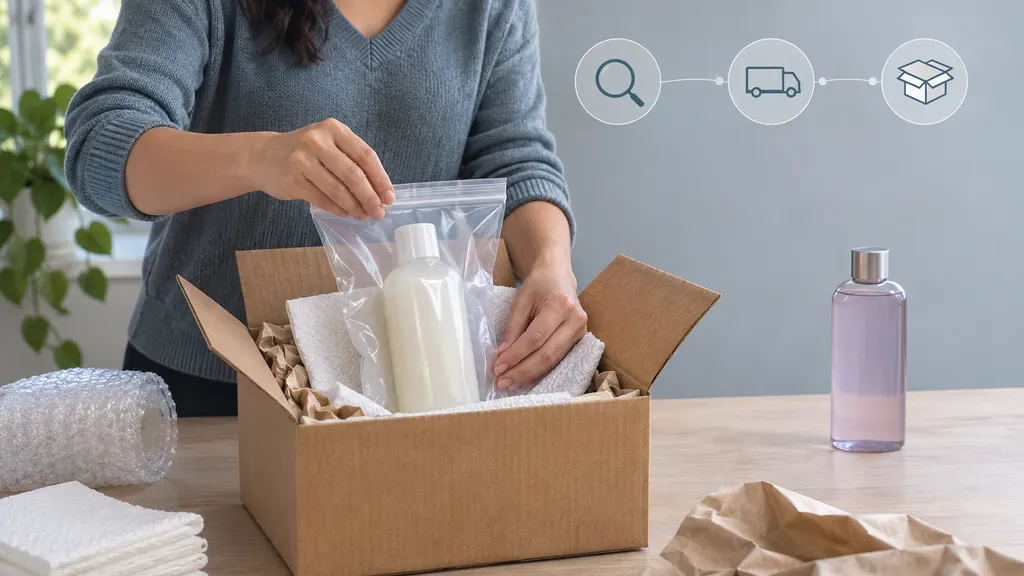
- Contain a leak. Place the container inside a sealed, leak-resistant secondary enclosure when appropriate. Add absorbent material suited to the contents and quantity so that a failure does not immediately soak the outer box or other items.
- Prevent movement and breakage. Cushion the container on all sides, paying particular attention to glass and to space between multiple bottles. Bottles should not strike one another or the walls of the box during normal handling.
- Use a sturdy outer box. Select a box that fits the packed contents without excessive empty space. Seal it securely with shipping tape. Do not rely on a thin product carton as the only protection unless the carrier accepts that packaging for the shipment.
- Apply required markings and documents. If the carrier requires a specific marking, label, declaration, or orientation instruction, follow its current directions. An orientation arrow does not substitute for leak-resistant packaging.
Before dispatch, gently check whether the packed contents shift inside the box. If bottles can collide or a cap can be pressed open, repack. For a business shipping the same item repeatedly, document the approved packaging method and test it with the actual container, closure, and fill level. A change in bottle design or formulation warrants another review.
Build the rule check into fulfillment
For ecommerce fulfillment, the most reliable approach is to classify each liquid product before it enters the shipping workflow. Keep its product description, hazard information where applicable, approved destinations and services, and packing instructions together. This prevents a warehouse worker from having to infer shipping eligibility from a product title.
Separate the acceptance decision from the packing decision. First confirm that the product may travel with the selected carrier and service under the applicable conditions. Then choose packaging that satisfies those conditions and protects the contents. If either step is unresolved, hold the order for review rather than substituting an apparently similar service.
Pay particular attention when changing carriers, adding faster delivery options, or expanding internationally. An existing domestic ground process does not establish eligibility for an air or cross-border shipment. The same review applies when a supplier reformulates a product: its familiar name and packaging may remain unchanged while its shipping classification needs reassessment.
FAQ
Can I mail a bottle of shampoo?
Often, yes, if the specific shampoo is eligible for the carrier and service and is packed to prevent leaks and breakage. Secure the cap, protect pumps or flip tops, contain potential spills, and cushion the bottle inside a sturdy box. Check the actual formulation if its label indicates a hazard.
Can I ship perfume by air?
Do not assume so. Alcohol-containing perfume may be classified as flammable, and the permitted services depend on the carrier and applicable rules. Check the product information and the carrier’s current instructions before selecting an air service.
Does a “fragile” or “this side up” label make liquid packaging compliant?
No. Such markings do not secure a cap, contain a leak, or replace required hazardous-materials markings and documentation. Pack for handling in more than one orientation, then add any markings the carrier specifically requires.
Can I ship a small amount of a hazardous liquid as an ordinary parcel?
Not automatically. Small quantities can still be subject to classification, packaging, service, marking, and acceptance requirements. Identify the material and confirm the rules for that exact shipment before preparing a label.
Can I mail beer or wine through USPS?
No. USPS lists alcoholic beverages, including beer and wine, as prohibited in the mail. Do not apply the separate rules for products such as perfume to alcoholic beverages.
Sources
- USPS, Shipping Restrictions — mailing restrictions and examples of prohibited or restricted contents.
- USPS, Publication 52: Hazardous, Restricted, and Perishable Mail — detailed standards for regulated mail.
- UPS, Shipping Support — carrier entry point for packaging and special-care shipping guidance.
- FedEx, Dangerous Goods Shipping — carrier guidance on shipping regulated goods.
- Pipeline and Hazardous Materials Safety Administration, Hazardous Materials — U.S. hazardous-materials transportation guidance.