What Does “Tendered to Delivery Service Provider” Mean? What Happens Next?
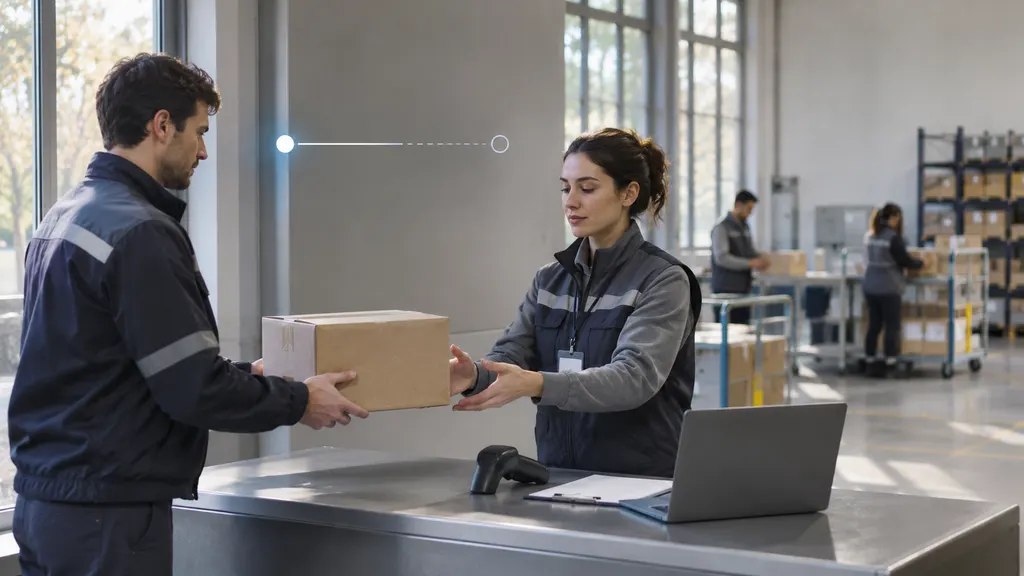
“Tendered to delivery service provider” means a shipment has been handed off, or is being handed off, to the company expected to handle the next stage of delivery. Often, that is a local carrier responsible for the final trip to your address. The package is not necessarily out for delivery, and this status alone does not confirm when it will arrive.
The most useful next step is to check which carrier now has the package and look for a new acceptance or processing scan. If the status does not change, the right person to contact depends on whether you are the recipient or the sender.
What does “tendered” mean in package tracking?
In shipping, tendered describes a handoff from one party to another. The first company may have transported the parcel across a country or border, while another company will sort it locally and deliver it. The “delivery service provider” could be a postal operator or another last-mile delivery company; the status does not identify a particular carrier by itself.
Tracking messages are generated by different shipping systems, so their wording is not perfectly standardized. In one shipment, the message may appear around the time of a physical handoff. In another, it may appear before the receiving carrier publishes its first scan. Treat it as a sign that responsibility is moving to the next delivery stage, not as proof that the parcel is already in a delivery vehicle.
It also helps to separate three events that may occur at different times: the original carrier records a handoff, the next carrier receives the parcel, and that carrier scans it into its own network. A gap between those events can leave tracking unchanged even while the shipment is moving through the process.
What usually happens next?
The next visible update depends on how the carriers exchange parcels and tracking data. A typical sequence looks like this:
- Handoff or tender: The first carrier records that the shipment is moving to a delivery partner.
- Receiving-carrier scan: The delivery provider acknowledges or processes the parcel. Its tracking page may now show more detailed local updates.
- Local sorting: The parcel moves through the receiving provider’s facilities toward the destination area.
- Out for delivery: The provider assigns the parcel to a delivery route. This is a later status than “tendered.”
- Delivery or an attempted delivery: Tracking records the outcome, which may include delivery, an attempted delivery, or an exception requiring further action.
Not every shipment displays each step, and updates can appear in a different order when systems exchange data late. A later, carrier-specific scan is generally more informative than the tendered message because it shows what the receiving provider has recorded.
Does it mean the package is close?
It may be approaching the final-delivery stage, but “tendered” is not a reliable countdown to arrival. The delivery provider may still need to receive a batch of parcels, scan yours, sort it, and move it to the appropriate local facility. International shipments can involve additional handoffs, so the word “delivery” in the status should not be read as a promise of immediate delivery.
Use the estimated delivery date, if one is available, as a planning guide rather than a guarantee. For a clearer picture, look at the shipment’s most recent dated event, its location if shown, and whether the local carrier has posted an acceptance scan. If you see “out for delivery,” that is a more direct indication that a delivery attempt may be next. If you see only “tendered,” the final-mile carrier may not yet have published an update.
Why might tracking stop at this status?
A pause after a handoff does not, by itself, mean a parcel is lost. Common possibilities include a receiving carrier that has not scanned the parcel yet, a scan that has not been shared with the original tracking system, or a delay while parcels are transferred and sorted. Tracking pages may also display events at different times, so checking two systems can reveal a newer scan on one of them.
There is an important evidence limit: a status can tell you what a shipping system has reported, but it cannot tell you exactly where an unscanned parcel is right now. Avoid assuming either that everything is on schedule or that the package has gone missing solely because this message has remained unchanged. The surrounding details matter more than the wording alone.
How to check the handoff without chasing the wrong carrier
Start with your order confirmation or shipping email. It may name the original carrier, the local delivery provider, or both. Then compare the latest event across the available tracking pages. A multi-carrier tracker such as 17TRACK’s tracking page can be a convenient place to check the tracking information it displays, especially if you are unsure which carrier to try first. If a local carrier is identified, check that carrier’s own tracking page as well. Its scans may provide a more direct view of what it has received.
A second tracking number may appear after a handoff. Do not assume the original number will work on the local carrier’s site; use the number supplied in the order details or shown in tracking. Likewise, do not assume a newly identified carrier has physically received the parcel until its own updates support that conclusion.
- Check the last event, not just the headline: Note its date, location, and which carrier reported it.
- Look for a receiving scan: An acceptance or processing event from the delivery provider is more useful than repeatedly refreshing the handoff message.
- Compare the expected date with actual scans: An approaching estimate and no local-carrier update call for closer monitoring; a missed estimate is a stronger reason to ask for help.
- Save the details: Keep the tracking number, order number, delivery address, and a screenshot or copy of the latest status before contacting support.
When should you contact someone, and whom?
If the estimated delivery date has not passed and the tendered event is recent, checking for a receiving-carrier scan is usually the most useful immediate action. There is no universal number of hours after a tendered status that proves a problem: scanning practices, service types, and handoff arrangements vary. Escalate sooner if tracking shows a delivery exception, an incorrect destination, or another message asking you to act.
If the estimated delivery date has passed and neither carrier shows meaningful progress, contact the seller or shipper. The sender has the purchase and shipping records and may be better placed to raise a shipment inquiry. You can also ask the identified delivery provider whether it has a record of receiving the parcel. Give each party the relevant tracking number and the last dated scan; ask a specific question such as, “Do you show an acceptance scan after the handoff?”
If the delivery provider is USPS, its “Where is my package?” guidance is a starting point for interpreting tracking and finding help. USPS also provides a Missing Mail help page for shipments that may require a search. Follow the carrier’s published instructions rather than assuming a tendered status alone qualifies a package for a missing-mail request.
If you are the seller or sender, verify which company reported the handoff before telling a customer that the final-mile provider has the parcel. Check any second tracking number, the receiving provider’s scans, and the promised delivery window. If a customer needs an update while the handoff remains unconfirmed, a precise message is more useful than an arrival promise: explain what the latest scan says, what has not yet been confirmed, and when you will check again.
FAQ
Is “tendered to delivery service provider” the same as “out for delivery”?
No. “Tendered” concerns a transfer between shipping parties. “Out for delivery” generally refers to a later stage when the delivery provider has assigned the parcel to a delivery route. Do not plan around a same-day arrival based only on the tendered message.
Does “tendered” prove that the local carrier has my package?
Not always. It indicates a reported handoff, but the receiving carrier may not have posted its own acceptance scan. Check that carrier’s tracking record, if available, to see what it has confirmed.
Can the tracking number change after the handoff?
Yes, a shipment may have a separate number for the next delivery provider. Check your shipping confirmation and tracking details for another number. A number that does not work on the local carrier’s website does not, by itself, mean the parcel is missing.
What if the status stays the same past the estimated delivery date?
Check the original and receiving carriers’ latest dated events, then contact the seller or shipper with the tracking number and last scan. If the receiving carrier is known, ask whether it has recorded the parcel. The seller can help investigate the shipment and explain your order-specific options.