Nippon Express (日本通運) Tracking
Please enter the Nippon Express (日本通運) tracking number to check the latest shipping status.
About Nippon Express
Nippon Express is the carrier identity used on this tracking page for logistics services associated with the official website at https://www.nittsu.co.jp/. The organization provides logistics, freight transportation, warehousing, distribution and related supply-chain services. The exact operating entity, service level and responsible transport partner depend on the shipment contract, origin, destination and transport leg.
| Field | Verified page guidance |
|---|---|
| Official website | https://www.nittsu.co.jp/ |
| Carrier type | Multimodal logistics and transportation provider serving domestic and international supply-chain movements. |
| Tracking role | Tracking may represent a transport leg, freight consignment, delivery movement or a partner handoff rather than one universal parcel network. |
Carrier Entity Relationships
| Entity | Relationship |
|---|---|
| Nippon Express | This page uses the supplied carrier identity to organize tracking guidance. |
| Official website | The official website is the primary source for service selection, shipment instructions and contact routing. |
| Transport partners | A transport partner may physically handle a shipment during a line-haul, customs or last-mile stage; a partner scan does not by itself prove receipt by Nippon Express. |
| 17TRACK | 17TRACK aggregates available tracking events as an independent tracking platform; it does not transport freight or decide claims. |
Quick Answer
Enter the shipment, consignment or parcel identifier supplied by the sender into the official Nippon Express tracking route or into 17TRACK. If no result appears, first check whether the identifier is a tracking number rather than an order or invoice number, remove accidental spaces, and confirm that the sender has handed the shipment to the transport network.
How to Track Nippon Express Packages
Use the official route when the shipment belongs to a contracted freight or logistics service. Use 17TRACK when you need a consolidated view or are unsure which transport participant currently holds the shipment.
| Method | Action |
|---|---|
| Official tracking | Open the official website, select the relevant tracking or shipment inquiry route, and submit the identifier exactly as shown on the receipt, label or dispatch notice. |
| 17TRACK | Submit the identifier to 17TRACK and allow automatic carrier recognition where supported. Review the event source and the latest physical scan. |
| No number | Ask the sender, seller or booking party for the shipment identifier. An order number, invoice number or purchase reference may not be searchable. |
| No first scan | Ask the sender to confirm label creation, pickup and acceptance separately. A label or booking record is not proof of physical receipt. |
Tracking Number Formats and Examples
Nippon Express shipment identifiers can differ by product, country, booking system and transport leg. A number that can be searched through a carrier or aggregator is not necessarily issued by that carrier. Do not infer service, destination or delivery date from a prefix alone.
| Identifier family | Normalized pattern and use | ||||||
|---|---|---|---|---|---|---|---|
| Carrier or freight reference | A carrier, booking or consignment reference selected by the operating system; use the exact receipt or dispatch format. | ||||||
View all details for carrier or freight references
| |||||||
| Partner or last-mile identifier | A destination or handoff participant may issue a second identifier; the original identifier may remain active or may be linked to the new reference. | ||||||
View all details for partner or last-mile identifiers
| |||||||
| Order or reference number | A merchant, purchase, invoice or internal reference used for customer service rather than transport scanning. | ||||||
View all details for order or reference numbers
| |||||||
Services and Delivery Times
Delivery timing depends on the contracted service, origin, destination, transport mode, cargo readiness, customs, handoffs and local operating conditions. A tracking estimate is not automatically a guaranteed delivery commitment.
Service Comparison
| Service category | Best use |
|---|---|
| Domestic logistics | Domestic freight, distribution, warehousing-linked movements and scheduled delivery arranged under a transport contract. |
| International logistics | Cross-border freight and supply-chain movements requiring export, import, customs and destination coordination. |
| Time-sensitive transport | Shipments whose service agreement specifies a faster or scheduled movement; the applicable contract controls the commitment. |
Delivery Time
| Timing reference | How to interpret it |
|---|---|
| Service standard | The transport agreement or service guide defines the applicable standard, counting point and exclusions. |
| Tracking estimate | An operational estimate based on available events; customs, weather, capacity and handoffs can change it. |
| Destination delivery | Confirm the destination-specific service and local delivery arrangement with the booking party or official contact route. |
Destination Country Delivery Times
| Destination group | Planning guidance |
|---|---|
| Domestic destination | Use the contracted domestic service standard and the origin-to-destination route shown on the shipment documentation. |
| International destination | Obtain a destination-specific quotation or service standard; customs and destination handoff conditions must be included in planning. |
| Remote or special-handling destination | Allow additional operational time where access, handling, documentation or local delivery arrangements require it. |
Common Tracking Problems and Solutions
The right escalation path depends on who booked the shipment and which party performed the latest physical scan. The sender or contracting customer usually has stronger authority for freight investigations, address corrections and claims.
Problem & Solution
| Problem or status | First action |
|---|---|
| Invalid number | Check transcription, spaces and the distinction between order, invoice and shipment references; ask the sender to confirm the exact identifier. |
| No events | Confirm that the shipment was physically accepted and allow the operating system to receive its first scan. |
| Label or booking created | Treat the event as electronic preparation, not proof that cargo entered transport; the sender should confirm handover. |
| Long tracking gap | Compare the last physical location with the planned route, then ask the sender or contracting customer to request an operational check. |
| Customs or handoff delay | Check documentation, duties, importer instructions and the destination party responsible for clearance or final delivery. |
| Delivered but missing | Check the delivery address, reception desk, warehouse, household members and proof of delivery before escalating through the sender. |
| Damage or loss | Photograph the packaging and contents, preserve all materials, notify the sender promptly and follow the contracting party's claim process. |
International Shipping, Customs and Carrier Handoffs
International tracking is a chain of custody. Arrival in a country or exchange facility does not by itself mean that customs has released the shipment or that final delivery has begun.
| Stage | What the event means |
|---|---|
| Origin booking and acceptance | Shipment data is created and the origin transport party receives or prepares the cargo. |
| Export processing | The shipment is prepared for international movement and export controls may apply. |
| Line-haul movement | Cargo moves between origin and destination facilities; scan visibility may be intermittent. |
| Import customs | Authorities or a customs representative review declarations and may request information or payment. |
| Partner handoff | A destination or local delivery party receives electronic data or physical cargo. An electronic pre-alert is not the same as a first physical acceptance scan. |
| Last mile | The destination delivery party performs local routing, delivery, pickup or return activity. |
Customer Service
Start with the party that issued the booking or sold the goods. For a contracted logistics movement, use the official website and provide the shipment identifier, origin, destination, booking date, latest scan and requested remedy.
| Channel | Best use |
|---|---|
| Official website | Service information, tracking routes and official contact navigation. |
| Booking party or seller | Address changes, shipment investigations, refunds, commercial claims and documents connected to the booking. |
| 17TRACK | Aggregated event visibility and carrier identification; it cannot approve operational or financial remedies. |
FAQ
Basic FAQs
Enter the shipment identifier on the official Nippon Express website or use 17TRACK for aggregated events.
Look on the transport receipt, dispatch notice, booking confirmation, shipping label or seller message.
The format depends on the service and operating system, so use the exact identifier supplied by the sender rather than guessing from a prefix.
The record may have been created before physical acceptance; ask the sender to confirm handover and the first operational scan.
Long gaps can occur during line-haul, customs processing, facility transfers or partner handoffs; use the last physical scan to choose the next contact.
The applicable service agreement and route determine delivery timing; an online estimate can change and is not automatically a guarantee.
Check the delivery notice and contact the responsible delivery party or sender about redelivery, pickup or address correction options.
Check the address, reception area, warehouse, household members and neighbors, then request proof of delivery and ask the sender to open an inquiry.
Notify the sender or booking party promptly, preserve packaging and contents, and provide photographs, value evidence and the shipment identifier.
Use the official website contact route or ask the booking party to direct the request to the correct operating office.
Expert FAQs
No. A partner, origin operator, seller or destination delivery party may issue an identifier that remains searchable after a handoff.
A pre-alert transfers shipment data, while an acceptance scan records a physical receipt or operational event; the two events can occur at different times.
No. Arrival indicates presentation or processing at a customs stage; release requires the relevant authority or customs representative to complete its review.
Eligibility depends on the service contract and shipment stage; the sender or booking customer normally has the strongest authority to request a correction.
No. 17TRACK displays available events but cannot redirect, release, deliver, investigate or compensate a shipment.
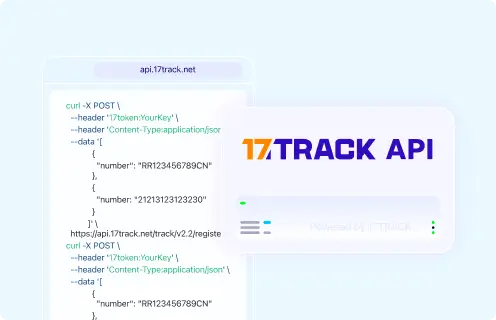
Tracking API
// Official Nippon Express API:
 // Current public official tracking API details require confirmation from the
 // applicable service agreement and official developer documentation.
 //
 // 17TRACK API:
 POST https://api.17track.net/track/v2.4/register
 Headers:
   17token: YourKey
   Content-Type: application/json
 Body:
 [
   {
     "number": "TRACKING_NUMBER",
     "carrier": "CARRIER_CODE"
   }
 ]
 // Confirm the current carrier code in 17TRACK documentation before production use.
Sources & References
- Official website — Nippon Express. Official corporate website
- 17TRACK API documentation. 17TRACK
17TRACK is an independent tracking platform and is not affiliated with Nippon Express.
Track your package
Global express parcel tracking service