Why Bulky Item Deliveries Need more than Basic Shipment Tracking?
Bulky item deliveries need more than a carrier status page because a tracking event can show where a shipment is without showing whether it can be safely received, moved through a building, delivered by appointment, or returned without damage. For ecommerce teams handling furniture, appliances, fitness equipment, machinery, oversized cartons, or multi-piece orders, reliable delivery management combines carrier tracking with packaging controls, handling instructions, exception workflows, customer communication, and proof of delivery.

Basic tracking remains useful. It can confirm that a label was created, a parcel was accepted, a shipment is in transit, or delivery was recorded. The problem is that bulky freight creates operational risks that are not fully represented by those milestones. A delivery can be technically “out for delivery” while the recipient is unavailable, the vehicle cannot access the site, the item requires two-person handling, or one carton from a multi-piece order is missing.
Why bulky deliveries create different operational risks
Small-parcel delivery is often designed around standardized handling. Bulky shipments are less predictable because their size, weight, shape, fragility, and destination conditions can affect nearly every stage of fulfillment. Carrier acceptance rules also vary by service, origin, destination, equipment, and package configuration. A product that fits one carrier’s parcel network may need a freight service or a different delivery method elsewhere.
Dimensions can matter as much as weight. Long cartons, irregular shapes, or excessive girth may trigger special handling, additional charges, or service restrictions. Packaging guidance from major carriers emphasizes choosing a suitable box, protecting contents from movement, and using adequate cushioning and closure methods. Those requirements are not merely packaging details: they influence whether a shipment survives handling and whether a delivery can be completed as planned.
Destination conditions add another layer. A customer may live in an apartment building with no loading dock, operate a business with receiving hours, or expect threshold, room-of-choice, assembly, or liftgate service. A standard tracking event rarely describes these conditions. The delivery team must collect and communicate the service requirements before the shipment reaches the final mile.
What basic shipment tracking can and cannot tell you
| Tracking can usually help with | Tracking alone may not confirm |
|---|---|
| Carrier acceptance and movement milestones | Whether the packaging is intact |
| Estimated or scheduled delivery information when provided by the carrier | Whether the destination is accessible to the delivery vehicle |
| Delays, exceptions, and delivery scans | Whether all pieces in a multi-carton order are present |
| Delivery confirmation or proof-of-delivery details when available | Whether the correct handling, placement, or appointment service was completed |
| Shipment history for customer service and investigations | Whether damage occurred before, during, or after handoff without supporting evidence |
This distinction is important for ecommerce operations. A status such as “delivered” records a carrier event; it does not automatically establish that the item was delivered to the correct location, accepted without visible damage, or received by the intended person. For a high-value or difficult-to-move product, the business needs a process around the event.
The information layer bulky shipments require
1. Shipment-level and order-level visibility
A bulky order may contain several cartons, pallets, or components moving under separate identifiers. Tracking each number independently can leave customer service staff and buyers with an incomplete view. The order record should connect every tracking number to the same order, product, destination, and promised service.
Operations teams should define what counts as complete delivery. For some orders, the final carrier scan is not enough until every expected piece has arrived. If the carrier provides piece-level events, those events should be reconciled against the fulfillment record. If they do not, the team should use warehouse scans, carton counts, or delivery documentation to identify discrepancies.
2. Exception monitoring instead of passive status checking
Bulky shipments benefit from monitoring rules that distinguish normal movement from an action-worthy exception. Examples include a missed appointment, an address issue, a delivery attempt at a site without access, a prolonged lack of movement, a damaged-package notation, or delivery of only part of an order.
The useful question is not simply “Where is the shipment?” It is “What decision must someone make now?” A delay before dispatch may require a customer update. A failed delivery attempt may require appointment coordination. A damage scan may require photographs, a replacement decision, and instructions not to discard packaging. Escalation ownership should be assigned before the problem occurs.
3. Delivery requirements captured before dispatch
Order data should record details that can change the delivery outcome: accurate dimensions and weight, number of pieces, contact information, receiving hours, access restrictions, floor or entrance information where relevant, appointment requirements, and any agreed handling service. The business should not assume that a carrier status page will contain all of this information.
Customer-facing instructions should be specific without promising a service the selected carrier or contract does not include. If a product requires special equipment or more than one handler, that requirement needs to be confirmed during planning, not discovered at the doorstep.
Packaging and tracking must work together
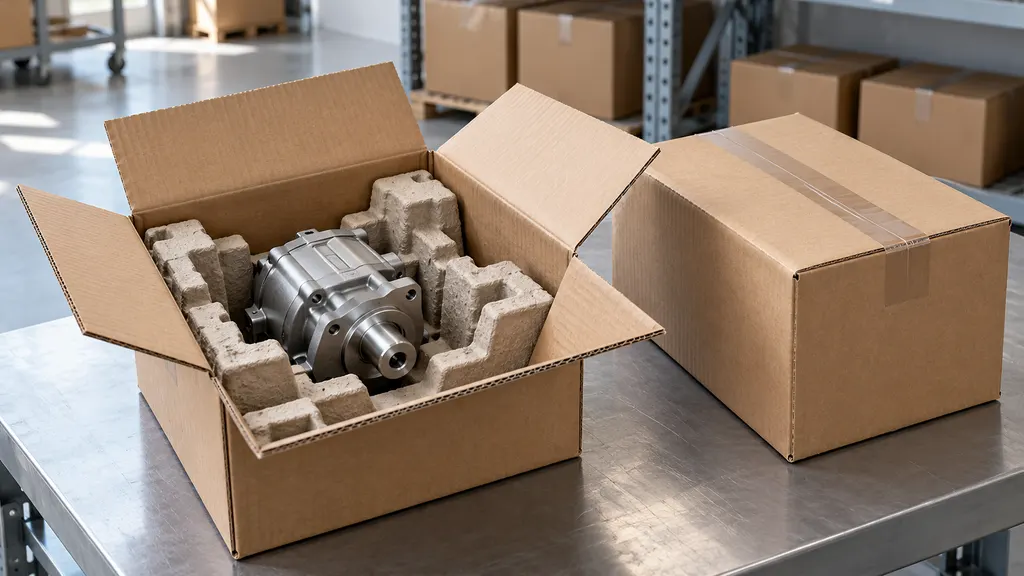
Freight packaging is part of delivery performance. A tracking platform can reveal a delay or a damage-related exception, but it cannot compensate for an unstable pallet, weak carton seams, inadequate internal cushioning, or poor labeling. Packaging decisions should reflect the product’s weight, center of gravity, fragility, stacking exposure, and expected handling environment.
Before scaling a bulky product, document a packaging specification and test the packed unit under realistic handling conditions. Record the final packed dimensions and weight, the number of cartons, the orientation requirements, and the inspection points used by the warehouse. If packaging changes, update the shipment data and carrier-service decision rather than relying on historical assumptions.
Labels and handling marks should remain visible throughout the shipment journey. However, marks such as “fragile” should support, not replace, appropriate packaging and carrier instructions. When damage claims are possible, establish a receiving process that asks customers to inspect the outer packaging and product, photograph visible issues, and retain relevant materials until the case is assessed. Exact claim requirements vary by carrier and service, so the responsible team should follow the applicable carrier terms.
A practical control workflow for bulky item delivery
- Classify the shipment. Identify whether it is a parcel, oversized parcel, palletized shipment, or another freight category. Capture dimensions, weight, piece count, and special handling needs.
- Validate the destination. Check address accuracy, receiving hours, access conditions, appointment needs, and any customer-provided delivery constraints.
- Select and confirm the service. Match the shipment profile to a carrier service that can accept the physical characteristics and required delivery method. Confirm uncertain requirements directly with the carrier or logistics provider.
- Connect all identifiers. Link carton, pallet, and order references so that staff and customers can see whether the delivery is complete.
- Monitor events against rules. Create alerts for delays, failed attempts, damage notations, delivery exceptions, and missing piece-level updates.
- Prepare the recipient. Send practical information about expected timing, appointment requirements, access, inspection, and what to do if the shipment arrives damaged or incomplete.
- Close the delivery loop. Reconcile proof of delivery, customer confirmation, warehouse records, and any damage or shortage report. Feed recurring problems back into packaging, carrier selection, and product-page information.
Where multi-carrier visibility fits
A multi-carrier tracking layer can give operations teams and buyers a consistent view across carriers, especially when bulky products move through different services or cross borders. 17TRACK provides public shipment tracking and also documents API options for integrating tracking data into business systems. These capabilities can support the visibility portion of a bulky-delivery process, but they should be treated as one layer rather than a substitute for freight planning, packaging validation, appointment coordination, or claims handling.
For teams using an order management system, warehouse platform, or customer-service workflow, the implementation goal should be actionable visibility. A useful integration maps carrier events to orders, identifies the responsible team, preserves the event history, and triggers customer communication at the right point. More alerts are not automatically better; alerts should be tied to a decision, deadline, or service risk.
How to measure bulky delivery performance
On-time delivery is only one measure. A more complete scorecard can include:
- Complete delivery rate: the share of orders delivered with all expected pieces.
- First-attempt completion: how often delivery succeeds without a failed attempt or rescheduling.
- Damage and shortage rate: incidents relative to bulky orders shipped.
- Exception response time: how quickly a team acknowledges and acts on a delivery problem.
- Customer contact rate: how often buyers need to ask where an order is or what will happen next.
- Return or replacement impact: the operational and financial effect of damage, refusal, or failed delivery.
These measures help separate carrier performance from internal process issues. A high failed-delivery rate may point to poor appointment data rather than slow transit. Repeated damage may indicate packaging or handling problems. Frequent “where is my order?” contacts may show that tracking information is technically available but not presented in a useful order-level format.
What to check before shipping a bulky product
- Are packed dimensions, weight, and piece count verified rather than estimated?
- Does the selected service accept the shipment’s size, weight, and destination?
- Are access, appointment, receiving-hour, and handling requirements documented?
- Can staff see all tracking identifiers under one order?
- Are delay, damage, failed-attempt, and partial-delivery exceptions monitored?
- Does the customer know how delivery will occur and what to inspect on arrival?
- Is there a clear owner for carrier escalation, customer communication, and claims?
- Can the business connect delivery outcomes to packaging and carrier decisions?
The practical conclusion is straightforward: tracking answers the location question, while bulky-delivery management answers the completion question. Businesses that combine carrier tracking with physical shipment data, destination readiness, exception ownership, and receiving procedures have a better basis for protecting products and setting accurate customer expectations.
FAQ
Is tracking still useful for bulky items?
Yes. Tracking provides movement milestones, exceptions, delivery events, and a record that can support customer service or an investigation. It is most useful when connected to the order, piece count, delivery requirements, and an escalation process.
What is the biggest difference between parcel tracking and bulky-item visibility?
Bulky-item visibility usually needs more operational context. Teams may need to know whether an appointment was arranged, whether every piece arrived, whether the destination can receive the shipment, and whether damage or handling issues were recorded. A standard tracking status may not answer those questions.
Should a business use one carrier for bulky deliveries?
Not necessarily. The appropriate carrier or service depends on shipment characteristics, destination, delivery requirements, and commercial terms. A multi-carrier approach can provide flexibility, but it also makes consistent order-level tracking, data mapping, and exception ownership more important.
What should customers do when a bulky item arrives damaged?
They should follow the seller’s and carrier’s instructions, document visible damage with photographs, note the issue on delivery documentation when applicable, and retain packaging until the case is reviewed. Requirements differ by carrier and service, so the business should publish a clear receiving and claims procedure.