What Is Last-Mile Delivery? Costs, Challenges, and Improvements for Ecommerce
Definition
Last-mile delivery is the final stage of a shipment’s journey from a distribution facility, store, local depot, or other delivery point to the recipient’s address or selected collection point. In logistics and ecommerce, the term usually refers to the movement of an order through the local delivery network after line-haul transportation and often after regional sorting or fulfillment. Despite its name, the last mile does not necessarily cover one literal mile; it describes the final delivery segment, which may be short or relatively long depending on the location and network design.
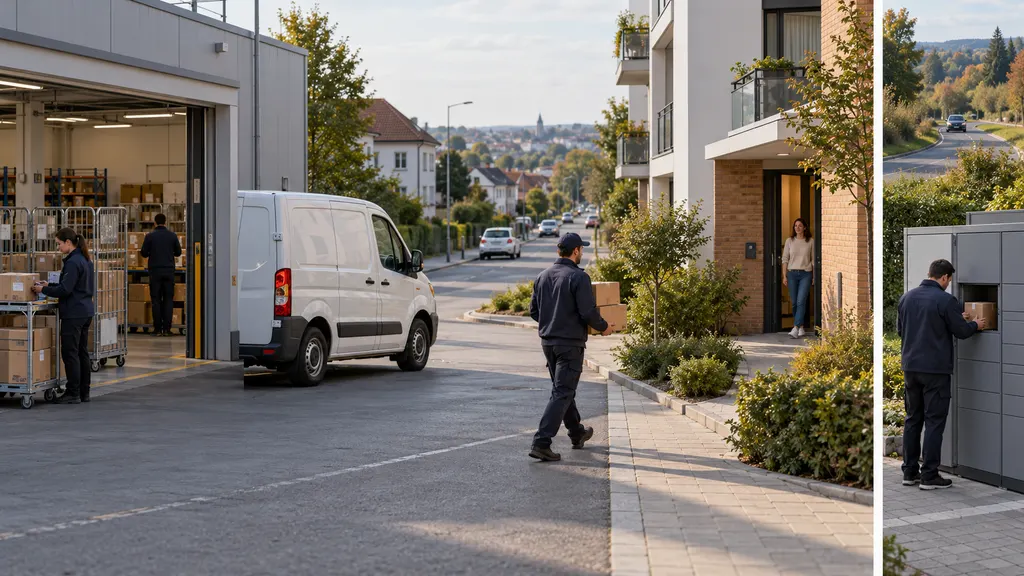
Last-mile delivery connects a completed order with its final recipient. It may involve a parcel carrier, postal operator, courier, retailer, marketplace, delivery platform, or an in-house delivery team. The delivery can end at a home, business, locker, pickup counter, store, or another location selected by the customer. The term is used most often in parcel logistics and ecommerce, but similar final-stage activities also occur in grocery delivery, food delivery, spare-parts distribution, and other supply chains.
In Logistics and Ecommerce
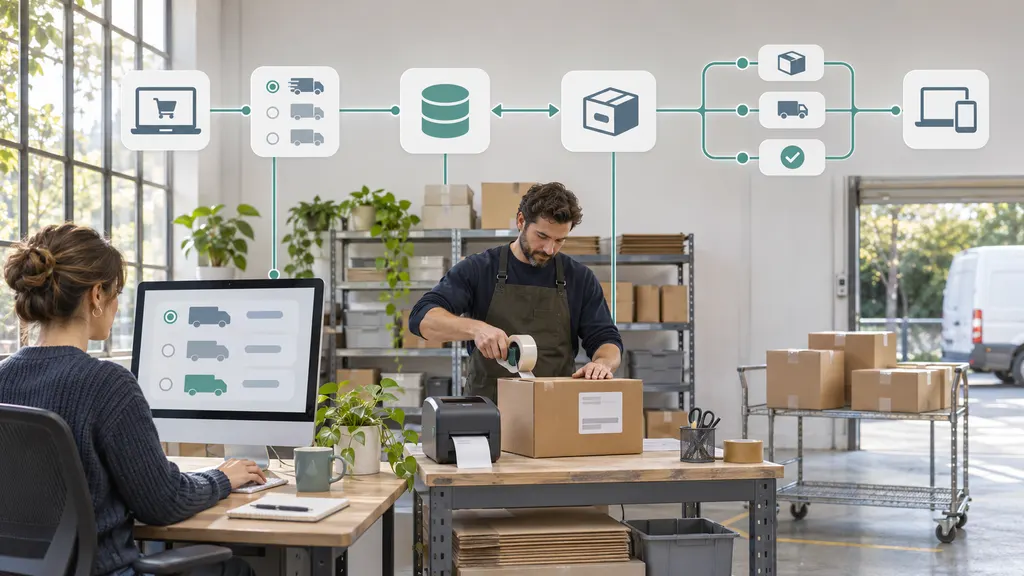
Within a typical order journey, last-mile delivery follows several earlier activities. A merchant or fulfillment provider receives and processes the order, picks and packs the items, and hands the shipment to a carrier or delivery network. The shipment may then move through regional transportation and sorting facilities. The last-mile stage begins when the shipment enters the local delivery operation and ends when it is delivered, collected, redirected, or otherwise closed according to the delivery instructions.
The stage is closely related to, but distinct from, several other logistics terms:
| Term | Meaning | Relationship to Last-Mile Delivery |
|---|---|---|
| Order | A customer’s request to purchase one or more products. | An order may produce one or more shipments that later require last-mile delivery. |
| Shipment | Goods moving together under a transport arrangement or shipment record. | The last-mile operation handles the final movement of the shipment to its destination. |
| Fulfillment | The process of preparing and dispatching an order. | Fulfillment normally occurs before the final delivery leg, although some facilities combine both activities. |
| Line-haul transportation | Movement between major hubs, regions, or facilities. | It normally precedes local delivery and uses different routes, equipment, and planning decisions. |
| Delivery | The act of transferring a shipment to the recipient or an agreed destination. | Last-mile delivery is the final delivery segment within a broader transport process. |
| Returns | The movement of unwanted, defective, or otherwise returned goods back through the supply chain. | Returns may create a separate reverse-logistics flow rather than a continuation of outbound last-mile delivery. |
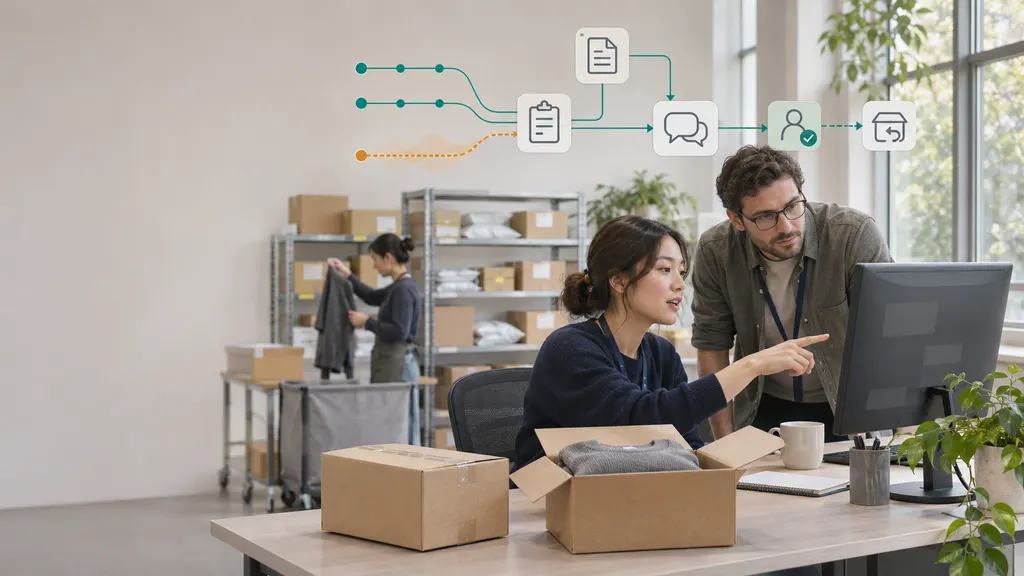
In an ecommerce store, customers may encounter last-mile delivery when they choose a delivery method, receive a dispatch notification, select a delivery window, follow tracking updates, or respond to a failed-delivery notice. The delivery experience is therefore influenced not only by transport time but also by address quality, communication, delivery instructions, proof of delivery, and the availability of collection alternatives.
How Last-Mile Delivery Works
The exact process differs by carrier and market, but a last-mile operation commonly includes the following stages:
- Local intake and sorting: Shipments arrive at a local depot, station, store, or other operating point and are sorted according to destination, service level, route, or delivery method.
- Route and stop planning: The operator assigns shipments to routes, vehicles, couriers, or collection points. Planning may consider delivery addresses, parcel size, promised service levels, traffic conditions, operating restrictions, and available capacity.
- Dispatch: The parcels leave the local facility with a driver, courier, postal worker, or other delivery resource. A shipment may be scanned or otherwise recorded at this point.
- Final approach: The delivery resource travels to the recipient’s address or another designated destination. Address information and access instructions become especially important at this stage.
- Delivery attempt or collection: The recipient receives the parcel, collects it from a designated point, or the operator records an unsuccessful attempt and follows the applicable next-step process.
- Completion and status update: The carrier or delivery operator records an event such as delivered, collected, redirected, held, or returned. The merchant and customer may receive the status through a tracking system.
Not every shipment follows a door-to-door path. A customer may select a parcel locker, pickup point, retail counter, or other out-of-home option. These alternatives change the final handoff and may reduce the need for a courier to visit an individual residence, but they still form part of the last-mile delivery design when they represent the final movement to the customer’s chosen collection location.
Main Characteristics
Many individual destinations
Earlier transport stages often move consolidated volumes between a smaller number of facilities. Last-mile delivery usually involves a larger number of separate destinations and delivery instructions. This makes the final stage more sensitive to address accuracy, building access, recipient availability, and local route conditions.
Stop-level operational decisions
A last-mile route is built around individual stops rather than only around major hubs. The operator must decide which shipments to group, which sequence to follow, and how to respond when a recipient is unavailable or a location cannot be accessed. These decisions can affect both service quality and operating resources.
Direct customer contact
The final handoff is often the part of the logistics process most visible to the customer. Delivery notifications, estimated arrival information, driver instructions, signature requirements, proof of delivery, and the handling of exceptions all influence the customer’s perception of the order.
Local variability
Road layouts, traffic, weather, building density, parking rules, security procedures, rural distances, and public access arrangements vary by location. A process that works in a dense urban area may not be suitable for a low-density or remote delivery area.
Multiple service options
Last-mile services can include standard delivery, scheduled delivery, same-day or time-sensitive services where available, pickup-point delivery, locker collection, and delivery to a business address. These are service configurations rather than universal categories, and their availability depends on the carrier, location, shipment characteristics, and commercial arrangement.
Costs and Operational Trade-Offs
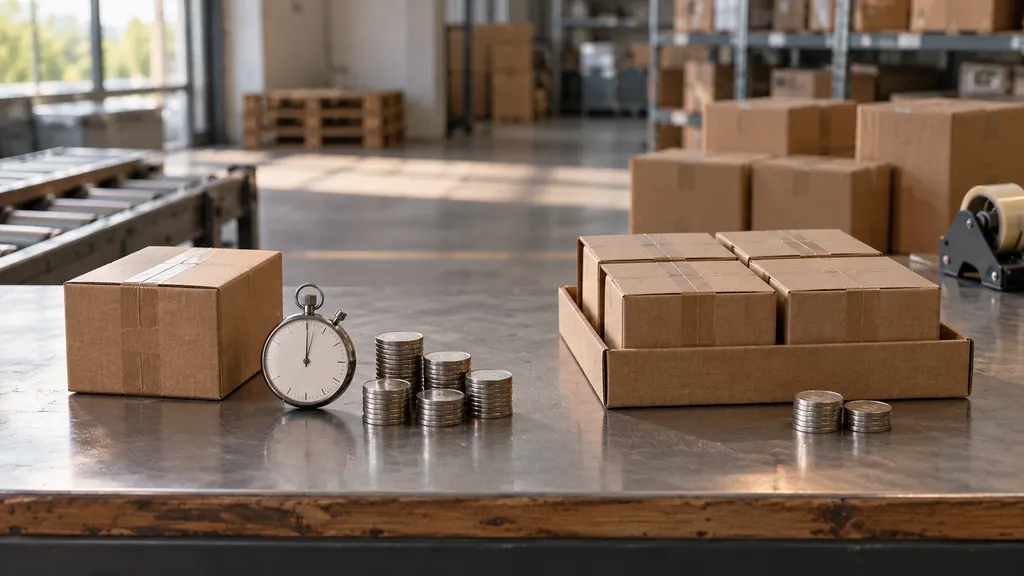
Last-mile delivery can be a significant operational cost because the final segment combines transport with a large number of separate handling and handoff activities. The cost of a delivery operation is not determined only by distance. It may also reflect the number of stops, labor time, vehicle utilization, local access conditions, failed attempts, parcel dimensions, service commitments, technology, customer support, and the need to process exceptions.
Important cost drivers include:
- Stop density: Deliveries concentrated in one area may require less travel between stops than deliveries spread across a large region.
- Route efficiency: Poorly sequenced stops or unexpected changes can increase travel and working time.
- Shipment characteristics: Heavy, oversized, fragile, temperature-sensitive, or regulated goods may require different handling and equipment.
- Delivery success: A missed delivery can create additional handling, communication, storage, or re-delivery work.
- Service promise: Narrow delivery windows and urgent services can limit the operator’s ability to consolidate stops.
- Destination type: Apartments, offices, gated properties, campuses, and remote addresses may require more access time than a simple street-side stop.
Lower cost is not always the only objective. A retailer or carrier may balance cost against delivery speed, reliability, customer convenience, safety, vehicle capacity, labor conditions, and environmental goals. For example, a pickup point may reduce individual residential stops while requiring the customer to travel to the collection location. A longer delivery window may support better route consolidation but provide less scheduling convenience.
Common Challenges
Last-mile delivery is exposed to operational uncertainty because the final stage takes place close to the recipient and within a changing local environment. Common challenges include incomplete or incorrect addresses, unclear building access, recipient absence, limited parking, traffic congestion, restricted delivery hours, damaged labels, weather disruption, and insufficient local capacity.
Cross-border ecommerce adds further coordination requirements. The shipment may need customs clearance, import documentation, tax or duty processing, and handoff between international and domestic operators before the local delivery stage begins. Customs clearance is not itself last-mile delivery, but a delay in clearance can postpone the start of the final delivery segment. Similarly, an international shipment may use one carrier for the long-distance movement and another operator for domestic delivery. Tracking information may therefore pass between several systems with different event names and update timing.
Returns create another challenge. A failed outbound delivery, a customer return, and a refund are not the same event. A return is a physical movement of goods in the reverse direction; a refund is a financial or transactional action. A last-mile network may support return collection, but the returned item then enters a reverse-logistics process involving inspection, restocking, repair, resale, recycling, or disposal according to the merchant’s procedures.
Ways to Improve Last-Mile Delivery
Improvement usually begins with identifying the specific failure or cost driver rather than applying one universal solution. A retailer, fulfillment provider, or carrier may evaluate delivery performance using measures such as successful first attempts, on-time completion against the applicable promise, route productivity, exception frequency, damage reports, customer contacts, and the use of alternative delivery locations. The precise definitions of these measures should be documented because carriers and merchants may calculate them differently.
Improve order and address data
Clear address fields, validated postal information, recipient contact details, delivery instructions, and accurate package data can reduce avoidable exceptions. Address validation should not be treated as a guarantee of successful delivery, because access conditions and recipient availability can still change.
Offer appropriate delivery choices
Customers may be able to choose a home address, business address, pickup point, locker, or scheduled window. Providing alternatives can help match the delivery method to the recipient’s circumstances. The options should be described clearly so that the customer understands the destination, timing, and collection requirements.
Use tracking and exception communication
Tracking systems help connect operational events with customer-facing status updates. Useful communication distinguishes between an ordinary movement event, a delivery attempt, a delay, a request for action, and a completed handoff. Clear exception messages can give the recipient a practical next step without treating every delay as a completed delivery.
Plan routes with local constraints
Route planning can incorporate delivery windows, vehicle capacity, stop locations, access restrictions, and known operating conditions. However, route output still depends on the quality and timeliness of the underlying data. A route plan that ignores loading time, building access, or realistic stop duration may appear efficient while failing during execution.
Coordinate the wider supply chain
Last-mile performance is affected by earlier decisions about inventory placement, order cut-off times, packaging, carrier handoff, customs documentation, and the accuracy of the promised delivery date. Improving only the local delivery route may not solve delays created upstream. Ecommerce operators therefore often need to examine the full order-to-delivery process.
Examples
| Scenario | Last-Mile Activity | Key Consideration |
|---|---|---|
| An online order is dispatched from a regional fulfillment center. | A local carrier sorts the parcel, places it on a route, and delivers it to the customer’s address. | Address accuracy, route sequence, and successful handoff. |
| A customer selects a parcel locker at checkout. | The shipment moves to the locker location and the customer receives collection instructions. | Locker capacity, access credentials, and collection time. |
| A cross-border parcel clears customs and enters a destination-country network. | A domestic operator completes the final movement to the address or pickup point. | Handoff data, local tracking events, and any outstanding import requirements. |
| A recipient is unavailable at the address. | The operator records an unsuccessful attempt and may redeliver, hold, redirect, or return the parcel under the applicable service rules. | Clear exception handling and communication. |
Common Misunderstandings
- “Last mile” always means a short distance. The term describes the final stage, not a fixed measurement. A final delivery segment can be geographically longer in a rural or remote area.
- Last-mile delivery is the same as the entire shipping process. It is only one part of the order journey. Fulfillment, line-haul transportation, customs processing, and returns may occur outside this stage.
- A delivery attempt is the same as a successful delivery. An attempt may end with a failed handoff, a rescheduled delivery, a redirect, or a return. Operational status definitions should distinguish these outcomes.
- Tracking and delivery are identical. Tracking is the recording and communication of shipment events. Delivery is the physical or authorized handoff at the destination. Tracking can report a delivery event, but it does not itself move the parcel.
- A refund is a type of delivery. A refund concerns the financial settlement of an order. It may follow a return or another customer-service decision, but it is not a physical logistics movement.
QA
What does last-mile delivery mean in ecommerce?
It means the final movement of an ecommerce shipment from a local facility or delivery network to the customer’s address, pickup point, locker, or other selected destination.
Why can last-mile delivery be expensive?
The final stage may involve many separate stops, local travel, labor time, access constraints, failed attempts, and customer communication. Cost depends on the network and service design, not only on distance.
Is last-mile delivery the same as shipping?
No. Shipping can refer to the broader movement of goods, while last-mile delivery identifies the final segment of that movement.
Does customs clearance count as last-mile delivery?
Usually not. Customs clearance is a border and import process. It may delay or enable the subsequent domestic last-mile movement, especially in cross-border ecommerce.
Sources
- IBM, “What Is Last-Mile Delivery?” — overview of the term, operational challenges, and ecommerce context.
- DHL, “What Is Last-Mile Delivery?” — industry explanation of final delivery operations and service considerations.
- Encyclopaedia Britannica, “Logistics” — general logistics context for the movement and coordination of goods.