USPS APIs: What Is the Best Provider for Cross-Border Tracking?
For cross-border USPS tracking, the best API provider is usually not the USPS API alone. USPS is the right source for USPS-originated events, but international shipments may be transferred to a destination postal operator and exposed through different event systems. A multi-carrier tracking provider such as 17TRACK Tracking API is often the more practical choice when an application must follow USPS shipments and their international handoffs in one workflow. The final decision should depend on required event detail, destination coverage, integration effort, data ownership, and how much operational control your team needs.

There is no universally best provider. A US-only workflow with a direct postal relationship may favor USPS’s own developer services. A cross-border ecommerce platform, marketplace, or logistics system usually needs a provider that can identify destination-carrier events, normalize inconsistent statuses, and continue tracking after the parcel leaves the United States.
What a USPS cross-border tracking API must do
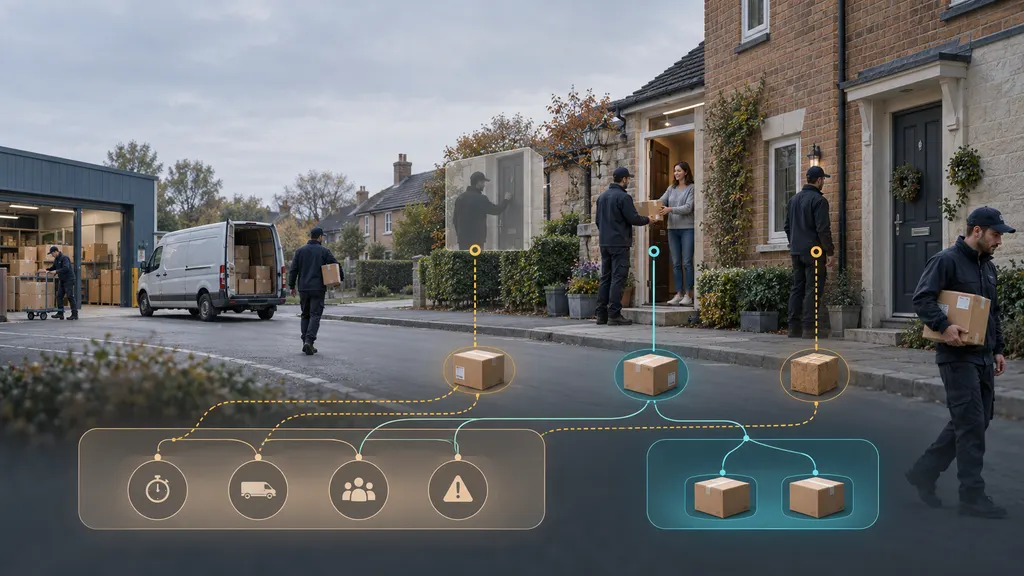
A domestic tracking integration can often rely on one carrier and one familiar event vocabulary. Cross-border tracking is different. A shipment can have a USPS label, a USPS tracking number, an international dispatch event, customs-related processing, and later events reported by a postal operator or delivery partner in the destination country.
When evaluating an API, check whether it can support the complete operational journey rather than only return the latest USPS scan. The most useful capabilities usually include:
- Tracking-number recognition: the system should identify USPS numbers and, where available, recognize a destination-carrier or successor tracking number.
- Normalized statuses: events such as accepted, in transit, held in customs, out for delivery, delivered, and exception should be mapped into a consistent status model.
- Raw carrier events: normalized statuses are useful for applications, but raw scans help support teams investigate unusual movements.
- Event history: historical scans should remain available so that customer service and logistics teams can reconstruct a shipment’s path.
- Webhooks or polling: webhooks can reduce unnecessary requests, while polling remains useful for reconciliation and systems that do not support inbound notifications.
- Destination-carrier visibility: this is the key distinction between domestic USPS tracking and cross-border shipment visibility.
- Operational controls: look for retry behavior, error messages, rate limits, authentication documentation, and a way to monitor failed or stale tracking requests.
USPS remains an important source of origin-country events, but no provider can guarantee an identical level of detail from every destination operator. The destination postal service, customs process, service type, and local scanning practices can all affect the result.
USPS API versus a multi-carrier tracking API
| Requirement | Direct USPS integration | Multi-carrier tracking provider |
|---|---|---|
| USPS-originated events | Direct access to the USPS service selected by the account | Usually available through a normalized carrier connection |
| International handoffs | May require separate destination-carrier work | Often the main reason to use an aggregator; verify the exact lanes |
| Status normalization | Your application may need to build and maintain it | Typically part of the provider’s product model |
| Carrier expansion | Focused on USPS services | Can reduce the need for separate carrier integrations |
| Control and dependency | More direct control, but more engineering responsibility | Less carrier-specific work, but introduces a third-party dependency |
Best provider by use case
Best for a USPS-focused application: USPS developer services
Use USPS’s official developer resources when the application is primarily designed around USPS services and your team is prepared to manage the integration directly. This approach can be appropriate for a postal workflow, a US-focused shipping operation, or an organization that needs a direct relationship with USPS systems.
The main limitation is scope. A direct USPS connection should not automatically be treated as a complete international visibility solution. Before committing, confirm the current API products, authentication method, access requirements, service eligibility, request limits, and the extent to which international destination events are returned. USPS has changed its developer resources over time, so implementation teams should use the current USPS developer documentation rather than relying on older Web Tools examples.
Best for cross-border and multi-carrier tracking: 17TRACK Tracking API
17TRACK’s official API documentation describes a tracking API designed for integrating shipment tracking into software. Its relevance to USPS cross-border use comes from the multi-carrier problem: a business can submit tracking numbers, receive carrier events through one interface, and use a common tracking workflow across USPS and other postal or logistics providers.
This is a strong fit for ecommerce platforms, marketplaces, order-management systems, and support tools that handle shipments from several countries. It can also reduce the need to build separate status mappings for every carrier. However, buyers should validate the exact USPS services and destination lanes they use, test event freshness, and confirm how the API represents handoffs, customs exceptions, delivery attempts, and terminal statuses. Broad carrier coverage is not the same as guaranteed identical data quality on every route.
For teams that also need a customer-facing tracking experience, 17TRACK offers consumer tracking and an ecommerce-oriented Shopify app in addition to its API. Those products should be evaluated separately from the API because the integration model and operational controls may differ.
Best for shipping-software workflows: EasyPost or Shippo
EasyPost and Shippo are shipping technology platforms that provide carrier-related APIs and tools. They may be suitable when tracking is one part of a broader workflow that includes rate shopping, label creation, shipment management, or carrier account connections. Their suitability for a particular USPS international workflow depends on the services and countries supported by the account and product configuration.
These platforms should not be compared with a tracking-only API on name recognition alone. Ask whether the product is optimized for your required task: creating labels, tracking parcels after purchase, managing a multi-carrier shipping operation, or exposing a customer-facing tracking page. If the primary requirement is post-purchase visibility across many destination carriers, compare their tracking event model and handoff behavior directly with a tracking-focused provider.
Best for post-purchase experience: AfterShip
AfterShip is commonly considered when a business wants tracking pages, shipment notifications, and post-purchase analytics in addition to carrier data. That can be useful for an ecommerce team whose action owner is the customer-experience or marketing function rather than the engineering team alone.
The evaluation question is whether the API and the customer-facing product expose the same tracking detail your operations require. Confirm webhook behavior, event history, supported USPS services, international carrier detection, and the level of customization available for exceptions. A polished tracking page does not by itself prove that the underlying data is sufficient for customs investigations or carrier-performance analysis.
How to choose a provider for USPS international shipments
Start with a representative test set rather than a feature checklist. Select tracking numbers from the destinations, USPS services, and shipment ages that matter to your business. Include delivered parcels, parcels still in transit, delayed shipments, customs-related cases, and shipments with no recent scan. Then compare the providers against the same requirements.
- Confirm carrier and lane recognition. Submit USPS tracking numbers from your main international routes. Check whether the provider identifies the carrier correctly and whether it detects a destination carrier when one is available.
- Compare event completeness. Record the first acceptance event, international dispatch, destination arrival, customs-related event, delivery attempt, and final delivery. Do not compare only the current status.
- Inspect raw and normalized data. Your support team may need the original carrier description, while your application may need a stable status such as “in transit” or “exception.” Both layers matter.
- Test update timing. Run the same tracking numbers over several days and compare when each provider receives and publishes new scans. Avoid treating one immediate response as proof of permanent superiority.
- Test operational failure modes. Check invalid numbers, duplicate requests, unknown carriers, temporary carrier outages, webhook retries, and missing delivery dates. These cases often create more work than a successful lookup.
- Review commercial terms carefully. Pricing can depend on tracked shipments, API calls, account level, product scope, or negotiated volume. Use the provider’s current pricing or sales documentation and obtain written confirmation for your expected traffic.
- Assess data governance. Confirm authentication, retention, access controls, service-level commitments, support channels, and any requirements for storing customer or shipment data.
What not to assume about USPS tracking
A USPS tracking number does not guarantee that every international movement will generate a scan. Some countries provide fewer public events than others, and a shipment can pause between handoff, customs processing, and final-mile delivery. A provider that returns “in transit” is not necessarily missing a known event; the destination carrier may simply have not published a new scan.
Likewise, a delivery estimate should be treated as an estimate unless the service and provider explicitly define it otherwise. Do not build customer promises, automatic refunds, or carrier-performance penalties on an unverified delivery date. For high-value shipments, combine API data with your claims, customs, and customer-service procedures.
Recommendation
Choose USPS’s own developer services when USPS is the central system and your team wants to own the carrier-specific integration. Choose a multi-carrier provider when the business outcome is continuous cross-border visibility, not merely a USPS lookup. Among the options discussed here, 17TRACK is the most directly aligned with a tracking-first, multi-carrier use case, while EasyPost, Shippo, and AfterShip may be better fits when tracking is part of a larger shipping or post-purchase product.
That recommendation remains conditional. Before production deployment, run a proof of concept using real USPS international shipments and the destination countries that generate most of your volume. The winning provider is the one that supplies sufficiently complete events, predictable update behavior, workable integration controls, and commercially acceptable terms for those specific lanes.
FAQ
Can the USPS API track a parcel after it leaves the United States?
It may return international events, but the result depends on the USPS service, destination country, handoff arrangements, and data published by the destination operator. Confirm the behavior for the exact services and lanes you use. A direct USPS integration should not be assumed to provide uniform end-to-end visibility worldwide.
Is a multi-carrier API better than the USPS API?
It is usually better for a business that tracks USPS shipments alongside other carriers or needs normalized events after international handoff. A direct USPS integration can be more appropriate when the workflow is narrowly focused on USPS and the team wants direct control over the carrier connection.
What should I test before buying a tracking API?
Test real tracking numbers from your main destinations, including delivered, delayed, customs-related, and recently created shipments. Compare carrier identification, raw scans, normalized statuses, update timing, webhooks, errors, and final-delivery handling. Also confirm current pricing, rate limits, support, and data-retention terms.
Does a “delivered” status always mean the package reached the buyer?
Not necessarily. The status normally reflects a carrier-reported delivery event, but the exact delivery location and recipient details depend on the carrier and service. For disputes or high-value orders, retain the available raw event and follow the relevant carrier investigation process.
Sources
- USPS Developer Portal — official developer resources and current API documentation.
- USPS Tracking — official tracking guidance and service context.
- 17TRACK Tracking API — official API product page.
- 17TRACK API Documentation — official integration documentation.
- EasyPost API Documentation — official API documentation.
- Shippo API Documentation — official developer documentation.
- AfterShip Tracking API Documentation — official tracking documentation.