Distribution Processing
What Is Distribution Processing?
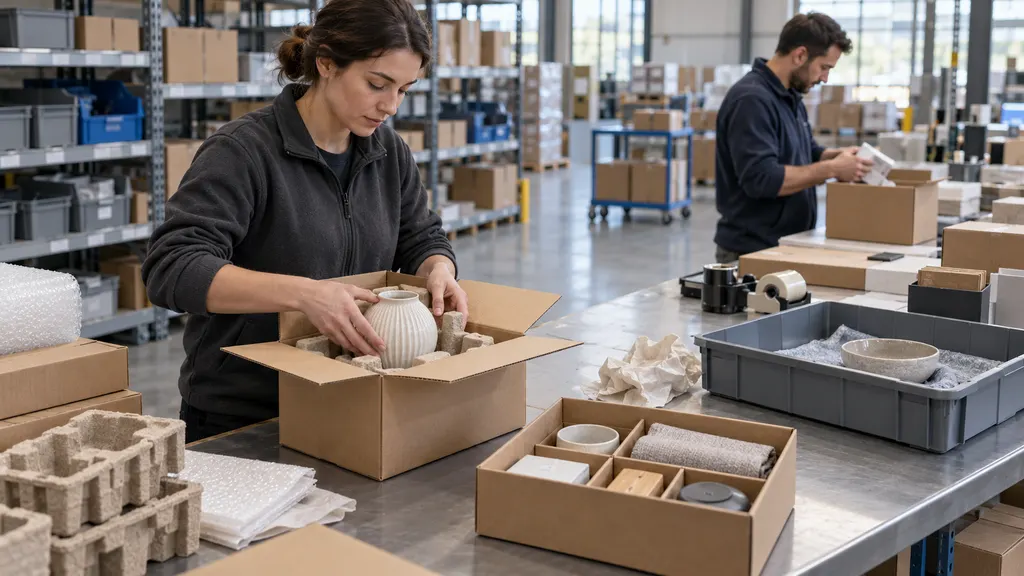
Distribution processing is the preparation or limited modification of goods within a distribution network so that they meet the requirements of a customer, sales channel, or destination market. In logistics, it can include activities such as labeling, repackaging, assembling product sets, adding instructions, and making minor finishing adjustments before goods move onward. Its purpose is to make goods ready for sale, use, or delivery without necessarily carrying out the principal manufacturing process.
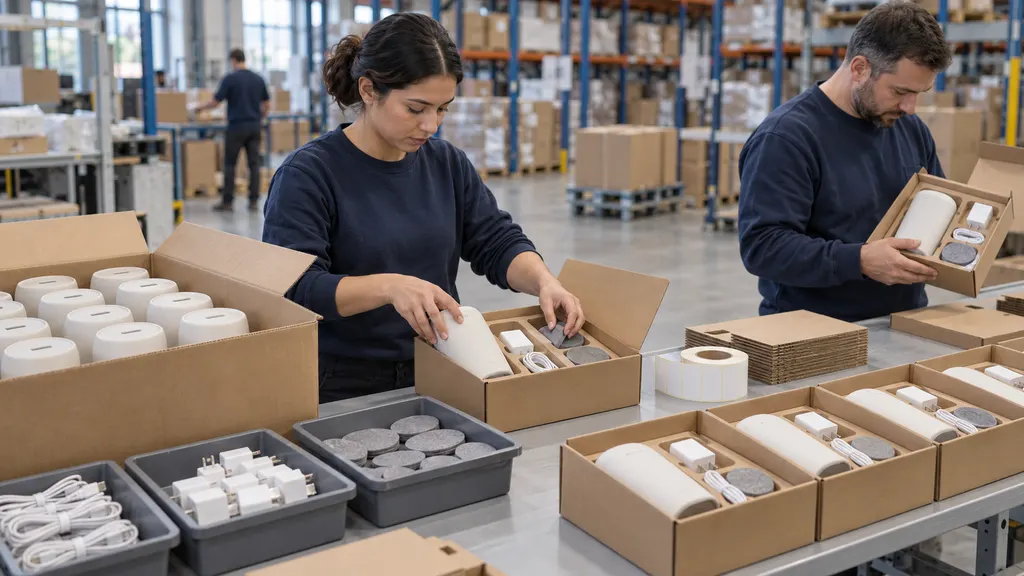
The expression is not used uniformly across all logistics organizations. Similar activities may be described as value-added services, value-added logistics, kitting, or postponement operations, depending on their scope. These expressions overlap, but they are not exact synonyms. Distribution processing is best understood by identifying the physical work performed, the requirements it addresses, and its place between production and final distribution.
Position in the Supply Chain
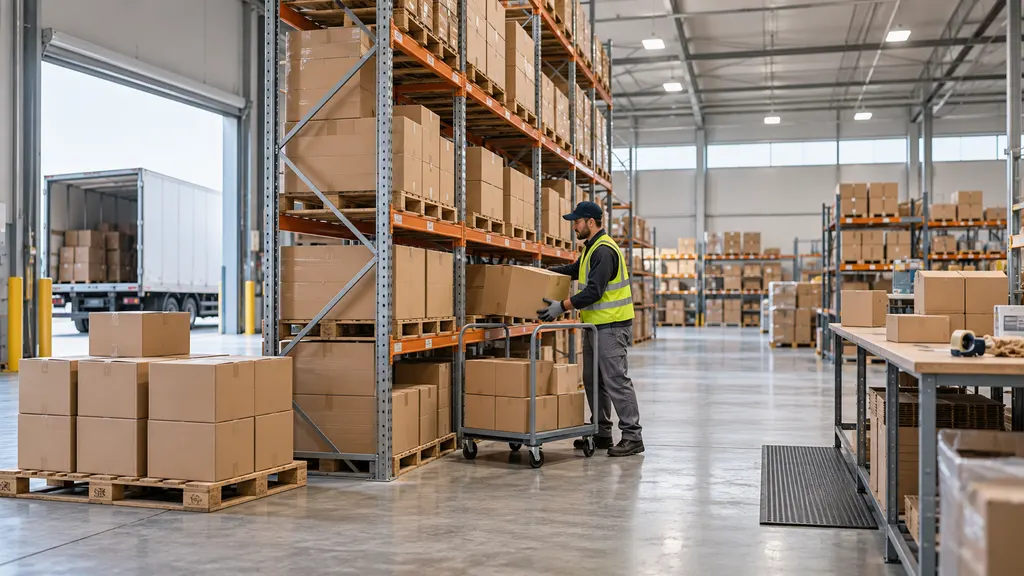
Distribution processing connects the movement and storage of goods with their final commercial requirements. Manufacturing may produce a common product in bulk, while different customers require different labels, package quantities, accessories, or presentation formats. A warehouse or distribution center can carry out some of these adjustments closer to the point where demand becomes known.
This work may take place after receiving, while inventory is held, during order preparation, or before dispatch. It does not have to occur at a separate facility. A distribution center might have a dedicated work area for labeling and assembly, or staff might complete a simple task at a packing station.
The term is useful in ecommerce because the item received from a supplier is not always the item configuration sold to a shopper. A seller may offer a bundle containing several separately stocked products, require a promotional insert, or need destination-specific information attached to the packaging. Distribution processing describes the preparation involved, rather than the transport of the resulting shipment.
Typical Activities
The following activities illustrate the scope of distribution processing. They are practical examples, not a universal classification. Whether a particular operation belongs in this category depends on the terminology and responsibilities established for the facility.
| Activity | Work performed | Illustrative purpose |
|---|---|---|
| Labeling and relabeling | Applying product, customer, handling, or logistics labels | Preparing stock for a receiving system or destination requirement |
| Repacking | Changing the quantity or presentation of goods in a package | Converting bulk-packed goods into smaller sales units |
| Kitting and set assembly | Combining specified components into one prepared set | Creating an ecommerce bundle from separately stored items |
| Insertion | Adding instructions, accessories, or other specified materials | Preparing a product package for a particular market |
| Minor finishing or configuration | Completing limited adjustments under an approved specification | Adapting a common product to a customer order |
| Inspection associated with preparation | Checking completeness, condition, or label accuracy | Verifying that the prepared goods match the work instruction |
Not every warehouse activity is distribution processing. Receiving, storage, picking, and loading are fundamental warehouse functions, but they do not necessarily alter the presentation or configuration of goods. Likewise, a quality inspection may support distribution processing without itself being a processing operation.
How Distribution Processing Works
1. Establish the required output
The process begins with a specification: what the finished unit must contain, how it must be presented, and how it will be identified. Instructions should distinguish product requirements from shipping requirements. A product label, for example, serves a different purpose from a label identifying a pallet or parcel.
Useful instructions identify the input items, required quantities, approved packaging, label content, acceptance criteria, and treatment of exceptions. If work involves regulated information or product claims, the responsible business must establish who approves that information; warehouse execution alone does not establish its legal adequacy.
2. Allocate materials and inventory
The facility selects suitable goods and any supporting materials. These may include cartons, inserts, labels, or components for a kit. Inventory records need to reflect what the operation consumes and what it creates. If several components become a separately stocked kit, simply moving the components to a workbench is not enough to record the resulting inventory accurately.
3. Perform and verify the work
Workers or equipment complete the specified operation. Verification can include checking component quantities, reading identifiers, comparing label versions, and inspecting packaging condition. The appropriate controls depend on the consequences of an error. A missing promotional insert and an incorrect safety instruction do not present the same risk.
4. Record the result and release the goods
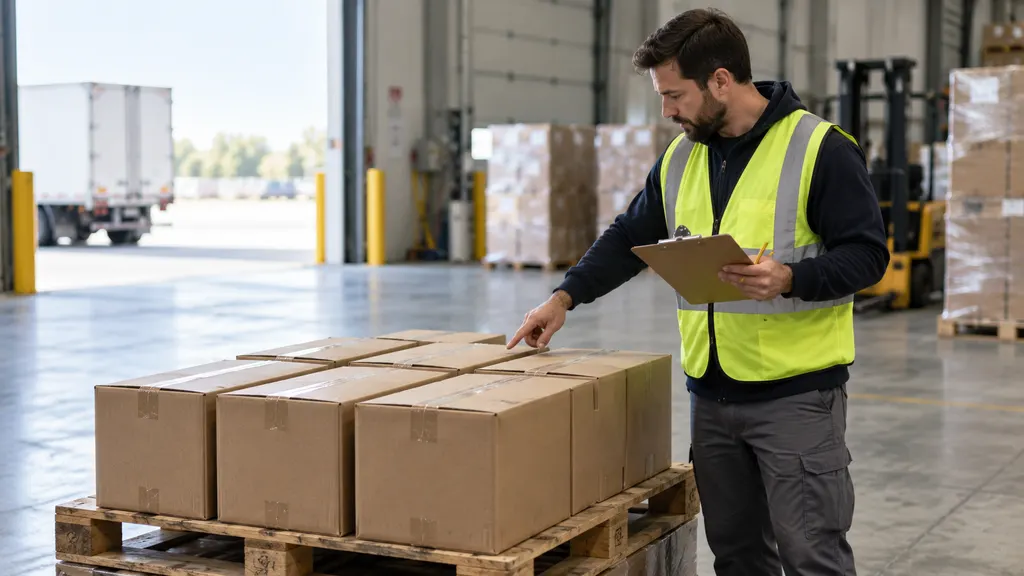
Completed goods are returned to storage, transferred to order fulfillment, or staged for dispatch. Records should preserve the relationship between the original goods and the processed output where that relationship is needed for traceability. Exceptions, damaged units, and unused components also need a defined disposition so that physical stock and inventory records remain aligned.
Related Terms and Important Boundaries
| Related term | Relationship to distribution processing | Important distinction |
|---|---|---|
| Manufacturing | Both can involve assembly or physical changes | Distribution processing focuses on preparation within distribution; substantial production work may be manufacturing regardless of facility name |
| Order fulfillment | Processing may form part of fulfilling an order | Fulfillment also includes activities such as picking and dispatch that need not modify goods |
| Value-added services | A broader service description that can include distribution processing | It may also cover services that do not physically prepare or modify goods |
| Kitting | A specific activity that can be distribution processing | It combines defined components rather than describing the entire range of processing tasks |
| Postponement | Processing can enable delayed product differentiation | Postponement is a supply chain strategy, not the physical operation itself |
| Cross-docking | Goods passing through a facility may receive limited preparation | Cross-docking concerns transfer between inbound and outbound flows rather than modification of goods |
These boundaries are operational rather than universally binding legal definitions. Calling an activity distribution processing does not determine its treatment under customs, product safety, tax, or manufacturing rules. The actual work and the applicable rules remain decisive.
Use in Cross-Border Ecommerce
Cross-border sellers may use distribution processing to adapt a common inventory pool for different destinations. For example, a seller may arrange for an approved language-specific instruction leaflet to be inserted before dispatch. Another may prepare different bundle configurations for separate storefronts while retaining the same underlying component inventory.
These arrangements can support postponement: the business delays a final configuration decision until the destination or order is known. However, the operation also introduces dependencies. Goods cannot be released correctly if the required label, insert, component, or approved instruction is unavailable.
Customs-controlled facilities require particular care. The World Customs Organization's Revised Kyoto Convention addresses customs warehousing and permitted handling under customs control. Its framework does not mean that every warehouse may perform every processing activity. Applicable national rules, authorizations, and procedures determine what can be done in a particular facility.
Repacking or relabeling should not be assumed to change the customs origin of goods. Nor should the completion of warehouse processing be taken as evidence that import clearance has occurred. Preparation, origin determination, and customs release are separate questions that require their own evidence.
Illustrative Ecommerce Example
A retailer sells a desk-accessory set containing a notebook, a pen, and a storage pouch. The supplier delivers each component separately. The retailer instructs its distribution center to place one of each item into a retail sleeve, add an approved information card, and identify the completed set using the retailer's specified product identifier.
The combination and presentation work are distribution processing. Picking the completed set for an order is order fulfillment. Attaching the outbound parcel label prepares the shipment for transport. These tasks can occur in the same facility, but they serve different purposes.
If a component is missing, the facility should not silently substitute another item unless the instruction permits it. The exception affects both the physical specification and the inventory record. If the retailer instead asks the facility to manufacture the notebook, that is a different production activity rather than merely preparing the supplied goods for distribution.
Operational Checks and Limitations
Distribution processing should be evaluated against the required output rather than treated as an automatic improvement. It adds handling, consumes materials and capacity, and can introduce errors. Its usefulness depends on whether performing the work within distribution fits the product, order pattern, and compliance obligations.
- Specification control: Is the current work instruction approved, and are obsolete labels or inserts excluded from use?
- Inventory accuracy: Do records account for components consumed, completed sets, damaged goods, and unused materials?
- Identification: Can staff distinguish the original item, the processed sales unit, and the transport unit?
- Traceability: Are relevant batch, lot, or serial references preserved when packaging or configurations change?
- Capacity: Can the work be completed before the required dispatch without bypassing checks?
- Authorization: Is the facility permitted to perform the operation, particularly where goods remain under customs control?
- Acceptance: Is there a clear method for deciding whether the output meets the specification?
GS1 guidance on logistics labels is relevant to identification during distribution, but a logistics label does not replace all product information. The identification of a transport unit and the labeling of the goods inside it should be assessed separately.
QA
Is distribution processing the same as order processing?
No. Order processing concerns handling order information and related workflow. Distribution processing concerns preparing or modifying physical goods within the distribution network, although an order can trigger that work.
Does distribution processing always involve manufacturing?
No. Labeling, inserting instructions, and combining finished items into sets can occur without carrying out the principal manufacturing process. More substantial operations may fall within manufacturing rules, depending on the work and jurisdiction.
Can distribution processing take place in a bonded warehouse?
Some handling or processing may be permitted, but the answer depends on the applicable customs rules and facility authorization. The logistics description alone does not establish permission.
Does distribution processing mean a shipment has been dispatched?
No. Processing can occur before storage, order picking, or dispatch. A processing record describes preparation work; it does not by itself establish carrier acceptance or delivery progress.
Sources
- Council of Supply Chain Management Professionals: Supply Chain Management Definitions and Glossary — Supports the broader logistics context, including warehousing, order fulfillment, packaging, and assembly. It is not presented as a universal definition of distribution processing.
- John J. Bartholdi III and Steven T. Hackman: Warehouse & Distribution Science — Educational reference for warehouse operations, material flow, inventory handling, and order preparation.
- GS1 Logistic Label Guideline — Supports the discussion of logistics-unit identification and the role of logistics labels.
- World Customs Organization: Revised Kyoto Convention, Specific Annex D — Provides the customs framework for customs warehouses, free zones, and permitted handling under customs control.