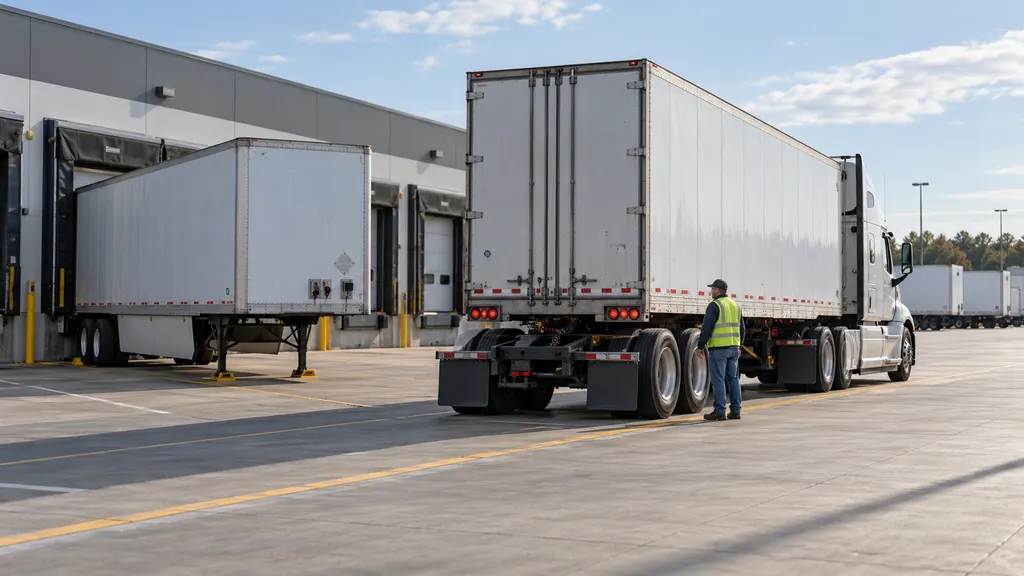
Stacking
What Is Stacking?
Stacking is the placement of goods, packages, pallets, or containers on top of one another to form a vertical arrangement for storage, handling, or transport. In logistics, it is used to organize cargo and make use of available space while keeping loads stable and protecting the items below. A safe stack depends on the strength of its supporting surfaces, the load-bearing capacity of its contents and packaging, and the forces it may encounter during handling or movement.
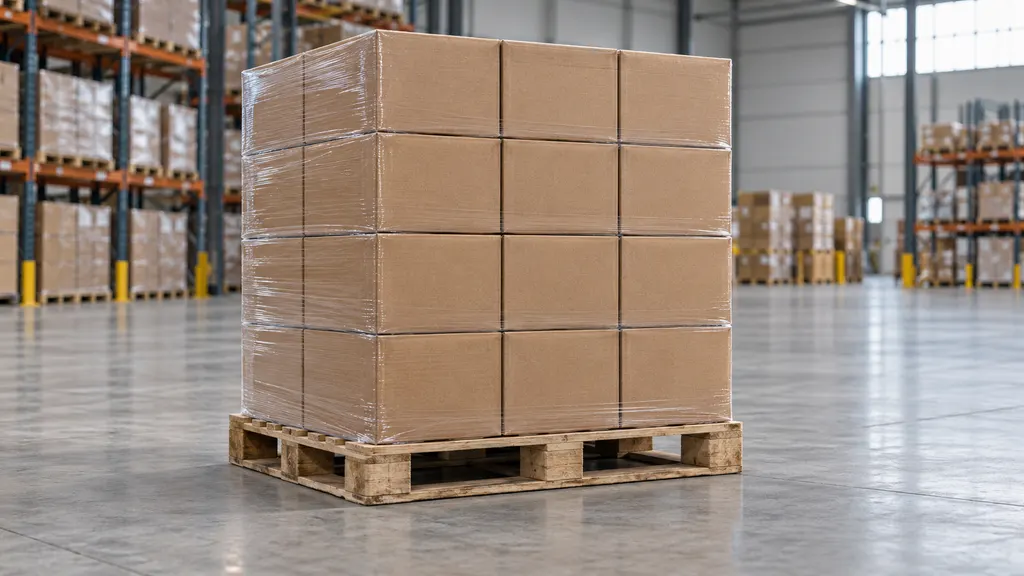
The term applies at several scales: cartons stacked on a pallet, loaded pallets placed above one another, goods arranged inside a freight container, and freight containers positioned in tiers. These applications share the principle of vertical load support, but their equipment, structural limits, and safety requirements are not interchangeable.
Where Stacking Fits in Logistics
Stacking occurs during receiving, warehouse storage, order preparation, loading, transportation, and returns processing. It affects both the physical condition of goods and how readily workers can inspect, identify, and retrieve them. In ecommerce fulfillment, products may be stacked in inbound cartons before individual units are picked for customer orders. Consolidated outbound shipments may also contain stacked cartons or palletized goods.
In cross-border shipping, a stack may remain under load through several handling stages and different transport conditions. Packaging that supports a load briefly in a warehouse may not necessarily withstand prolonged compression, moisture exposure, vibration, and movement during a longer journey. Stack planning therefore concerns the expected distribution environment, not just whether goods remain upright when first assembled.
Users may encounter stacking instructions on packaging, pallet specifications, warehouse procedures, loading plans, and cargo-handling documentation. Instructions such as a maximum number of layers or a prohibition on placing other cargo above a package should be interpreted for the package and conditions concerned, rather than treated as general rules for similar-looking goods.
Common Stacking Arrangements
The following arrangements describe different ways of organizing loads. They are practical descriptions, not a single universal classification system.
| Arrangement | Description | Main consideration |
|---|---|---|
| Column stacking | Cartons are positioned directly above cartons in the layer below, with corresponding edges and corners aligned. | Alignment can help transfer compression through the load-bearing parts of suitable cartons, but the load still needs adequate lateral stability. |
| Interlocking stacking | Cartons are arranged so that successive layers overlap, often by changing their orientation. | The pattern may improve cohesion, but misaligned carton edges can reduce compression performance compared with an aligned arrangement. |
| Block stacking | Loads are stored on the floor in blocks, potentially with loaded pallets stacked above one another where suitable. | Lower loads must withstand the weight above, and access to individual loads may be restricted. |
| Direct stacking of rigid units | Suitable crates, bins, or other rigid units are placed on compatible units below. | Stacking interfaces, structural condition, and manufacturer limits determine whether the arrangement is appropriate. |
| Freight container stacking | Freight containers are positioned in tiers using their designed structural support interfaces. | Container condition, approved loading arrangements, handling equipment, and securing requirements must be considered. |
No pattern is automatically suitable for every product. A stable-looking arrangement may still damage the packages at its base. Conversely, an arrangement that preserves carton compression strength may require additional measures to prevent sideways movement.
What Determines Whether a Load Can Be Stacked?
Packaging strength and product support
The lowest package must support the loads transmitted from above without unacceptable crushing, distortion, or damage to its contents. Depending on the package design, support may come mainly from the packaging, the product, internal fittings, or a combination of these elements. A heavy product is not necessarily capable of carrying weight on its upper surface.
For corrugated cartons, compression performance depends on more than nominal box size. Carton construction, closure, condition, alignment, moisture exposure, and the duration of loading all matter. Test information should be interpreted against the intended use conditions; a laboratory result is not automatically a permitted operational stacking load.
Weight distribution and geometry
A stack needs a stable base and a load distribution compatible with the strength of the supporting packages or equipment. Concentrated loads can damage a small area even when the total weight appears acceptable. Uneven surfaces, gaps, unsupported edges, and protruding packages can create weak points or cause a stack to lean.
Placing heavier items lower can help reduce the height of the center of gravity, but this principle does not override package-specific restrictions. A strong, heavy item with an irregular upper surface may still be unsuitable as a base for other goods.
Pallets, floors, and supporting structures
A stack is only as reliable as its supporting system. Pallet damage, missing boards, an uneven floor, or an unsuitable support arrangement can undermine an otherwise sound load. A pallet's permitted load may depend on whether it rests on a floor, is lifted by handling equipment, or is supported in racking. A rating for one condition should not be assumed to apply to another.
Time and environmental conditions
Stacking suitability can change during storage and transport. Sustained loading may deform packaging, while moisture can weaken some packaging materials. Movement during transport introduces forces that are absent in stationary storage. These considerations help explain why a warehouse stacking arrangement may require reassessment before it is used inside a vehicle or freight container.
Planning and Checking a Stack
Stack planning combines package information, equipment limits, storage conditions, and the expected handling route. The following sequence provides a practical assessment framework rather than a substitute for a site-specific safety procedure.
- Identify restrictions. Check package markings, supplier instructions, product fragility, required orientation, and any stated stacking limits. Establish whether those limits refer to layers, supported weight, storage conditions, or another measure.
- Inspect the load and its base. Look for wet or crushed cartons, damaged pallets, unstable contents, distorted containers, and uneven support surfaces. Segregate loads that require further assessment.
- Confirm supporting capacities. Consider the load-bearing capability of the lowest packages, the pallet, the floor, and any equipment or structure involved. Do not select a height from visual appearance alone.
- Select a suitable arrangement. Choose a pattern that balances compression support, stability, package dimensions, and the need to identify or retrieve goods. Avoid unintended overhang and unsupported load paths.
- Provide appropriate restraint. Assess whether wrapping, strapping, blocking, bracing, or another method is needed. Restraint must be compatible with the goods and must not itself cause damage.
- Preserve safe access. Keep aisles, passageways, and required clearances available. Consider how workers and handling equipment will approach the stack and remove goods without destabilizing it.
- Inspect after changes. Reassess a stack after impact, partial unloading, repacking, or visible movement. Leaning, bulging, crushing, and shifting are reasons to stop and review the arrangement.
There is no universal safe stacking height for all goods. In the United States, OSHA's general-industry materials-handling rule requires tiered materials to be stacked, blocked, interlocked, and limited in height so that they remain stable and secure against sliding or collapse. This is a jurisdiction-specific requirement, not a worldwide numerical height limit.
Stacking and Related Terms
| Term | Meaning | Relationship to stacking |
|---|---|---|
| Palletizing | Arranging goods on a pallet to create a handling unit. | Often includes stacking cartons, but palletizing also concerns the pallet, load layout, and unit stability. |
| Racking | Storing goods on an engineered supporting structure. | Racking supports loads at designated levels; it does not necessarily mean that one stored load bears directly on another. |
| Stowage | The placement and arrangement of cargo within a transport space. | Stacking may form part of stowage, alongside weight distribution, access, compatibility, and securing. |
| Load securing | Measures intended to prevent cargo from moving in an unsafe way. | A stack may require securing, but securing does not make structurally unsuitable packaging capable of supporting additional weight. |
| Stackability | The suitability of a package or load to have other units placed above it under specified conditions. | Describes a capability or restriction rather than the act of arranging goods vertically. |
Practical Examples and Common Misunderstandings
For example, a retailer may receive identical cartons of packaged household goods on a pallet. Before placing another loaded pallet above them, the warehouse needs to establish whether the lower unit is designed to support that arrangement. Cartons that can support additional carton layers may not be able to support the concentrated contact points created by the underside of another pallet.
In another example, a cross-border shipment may contain both rigid crates and lightweight cartons. Loading all available space above the cartons would not be justified merely because the cargo fits. The loading plan must account for the support each package can provide and the movement expected during transport.
Wrapping is not a replacement for compression strength. Stretch film can help hold packages together, but it does not establish that the bottom packages can carry the load above. Excessive restraint forces can also deform vulnerable packaging.
A stacking limit is not always a height limit. A restriction may concern the number of packages above a unit, the supported mass, or a particular tested arrangement. These measures should not be treated as equivalent without supporting information.
More vertical storage does not automatically mean better space use. An arrangement that obstructs retrieval, hides damaged goods, or creates unsafe handling conditions may be unsuitable even if it occupies less floor area. Storage density must be considered alongside access and operational safety.
QA
What does stacking mean in a warehouse?
It means placing goods or load units above one another for storage or handling. The lower units and their supporting surfaces must be suitable for the resulting load, and the arrangement must remain stable.
Is stacking the same as palletizing?
No. Palletizing creates a handling unit on a pallet. Stacking describes vertical placement and can occur on a pallet, directly on a floor, or in other suitable storage and transport arrangements.
How high can cartons be stacked?
There is no universal height. The answer depends on package strength, load weight, alignment, environmental conditions, duration, supporting equipment, and applicable safety requirements.
Can a non-stackable load be made stackable by wrapping it?
Wrapping alone does not establish stackability. Any proposed change requires an assessment of structural support and stability; holding packages together is different from enabling them to carry additional weight.
Sources
- Occupational Safety and Health Administration: 29 CFR 1910.176, Handling Materials—General — U.S. requirements concerning storage stability, clearances, and safe material storage.
- Health and Safety Executive: Warehousing and Storage—A Guide to Health and Safety — Guidance on warehouse storage, pallet handling, stacking, and supporting equipment.
- United Nations Economic Commission for Europe: IMO/ILO/UNECE Code of Practice for Packing of Cargo Transport Units — Guidance on cargo packing, load distribution, stacking arrangements, and securing for intermodal transport.