Rack
What Is a Rack?
A rack is a supporting framework used to hold, organize, and store goods. In warehousing and logistics, racks provide storage positions for pallets, cartons, containers, or individual items, often at several heights above the floor. They are part of a facility's storage infrastructure and help determine how inventory is put away, accessed, replenished, and picked.
The term can describe an individual storage structure or, less precisely, a section of a larger installation. Racking usually refers to the assembled storage system or the equipment collectively. Outside warehousing, rack has other meanings, including equipment frames and display fixtures; this entry focuses on its warehouse and fulfillment meaning.
Role in Warehousing and Ecommerce Fulfillment
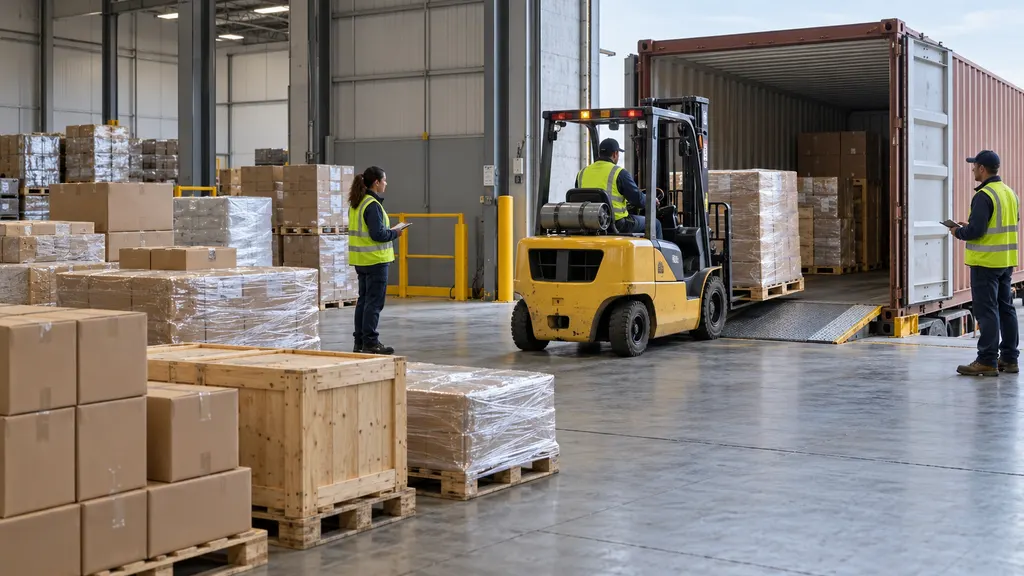
Racks provide physical locations for inventory between warehouse activities. After goods are received and checked, they may be placed in rack locations until needed for picking, production, consolidation, or replenishment. A rack does not identify or track inventory by itself: location labels, operating procedures, and inventory records connect the physical storage position with information about its contents.
In ecommerce fulfillment, a facility may use pallet racks for reserve stock and smaller picking locations for individual products. Workers or handling equipment move goods from reserve storage to picking locations when replenishment is required. Alternatively, orders containing full pallets or cases may be picked directly from suitable rack locations.
Cross-border goods use racks in much the same physical way as domestic goods. Their customs status, ownership, or release conditions may affect where they are permitted to be stored and how records must be maintained, but these requirements do not create a different structural definition of a rack. A rack location alone is not evidence that goods have cleared customs.
Main Components and Storage Locations
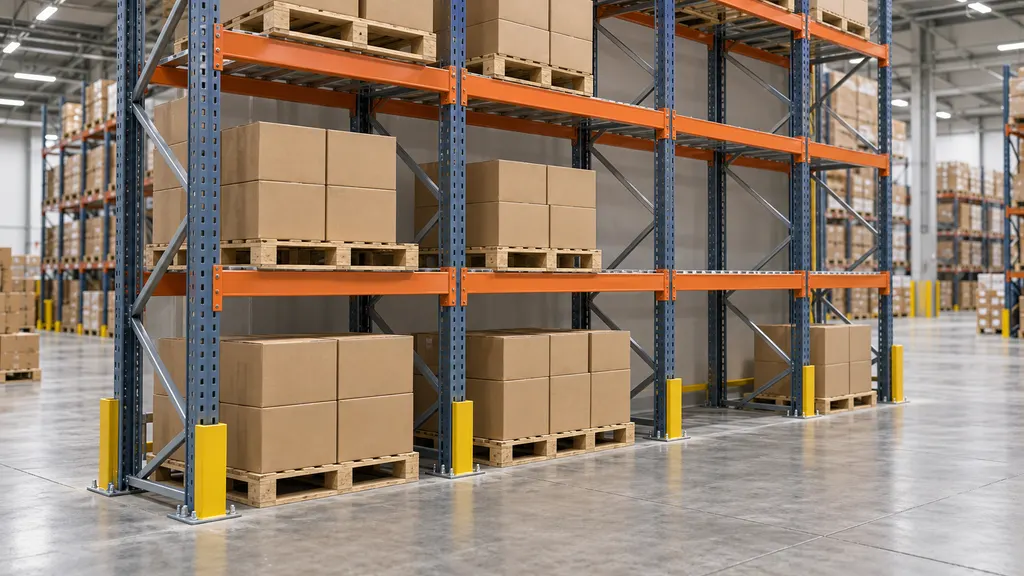
The components of a rack depend on its design. A conventional adjustable pallet rack commonly includes upright frames and horizontal load beams. Other components may include bracing, connectors, locking devices, pallet supports, decking, and protective equipment. Not every component is present in every system, and adding decking does not automatically make a rack suitable for any load.
- Upright frame: A vertical structural assembly that supports the storage levels.
- Beam: A horizontal structural member that supports loads between upright frames.
- Bay: A section between adjacent upright frames in a conventional pallet-rack arrangement.
- Level: A horizontal storage tier within the rack.
- Storage position: A designated space for a pallet, container, or other load.
- Aisle: The access space alongside or between storage structures, rather than part of the stored load.
These distinctions matter when describing capacity. A warehouse with many pallet positions does not necessarily have many rack bays, because a bay may contain several levels and positions. Likewise, the number of available positions does not establish the weight the structure can safely support.
Common Rack Configurations
Warehouse racks differ in how loads are supported and accessed. The following are established configurations, not a ranking of quality or a complete classification. Their suitability depends on the goods, handling equipment, building conditions, and operating requirements.
| Configuration | Storage and access arrangement | Important consideration |
|---|---|---|
| Adjustable pallet racking | Pallets rest on beams, with storage levels positioned to accommodate the intended loads. | Direct access depends on the layout; changing beam positions can affect structural capacity. |
| Drive-in racking | Handling equipment enters storage lanes to place pallets on supporting rails. | Deep storage reduces direct access to individual pallets and requires controlled vehicle movements. |
| Drive-through racking | Storage lanes can be accessed from opposite ends. | Opposite-end loading and retrieval can support first-in, first-out operation when the process is organized accordingly. |
| Live or flow racking | Loads move along inclined tracks or rollers toward a retrieval position. | The load and its supporting pallet or container must be compatible with the movement system. |
| Cantilever racking | Projecting arms support goods such as pipes, timber, or other long items. | Load length, distribution, and stability must be considered rather than weight alone. |
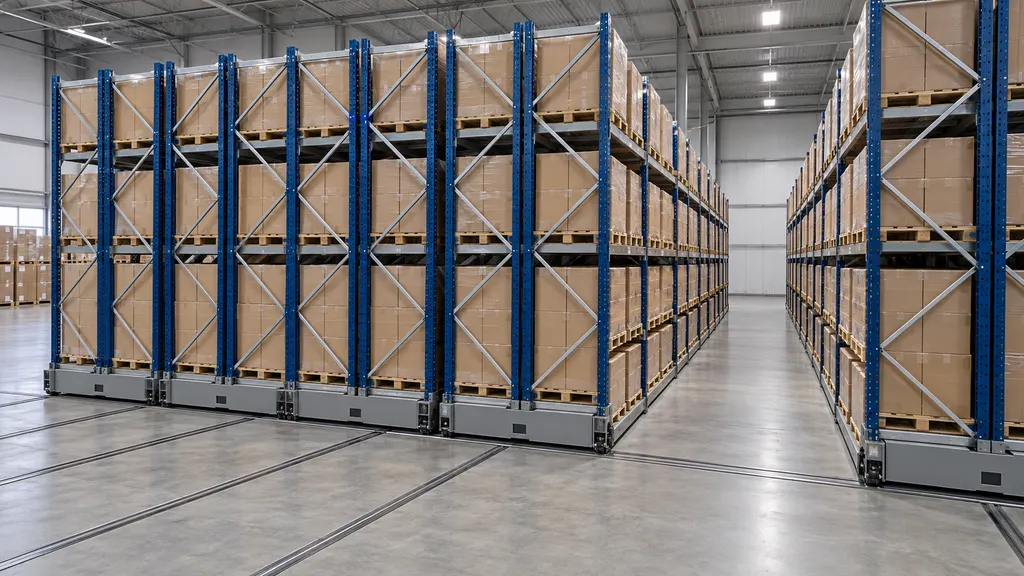
| Mobile racking | Rack assemblies move on mobile bases to open an access aisle. | Movement controls, access arrangements, and safety provisions are integral to the installation. |
Storage arrangement and stock rotation should be considered separately. For example, a system that permits first-in, first-out movement does not guarantee that operators will load and retrieve goods in the required order. Product dates, inventory records, and operating procedures still matter.
How Racks Are Used in a Warehouse Workflow
- Confirm the load. Identify the goods, packaging, pallet or container, dimensions, weight, and any relevant handling restrictions. A damaged pallet or unstable load may be unsuitable for rack storage even when its recorded weight is within a stated limit.
- Select a suitable location. Match the load with an authorized storage position. Consider available clearance, support requirements, access equipment, and the rack's approved configuration and load limits.
- Put away the goods. Place the load using the appropriate handling method. Loads should be supported as intended without striking the structure or obstructing access routes.
- Record the location. Associate the inventory with its storage address, whether through a warehouse management system or another controlled recordkeeping method. Record lot or batch details when the operation requires them.
- Retrieve or replenish. Move goods to order picking, production, packing, or another authorized location. Update inventory records so that the recorded position continues to reflect the physical position.
- Monitor the installation. Report damage, displaced components, unstable goods, and other unsafe conditions. Address affected storage positions under the facility's safety procedures.
For example, an online retailer may store unopened cartons on pallets in reserve racking while keeping individual units in a separate picking area. When the picking stock falls to a replenishment trigger, an operator transfers another carton from reserve storage. The rack supports the reserve inventory; the replenishment rule determines when that inventory moves.
Capacity, Configuration, and Safety
Rack capacity is specific to the installation and its configuration. It should not be inferred from appearance, available floor space, or the capacity of a neighboring structure. Beam lengths, storage-level positions, structural components, load distribution, and the condition of the installation can affect what it is designed to support.
A stated load limit must also be interpreted correctly. A limit for a pair of beams is not automatically the limit for the entire bay, and neither is necessarily a limit for each individual pallet. Operators should use the manufacturer's or supplier's information and the load notices applicable to the installed arrangement.
Changes require particular care. Moving beam levels, replacing components, changing pallet dimensions, or introducing a different load pattern may alter the assumptions behind the original design. The fact that a replacement component physically fits does not establish that it is structurally compatible. Appropriate technical confirmation should be obtained before making changes that affect the installation.
Practical checks include keeping loads stable, maintaining clear aisles, checking for impact damage, and ensuring that load information remains legible and relevant. Inspection arrangements should reflect the installation, operating conditions, supplier guidance, and applicable local requirements. The United Kingdom's Health and Safety Executive provides detailed warehouse-racking guidance; in the United States, OSHA's general material-storage rule addresses matters including stable storage and clear access routes.
Rack safety cannot be reduced to weight alone. A load can be below a stated weight limit yet remain unsafe because its pallet is damaged, its contents are unstable, or it is supported incorrectly. Fire protection, escape routes, and building conditions must also be considered when planning storage layouts.
Rack, Shelving, Pallet, and Bin: Related Terms
| Term | Meaning in a warehouse | Relationship to a rack |
|---|---|---|
| Racking | The storage framework collectively, or an assembled rack system. | Often used interchangeably with rack when discussing an installation. |
| Shelving | Storage equipment with horizontal surfaces supporting goods. | Often associated with smaller, manually handled items, although terminology overlaps and some racks include shelves or decking. |
| Pallet | A portable platform supporting goods for handling and storage. | A pallet may carry the load placed in a rack; it is not the rack itself. |
| Bin | A container, compartment, or named inventory location, depending on context. | A bin may sit on a rack, or a software system may use bin as the name for a rack location. |
| Stack | Goods or load units placed one above another. | Floor stacking does not necessarily use a rack; suitability depends on the goods and packaging. |
The distinction between rack and shelving is a useful operational convention, not an absolute rule. Equipment names vary among suppliers and facilities. For specifications, purchasing, and safety decisions, the actual design and approved use are more informative than the label alone.
QA
What does rack location mean?
A rack location is a designated storage address within a rack system. It may identify an aisle, bay, level, and position, but the exact address format depends on the warehouse.
Are racks and shelves the same?
The terms overlap. Shelving commonly provides surfaces for smaller items, while pallet racking supports palletized loads on structural members. Some racks also contain shelves or decking, so the equipment's design should be checked rather than relying only on its name.
Does a rack's capacity stay the same after its beams are moved?
Not necessarily. Changing storage-level positions can affect structural capacity. Any revised arrangement should be checked against the relevant supplier or manufacturer information before use.
Does rack storage guarantee first-in, first-out inventory rotation?
No. Some configurations support first-in, first-out movement, but correct rotation also depends on loading and retrieval procedures and accurate inventory records.
Sources
- Merriam-Webster: Rack — General definition of a rack as a supporting framework.
- Health and Safety Executive: Warehousing and Storage, HSG76 — Warehouse storage systems, rack configurations, loading, alterations, inspection, and operational safety guidance.
- Occupational Safety and Health Administration: 29 CFR 1910.176, Handling Materials—General — United States requirements concerning material-storage stability, clearances, aisles, and passageways.