Palletized Unit
What Is a Palletized Unit?
A palletized unit is a quantity of goods arranged on a pallet and secured or otherwise contained so that the pallet and its contents can be handled together as one load. In logistics, the term describes the complete handling unit, rather than the empty pallet alone. Its contents may include cartons, bags, drums, crates, or a single large item.
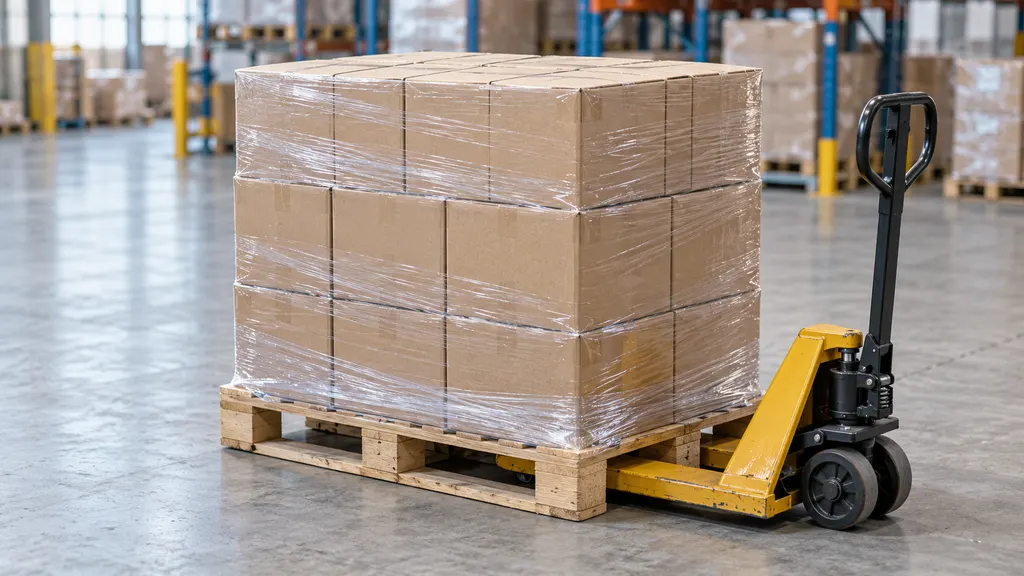
Palletized units are used in freight transport, warehousing, manufacturing, and distribution. They allow suitable mechanical handling equipment, such as a forklift or pallet truck, to move goods without handling each package separately. The expression palletized load is often used with the same meaning. A palletized unit is one form of a broader concept: the unit load.
Components and Main Characteristics
A palletized unit combines a supporting platform, the goods placed on it, and any materials needed to maintain the load's integrity during its intended handling and movement. Its suitability depends on the complete arrangement, not simply on the strength of the pallet.
- Pallet: The base supports the goods and provides access for compatible handling equipment. Its material, dimensions, condition, and load capacity must suit the application.
- Goods and packaging: Products may already be packed in cartons, sacks, drums, or other containers. Their strength, shape, and weight distribution affect the stability of the assembled load.
- Unitization materials: Stretch film, shrink film, straps, corner protectors, or other restraints may help keep the goods together. The appropriate combination depends on the load and expected transport conditions.
- Identification: Labels or other identifiers may connect the physical unit to warehouse records, transport instructions, and receiving information.
A palletized unit does not have one universal size, weight, or number of packages. Requirements vary with pallet design, product characteristics, handling equipment, storage systems, transport arrangements, and receiving-site rules. Dimensions and weight should therefore describe the actual completed unit, including packaging and any protrusions.
How Palletized Units Are Prepared and Handled
1. Select a suitable pallet and loading arrangement
Preparation begins with checking whether the pallet is compatible with the goods, handling equipment, storage location, and intended journey. A damaged pallet or an unsuitable support arrangement can compromise the load even when the goods appear securely wrapped. Capacity also depends on how a pallet is supported; floor storage, lifting, and rack storage can place different demands on it.
The loading arrangement should account for package strength, weight distribution, and the position of the load's center of gravity. Heavy or irregular goods may require blocking, a cradle, or other purpose-designed support. There is no single stacking pattern that is appropriate for every product.
2. Assemble and stabilize the goods
Packages are arranged to create a stable load without exposing them to damaging compression or movement. Where practicable, goods should remain within the pallet footprint. Overhanging packages can be vulnerable to impact and may receive inadequate support at their edges.
Wrapping or strapping should match the goods and packaging. Excessive restraint can crush packages, while insufficient restraint may allow movement. Edge protection can help distribute strap forces and protect vulnerable corners. A load that is stable while stationary is not necessarily stable during braking, turning, lifting, or other transport movements.
3. Identify, measure, and record the completed unit
Once assembled, the unit can be weighed, measured, labeled, and recorded in the relevant warehouse or transport system. Measurements should include the pallet, load protection, and anything extending beyond the main stack. Gross weight includes the supporting pallet and associated packaging, not just the products.
Where the GS1 identification system is used, a Serial Shipping Container Code (SSCC) can identify a logistics unit such as a palletized load. The identifier connects the unit with associated information; it does not itself describe every item inside it. Not every palletized unit uses an SSCC, and identification practices depend on the participating organizations.
4. Move, store, and load the unit
Handling equipment must be suitable for the unit's weight, dimensions, and lifting arrangement. Operators also need to consider load stability, visibility, available clearance, and the condition of the travel surface. Storage requires a compatible support arrangement and observance of applicable load limits.
Before transport, the assembled unit must also be positioned and secured appropriately within the vehicle or freight container. Holding goods together on a pallet is not the same as securing that palletized unit against movement inside a vehicle. The IMO/ILO/UNECE CTU Code provides guidance on packing and securing cargo in cargo transport units.
Use in Warehousing and Ecommerce
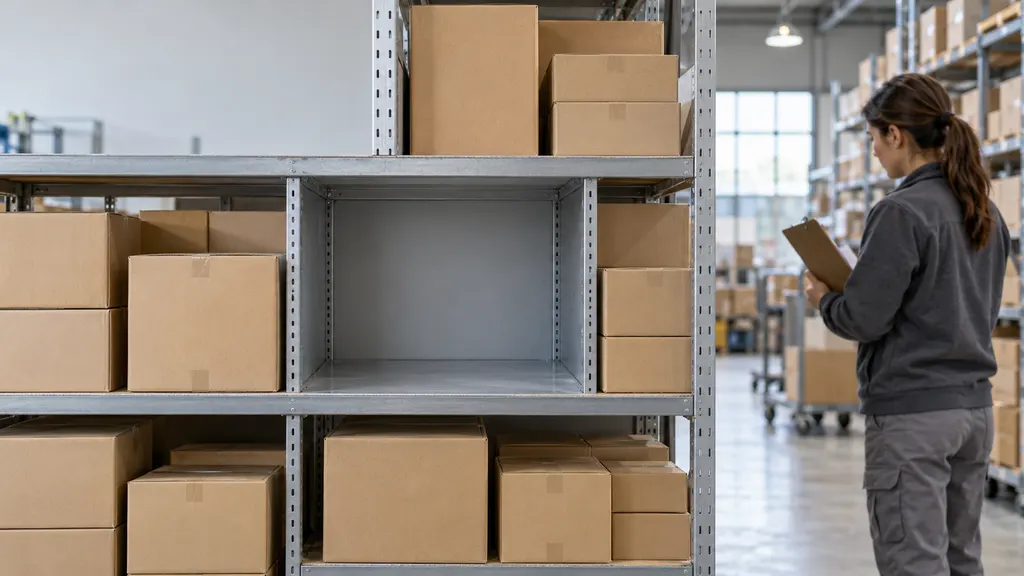
In a warehouse, a palletized unit can be the physical unit used for receiving, put-away, storage, replenishment, and dispatch. However, the handling unit and the inventory unit are not necessarily identical. A warehouse may move a pallet as one object while recording its contents as individual products, cases, batches, or other inventory quantities.
For example, a retailer may receive cartons of one product on a single pallet. The warehouse records the received quantity, stores the palletized unit, and later removes cartons for order fulfillment. The original palletized unit then changes as goods are picked. If the remaining goods are rewrapped or moved to another pallet, identification and inventory records may need updating.
A mixed-product pallet requires particular attention to contents and accessibility. Its outer label may identify the handling unit, while a linked packing list or electronic record describes the different products inside. A pallet identifier should not be assumed to mean that the load contains only one product or belongs to only one customer order.
Use in Cross-Border Shipping
In cross-border supply chains, palletized units may move between factories, consolidation warehouses, ports, freight terminals, and destination distribution centers. They can remain intact across several handling stages, but may also be broken down, inspected, or rebuilt. Palletization does not guarantee that the goods will remain untouched throughout the journey.
The pallet material can introduce requirements separate from those applying to the goods. ISPM 15, the international standard for wood packaging material in international trade, addresses phytosanitary risks associated with regulated wood packaging, including relevant wooden pallets. Its scope includes exemptions for certain materials, such as qualifying processed wood. Applicable destination requirements and the status of the actual packaging material should be checked before shipment.
Compliance of wood packaging does not replace customs declarations, product documentation, or other controls that may apply to the goods. Likewise, describing freight as a palletized unit does not determine its tariff classification or make it a single product for customs purposes. The supporting records still need to describe the goods accurately.
Related Terms and Important Distinctions
| Term | Meaning | Relationship to a palletized unit |
|---|---|---|
| Pallet | The supporting platform used to carry goods. | The pallet is a component of the completed unit, not the entire loaded assembly. |
| Unit load | Goods grouped or arranged to be handled as one load. | A palletized unit is a unit load supported on a pallet; other unit loads need not use pallets. |
| Palletization | The process of arranging goods on pallets for unit handling. | It describes the operation that produces palletized units. |
| Shipment | Goods dispatched under a particular shipping arrangement. | A shipment may contain one or several palletized units, as well as other packages. |
| Freight container | A reusable transport enclosure designed for cargo movement and handling. | A container may hold multiple palletized units; the two are not interchangeable. |
| SKU | An identifier used to distinguish an inventory item. | A palletized unit may contain one SKU or several; an SKU does not identify a particular pallet load. |
Practical Checks and Common Misunderstandings
Before accepting or dispatching a palletized unit, the relevant checks concern both physical condition and information accuracy. A useful inspection covers the following points:
- Support and condition: Is the pallet intact, appropriate for the goods, and compatible with the next handling and storage stages?
- Load stability: Are goods adequately supported, with no visibly unstable stack, loose packaging, or damaged restraints?
- Dimensions and mass: Do recorded measurements describe the completed unit rather than only its product contents?
- Handling restrictions: Are stacking limitations, orientation requirements, or special lifting needs communicated where relevant?
- Identification and contents: Does the unit's identifier correspond to the correct goods and quantities in the accompanying records?
- Route requirements: Have applicable packaging, receiving-site, and cross-border requirements been considered?
Several assumptions should be avoided. A wrapped pallet is not automatically safe to stack: stackability depends on the goods, packaging, pallet, and support arrangement. Similarly, a pallet's footprint alone does not establish whether a loaded unit fits a rack or vehicle; height, weight, clearances, and handling access also matter.
Palletization also does not eliminate the possibility of damage. It changes how goods are grouped and handled, but protection still depends on packaging design, load preparation, equipment use, storage conditions, and transport securing.
QA
Is a palletized unit the same as a pallet?
No. A pallet is the supporting platform. A palletized unit includes that platform, its goods, and any materials used to keep the load together.
Can one palletized unit contain different products?
Yes. A mixed-product pallet can contain several products. Its contents need to be recorded accurately, and the arrangement must remain suitable for handling and transport.
Does stretch wrapping replace vehicle load securing?
No. Wrapping may help hold packages together, but securing the complete unit inside a vehicle or container is a separate requirement.
Does every pallet used internationally require ISPM 15 treatment?
No. ISPM 15 concerns regulated wood packaging material and includes material-specific exemptions. The pallet's construction and applicable destination requirements determine what needs to be checked.
Sources
- UNECE: IMO/ILO/UNECE Code of Practice for Packing of Cargo Transport Units — Guidance on cargo packing, load distribution, and securing relevant to palletized cargo.
- GS1: Serial Shipping Container Code (SSCC) — Identification of logistics units, including pallet loads.
- International Plant Protection Convention: International Standards for Phytosanitary Measures — Official standards collection, including ISPM 15 on wood packaging material in international trade.
- Occupational Safety and Health Administration: Warehousing — Workplace safety context for materials handling, storage, and powered industrial trucks.