Ontario Snow Forecast: Will Your Package Be Delayed?
Snow is returning to parts of southern Ontario, raising a practical question for anyone waiting on an online order: will the package still arrive on time?
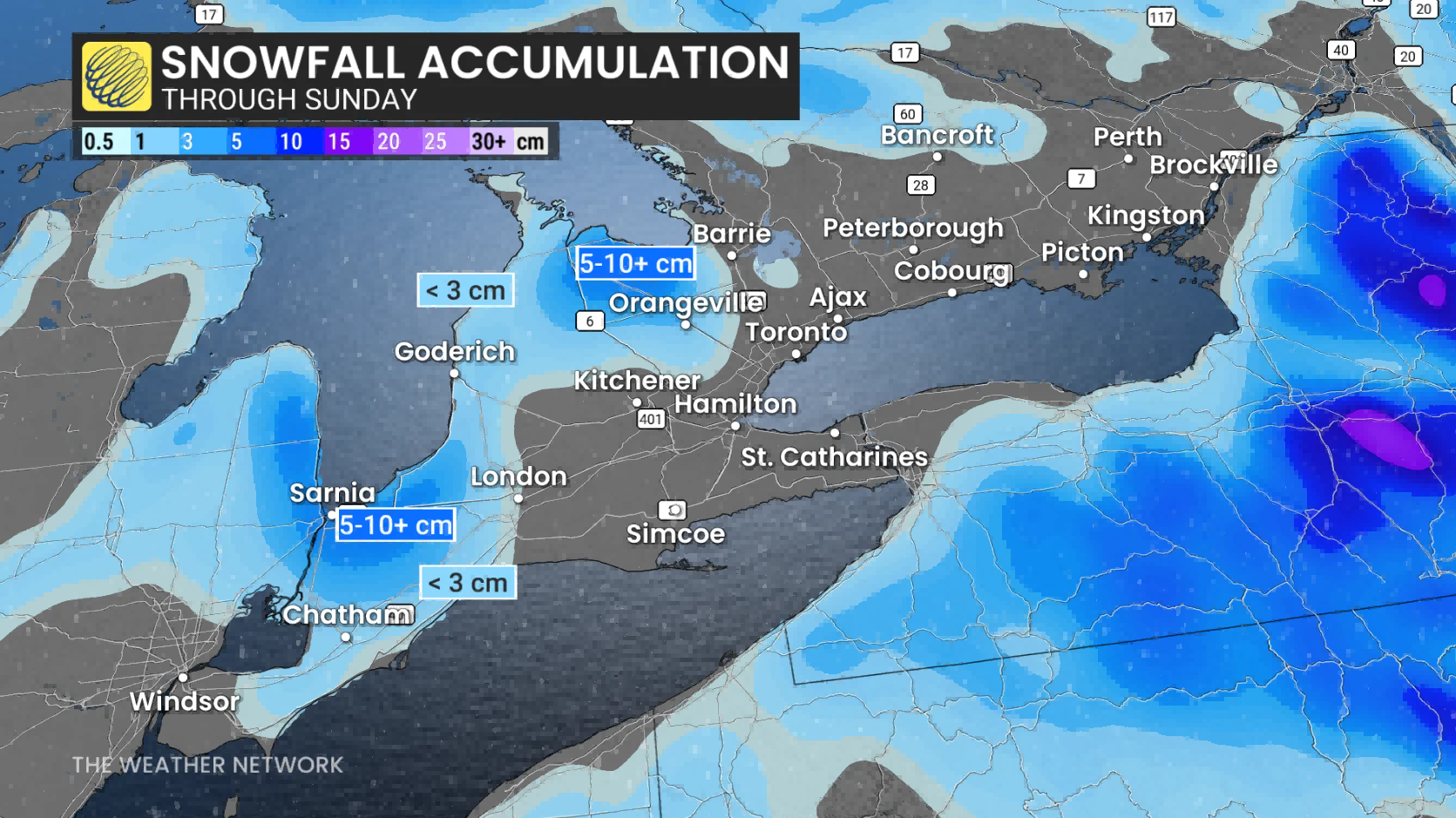
Source: The Weather Network
The answer is not necessarily a delay. Toronto may see brief flurries rather than the same accumulation expected in harder-hit communities, so location matters; a weather forecast alone does not confirm that an individual delivery has been disrupted.
For your parcel, start with the latest tracking update, any change to its expected arrival date, and your carrier’s official service alerts.
Where Is Snow Expected in Southern Ontario?
In its forecast updated November 12, 2026, The Weather Network describes colder air moving into southern Ontario, bringing lake-effect flurries and snow near Lake Huron and Georgian Bay. Most areas are expected to receive less than 3 cm during the initial burst, although localized totals could be higher.
| Area | What the forecast says |
|---|---|
| Much of southern Ontario | Less than 3 cm during the initial snowfall, with rain and melting making totals uncertain. |
| Sarnia–Lambton and near Collingwood | Around 5 cm is possible in some locations during the initial burst. |
| Lambton County | Cumulative snowfall could reach 10–15 cm through Saturday, November 14, although the rain-snow mix could cause some accumulation to melt quickly. |
| Snowbelt along Georgian Bay’s southern shore | The hardest-hit locations could receive 5–10 cm. |
| Toronto and the GTA | Brief flurries are possible; Toronto could also reach the freezing mark. |
For shoppers, that distinction matters: the weather expected in a snowbelt community may be different from conditions at a Toronto delivery address. Check the forecast for your own community rather than assuming every Ontario shipment faces the same conditions.
Will the Snow Delay Your Package?
A snowfall forecast is a reason to pay attention, not proof that your package will arrive late. Canada Post says weather conditions and highway or road closures can affect delivery times, and directs customers to tracking for shipment information and service alerts for announced disruptions.
It helps to separate three types of information:
- Weather forecasts: Describe where difficult conditions may develop.
- Carrier service alerts: Identify announced operational impacts in particular areas.
- Tracking updates: Show the latest available location and status information about an individual shipment.
For example, Canada Post uses a yellow alert when it is doing its best to deliver but delays are possible, while a red alert means delivery is suspended. These are service notices to check, not labels that should be assumed from a snowfall forecast.
The weather report and carrier guidance cited here are not confirmation of a widespread Ontario delivery shutdown caused by this weather system. They should not be used to make a blanket prediction that packages will arrive one, two or three days late.
How to Check Whether Your Delivery Is Affected
Rather than trying to predict a delay from snowfall totals, check your parcel and the carrier’s notices together. Canada Post recommends both tracking and service alerts: tracking provides shipment information, while alerts provide information about delivery interruptions and weather events affecting its network.
Start With Your Latest Tracking Update
Open your shipment’s tracking page and review the following details. Use the actual message and available delivery estimate as your starting point rather than assuming snow is the cause:
- Update time: The date and time of the latest update.
- Reported location: The most recently reported location.
- Exception message: Any exception or disruption message.
- Delivery estimate: The expected delivery date, if displayed.
A tracking gap alone does not establish that a parcel is lost or that snow caused a delay. Canada Post explains that scans may not appear for several days while a shipment is in transit, and advises customers to check the expected delivery date.
For Canada Post shipments, its tracking tool provides the latest available location and status information, with further updates added as they become available. Use your tracking number to review the shipment’s progress, then compare it with the carrier’s official notices.
Check Your Carrier’s Official Service Alerts
Look for notices covering your delivery area and any relevant community named in the tracking update. Canada Post’s Delivery Service Alerts page explains whether announced interruptions involve possible delays or suspended delivery.
For parcels handled by Purolator, UPS, FedEx or another carrier, check the company actually handling your shipment. Do not assume a Canada Post alert applies to another delivery network.
Pay attention to each alert’s location and publication time, and check whether service has subsequently been restored. Canada Post maintains a separate archive for interruptions that have ended, so an older notice should not be treated as evidence of a current suspension.
What to Do if Your Package Is Running Late
Your next step should follow the shipment’s actual status, not a universal “wait this many days after snow” rule. Start with the expected delivery date, tracking details and any relevant service notice before deciding whether to contact support.
If the Expected Delivery Date Has Not Passed
Review the latest tracking information and any relevant carrier alert before concluding that the package is late. Canada Post notes that shipment updates are provided as they become available, so check whether the published status or expected arrival information has changed.
If Tracking Reports a Weather-Related Disruption
Read the full message and look for an accompanying service notice. Canada Post’s tracking guidance lists severe weather among the circumstances that can generate disruption-related scans, but that alone does not provide a fixed number of additional delivery days.
Avoid applying another carrier’s estimate or another customer’s experience to your parcel. Look for revised delivery information from the company handling that shipment.
If the Expected Delivery Date Has Passed
Check your carrier’s support instructions for the relevant service, and keep your tracking number and order details ready for an enquiry. For Canada Post, its tracking guidance advises starting an investigation if the expected delivery