How to Ship Clothes: Folding, Packaging, Labels, and Choosing a Carrier
To ship clothes safely, fold them to reduce bulk, protect them from moisture, choose packaging that fits closely, attach a clear and complete shipping label, and select a carrier based on the parcel’s size, destination, delivery requirements, and tracking needs. For most shirts, trousers, lightweight dresses, and similar items, a durable poly mailer or a small corrugated box is sufficient. Bulky, delicate, high-value, or international shipments need more careful packaging and documentation.
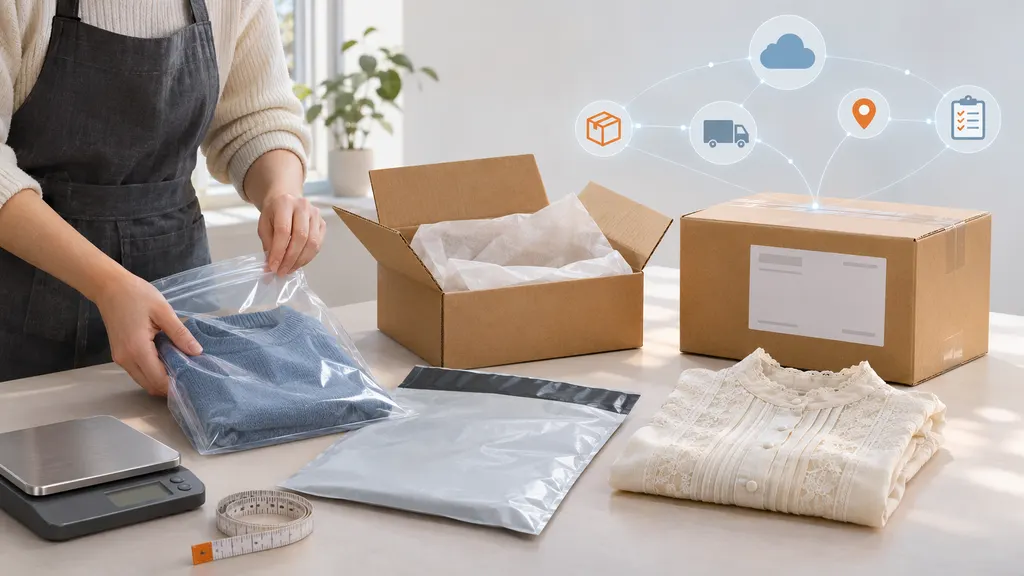
The best packing method is not simply the one that uses the least material. It should keep garments clean, dry, and presentable while preventing movement and damage during handling. A well-packed parcel also reduces avoidable shipping costs because excessive empty space can increase the package’s measured dimensions.
Choose packaging before you fold
Start by grouping the items that will travel together. A single T-shirt can usually be shipped in a flexible mailer. Several garments, structured clothing, shoes, or items with hard accessories may need a box. Separate items that could snag, stain, or press into one another.
- Poly mailer: Suitable for soft, non-fragile garments that are already protected from moisture. Use a strong, self-sealing mailer intended for shipping rather than a thin retail bag.
- Corrugated box: Better for coats, multiple garments, folded denim, formalwear, shoes, or orders that could be crushed in a flexible envelope.
- Inner garment bag or clear poly bag: Useful as a clean, moisture-resistant inner layer. It should not replace the outer shipping package.
- Protective wrap: Appropriate for buckles, metal hardware, sharp decorations, or other features that could damage fabric or packaging.
- Void fill: Use paper or another suitable filler when clothing moves inside a box. Avoid filling a small box so tightly that it strains the seams.
Reuse a box only if it is rigid, dry, clean, and free from old labels or markings that could confuse automated sorting. Remove or fully cover previous barcodes and addresses. The outer package should close securely without bulging.
How to fold clothes for shipping
Folding is mainly about controlling volume and preventing creases. It does not need to follow one universal method; the right approach depends on the garment’s fabric, shape, and packaging.
- Inspect the garment. Check that it is clean, dry, and free of loose accessories. Fasten buttons, zippers, and hooks where doing so helps the garment keep its shape.
- Protect delicate surfaces. Place sequins, embroidery, leather details, or metal hardware away from direct contact with exposed fabric. A tissue sheet or inner bag can reduce rubbing.
- Fold along natural seams. For shirts and jackets, fold the sleeves inward and bring the sides toward the center. For trousers, align the legs before folding them once or twice, depending on their length.
- Keep the stack even. Place heavier garments at the bottom of a box and lighter or more delicate pieces above them. Avoid creating sharp pressure points.
- Use a protective inner layer. Put the folded clothing in a sealed or self-closing inner bag where appropriate. Leave enough room to avoid compressing the garment excessively.
- Check the final dimensions. Measure the package after it is closed, not while the clothing is still loose. Record the length, width, height, and weight accurately.
For knitwear, padded garments, and items that can lose their shape, avoid extreme compression. Vacuum packing may reduce volume, but it can create deep creases and may not be suitable for every fabric or customer expectation. If the order includes a branded presentation box, place that presentation packaging inside a protective shipping carton when it could be dented or torn.
Pack clothes to prevent moisture and movement
Clothing is vulnerable to water, dirt, odors, and abrasion even when the fabric itself is not fragile. The inner layer should keep the garments together and provide a basic barrier against moisture. The outer package should then be sealed across all openings.
For a mailer, press the adhesive closure firmly across its full width. For a box, use shipping tape designed for parcel handling and seal the main seam as well as the edges that could open under pressure. Do not rely on household gift wrap, string, or a single narrow strip of tape. If the box contains several garments, gently shake it before sealing. If the contents shift noticeably, add appropriate void fill or choose a better-fitting box.
Do not place wet or damp clothing in a sealed package. Moisture trapped inside can cause odor, mildew, or damage to labels and packaging. If the garment has a removable hanger, decide whether it adds customer value or unnecessary bulk. A hanger can increase the package size and create pressure against the box, while removing it may reduce volume for ordinary folded apparel.
Create a shipping label that can be read
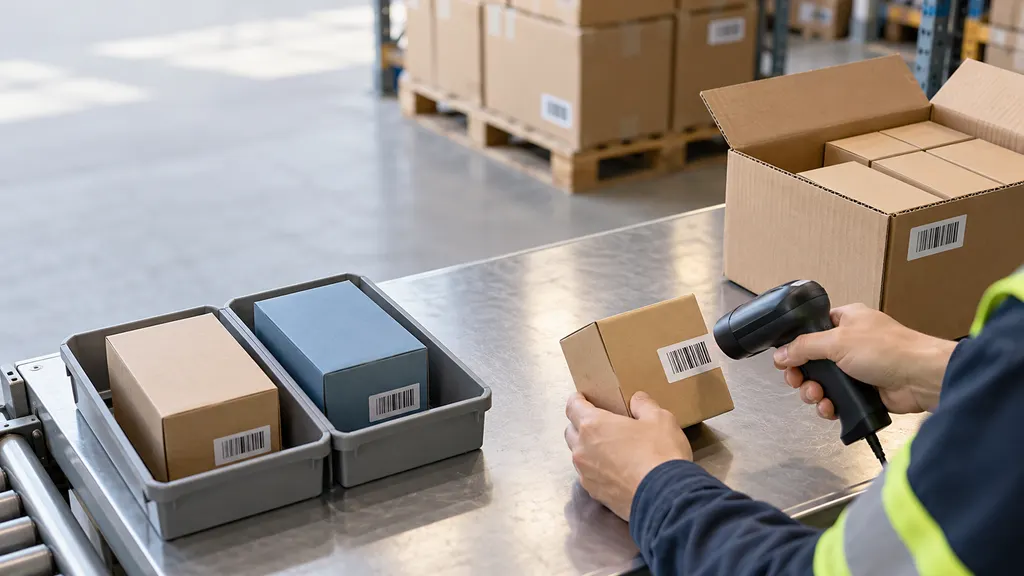
A shipping label is part of the package’s handling instructions. Print it clearly on a flat surface and attach it so the barcode remains visible and scannable. Do not place tape, straps, or a curved fold across the barcode if the carrier’s equipment may need to scan it.
- Use the complete recipient name, delivery address, postal or ZIP code, and country where required.
- Include a return address or other return-handling information when your shipping process requires one.
- Keep the label on the largest flat surface of the package whenever possible.
- Remove old labels and barcodes from reused packaging.
- Do not attach a label over a seam, corner, opening, or heavily textured surface.
- Compare the label details with the order record before handing over the parcel.
- Keep the tracking number and a packing or dispatch record until delivery is complete.
If the label is printed on paper, protect it from rain by using an adhesive pouch or another carrier-appropriate method. A loose sheet inside the parcel is not a substitute for an external shipping label. For international orders, the shipping label may be accompanied by customs documentation. The description, quantity, value, country of origin, and other required fields should match the shipment and destination rules. Do not describe commercial clothing inaccurately just to simplify customs processing.
How to choose a carrier for clothing
Carrier selection should follow the shipment’s requirements rather than habit. Compare the service options available for the actual origin, destination, package dimensions, weight, and requested delivery speed. Carrier websites may calculate charges using both weight and dimensions, so measure the finished parcel before buying postage.
| Shipping situation | Packaging priority | Carrier decision factors |
|---|---|---|
| One or two lightweight garments | Compact, moisture-resistant mailer | Destination, tracking, delivery speed, and available drop-off or pickup options |
| Several garments or bulky apparel | Rigid box with controlled empty space | Dimensional charges, maximum parcel limits, and handling requirements |
| High-value or time-sensitive order | Strong outer package and documented contents | Tracking detail, delivery confirmation, declared-value or protection options, and claims process |
| International shipment | Secure packaging that can withstand longer handling | Service availability, customs requirements, duties or taxes, transit expectations, and return feasibility |
Postal services can be practical for ordinary parcels and destinations covered by their network. Integrator and express services may be useful when speed, pickup, detailed tracking, or a particular international lane matters. The cheapest quoted service is not always the lowest total-cost option if it has a slower delivery promise, fewer tracking events, or a more difficult claims process.
For an ecommerce operation, compare carriers using the same test shipment: identical origin, destination, dimensions, weight, and service requirement. Review the quote, label workflow, tracking behavior, delivery confirmation, surcharge rules, and return process. Keep a carrier matrix that is updated when service terms or operating conditions change. A small seller may begin with one dependable service and add alternatives for remote destinations, oversized parcels, or international orders.
Common mistakes when shipping clothing
- Using packaging that is too large: The parcel may cost more to transport and allow the garments to shift.
- Using packaging that is too small: Overfilled mailers and boxes can split at the seams or crush the clothing.
- Skipping the inner moisture barrier: A damaged outer package can expose unprotected garments to rain or handling dirt.
- Leaving old labels attached: A previous barcode or address can send the parcel into the wrong handling path.
- Guessing weight and dimensions: Incorrect shipment details can lead to adjustments, delays, or unexpected charges.
- Ignoring the return journey: Customers may need to return clothing in a different configuration, so provide practical packing and return instructions.
- Promising delivery dates too precisely: Transit time can depend on the service, destination, handoffs, weather, customs, and operational disruptions.
Final packing checklist
- Confirm the order, size, color, and quantity.
- Make sure every garment is clean and completely dry.
- Fold or roll the items in a way that suits the fabric and presentation requirements.
- Protect delicate details and place the garments in an appropriate inner layer.
- Select an outer mailer or box with enough strength and minimal unused space.
- Seal every opening securely and check for movement inside the package.
- Measure and weigh the closed parcel.
- Verify the address, service, label, and customs information where applicable.
- Attach the label to a flat surface and remove old labels.
- Record the tracking number and keep proof of handoff.
The practical goal is a parcel that protects the garment without adding unnecessary volume. When packaging, labeling, and carrier selection are handled as one process, clothing arrives cleaner, more presentable, and easier to track from dispatch through delivery.
FAQ
Can I ship clothes in a plastic bag?
Use a purpose-made poly mailer or another durable shipping envelope, not an ordinary household bag. Put the clothing in a clean inner layer when appropriate, seal the outer mailer fully, and check that it is strong enough for the parcel’s weight and handling.
Is a box better than a mailer for clothing?
Neither is universally better. A mailer is often efficient for soft, non-fragile garments. A box offers more structure for bulky clothing, multiple items, shoes, formalwear, or garments with features that could be crushed or puncture flexible packaging.
How should I ship delicate or expensive clothing?
Use a clean inner protective layer, shield hardware and embellishments, avoid excessive compression, and place the item in a rigid outer package. Choose a service with tracking and review the carrier’s available protection, delivery confirmation, and claims terms before shipping.
Do I need to use a garment bag?
A garment bag is not required for every shipment. It can help keep clothing clean and organized, but the parcel still needs a suitable outer mailer or box. For premium presentation or structured garments, an inner garment bag may be useful.
What should I do before shipping clothes internationally?
Check whether the selected service accepts the destination and review the current customs requirements. Prepare an accurate description, quantity, value, and other required shipment information. Keep the customs details consistent with the order and the physical contents.