How to Pack and Ship Vinyl Records without Warping or Cracking
To ship vinyl records safely, keep the record flat, prevent movement inside the parcel, protect the jacket from pressure, and use a rigid mailer that is larger than the sleeve. The most reliable packing method is to place the record in a protective inner sleeve, separate it from the jacket, sandwich both between stiffeners, and fill the remaining space so nothing can slide or bend during handling.
Vinyl is rarely damaged by one single impact. Problems usually develop when a package is bent, crushed, exposed to excessive heat, or allowed to move inside a box. A good packing process addresses each risk separately rather than relying on a thin cardboard mailer alone.
Why Vinyl Records Get Damaged in Transit
A record shipment has several vulnerable parts. The disc can warp when exposed to high temperatures or uneven pressure. It can crack if the parcel is bent, dropped on an edge, or compressed by heavier packages. The paper or cardboard jacket can develop corner dents, seam splits, ring wear, or creases even when the vinyl itself survives.
The record should also be considered separately from its jacket. If the disc remains inside the jacket during shipment, movement or impact can make the record press against the jacket seams. A loose record may also slide out through a split seam. Separating the disc from the jacket reduces this pressure and makes it easier to inspect the shipment before sealing it.
Heat is a separate concern. Vinyl should not be left in direct sunlight, inside a hot vehicle, or beside a strong heat source. A parcel can spend time in warm conditions even when the carrier handles it normally, so packaging should reduce pressure and movement without trapping the record against a hot external surface.
Materials You Need
- A new or clean anti-static inner sleeve, preferably one that fits the record without forcing it into place.
- A protective outer sleeve for the jacket, if the record is being sold or stored in collectible condition.
- Two or more rigid cardboard stiffeners, cut slightly larger than the record jacket.
- A purpose-built record mailer or a strong, shallow corrugated box.
- Cardboard filler, kraft paper, or another material that stops movement without creating excessive pressure.
- Packing tape, a measuring tool, and a shipping label that can be read without covering a seam.
Avoid using loose packing peanuts around a single record. They can allow the contents to shift and may not provide meaningful resistance against bending. Bubble wrap can help cushion a box, but it should not be the only structural protection. The record needs rigid support on both broad faces.
Step-by-Step Packing Method
1. Inspect and prepare the record
Before packing, inspect the disc, jacket, and any inserts. Confirm that the record is the correct item and that it is free of obvious moisture or contamination. Do not pack a damp sleeve or a wet-cleaned record. Allow cleaned materials to dry fully before placing them in an enclosed package.
If the record is being sold, document its condition with photographs. Photograph the front and back of the jacket, the record labels, and any visible defects. This does not prevent shipping damage, but it creates a useful record of the item’s condition before handoff.
2. Remove the disc from the jacket
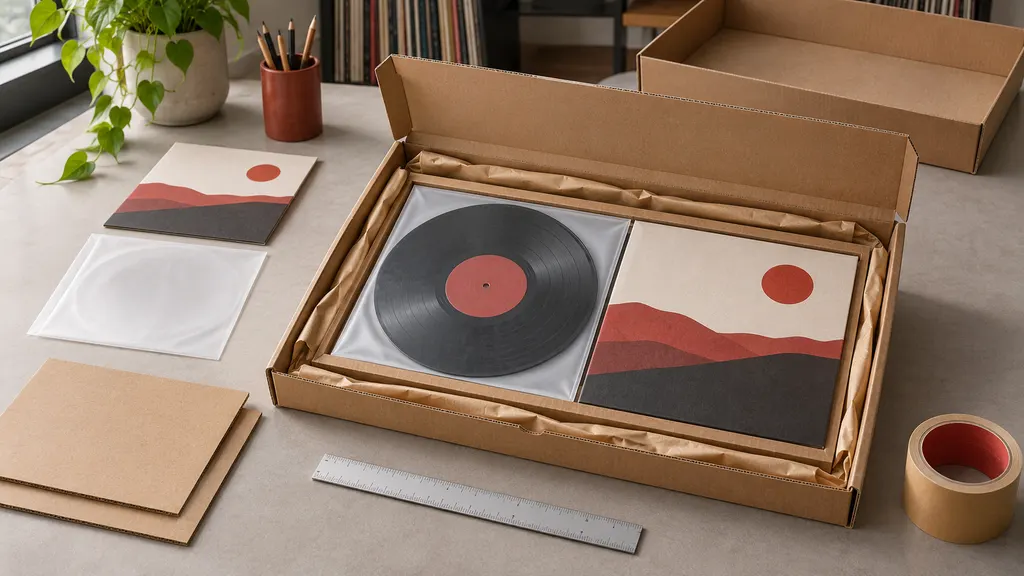
Place the vinyl in a clean inner sleeve. Keep the opening of the inner sleeve facing upward or toward the edge that is least exposed to the jacket opening, depending on the sleeve design. The goal is to reduce the chance that the record will slide out if the parcel is turned over.
Put the sleeved record beside the jacket inside a protective outer sleeve, rather than inside the jacket itself. For a valuable or fragile jacket, a second layer of protection may be appropriate. Do not force an oversized record, gatefold jacket, booklet, or multiple inserts into a tight sleeve.
3. Build a rigid sandwich
Place one stiff cardboard sheet on the bottom, position the protected record and jacket in the center, and add another stiff sheet on top. The stiffeners should extend beyond the edges of the jacket on all sides. That margin helps distribute pressure and makes it less likely that an edge impact will reach the record directly.
For a single LP, two strong stiffeners are often sufficient when used with a properly sized mailer. For valuable records, heavier jackets, or shipments containing several records, add structural protection rather than simply wrapping the bundle in more soft material. The package should remain flat and rigid when lifted from one side.
4. Secure the contents without compressing them
Use a small amount of tape or a paper band to keep the stiffeners aligned, but do not apply tape directly to the jacket, inner sleeve, or vinyl. The bundle should not rattle, yet it must not be squeezed so tightly that the cardboard bows or the jacket is pressed against the record.
A simple movement test is useful: gently tilt the bundle and listen for shifting. If it moves, add a thin piece of filler at the open space. If the bundle is difficult to insert into the mailer or the cover begins to bow, remove material. Excessive pressure can be as harmful as insufficient support.
5. Choose the right mailer or box
A record mailer should fit the rigid sandwich closely without bending it. A mailer that is too large allows the contents to slide; one that is too small can crush corners and put pressure on the jacket. A shallow corrugated box with enough internal clearance can be a better choice when sending multiple records or additional items.
Do not use a flexible envelope for an unprotected record. Even if the envelope is padded, it may not resist the bending forces that occur when mail is sorted or placed under heavier parcels. The external package should be rigid enough that a normal hand grip does not deform it.
6. Fill empty space and seal every opening
After inserting the bundle, check all sides of the mailer. Fill gaps with folded cardboard or crumpled kraft paper that is firm enough to limit movement. Avoid packing the box so tightly that the contents are under constant pressure. Close every flap with quality packing tape, paying particular attention to corners and seams.
A label reading “Fragile” may communicate handling preferences, but it should not replace physical protection. Carrier networks use automated equipment and packages may be stacked, turned, or placed beside heavier items. Design the parcel to remain safe even when a warning is overlooked.
Packing One Record versus Several Records
One record is usually easier to protect because the parcel can remain shallow and rigid. Several records require more attention to weight, internal movement, and edge pressure. Keep each record in its own sleeve and use separators if the records can rub against one another. Group the records into a stable stack rather than leaving individual items loose in a large carton.
For a multi-record shipment, use a strong corrugated box with cushioning on every side. Place the stack so it cannot move from end to end or side to side. The box should close without bulging. If the box is heavy enough that the bottom flexes when lifted, choose a stronger carton or split the shipment.
A box that is technically within a carrier’s size or weight limit may still be a poor choice for vinyl. Assess whether one person can lift it without gripping the contents too tightly and whether the bottom, corners, and closure can withstand the load.
How to Reduce Warping Risk
- Keep records away from direct heat and sunlight before dispatch.
- Store and pack them flat rather than leaning them at an angle.
- Do not place heavy objects directly on the record bundle.
- Use rigid, evenly supported surfaces instead of soft packaging that allows bending.
- Avoid leaving a packed parcel in a hot vehicle or exposed outdoor location.
Packaging cannot control every temperature condition in a delivery network, and no ordinary mailer can guarantee that a record will never warp. The practical objective is to avoid adding unnecessary heat exposure or uneven pressure and to reduce the time the package spends in vulnerable conditions.
Final Inspection Before Handoff
Run through this checklist before applying the shipping label:
- The record is in a clean inner sleeve and is separate from the jacket.
- The jacket and disc are protected from direct contact with external pressure.
- Rigid stiffeners extend beyond the contents on all sides.
- The bundle does not slide inside the mailer.
- The mailer does not bow, bulge, or open when handled.
- The label is attached to a flat surface and does not cover a closure.
- The parcel has been photographed after sealing if the item is valuable.
Record the parcel’s dimensions and weight accurately when purchasing postage. Keep the drop-off receipt or electronic acceptance record, and use a service with tracking when the value or delivery risk justifies it. Tracking does not protect a record from physical damage, but it helps identify whether the parcel entered the carrier network and whether delivery occurred.
Common Packing Mistakes
Leaving the record inside the jacket
This can increase pressure on the jacket seams and allow the disc to contribute to seam splits. Separate the disc and jacket before packing.
Using only a paper mailer
A thin envelope does not provide dependable resistance to bending or corner impact. Use a rigid record mailer or a suitably strong box.
Overfilling the package
Extra cardboard is not automatically extra protection. If the contents are compressed, the jacket may crease and the mailer may fail at its seams.
Ignoring the outer package
An excellent inner sleeve cannot compensate for a weak, oversized, or poorly sealed outer parcel. Inspect the complete package, not just the record.
FAQ
Should I ship a vinyl record inside its jacket?
For most shipments, it is safer to remove the record from the jacket, place it in a protective inner sleeve, and pack it beside the jacket. This reduces pressure on the jacket seams and lowers the risk of a record sliding through a split seam.
Can bubble wrap prevent a record from cracking?
Bubble wrap can cushion impacts, but it does not provide the rigid support needed to resist bending. Use stiff cardboard or a purpose-built record mailer as the primary protection, with cushioning used to control movement where appropriate.
How much empty space should remain in the box?
There should be enough space for a thin layer of filler that prevents movement, but not so much that the bundle can slide across the box. The parcel should close without forcing the contents together.
Is a “Fragile” label enough?
No. A warning label may be useful, but the package must be designed to withstand normal sorting, stacking, and handling. Rigid support, correct sizing, and secure sealing matter more than the label alone.
What should I do if a record arrives warped?
Keep the packaging and photograph the parcel, labels, and record before attempting any treatment. Contact the seller or carrier according to the applicable claim process. Do not try to flatten a valuable record without appropriate knowledge, since additional heat or pressure can cause further damage.
Sources
- Library of Congress: Care, Handling, and Storage of Sound Recordings — guidance relevant to handling and protecting sound-recording media.
- USPS: How Do I Properly Prepare a Package for Mailing? — general preparation, packaging, and sealing guidance.
- UPS: Packaging Tips — general principles for selecting packaging, cushioning contents, and closing parcels.
- Discogs: How To Ship Vinyl Records — record-specific packing practices for separating discs, protecting jackets, and using rigid mailers.