Air Freight vs Sea Freight: How Small Ecommerce Businesses Should Ship Inventory
For most small ecommerce businesses, sea freight is the better default for planned, bulky, or lower-margin inventory, while air freight is the better choice for urgent replenishment, compact high-value goods, and demand that is difficult to forecast. The right decision is not based on freight price alone: compare the complete landed cost, including transport, duties, handling, inventory carrying cost, stockout risk, and the financial effect of slower replenishment.

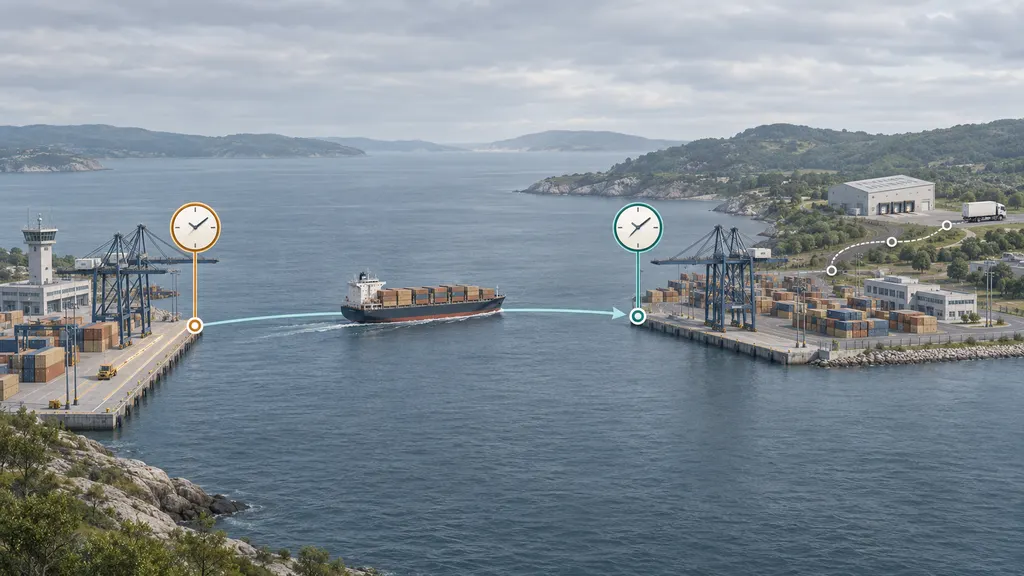
Air and sea freight solve different inventory problems. Air gives you speed and more frequent opportunities to move smaller shipments, but usually at a higher cost per unit. Sea freight generally offers better economics for larger consignments, but requires more planning and creates a longer period between purchase and sale. A small business should choose the mode that protects its cash flow and service level for the specific shipment, not use one mode for every order.
Air freight and sea freight at a glance
| Decision factor | Air freight | Sea freight |
|---|---|---|
| Best operational role | Fast replenishment and time-sensitive inventory | Planned replenishment and larger shipments |
| Cost pattern | Usually higher cost per chargeable unit | Usually more economical as shipment volume increases |
| Planning requirement | Can support shorter replenishment decisions, subject to capacity and customs | Requires earlier forecasting and booking |
| Inventory risk | Less time in transit, but higher transport spend | More inventory tied up while moving, but potentially lower freight cost per unit |
| Typical fit | Small, valuable, lightweight, seasonal, or urgent goods | Heavy, bulky, durable, predictable, or lower-margin goods |
These are operating tendencies rather than guaranteed outcomes. Actual transit time and price depend on origin, destination, service type, cargo characteristics, routing, customs clearance, carrier capacity, and the commercial terms agreed with the supplier or freight forwarder.
When air freight is the stronger choice
1. A stockout would cost more than the freight premium
Air freight can be justified when an item is close to selling out and the lost contribution margin, advertising disruption, marketplace penalties, or customer dissatisfaction would exceed the additional transport cost. This is especially relevant for products with steady demand and a short replenishment window.
Do not use “fast” as a substitute for a service commitment. A shipment still needs export documentation, import clearance, delivery appointments, and final-mile handling. Ask the forwarder for the service definition, not only an estimated number of days. Confirm whether the quote covers airport-to-airport movement or a door-to-door service.
2. The inventory is compact and relatively high value
Air becomes easier to justify when the goods have high value relative to their weight or volume. Examples may include small electronics accessories, specialty components, premium cosmetics, or replacement parts, provided the goods are permitted for air transport and correctly documented.
Weight is not the only pricing input. Air cargo may be rated using actual weight or volumetric weight, depending on which is greater under the applicable carrier or forwarder rules. Before comparing quotes, provide accurate carton dimensions, quantity, gross weight, product description, and packaging details.
3. Demand is uncertain but a product launch cannot wait
For a new product, a mixed approach can reduce exposure. A business might send a limited opening quantity by air to test demand, then move the larger, more predictable replenishment by sea. This does not eliminate forecasting risk, but it avoids committing the entire first purchase to a slow transport cycle before sales data exists.
4. The product is seasonal or tied to a fixed event
Inventory for a holiday, promotion, trade event, or short selling season has a narrower window of usefulness. If missing the window would leave the business with obsolete or heavily discounted stock, air freight may be economically sensible even when its quoted freight rate is higher.
When sea freight is the stronger choice
1. The shipment is large, heavy, or low margin
Sea freight is generally better suited to goods that occupy substantial space or have a low selling price relative to their physical size. Furniture, home goods, fitness equipment, packaged consumer products, and other bulky merchandise often need a transport mode that does not make freight a disproportionate part of landed cost.
Sea shipments may be arranged as full container load or less-than-container load services, depending on volume and the forwarder’s offering. The commercial and handling details differ, so a small business should compare the complete door-to-door quote rather than assuming that a lower ocean line-haul price automatically means a lower final cost.
2. Demand is predictable enough to support advance purchasing
Sea freight works best when the business can forecast demand, place purchase orders early, and maintain enough safety stock to absorb schedule variation. The longer planning cycle should be reflected in the reorder point. If a business waits until available stock is nearly exhausted before placing a sea order, it may be forced into an expensive emergency shipment.
3. The product has no meaningful shelf-life pressure
Durable goods are easier to move by sea because time in transit is less likely to reduce their saleability. Perishable, temperature-sensitive, time-critical, or rapidly depreciating goods require a more specialized assessment. The mode decision should consider product handling requirements, not only freight cost.
The costs small businesses often miss
A useful comparison starts with a landed-cost model. At minimum, calculate:
- Product cost and supplier charges.
- International freight and origin charges.
- Insurance, if purchased or required by the commercial arrangement.
- Destination handling, terminal, brokerage, storage, and delivery charges.
- Import duties, taxes, and other government charges applicable to the product and destination.
- Packaging changes or palletization required for the chosen service.
- Inventory carrying cost while goods are in transit and before they are sold.
- The expected cost of stockouts, late promotions, cancellations, or markdowns.
Do not compare an air quote that is door-to-door with a sea quote that covers only port-to-port transport. Confirm the quotation basis, currency, validity period, fuel or security surcharges, minimum charges, customs responsibilities, and delivery scope. Incoterms can allocate responsibilities between buyer and seller, but they do not replace a shipment-specific review of charges and documentation. The International Chamber of Commerce’s Incoterms information is a useful starting point for understanding those rules.
Inventory planning: the decision most businesses should make first
Freight mode is partly an inventory policy decision. A simple planning exercise should answer four questions:
- How quickly does the item sell? Use recent sales by stock-keeping unit where possible, and separate normal demand from one-off promotions.
- How long can the business wait? Include supplier production time, pickup, export processing, transport, customs, domestic delivery, and receiving.
- What happens if demand is higher than expected? Estimate the financial impact of a stockout and the availability of substitute products.
- What happens if demand is lower than expected? Consider cash tied up in inventory, storage, markdowns, and product aging.
For many small brands, the most resilient policy is not “air or sea” but a planned combination. Sea freight can carry the baseline inventory, while air freight is reserved for a limited emergency quantity or a product with unusually high demand. This approach can reduce the risk of paying air rates on the full purchase order while preserving a response option when the forecast is wrong.
A practical decision framework
Use this sequence before booking:
Step 1: Classify the shipment
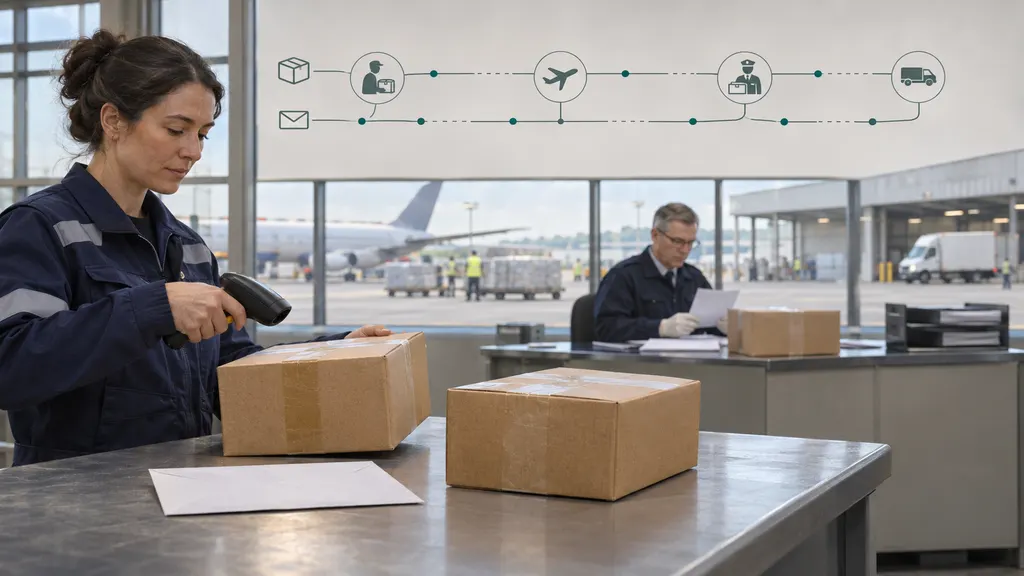
Record the number of cartons, dimensions, gross weight, product value, commodity description, country of origin, destination, and any restrictions. Dangerous goods, batteries, food, cosmetics, medical products, and other regulated categories may require additional documentation or handling. The International Air Transport Association’s dangerous goods resources explain why air shipments in particular need accurate classification and compliance checks.
Step 2: Establish the latest acceptable arrival date
Work backward from the date inventory must be available for sale. Add receiving and quality-control time after delivery. If the deadline is fixed, request a routing and service plan that addresses the deadline rather than relying on a generic mode label.
Step 3: Request comparable quotes
Ask the same provider, or multiple providers, to quote equivalent scopes. Request both air and sea options when practical, with origin, destination, service level, included charges, excluded charges, customs assumptions, and estimated milestones clearly stated.
Step 4: Stress-test the result
Check what happens if the shipment is delayed, the exchange rate changes, customs asks for more information, or demand falls. A mode that is cheapest under perfect conditions may not be the best choice if one disruption creates a large stockout or cash-flow problem.
Step 5: Decide the allocation, not just the mode
For a purchase order with uncertain demand, divide the order only if the cost and supplier arrangements remain manageable. A small air quantity is useful only when it arrives early enough to change the business outcome and when the additional handling does not erase the benefit.
Common mistakes to avoid
- Choosing by freight rate alone: a low quote can exclude destination and delivery costs.
- Using average transit times as guarantees: schedules vary and customs is not fully controlled by the carrier.
- Ignoring chargeable weight: carton dimensions can materially affect air pricing.
- Ordering sea freight too late: a long replenishment cycle needs to be built into reorder rules.
- Sending the entire launch quantity by air: speed does not solve a demand forecast that is fundamentally wrong.
- Failing to monitor milestones: late document submission or a missed handoff can create avoidable delays.
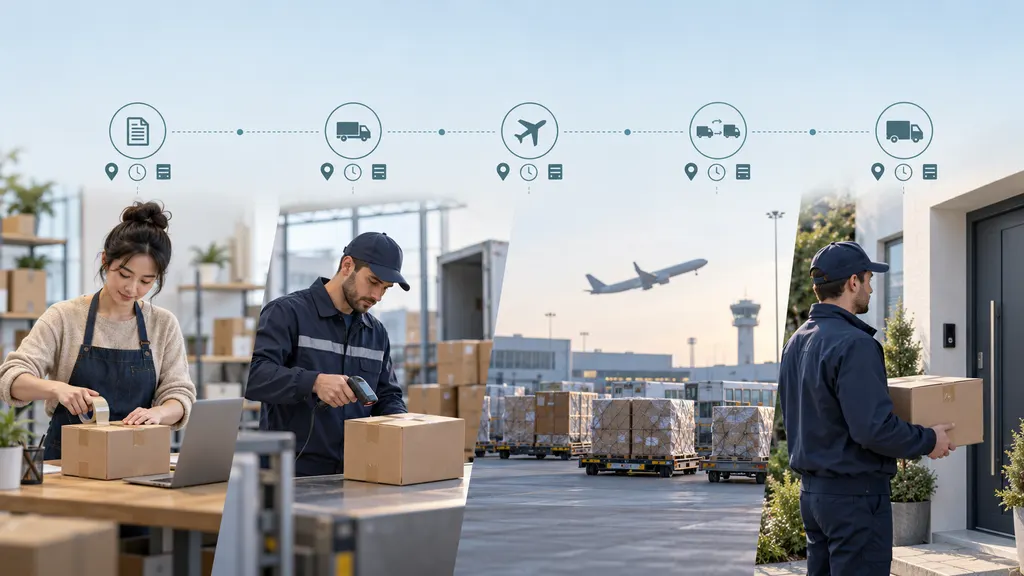
Shipment visibility also matters after a mode decision has been made. Tracking tools can help a small team identify missed scans, handoff delays, and delivery exceptions across carriers. For businesses managing multiple carriers or international parcels, 17TRACK’s tracking service may be a relevant operational option; it should be evaluated against the carriers and shipment types used by the business. Tracking does not shorten transit time, but it can reduce the time between an exception occurring and the team responding to it.
Bottom line
Choose sea freight for the planned base load when products are bulky, durable, predictable, and cost-sensitive. Choose air freight when speed has a measurable business value, the goods are relatively compact or high value, or a limited replenishment is needed to avoid a costly stockout. For many small ecommerce operations, the strongest policy is a controlled mix: forecast and ship the baseline by sea, then reserve air for time-sensitive exceptions backed by a clear financial calculation.
FAQ
Is air freight always faster than sea freight?
Air freight usually has a shorter transportation stage, but the total door-to-door time also includes booking, export procedures, customs clearance, handling, and final delivery. Compare complete service timelines rather than only airport-to-airport or port-to-port estimates.
Is sea freight always cheaper?
No. Sea freight often has a cost advantage for larger or heavier shipments, but minimum charges, consolidation fees, port handling, storage, customs, and inland delivery can change the result. A comparable landed-cost quote is required.
How should a small business compare air and sea quotes?
Give providers the same shipment information and ask for the same delivery scope. Compare total cost, estimated milestones, included services, exclusions, customs responsibilities, shipment dimensions, and the financial impact of arriving late.
Can a business use both air and sea freight for one purchase order?
Yes, if the supplier, forwarder, packaging, and customs arrangements support split shipments. A common planning approach is to move a limited quantity quickly and send the balance by sea, but the additional handling and administration should be included in the calculation.
What information should be ready before requesting a quote?
Prepare the origin and destination, product description, tariff information if available, carton count, dimensions, gross weight, cargo value, requested delivery scope, desired arrival date, and any product restrictions. Accurate dimensions and classification are particularly important for quote quality.