USPS Priority Mail vs. Flat Rate: Which Pricing Option Costs Less?
USPS Flat Rate usually costs less when a dense, relatively heavy shipment fits efficiently into an approved Flat Rate package. Standard Priority Mail is often cheaper for lighter parcels, smaller boxes, or shipments traveling shorter distances. The right choice depends mainly on package weight, dimensions, destination zone, packaging, and the shipping price available to your account.
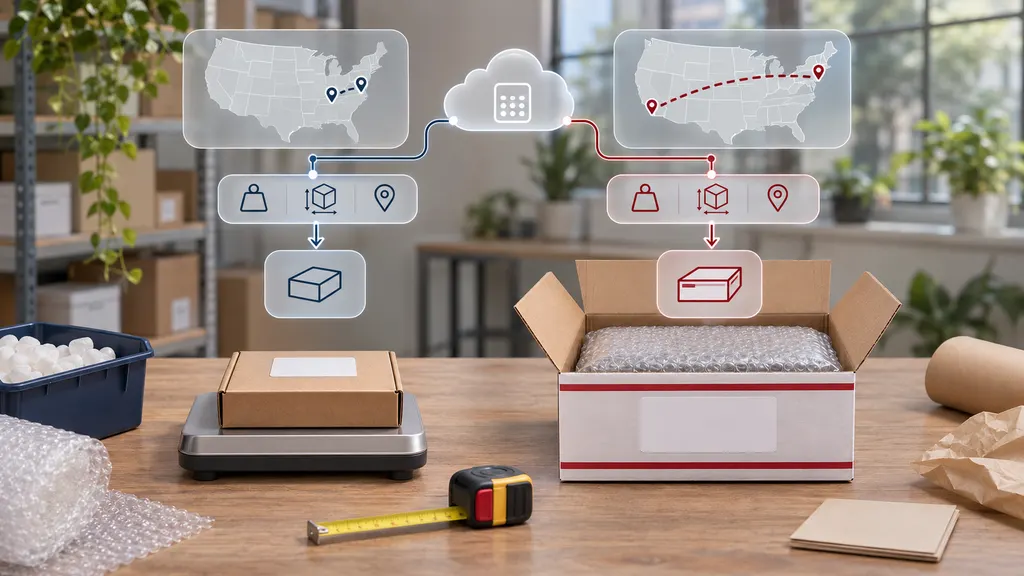
Flat Rate is not a separate service from Priority Mail. It is a Priority Mail pricing option that uses specific USPS-provided packaging and charges one published price for the package type, subject to the applicable rules and weight limits. Standard Priority Mail generally uses weight and zone to determine the postage. That distinction makes a direct comparison more useful than assuming one option is always cheaper.
How the Two USPS Pricing Options Work
Standard Priority Mail
With standard Priority Mail, the price is normally influenced by the package’s weight, dimensions, and destination. A shipment traveling a shorter distance may fall into a lower zone and cost less than the same package sent farther away. Weight increases can also move a parcel into a higher price tier.
This option gives a shipper more freedom to use its own box or mailer, provided the packaging complies with USPS requirements. That flexibility can matter for ecommerce sellers shipping products with unusual shapes, branded packaging, protective inserts, or dimensions that do not fit a Flat Rate box.
Priority Mail Flat Rate
Flat Rate uses designated USPS packaging, such as envelopes and boxes identified for Flat Rate service. The postage is tied to the packaging type rather than the distance between the sender and recipient. This can simplify rate selection, especially when a business ships similar products throughout the United States.
The package must fit within the selected container and comply with USPS conditions. A shipper should not treat “if it fits, it ships” as permission to force an item into a box, alter the package in a way that changes its eligibility, or ignore the applicable weight limit. USPS product pages and the Domestic Mail Manual should be checked for the current requirements.
Which Option Usually Costs Less?
| Shipment situation | Option that often has the advantage | Reason |
|---|---|---|
| Lightweight item in a small custom box | Standard Priority Mail | The weight-based rate may be below the Flat Rate price. |
| Heavy, compact item that fills a Flat Rate box | Flat Rate | The price does not rise with weight within the applicable limit. |
| Shipment traveling a short distance | Standard Priority Mail | A lower zone can make ordinary Priority Mail less expensive. |
| Dense shipment sent across several zones | Flat Rate | The same Flat Rate price can avoid distance-related increases. |
| Oversized or irregular product | Standard Priority Mail, if eligible | A custom package may fit better than a fixed Flat Rate container. |
These are decision patterns, not universal price rules. USPS prices can change, and the same product can produce different results depending on the origin ZIP Code, destination ZIP Code, package weight, account type, and mailing channel. Retail postage and commercial pricing may not be identical.
The Five Factors That Decide the Cheaper Rate
1. Package weight
Weight is the first comparison point for standard Priority Mail. For Flat Rate, weight is less important after the shipment is inside the correct package, although the service’s maximum permitted weight and packaging conditions still apply. A very light item may waste the economic advantage of Flat Rate because the fixed price can exceed the weight-based price.
By contrast, a compact product with a high shipping weight can benefit from Flat Rate. Examples may include books, tools, dense household goods, or multiple small items packed together. The product must still fit without unsafe compression or excessive bulging.
2. Package dimensions and usable space
A Flat Rate comparison is meaningful only when the product fits the approved container with suitable protection. A box that technically closes but leaves no room for cushioning may create damage risk and should not automatically be considered the cheaper option.
For standard Priority Mail, the seller can select packaging that matches the item more closely. That can reduce unused space, dimensional complications, and packaging material. When comparing costs, include the box, mailer, tape, inserts, and labor if those costs differ materially between the two options.
3. Shipping distance and zones
Standard Priority Mail commonly reflects the distance between the origin and destination through USPS zones. A shipment sent nearby may be substantially more competitive than the same shipment sent across the country. Flat Rate removes much of that distance-based variation because the package type determines the published postage.
Businesses with a concentrated customer base should compare ordinary Priority Mail first. A seller shipping nationally, or one fulfilling orders from a location far from many customers, should test Flat Rate more often because zone differences may have a greater effect.
4. Retail versus commercial pricing
The price shown at a Post Office counter is not necessarily the price available through an online postage provider or a qualifying business account. Commercial pricing, negotiated arrangements, platform discounts, and account-specific terms can change the result.
For an ecommerce operation, use the same pricing channel for both options. Comparing a retail Flat Rate price with a discounted standard Priority Mail price, or comparing published retail prices with an account-specific label rate, can lead to the wrong conclusion. Record the source of each quote and the date it was obtained.
5. Extra services and total fulfillment cost
Postage is only one part of the shipping decision. Compare any applicable insurance, signature service, pickup, packaging, label, and handling costs on the same basis. A cheaper postage rate may not produce a lower total cost if it requires more packaging labor or increases damage risk.
USPS Priority Mail commonly includes tracking, but service features and eligibility should be confirmed for the exact product and mailing method. Do not assume that every add-on, refund rule, or insurance condition applies identically to every package type.
A Practical USPS Rate Comparison Process
- Define the shipment. Record the packed weight, outside dimensions, origin ZIP Code, destination ZIP Code, and the exact packaging option.
- Check Flat Rate eligibility. Select the smallest approved Flat Rate container that fits the item safely. Confirm the current weight and packaging rules on USPS resources.
- Get a standard Priority Mail quote. Use the same origin, destination, weight, pricing channel, and mailing date. If the package uses a different box, measure that box accurately.
- Compare total cost. Add packaging and fulfillment costs where they differ. Keep postage, packaging, labor, and optional services as separate line items so the reason for the decision is visible.
- Test more than one destination. Use nearby, mid-distance, and far-away ZIP Codes that represent the actual customer base. A rate decision based on one destination may not generalize to all orders.
- Set a decision rule. For example, a warehouse may use Flat Rate for dense orders above a tested weight threshold and standard Priority Mail for lighter orders. Review the rule after USPS price changes or a change in packaging.
USPS provides an online price calculator and current price information, but the result is only as accurate as the package details entered. Weigh the fully packed parcel rather than relying on the product’s catalog weight. Small changes in packaging can also affect the comparison.
Examples Without Assuming a Universal Winner
Consider a lightweight apparel order placed in a compact mailer. Standard Priority Mail may be the better starting point because the shipment does not use enough of a Flat Rate container to justify its fixed price. The seller should still check the actual destination and account rate.
Now consider a dense order containing several heavy but compact items. If the order fits securely in an eligible Flat Rate box, the fixed price may be lower than a zone-based Priority Mail quote, particularly for a distant destination. The advantage is strongest when the container is used efficiently rather than carrying a small, lightweight item.
A third case is a fragile product that requires a custom carton and substantial cushioning. Even if a Flat Rate box appears cheaper on postage, forcing the product into that container may increase damage exposure or packing time. Standard Priority Mail can be the better operational choice when it permits safer packaging and more consistent fulfillment.
How to Choose for Holiday Shipping
During the holiday season, rate selection should be combined with an operational review. Order volume, cutoff dates, inventory location, packaging availability, and customer promises can matter as much as the postage quote.
- Pre-test the most common order combinations before peak volume begins.
- Keep enough of the selected USPS packaging on hand if Flat Rate is part of the plan.
- Publish realistic delivery expectations rather than treating a service standard as a guaranteed arrival date.
- Use tracking information to identify delays and communicate with customers before a missed delivery becomes a support escalation.
- Recheck rates and service conditions after a USPS price or product change.
For multi-carrier ecommerce teams, USPS may be one option in a broader shipping matrix. The comparison should remain consistent: identical shipment facts, the same pricing basis, and a clear distinction between postage savings and delivery-service differences.
Common Mistakes to Avoid
- Assuming Flat Rate is always cheaper: It is designed for a specific packaging and weight profile, not every shipment.
- Comparing only the box price: Include packaging materials, labor, and the cost of damage or rework when relevant.
- Ignoring zones: Standard Priority Mail can be competitive for nearby destinations and less attractive for distant ones.
- Using outdated prices: USPS postage and product conditions can change. Check the current official price source before publishing a rate card.
- Forcing products into Flat Rate packaging: A container must fit the item safely and remain eligible under USPS rules.
- Mixing retail and commercial quotes: Use the pricing channel that will actually be used to buy the label.
Bottom Line
Choose Flat Rate when a heavy, compact shipment fills an eligible USPS container and the fixed price beats the zone-based Priority Mail quote. Choose standard Priority Mail when the item is light, requires custom packaging, travels a short distance, or does not use a Flat Rate box efficiently.
The most reliable answer comes from a small rate test, not a general rule. Compare the same shipment across representative destinations, use your actual pricing channel, and include the operational cost of packaging and fulfillment. That process gives a more dependable shipping policy for both routine orders and holiday volume.
FAQ
Is USPS Flat Rate the same as Priority Mail?
Flat Rate is a Priority Mail pricing option, not a completely separate service category. It uses designated USPS packaging and a fixed postage price for the applicable package type, subject to USPS rules and limits.
Is Flat Rate cheaper for heavy packages?
It can be, especially when a heavy, compact shipment fits efficiently in an eligible Flat Rate container. Standard Priority Mail may still be cheaper if the shipment is light, the destination is nearby, or the Flat Rate package is not used efficiently.
Does Priority Mail cost more when a package travels farther?
Standard Priority Mail pricing commonly reflects destination zones, so distance can affect the price. Flat Rate is designed to reduce that distance-based variation for eligible packages, although the current price and rules should be confirmed with USPS.
Can I use my own box for Flat Rate shipping?
Flat Rate pricing is tied to designated Flat Rate packaging. A shipper should use the approved container for the selected Flat Rate product and verify current USPS packaging requirements before mailing.
How should a business compare USPS rates?
Measure the fully packed shipment, record the origin and destination ZIP Codes, use the actual retail or commercial pricing channel, and compare standard Priority Mail with the appropriate Flat Rate option. Repeat the test for several representative destinations and include packaging and handling costs.
Sources
- USPS Priority Mail — service overview and product information.
- USPS Domestic Mail Manual — domestic mailing standards, eligibility, and service conditions.
- USPS Business Price Lists — current USPS pricing resources for business users.
- USPS Price Calculator — shipment-specific postage estimates based on entered package details.
- USPS Tracking — official tracking access and package-status information.