USPS API Integration Costs for Ecommerce Tracking and Fulfillment Platforms
USPS API integration costs depend on what the platform needs to do: retrieve tracking events, create shipping labels, rate shipments, validate addresses, or support a complete fulfillment workflow. USPS may provide access to certain APIs through its developer and business programs, but the total budget is rarely just an API fee. Engineering time, authentication, monitoring, carrier-service rules, label purchasing, and ongoing maintenance often account for most of the cost.
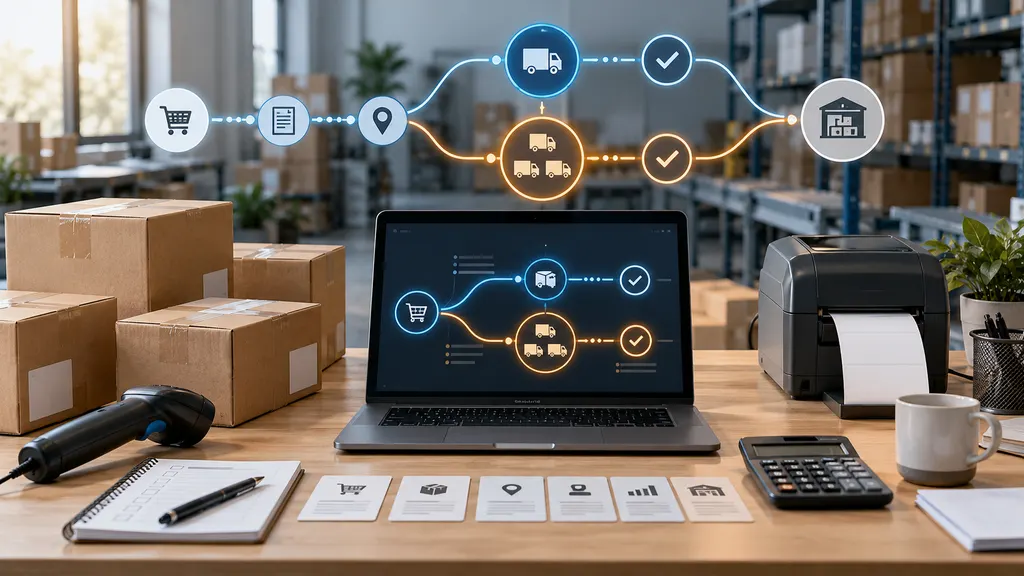
For an ecommerce or fulfillment team, the practical question is not simply “What does the USPS API cost?” It is “Which USPS capabilities do we need, and should we connect directly or use a multi-carrier platform?” This guide separates those decisions and provides a framework for estimating the implementation cost without assuming a public price that may not apply to every account or use case.
What counts as a USPS API integration?
A USPS integration can describe several different technical projects. They should be priced separately because their complexity and commercial requirements are different.
- Tracking integration: Your system submits tracking numbers, retrieves scan events, and displays delivery status to staff or customers.
- Label and postage integration: The platform obtains rates, buys postage, generates labels, and records the resulting tracking number.
- Address services: The workflow validates or standardizes delivery addresses before an order is shipped.
- Fulfillment integration: An order-management, warehouse-management, or 3PL system connects inventory, shipping rules, label creation, tracking, and exception handling.
- Customer-facing tracking: A store sends shipment updates, shows a branded tracking page, or gives support staff a consolidated view of carrier events.
A tracking-only project may be relatively narrow. A label workflow is usually broader because it can involve account permissions, payment or postage arrangements, service selection, package data, label formats, voids, refunds, manifests, and operational reconciliation. A company should define the required workflow before requesting an implementation estimate.
The main cost categories
1. USPS access and commercial terms
The first cost question is whether the required USPS capability is available to the business under the intended access arrangement. USPS documentation and business programs can have different eligibility, registration, authentication, and usage conditions. Public documentation should be treated as the starting point, not as a universal price sheet.
Do not assume that an API is free merely because documentation is publicly readable. Conversely, do not assume that a separate per-request fee exists if USPS has not publicly stated one for the relevant service. Confirm the commercial terms, account requirements, production limits, and support model directly with USPS or the selected technology provider.
2. Engineering and integration work
Development cost is usually driven by the number of workflows rather than by the number of API endpoints. A basic tracking connector may need authentication, request handling, response mapping, retries, and a shipment-status table. A fulfillment connector may also need service selection, package rules, label storage, cancellation logic, error queues, warehouse permissions, and links to orders and inventory.
The estimate should include discovery, architecture, implementation, testing, deployment, documentation, and the time required to coordinate with the carrier or intermediary. It should also identify which system owns the shipment record. Ambiguous ownership creates duplicate labels, inconsistent tracking numbers, and difficult support cases.
3. Infrastructure and observability
An integration needs somewhere to run and a way to show when it fails. Typical operating costs can include application hosting, a database or event store, secrets management, log retention, alerting, queueing, and backup. These costs vary by architecture and traffic, so a precise amount cannot be calculated from the carrier name alone.
Monitoring is particularly important for tracking. A request can succeed while the returned event is delayed, incomplete, duplicated, or mapped to the wrong internal status. Useful controls include request logs without exposing sensitive credentials, response-time alerts, retry limits, dead-letter queues, webhook or polling health checks, and reconciliation reports for shipments that have not changed status.
4. Postage, labels, and transaction-related charges
API access and postage are different budget lines. If the integration purchases postage, the business must account for the postage transaction itself and any applicable payment, account, refund, adjustment, or intermediary terms. A platform may also charge subscription, transaction, label, or support fees even when the underlying carrier API does not publish a separate request price.
The correct estimate therefore needs at least two scenarios: a tracking-only scenario and a shipping-execution scenario. The second should include expected shipment volume, package characteristics, service mix, label reprints, voids, returns, and the commercial terms of the label provider. Avoid inserting a generic per-label number unless it comes from the exact provider, account type, service, and date being evaluated.
5. Maintenance and change management
Carrier integrations are not finished when the first label or tracking event works. Maintenance may be needed for authentication changes, endpoint revisions, new service codes, address or package rules, status mapping, carrier outages, security updates, and changes made by connected ecommerce or warehouse systems.
A realistic business case includes an annual maintenance allowance and an owner for operational incidents. Without that ownership, a failed tracking job can become a customer-service problem before anyone notices it.
Direct USPS integration versus an intermediary
A direct connection can make sense when a company has a focused USPS workflow, an engineering team, and a reason to control the carrier relationship closely. It may offer more control over data models, internal routing, and release timing. The trade-off is that the company owns carrier-specific logic, testing, monitoring, and future changes.
An intermediary can be a better fit when the platform needs several carriers, a faster launch, prebuilt label workflows, normalized tracking events, or support for multiple sales channels. The intermediary adds its own commercial and technical layer, so the evaluation should include its pricing model, service limits, data retention, support response, carrier coverage, and exit options.
For an ecommerce business that only needs customer-facing USPS tracking, a multi-carrier tracking service may reduce integration work. For a fulfillment operation that must buy labels and control warehouse execution, a shipping platform or specialized fulfillment connector may be more appropriate. These are architecture choices, not universal claims that one model is cheaper.
| Approach | Potential cost advantage | Main cost or risk | Best fit |
|---|---|---|---|
| Direct USPS connection | More control over the integration and internal data model | Engineering, carrier-specific maintenance, and operational support remain in-house | Teams with a defined USPS workflow and technical ownership |
| Shipping or fulfillment platform | Prebuilt operational workflows can reduce build time | Subscription, transaction, label, and provider dependency costs may apply | Merchants and warehouses that need label execution |
| Multi-carrier tracking API | One normalized tracking layer for USPS and other carriers | Usage pricing, coverage differences, and intermediary status mapping require validation | Ecommerce platforms focused on shipment visibility |
A practical cost-estimation worksheet
Before comparing vendors or asking developers for a quote, document the following inputs:
- Use case: tracking, rates, labels, address validation, returns, or a combined workflow.
- Shipment volume: expected monthly shipments, tracking requests, status refreshes, and peak-season volume.
- Systems: ecommerce platform, order-management system, warehouse system, customer-service tool, and data warehouse.
- Operational rules: package limits, service selection, signature requirements, residential delivery logic, and exception handling.
- Customer experience: email or SMS updates, tracking-page requirements, delivery estimates, and language or regional needs.
- Reliability: acceptable delay, retry behavior, fallback procedures, and reconciliation frequency.
- Ownership: who manages credentials, carrier disputes, failed jobs, refunds, and production changes.
Then separate one-time and recurring costs. One-time costs include discovery, development, data migration, test shipments, security review, and launch support. Recurring costs include software fees, API or transaction usage where applicable, hosting, monitoring, support, maintenance, and postage. This structure prevents a low implementation quote from hiding a high operational burden.
Questions to ask during vendor validation
A proof of concept should use real workflow conditions rather than a single successful request. Ask the provider to demonstrate:
- How credentials are created, rotated, restricted, and revoked.
- How tracking numbers are submitted and how duplicate requests are handled.
- How events are normalized, timestamped, ordered, and mapped to internal statuses.
- What happens when USPS returns an error, a temporary outage occurs, or no new scan is available.
- Whether the system supports polling, webhooks, or another event-delivery model for the selected product.
- How labels, voids, refunds, reprints, and shipment cancellations are handled if fulfillment is included.
- What data can be exported if the business changes providers.
If the project is mainly about multi-carrier visibility, 17TRACK’s Tracking API and API documentation are relevant examples to evaluate. The fit still needs to be tested against the required USPS workflow, commercial terms, volume, status fields, and other carriers. A tracking API should not automatically be treated as a label-purchasing solution.
What a defensible budget conclusion looks like
A defensible estimate does not state one universal USPS API price. It identifies the selected capability, confirms the access and commercial terms, models expected usage, and separates carrier charges from software and engineering costs.
For tracking-only ecommerce projects, the decisive factors are usually data freshness, status normalization, reliability, customer notifications, and the number of carriers that must be supported. For fulfillment platforms, label creation, rate selection, warehouse execution, payment arrangements, refunds, and operational controls become equally important. The cheapest apparent API can be a poor choice if the team must rebuild the surrounding workflow.
The next step is to write a short requirements document, confirm the current USPS access terms, request itemized quotes from any intermediary, and run a proof of concept using representative shipments. That process produces a more useful total-cost estimate than a headline API fee.
FAQ
Is the USPS API free?
There is no single answer for every USPS capability, account, or integration arrangement. Public documentation does not by itself establish the commercial terms for a particular production use case. Confirm access, eligibility, limits, support, and any applicable charges with USPS or the selected provider.
Does USPS API access include shipping labels?
Not necessarily. Tracking, address services, rates, postage, and label creation are separate requirements and may use different products or providers. Treat label purchasing as a separate workstream until the documentation and account terms confirm otherwise.
What is the largest hidden cost in a USPS integration?
Maintenance and operational support are common sources of underestimated cost. Error handling, authentication changes, status mapping, monitoring, retries, reconciliation, and carrier-service changes can require ongoing engineering and support work.
Should an ecommerce platform integrate directly with USPS?
Direct integration can fit a focused USPS workflow with strong in-house technical ownership. A multi-carrier API or shipping platform may be more efficient when the business needs normalized tracking, several carriers, prebuilt label workflows, or a faster implementation. Compare the full operating model, not only the API request price.
How should a team compare USPS API vendors?
Compare the exact workflow, carrier coverage, pricing model, usage limits, authentication, data fields, event delivery, error handling, support, security, export options, and implementation effort. Test real tracking and fulfillment scenarios before signing a long-term agreement.
Sources
- USPS Web Tools and APIs — official USPS information about business APIs and access.
- USPS Business Services — official USPS business resources and service context.
- 17TRACK Tracking API — official product page for evaluating a multi-carrier tracking API option.
- 17TRACK API Documentation — official technical documentation for integration assessment.