Emergency Logistics
Definition
Emergency logistics is the planning, coordination, movement, storage, and control of goods, equipment, people, and information needed to respond to an urgent disruption or crisis. In logistics and supply chain management, the term usually refers to activities carried out under severe time, infrastructure, information, or resource constraints. The objective is to make essential items or services available where they are needed while maintaining appropriate controls over safety, documentation, inventory, transport, and delivery.
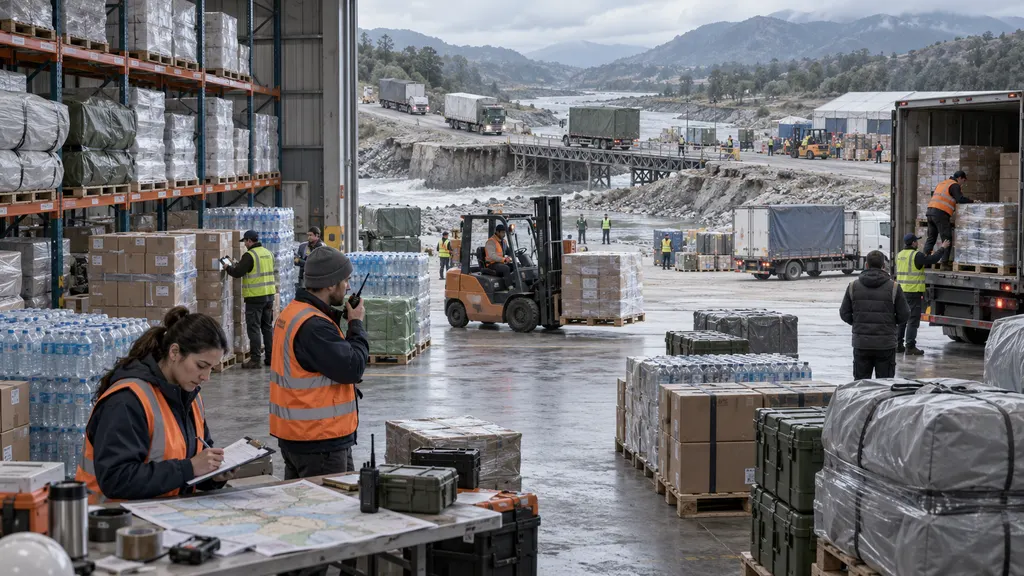
Emergency logistics is used in humanitarian response, disaster relief, public-sector operations, healthcare, industrial continuity, and commercial supply chains. It may be activated after a natural hazard, conflict, public-health emergency, major accident, infrastructure failure, cyber incident, or sudden supplier disruption. The exact scope varies by organization: one company may use the term for expedited replacement parts, while a humanitarian organization may use it for the end-to-end supply of relief items to affected populations.
Emergency logistics is related to, but not identical with, emergency management, humanitarian logistics, disaster logistics, and expedited shipping. Emergency management covers the broader coordination of preparedness, response, recovery, and mitigation. Emergency logistics is the supply and movement component of that work.
In Logistics and Supply Chain Management
Emergency logistics sits at the intersection of procurement, inventory management, warehousing, transportation, customs, distribution, and information management. It begins when an organization identifies an urgent operational requirement and continues until the required goods or services reach the point of use, are accounted for, and are either replenished, returned, disposed of, or transferred into normal operations.
Unlike routine fulfillment, emergency logistics often operates with incomplete demand information and rapidly changing priorities. A logistics team may need to decide which items are critical, which inventory can be redeployed, which transport mode is feasible, and what documentation is required. Decisions may also involve alternative suppliers, temporary storage, route changes, security controls, and coordination with public authorities or partner organizations.
In a commercial supply chain, an emergency logistics process can support a factory that needs an unavailable component, a retailer that must restore stock after a warehouse disruption, or an ecommerce seller that must reroute inventory after a transport failure. In cross-border operations, the process may also involve export controls, import requirements, customs declarations, temporary admission, sanctions screening, and destination-country restrictions. These requirements do not disappear because a shipment is urgent.
Core Characteristics
- Urgency: The required response time is shorter than the normal planning cycle, although the exact time limit depends on the situation.
- Uncertainty: Demand, available inventory, transport capacity, infrastructure, and delivery conditions may change during the operation.
- Priority-based allocation: Scarce goods, vehicles, storage space, and staff may need to be assigned according to operational or humanitarian priorities.
- Coordination: Multiple parties may be involved, including suppliers, carriers, warehouses, customs authorities, public agencies, nongovernmental organizations, retailers, and customers.
- Resilience requirements: The network may need alternative routes, suppliers, facilities, communication methods, or modes of transport.
- Traceability and accountability: Even under pressure, organizations need records of what was requested, purchased, received, stored, moved, and delivered.
- Safety and compliance constraints: Dangerous goods, medical products, food, batteries, or other controlled items may require special handling and documentation.
Speed is therefore only one performance consideration. A shipment that moves quickly but is incorrectly documented, sent to the wrong location, damaged, unsafe, or impossible to use may not meet the emergency requirement.
Emergency Logistics Process
There is no single universal workflow for every emergency, but the following sequence describes a common operational structure. Organizations may combine or repeat stages as conditions change.
- Identify the incident and requirement. Establish what has happened, which operation is affected, what goods or services are needed, where they are required, and by when. The requirement should be specific enough to support procurement and transport decisions.
- Assess available resources. Check on-hand inventory, reserved stock, supplier availability, warehouse capacity, transport options, staff, equipment, and usable information. Existing inventory may be repositioned before new goods are purchased.
- Set priorities. Classify requirements by urgency, operational impact, safety implications, and consequences of delay. Priority rules should be documented because multiple requests may compete for the same resources.
- Select sourcing and fulfillment options. Possible actions include using existing stock, activating an alternative supplier, substituting an approved item, consolidating shipments, chartering or expediting transport, or using a nearby facility. Substitution should not compromise technical, medical, safety, or regulatory requirements.
- Plan movement and handling. Determine the origin, destination, transport mode, packaging, loading requirements, storage conditions, route, handover points, and proof-of-delivery method. The plan should account for access restrictions and likely changes.
- Complete documentation and controls. Prepare purchase records, commercial documents, transport documents, customs information, permits, product details, and any required safety or security records. Cross-border shipments may require coordination with customs brokers and competent authorities.
- Monitor execution. Track milestones such as dispatch, departure, border clearance, arrival, receipt, and final handover. When tracking data is unavailable, scheduled check-ins and signed handovers may provide alternative control points.
- Close or transition the operation. Reconcile inventory and costs, record losses or damage, return reusable assets, review supplier and carrier performance, and move remaining activity into routine replenishment or recovery planning.
Classification by Operational Context
Emergency logistics can be described by the situation it supports. These descriptions are practical categories rather than a single universally adopted formal classification.
| Context | Typical logistics requirement | Important considerations |
|---|---|---|
| Humanitarian or disaster response | Movement and distribution of relief items, shelter materials, water equipment, medical supplies, or other essential goods. | Access, security, changing needs, coordination, accountability, and delivery to affected locations. |
| Healthcare emergency | Rapid supply of medicines, diagnostic materials, protective equipment, or clinical consumables. | Product suitability, storage conditions, expiry control, documentation, and authorized handling. |
| Industrial or maintenance emergency | Delivery of replacement parts, tools, machinery, or technical materials needed to restore operations. | Technical specifications, compatibility, availability, transport time, and downtime impact. |
| Commercial supply-chain disruption | Rerouting inventory, using alternate suppliers, or expediting replenishment after a facility or transport failure. | Customer commitments, inventory accuracy, cost, service levels, and network capacity. |
| Cross-border emergency movement | Import or export of urgent goods across national borders. | Customs procedures, permits, restricted goods rules, documentation, and destination-country requirements. |
Emergency Logistics in Cross-Border Ecommerce
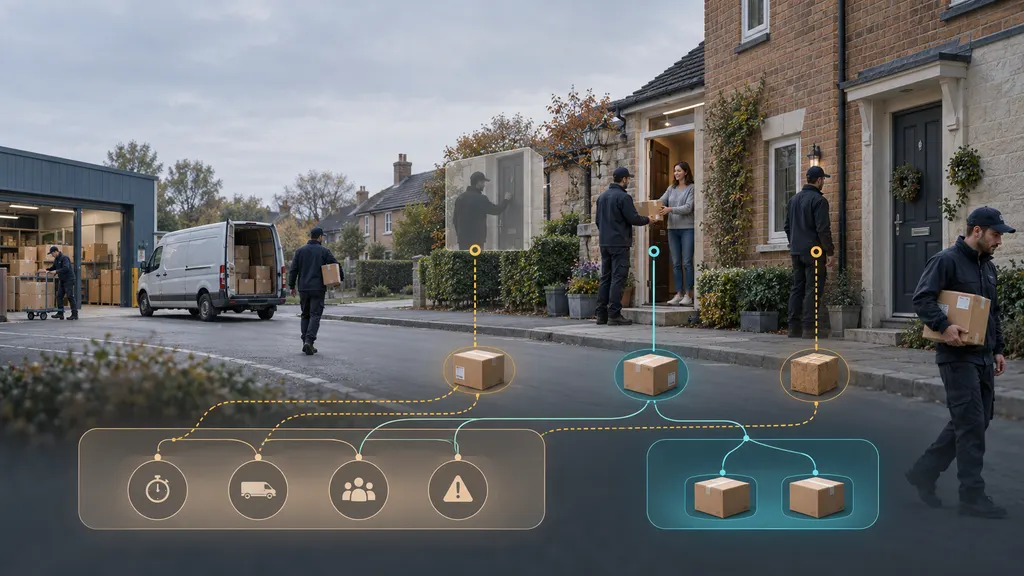
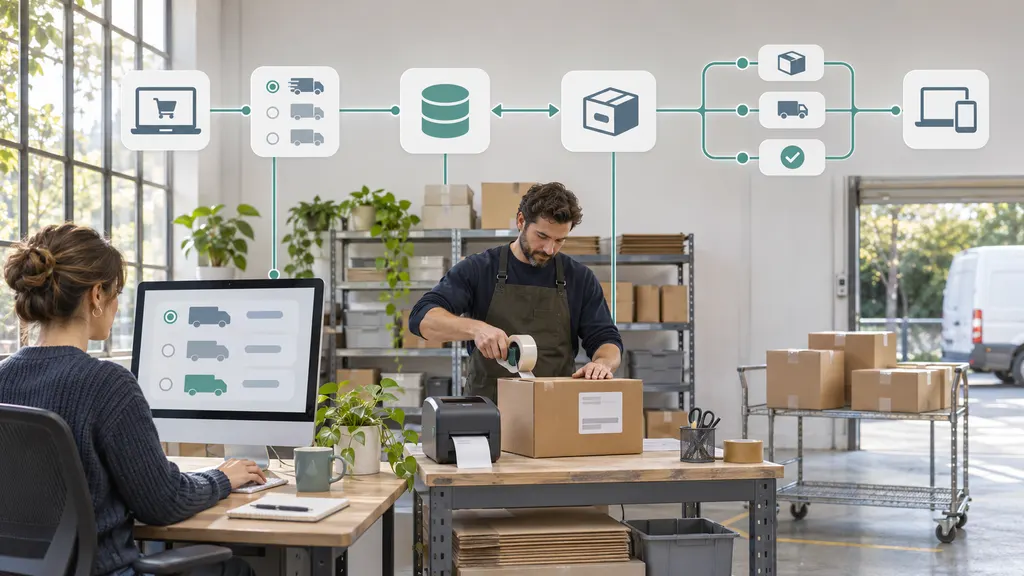
In cross-border ecommerce, emergency logistics may arise when an international order is affected by a carrier disruption, customs hold, warehouse outage, inventory mismatch, severe weather event, or sudden change in destination access. A seller or fulfillment operator may need to choose between reshipping, rerouting, refunding, reallocating inventory, or waiting for the original shipment to be released.
The first step is to distinguish the status of the order from the status of the shipment. An order represents the customer’s purchase request. A shipment is the physical movement created to fulfill that order. One order can be split into several shipments, and an emergency action may create a replacement shipment without changing the original order record. Keeping these records connected helps prevent duplicate fulfillment and inaccurate inventory.
Urgent international fulfillment also requires realistic communication. A carrier scan can show a movement event, but it does not by itself prove customs release, final delivery, or successful use by the recipient. Ecommerce operators should separate confirmed events from estimates and should preserve records of customer contact, replacement decisions, refunds, and delivery evidence.
Emergency Logistics Compared with Related Terms
| Term | Meaning | Relationship to emergency logistics |
|---|---|---|
| Expedited shipping | A transport service or method intended to reduce transit time. | It can be one tool within an emergency logistics response, but it does not cover sourcing, inventory, customs, warehousing, or allocation decisions. |
| Humanitarian logistics | Logistics supporting humanitarian objectives, including preparedness, response, recovery, and related operations. | Emergency logistics may form part of humanitarian logistics, but the two terms are not interchangeable in every context. |
| Disaster logistics | Logistics associated with preparing for and responding to disasters. | It is a situation-specific expression that may overlap substantially with emergency logistics. |
| Business continuity | The capability to continue or restore important business activities after disruption. | Emergency logistics can support continuity, while business continuity includes broader people, process, technology, facility, and governance measures. |
| Reverse logistics | The movement of goods from a customer or downstream location back toward a seller, processor, or other point in the supply chain. | A return or recovery movement may be urgent, but reverse logistics is defined by direction and purpose rather than by the existence of an emergency. |
Common Misunderstandings
- It does not mean any fast delivery. A same-day or express shipment may be routine if it is planned as part of normal service. Emergency logistics refers to the broader response to an urgent disruption or requirement.
- Urgency does not remove compliance obligations. Customs, dangerous-goods, product-safety, export-control, and transport requirements may still apply. The applicable procedure depends on the goods, countries, and authorities involved.
- Emergency logistics is not limited to disasters. It can support commercial, industrial, healthcare, public-sector, or ecommerce operations when an urgent supply problem occurs.
- Tracking is not the same as control. A tracking event is one source of operational information. Effective control may also require inventory reconciliation, documentation, confirmation of receipt, and escalation when an expected milestone is missed.
- Speed is not the only measure of success. Correct quantity, condition, destination, documentation, safety, and usability are also relevant to whether the requirement has been met.
Operational Checks
A practical emergency logistics checklist should confirm the requirement, quantity, destination, deadline, responsible owner, and acceptance criteria. It should also identify whether the goods are restricted, temperature-sensitive, hazardous, fragile, perishable, high-value, or subject to special import or export rules. Before dispatch, the organization should verify the consignee, address, contact method, packaging, transport booking, documents, and contingency plan.
During movement, useful control points include dispatch confirmation, carrier acceptance, border or gateway status where applicable, arrival at the destination facility, and final receipt. If an item is replaced or reshipped, the original shipment should be clearly marked in the order and inventory systems. After the event, organizations can compare the request with what was delivered, identify shortages or losses, and document lessons for future preparedness. These checks help convert an improvised response into a controlled and auditable operation.
QA
What is emergency logistics in logistics?
It is the urgent planning and execution of sourcing, storage, transportation, distribution, and related controls needed to respond to a disruption or crisis.
Is emergency logistics the same as expedited shipping?
No. Expedited shipping focuses on reducing transport time. Emergency logistics covers the wider response, including requirements, inventory, sourcing, documentation, warehousing, coordination, and delivery.
Does emergency logistics apply to ecommerce?
Yes. It can support urgent reshipments, inventory relocation, alternative fulfillment, carrier disruption response, warehouse recovery, and cross-border delivery decisions.
Can urgent shipments bypass customs requirements?
Urgency does not automatically remove customs or other regulatory requirements. The applicable process depends on the goods, origin, destination, and relevant authorities.
Sources
- International Federation of Red Cross and Red Crescent Societies, IFRC Logistics Manual — practical logistics concepts, planning, procurement, warehousing, transport, and accountability in humanitarian operations.
- UN Logistics Cluster — humanitarian logistics coordination and operational context.
- World Customs Organization, Natural Disaster Relief — customs and facilitation context for disaster-related movements.
- ISO 22301, Security and resilience — Business continuity management systems — business continuity context related to disruption response and recovery.