Can I Use My Own Box for USPS Priority Mail? Box and Reuse Rules?
Yes. You can use your own box for USPS Priority Mail as long as the package meets USPS size, weight, labeling, and packaging requirements. The box does not have to be a USPS-branded Priority Mail box unless you are using a Priority Mail product with specific packaging or a Flat Rate price. A clean, sturdy reused carton is generally acceptable, but old labels, barcodes, markings, and service endorsements should be removed or fully covered before mailing.
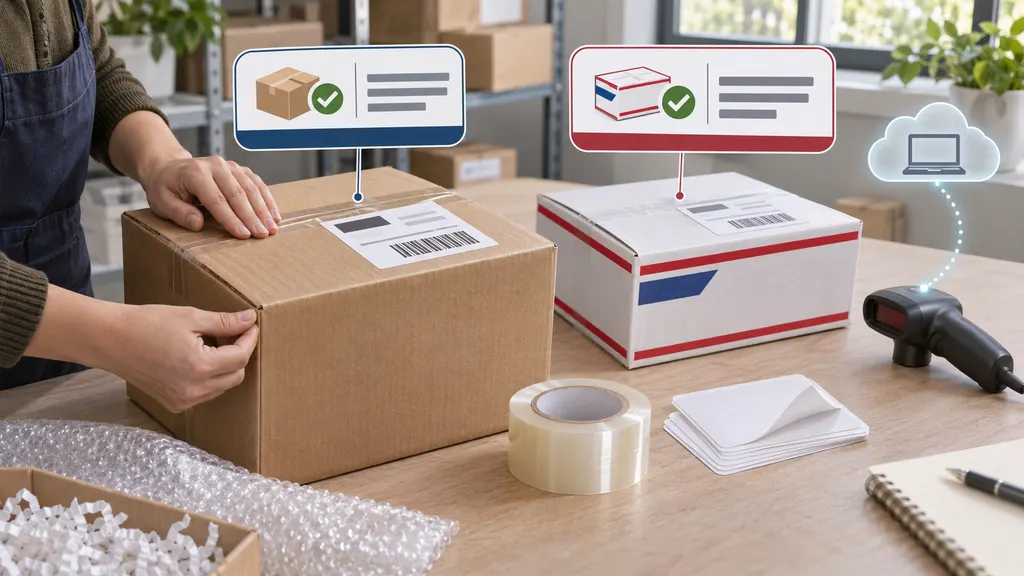
The main distinction is between the shipping service and the packaging price or product. Your own box can usually be used for regular Priority Mail priced by weight and destination. It does not automatically qualify for Priority Mail Flat Rate, and a USPS-provided Flat Rate box should not be used as an ordinary package for a different service.
When your own box is allowed
USPS Priority Mail is a mailing service, not a requirement to use one particular type of carton. If you buy regular Priority Mail postage for a package, you can normally pack the item in a privately purchased box or a suitable reused shipping carton. This is often practical for ecommerce sellers, households, and small businesses that already have packaging on hand.
Your box should be strong enough for the contents and the expected handling during transportation. It should have intact seams, firm panels, and flaps that can be closed securely. A box that is crushed, water-damaged, soft, or weakened by multiple layers of old tape may fail even if it is technically the right size.
USPS guidance also permits the reuse of many boxes when they remain serviceable. Reuse does not mean that every old carton is suitable. A box previously used for a heavy item may have lost strength, and a carton with exposed hazardous-material markings can create a serious labeling problem. Inspect the packaging before selecting it.
Regular Priority Mail versus Flat Rate packaging
USPS offers different ways to price and package Priority Mail. This is where many mailing mistakes occur.
- Regular Priority Mail: You can generally use your own box. Postage is calculated using the package details required by USPS, such as weight, destination, and applicable dimensions.
- Priority Mail Flat Rate: The price applies to an eligible Flat Rate envelope or box and is not simply a discount available for any carton with similar dimensions. If you use your own box, you should not describe or purchase it as a Flat Rate box.
- USPS-produced Priority Mail packaging: Packaging marked for Priority Mail should be used with Priority Mail postage. Packaging marked for a particular Flat Rate product should be used consistently with that product rather than repurposed for another service.
In practical terms, an ordinary brown shipping box can carry a Priority Mail label, but it cannot be treated as a Flat Rate box merely because it is approximately the same size as one. If the package does not use the eligible Flat Rate packaging, select the appropriate non-Flat Rate Priority Mail option.
Rules for reusing a shipping box
Reusing a box can reduce packaging waste and lower fulfillment costs, but the previous shipment must not create confusion for USPS equipment or employees. Before applying the new label, complete these checks:
- Remove old shipping labels. Take off previous address labels, postage labels, routing labels, tracking labels, and any other markings that could be scanned or mistaken for the current shipment.
- Cover barcodes that cannot be removed. If a label is firmly attached, cover the old barcode and address with an opaque label or paper. Do not rely on a new label placed beside an exposed old barcode.
- Remove service markings that no longer apply. Old Priority Mail, Priority Mail Express, Ground Advantage, international, hazardous-material, or special-handling markings can create ambiguity. Cover or remove them if they do not describe the new mailing.
- Check for prohibited or misleading markings. A reused box may display warnings, endorsements, or product descriptions that no longer match its contents. The outside should not misrepresent the service or contents.
- Inspect the structure. Press lightly on the panels and examine the corners, bottom, seams, and flap folds. Avoid cartons with major tears, punctures, moisture damage, or weakened closures.
- Use suitable closure material. Seal all openings securely with packaging tape. Do not depend on household gift-wrap tape, string, or a single narrow strip across a heavy carton.
Do not wrap a shipping box in paper if the paper is loose or likely to tear. Torn outer paper can expose old labels, catch in processing equipment, or separate from the package. If you use an outer covering, it should be firmly attached and should not interfere with the address label or postal markings.
How to prepare your own box for Priority Mail
1. Choose a box that matches the item
Select a carton that leaves enough room for protective material without allowing the product to move excessively. A box that is much larger than necessary may require more cushioning and can increase postage when dimensions affect the price. A box that is too small can put pressure on the contents and cause the flaps or seams to open.
For fragile items, use an inner container or adequate cushioning around the product. The goal is to prevent direct impact between the item and the outside walls. Keep sharp edges, liquid containers, and heavy components from pressing against the carton.
2. Strengthen the bottom
Before placing the item inside, check whether the bottom can support the total package weight. Apply tape across the center seam and extend it across the flap edges where appropriate. Heavy contents may need additional reinforcement, but excessive tape should not cover the entire address area or obscure package markings.
3. Cushion and immobilize the contents
Fill open space with an appropriate cushioning material. Fragile products should not rattle when the closed box is gently moved. At the same time, avoid packing so tightly that the box bulges or the flaps cannot close naturally. If the item has a retail box, do not assume that the retail packaging alone provides adequate protection for a postal shipment.
4. Seal and inspect the package
Close every flap and apply durable packaging tape to the seams. Check all six sides of the box. There should be no loose flaps, exposed contents, holes, or surfaces likely to separate during handling.
5. Apply the current label correctly
Place the current shipping label on the largest flat side of the package. Keep the recipient address, return address, postage, and barcode visible and away from seams or edges. Do not place tape over a barcode if the tape could create glare or wrinkles that interfere with scanning; follow the instructions associated with the postage label and mailing channel.
Size and weight checks
Using your own box does not remove the normal USPS package limits. For domestic Priority Mail, USPS states that the maximum weight is generally 70 pounds and the maximum combined length and girth is 108 inches. Length is the longest side; girth is measured around the package at the widest point perpendicular to the length. Some special products or destinations can have additional requirements, so check the current service rules before shipping an unusually large or heavy package.
Measure the finished package rather than the empty carton. Record the actual weight after adding the item, cushioning, tape, and label. Entering a smaller weight or dimension can lead to postage adjustments, delays, or a charge to the account used to purchase the label. Online postage platforms may also calculate pricing differently depending on the service, package type, origin, destination, and mailing channel.
If you are shipping internationally, do not assume that domestic Priority Mail rules apply. USPS international services can require customs information, and packaging, content descriptions, and destination-country restrictions may also matter. Check the specific international service before reusing a box with old customs forms or markings.
Common mistakes to avoid
- Using an old Flat Rate box with a different service: The box’s markings and the postage selected should correspond. Do not use a USPS Flat Rate box as a generic carton while purchasing an unrelated service without following USPS packaging rules.
- Leaving the previous barcode exposed: A new address label does not guarantee that an old barcode cannot be scanned. Remove or cover it.
- Assuming any box is strong enough: Thin product packaging, cereal boxes, and damaged cartons may not withstand shipping pressure, especially when used for heavy or fragile items.
- Forgetting the completed package dimensions: The size of the box after packing, not its empty size, is relevant to postage and acceptance.
- Covering the label with reflective or wrinkled material: The address and barcode must remain easy to read and scan.
- Leaving unrelated hazard markings visible: An old hazardous-material marking can be misleading if the new contents are different. Remove or cover markings only when doing so does not conceal information that is required for the current shipment.
A simple decision checklist
Use this checklist before taking the package to a Post Office or handing it to a carrier pickup:
- Is the carton clean, dry, rigid, and large enough for the item plus protection?
- Are all old addresses, barcodes, postage labels, and routing marks removed or completely covered?
- Does the selected postage match the packaging? In particular, is a Flat Rate product being used only with eligible Flat Rate packaging?
- Are the final weight and dimensions accurate?
- Is the item packed so that it does not move excessively or press through the carton?
- Are all seams sealed and is the current label on a flat, visible surface?
- Are there any destination-specific, international, hazardous-material, or restricted-content requirements?
If the answer to each question is yes, your own box is usually a reasonable choice for Priority Mail. When the package is unusually large, heavy, fragile, or regulated, confirm the service details with USPS before mailing rather than relying on the appearance of the carton.
FAQ
Can I use a brown cardboard box for USPS Priority Mail?
Yes. A plain brown cardboard box can generally be used for regular Priority Mail if it is sturdy, properly sealed, accurately measured, and free of confusing old labels or markings. It does not become a Flat Rate package simply because it is made of cardboard.
Can I reuse an Amazon or other carrier box?
You can generally reuse a suitable shipping carton, but remove or cover the previous carrier’s labels, barcodes, tracking numbers, and service markings. Inspect the box for damage and make sure its condition is appropriate for the new contents.
Can I use my own box for Priority Mail Flat Rate?
Not as a substitute for the eligible Flat Rate packaging. Flat Rate pricing is tied to the applicable USPS Flat Rate envelope or box. If you use your own carton, choose the appropriate non-Flat Rate postage option unless USPS specifically provides another packaging rule for the service you are buying.
Do I have to cover the old Priority Mail logo?
If the box is being used with the corresponding Priority Mail service, the logo may not create the same problem as an old address or barcode. However, any marking that is misleading, associated with a different product, or inconsistent with the postage should be removed or covered. When in doubt, use an unmarked box or cover the conflicting markings.
What happens if my reused box is too weak?
The package can open, become damaged, or be delayed during processing. USPS may also apply handling requirements or return a package when packaging is inadequate. A stronger carton and proper cushioning are safer than trying to save a small amount on packaging.
Sources
- USPS Priority Mail — service details and packaging information.
- USPS Quick Service Guide: Priority Mail — Priority Mail eligibility, limits, and service requirements.
- USPS Publication 52: Hazardous, Restricted, and Perishable Mail — mailing restrictions, markings, and packaging considerations.
- USPS Free Shipping Supplies — USPS-provided envelopes and boxes for eligible mailing services.