Universal parcel tracking | Tracking number search
Track packages from USPS, Canada Post, Royal Mail, UPS, FedEx, DHL, Deutsche Post, Aliexpress, Shein, Temu, Amazon, etc. Enter your tracking number below!
Eager to know where your package is after shopping online? Or maybe you are a merchant managing hundreds of shipments? Perhaps you are a business managing international logistics? Either way, knowing your shipment whereabouts is essential.
At 17TRACK, our universal package tracker integrates shipment tracking info across all major postal services, couriers, freight companies, and logistics providers worldwide. Enter your tracking number or waybill number in the box above, and stay updated!
How does package tracking work?
Package tracking is a system that enables you to monitor the progress of your parcel at every step of its delivery journey.
Think of package tracking as a live map for your shipment. When a seller ships your order, the carrier assigns a unique tracking number to your package. And each time the package reaches a new checkpoint, such as pickup, sorting centers, customs, the tracking number will be scanned. These scans automatically update the status and location in the tracking system, providing real-time visibility into the parcel’s journey. Upon check, you will know the package’s current location, status, and estimated delivery time.
Track different shipments worldwide
1. Courier tracking
This is commonly used for fast, small-parcel deliveries handled by companies like UPS, FedEx, DHL, DPD, Hermes, and other express carriers.
The tracking process relies on barcodes printed on the shipping label. At every checkpoint, handheld scanners, automated conveyor systems, or gate-scanning machines capture the barcode details and send them to the courier’s tracking database. This allows customers to see statuses like Picked Up, In Transit, Arrived at Facility, Out for Delivery, or Delivered.
Checking a courier shipment is simple: enter your tracking number on the courier’s website, mobile app, or on any universal tracking platform like 17TRACK.
2. International shipping tracking
When a package begins its international journey, it first goes through export processing in the origin country. From there, it may transfer to an airline or sea carrier, arrive at the destination country, pass through customs inspection, and enter the local courier network for final delivery.
The package will be scanned at origin facilities, airports, customs ports, transit hubs, and final sorting centers. Each stage generates tracking updates that show whether the shipment is progressing normally or delayed for checks such as customs clearance.
Also, the tracking system may combine data from various sources: carrier scans, airline or vessel manifests, and customs status reports. UPU-format postal codes, airway bills (AWB).
Many parcels may travel through the hands of multiple carriers before reaching the destination. This is common because:
- One carrier may handle pickup in the origin country.
- Another carrier transports the parcel internationally.
- A local carrier completes last-mile delivery.
For example, a shipment might start with China Post, move through FedEx or UPS during transit, and be delivered locally by DHL, DPD, or USPS.
Therefore, a universal parcel tracking platform like 17TRACK is often more reliable. It gathers information from all carriers involved, keeping your tracking timeline complete even when the shipment changes hands.
3. eCommerce order tracking
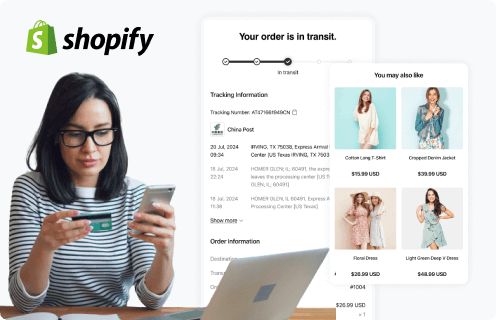
eCommerce order tracking lets you monitor every stage of your customer’s purchase — not just the delivery. From the moment an order is confirmed, you can see updates like Order Confirmed, Processing, and Awaiting Pickup before the parcel even enters the courier network.
Once you generate the shipping label, its barcode becomes the shared identifier between your store, the carrier, and the customer. Each scan along the way — warehouse sorting, transit hubs, customs, and last-mile delivery — updates the order timeline automatically. For international online purchases, order tracking is particularly helpful because it consolidates postal, courier, and cross-border logistics data into one continuous tracking timeline.
For buyers: Note that an order number and a tracking number are not the same. You can check delivery progress only with your tracking number — order numbers cannot be used for shipment tracking.
4. Freight tracking
Freight shipping is designed for large, heavy, or palletized shipments moving through road, rail, air, or sea networks. It is commonly used by business clients, B2B suppliers, manufacturers, and companies shipping bulk goods.
Since freight often travels long distances, passes through multiple hubs, and involves several carriers or forwarding agents, keeping shipment visibility during transit is very essential.
Tracking begins the moment a carrier creates a freight bill or label. Each pallet or shipment usually receives a PRO number, bill of lading (BOL) number, or a barcode tag, which is scanned at every major handoff: pickup, terminal loading, regional hubs, transfer points, and final delivery. Many freight networks also rely on GPS-equipped trucks, electronic logging devices, and EDI updates to push real-time status information into the tracking system.
To track your freight shipment, enter the PRO number, AWB number, bill of lading, or booking reference in the carrier’s freight tracking system. Many freight forwarders also provide milestone-based updates through online portals or email notifications.
5. Cargo tracking
Cargo shipping is typically used for commercial goods shipped internationally, including bulk items, wholesale products, and high-volume eCommerce inventory. It often moves through multiple carriers, ports, and customs processes.
Cargo is documented and scanned using cargo manifests, airway bills, cargo barcodes, and customs declarations. As shipments move through airports, seaports, warehouses, and transshipment hubs, the tracking systems log key events such as cargo acceptance, departure, arrival, customs inspection, release, and handoff to the next logistics provider. These checkpoints ensure you know where your cargo is at every stage of the journey.
Checking cargo status is straightforward: enter the AWB or bill of lading number into the carrier’s system or a global package tracking platform like 17TRACK. You’ll see updates like flight departures, vessel movements, customs status, cargo released, and handover to the final-mile provider.
6. Container tracking
Container tracking focuses on standard 20ft and 40ft shipping containers used for global ocean freight. This service is vital for businesses handling large-scale transport, factory shipments, industrial goods, and long-distance supply chains.
Each container has a unique container number (e.g., ABCU1234567) that follows ISO standards. When the container is loaded onto a vessel, moved through a port, inspected, unloaded, or transferred to rail/truck for inland transport, its number is logged by port authorities and shipping lines. The tracking systems combine AIS vessel data, port terminal scans, and carrier event updates to show where the container is — even when it’s still on the ocean.
To check your container’s status, enter the container number or booking number on the shipping line’s website. Some platforms also allow you to track by bill of lading. You can see the vessel’s real-time position, estimated arrival dates, and container milestones throughout the journey.
Tracking number lookup
Regardless of whether you’re tracking a courier parcel, freight load, or international shipment, everything starts with a tracking number. Let’s break down what it is and how to locate yours.
1. What is a tracking number?
A tracking number is also known as a tracking code or tracking ID. It is a unique identifier assigned to each parcel that lets you track package movement from dispatch to delivery. It identifies your parcel within the carrier’s network and should be provided by the sender once the item has shipped.
Note that some packages may not be trackable in the destination country until you receive postal or courier notification. 17TRACK's universal parcel tracking system can help you monitor the progress of your shipments in real time.
2. Tracking number formats & examples
Logistics tracking numbers come in different formats depending on the carrier. For example, postal services under the Universal Postal Union (UPU) use codes like RA123456789CN. The first two letters indicate the shipment type, and the last two letters identify the country of origin. Other couriers may use their own numbering system. Here’s a breakdown of common tracking number formats:
- UPS: Tracking numbers start with "1Z" and are 18 characters long, offering detailed shipment status updates.
- FedEx: Typically 12 digits, used for both Express and Ground shipments.
- USPS: Usually 20–22 digits, covering most domestic deliveries within the United States.
- DHL: Often 10–11 digits, sometimes with prefixes like “JD” for specific services.
- Canada Post: Commonly 16 digits, starting with letters and ending with “CA” to indicate Canada.
3. How to find out your tracking number?
Your tracking number is the key to accessing real-time updates on your shipment. Here’s how to locate it:
- Shipping Confirmation Email: Check your inbox. This is usually sent right after your order has shipped, containing your tracking number.
- Shipping Label or Receipt: If you've received a physical shipment, the tracking number usually appears on the label or receipt.
- Your Online Account: Check your order history on the online store or the courier’s website. The tracking number is usually displayed under your order or shipment details.
- Carrier’s Customer Service: If you can’t find the tracking number, reaching out to the carrier. It can often retrieve the tracking number using your name, address, or order details.
4. How to find a package without a tracking number
Didn’t get a tracking number or accidentally lost it? You’re not stuck. There are still several ways to track your package:
- Check Order Status: Most online stores display basic shipping updates (e.g., “shipped,” “in transit,” or “delivered”) even if they don’t show a tracking number.
- Use Delivery Notifications: Carriers often send SMS or email updates tied to your phone number or email, even without a tracking code.
- Search by Address with the Carrier: Some carriers offer a “track by address” or “track by reference” service. This lets you look up a shipment using details like your delivery address, phone number, ZIP/postal code, or the date the package was sent. Simply ask their customer service to run the search for you.
- Contact the Sender: The merchant, seller, or shipper may have the shipment ID or internal reference number.
- Check Your Delivery Attempts: If the courier has already attempted delivery, you may find a notice with instructions on how to track or reschedule the package.
Package tracking statuses
Tracking statuses can sometimes be confusing. Here’s a quick guide to some common ones:
| Tracking Status | Status Description |
| In Transit | Your package is moving between locations or is in the process of being delivered. |
| Out for Delivery | Your package is on its way to your address and should be delivered soon. |
| Delivered | Your package has been successfully delivered to the recipient. |
| Exception | There was an issue with your delivery, such as an incorrect address or failed delivery attempt. |
Shipment tracking & delivery FAQs
1. Why doesn't my package have tracking information?
- Did you just place your order? After receiving the shipping notification, please wait at least 1-3 days for tracking updates to appear. Try again after a few hours. Some shippers may take up to 24 hours to add your tracking information.
- Did you enter an order number instead of a tracking number? Please make sure to enter the tracking number, which can be found on your order page or shipping notification email.
- Make sure you entered the tracking number correctly - people often mistake the number "0" for the letter "O"
- Did you enter the correct number of repeated digits (e.g., 0000)? It's easy to miss a digit or enter too many.
- Did you copy and paste the tracking number? Check for any unwanted prefixes/suffixes like "N°", "#", ",", "-", etc.
2. Why does my package tracking stop updating?
- Carriers don’t scan every step
Not every stop or transfer generates a new tracking scan. Some facilities only scan packages at major checkpoints, so smaller movements between those points may go unreported. - Long travel segments between hubs
Shipments often travel long distances—whether by air, sea, or road—without passing through a scanning facility. During these legs, it’s normal for tracking to remain unchanged for several days. - International transits and customs
Packages may wait for clearance or transfer at customs or border facilities. Even if the package is progressing normally, updates may appear infrequently until it reaches the destination country. - System delays or sync issues
Sometimes tracking information updates in batches rather than in real time. Carriers may upload scans late, causing sudden jumps in tracking activity after a quiet period.
3. When to take action if my package is not updating?
- How long to wait before worrying
For domestic shipments, it’s usually best to wait 3–5 business days without an update before getting concerned. For international packages, gaps of 7 to 10 business days are normal due to long transit legs and customs checks. Economy shipping can take even longer, sometimes with quiet periods up to 2 or 3 weeks. If your tracking remains unchanged beyond these ranges, it’s reasonable to follow up.
- Who to contact?
Start by reaching out to the seller or store, as they can confirm your shipment details and contact the carrier if needed. If you already have the tracking number and want more information, you can check directly with the carrier or check your parcel status on 17TRACK.
- Information needed to request support
When asking for help, make sure you have your tracking number, order ID, and shipping address handy. It also helps to have screenshots of your latest tracking status and any messages you’ve exchanged with the seller or carrier. Briefly explain the issue, like no updates for several days or a package stuck at a certain checkpoint. Providing these details will help speed up the support process.
4. What does "package delayed in transit" mean?
A “delayed in transit” update means the package is still moving through the network but isn’t progressing as quickly as expected. This can happen for many reasons — weather issues, high shipping volumes, routing changes, customs inspections, or mechanical delays with trucks, planes, or sorting equipment. In most cases, the parcel will resume moving once the carrier resolves the issue. Delays of 24–72 hours are common, especially during peak seasons. If the status doesn’t change for several days, checking the tracking updates or contacting the carrier with your tracking number can help you understand the next steps.
5. What does "shipment stuck in customs" mean?
When you check your customs tracking updates, watch for words like "Held in customs," "Pending inspection," or "Awaiting clearance." These messages usually mean one of three things:
- The package needs extra paperwork or payment.
- Customs is inspecting the package because it was selected or flagged.
- The package has cleared customs and is moving to the next step.
- It’s important to respond quickly if customs asks for more information or payments. This helps avoid extra delays and gets your package moving faster. Reading these updates carefully will keep you informed about what needs to happen next.
6. What to do if your parcel is lost, late, or damaged
Sometimes shipments don’t arrive as expected. Whether your parcel is missing, delayed, or arrives in poor condition, there are clear steps you can take to resolve the issue quickly.
- Lost parcels
If your parcel goes missing, start a lost-parcel investigation as soon as possible. Start by reporting the issue to the seller or carrier. They will alert their logistics partner and use internal systems to track your package.
You might need to provide key documents like your order confirmation, proof of payment, shipping address, and screenshots of the latest tracking status. These help prove ownership and support the investigation. Once your item is officially declared lost, the seller or carrier will usually offer a replacement or refund, depending on their policy.
- Delayed parcels
Delivery delays can happen for lots of reasons, such as customs backlogs, bad weather, heavy order volumes during peak seasons, or rerouting by the carrier. While your parcel is still on its way, keep an eye on its tracking updates and make sure you’ve provided any needed information, like customs documents or import fees, to keep things moving.
If the delay exceeds normal timeframes, reach out to the seller or carrier for an update. They may be able to confirm the parcel’s last scanned location or escalate it internally if it appears stuck.
- Damaged parcels
If your parcel arrives damaged, take clear photos of the outer packaging, inner packaging, and the damaged items themselves. This visual evidence is essential for the claim process and helps carriers determine what happened during transport.
To file a claim, gather all necessary documents including your tracking number, purchase invoice, photos of the damage, and the original packaging if possible, and submit it to the carriers via an online portal, email, or physical mail.
Volg uw zending
Wereldwijde express pakket tracking service